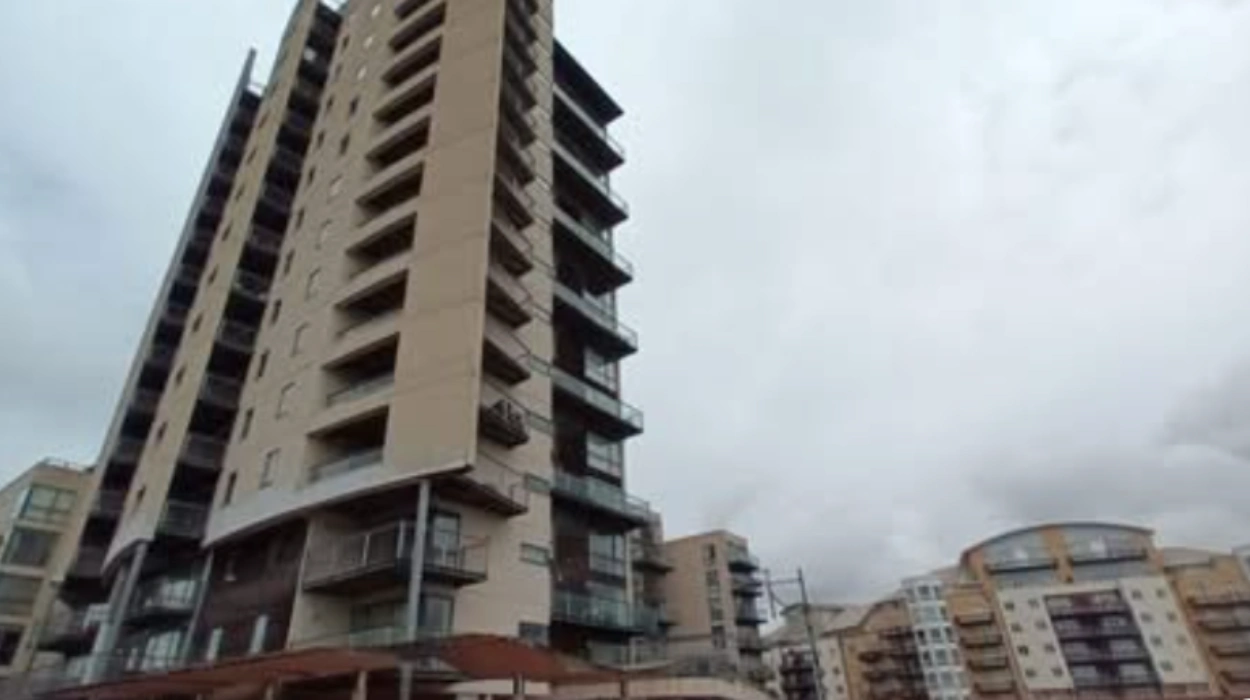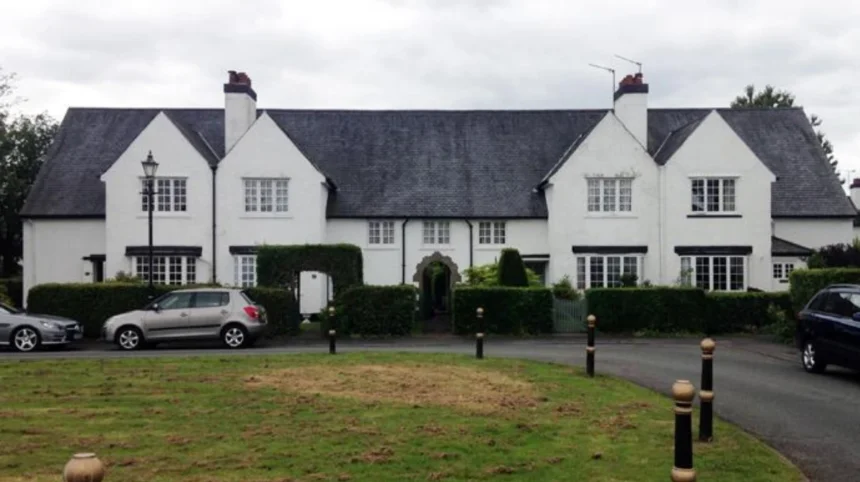
Cardiff’s garden suburbs are a significant part of the city’s early twentieth-century housing history. They emerged from the Garden City Movement, which promoted healthier homes, planned streets, gardens, open space and better living conditions. In Cardiff, Rhiwbina Garden Village became the clearest surviving example of these ideas. Its development began in the 1910s and created a distinctive residential landscape that remains important to Cardiff’s architectural and social history.
- What were Cardiff’s garden suburbs designed to achieve?
- Why did the Garden City Movement become important in Cardiff?
- When did Rhiwbina Garden Village begin?
- How did Rhiwbina Garden Village reflect Garden City principles?
- What role did transport play in Cardiff’s garden-suburb development?
- Who was Thomas Alwyn Lloyd and why does he matter?
- Was Rhiwbina Garden Village the only garden suburb near Cardiff?
- How did Rhiwbina change after its original construction?
- Why is Rhiwbina Garden Village a conservation area?
- How did Cardiff’s garden suburbs influence later housing design?
- What makes Cardiff’s garden suburbs historically important today?
- How is Cardiff protecting its historic garden-suburb character?
- Why does the Garden City story still matter for Cardiff’s future?
The story also connects Cardiff with a wider Welsh planning movement. Architects, housing reformers and planners responded to the rapid urbanisation created by industrial growth. They sought alternatives to dense Victorian housing and unplanned suburban expansion. The result was a new approach to residential design based on greenery, space, community facilities and carefully planned streets.
Cardiff’s garden-suburb story therefore extends beyond individual houses. It reflects changes in housing policy, architecture, transport, public health and urban planning during a period when Cardiff was expanding rapidly.
What were Cardiff’s garden suburbs designed to achieve?
Cardiff’s garden suburbs were designed to provide healthier residential environments through planned streets, private gardens, open space, lower housing density and improved living conditions. Rhiwbina Garden Village represents this approach most clearly within Cardiff’s historic suburban development.
The Garden City Movement developed in Britain during the late nineteenth and early twentieth centuries. Its central ideas were associated with Ebenezer Howard, whose 1898 book To-morrow: A Peaceful Path to Real Reform proposed planned communities that combined the advantages of urban and rural environments.
Howard’s ideas influenced architects and planners across Britain. The movement promoted residential areas with greenery, controlled development, access to open space and a stronger relationship between homes and their surroundings.
These principles developed during a period of serious housing pressure. Industrial cities experienced rapid population growth. Housing construction often prioritised quantity and proximity to employment rather than spacious residential environments.
Cardiff experienced particularly rapid expansion because of its position as a major coal-exporting port. Cardiff Docks supported a large industrial economy, while railway connections strengthened the city’s links with South Wales and national markets.
Garden-suburb planning offered an alternative residential model. Houses were positioned within landscaped settings rather than packed tightly into continuous terraces. Roads were planned around the site instead of following a rigid grid. Gardens became an important part of residential design.
The approach also recognised the importance of sunlight, ventilation and access to outdoor space. These principles became increasingly important within early twentieth-century housing reform.
Why did the Garden City Movement become important in Cardiff?
The Garden City Movement became important in Cardiff because rapid industrial growth created demand for better housing, while planners and architects increasingly promoted healthier neighbourhoods with gardens, greenery, lower densities and carefully organised streets. Rhiwbina became Cardiff’s strongest expression of these principles.
Cardiff entered the twentieth century as one of Britain’s most important industrial ports. Coal from the South Wales valleys passed through Cardiff Docks, creating employment and attracting workers.
Urban growth placed pressure on existing housing. Victorian terraces remained a dominant feature of many Cardiff districts. Terraced housing provided efficient accommodation, but some areas experienced overcrowding, limited private outdoor space and poor environmental conditions.
Housing reformers increasingly supported designs that separated residential streets from industrial environments.
The Garden City Movement fitted this changing outlook. Its principles did not reject urban life. Instead, they attempted to organise housing around healthier physical conditions.
Welsh architects and planners played an important role in adapting these ideas to local conditions. Cadw identifies Rhiwbina Garden Village as one of the Welsh developments influenced by the Garden City Movement. It also identifies Thomas Alwyn Lloyd as an important figure in Welsh planning history. Lloyd had worked as an architectural assistant to Raymond Unwin, one of the leading architects associated with the Garden City tradition.
This connection helped transfer British garden-suburb principles into Welsh housing design.
The movement also influenced developments beyond Cardiff. Examples include Oakdale Village, Wrexham Garden Village and Barry Garden Suburb. These developments demonstrate that garden planning became part of a wider Welsh response to industrialisation and housing reform.
When did Rhiwbina Garden Village begin?
Rhiwbina Garden Village began in the early twentieth century when the Rhiwbina Garden Village Society was formed in 1912. The society acquired 107 acres north of Cardiff, and the first 34 houses were built in 1914 beside the recently opened Cardiff Railway.
Rhiwbina provides the clearest documentary evidence for Cardiff’s garden-village experiment.
According to the Royal Commission on the Ancient and Historical Monuments of Wales, now represented through Coflein, the Rhiwbina Garden Village Society was formed in 1912. The society acquired 107 acres of land north of Cardiff.
The location was significant because it stood beside the recently opened Cardiff Railway. Transport connections supported the garden-village concept by linking a relatively low-density residential district with Cardiff’s wider urban economy.
Construction began before the First World War. The first 34 houses were completed in 1914. Development then continued through the 1920s. A total of 189 houses were eventually constructed as part of the historic garden village scheme.
This development demonstrates that the garden-village concept was not simply an architectural style. It was an organised housing project involving land acquisition, planning, construction and long-term management.
The original development also had a clear relationship with its landscape. Houses, roads and gardens were planned together. The layout created a distinctive residential environment that differed from the dense terraces common in older parts of Cardiff.
How did Rhiwbina Garden Village reflect Garden City principles?
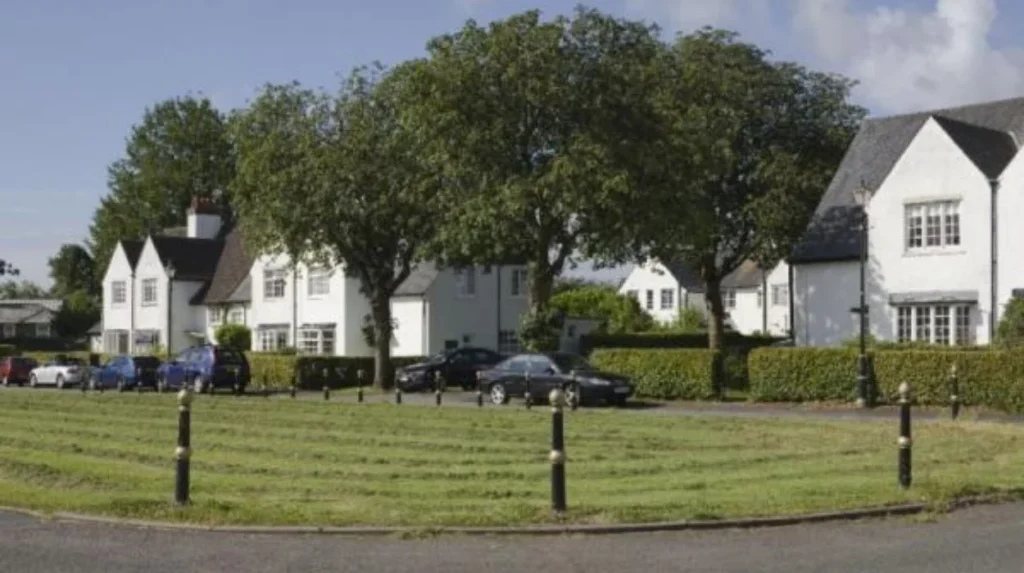
Rhiwbina Garden Village reflected Garden City principles through its planned layout, detached and semi-detached housing, gardens, greenery, road design and relationship with the surrounding landscape. Its surviving form demonstrates how early twentieth-century planners translated Garden City theory into practical housing.
Garden City planning relied on more than decorative greenery. The physical arrangement of a neighbourhood was central to the concept.
Rhiwbina’s historic layout demonstrates this principle. The development was designed as a coherent residential environment rather than as a collection of unrelated houses.
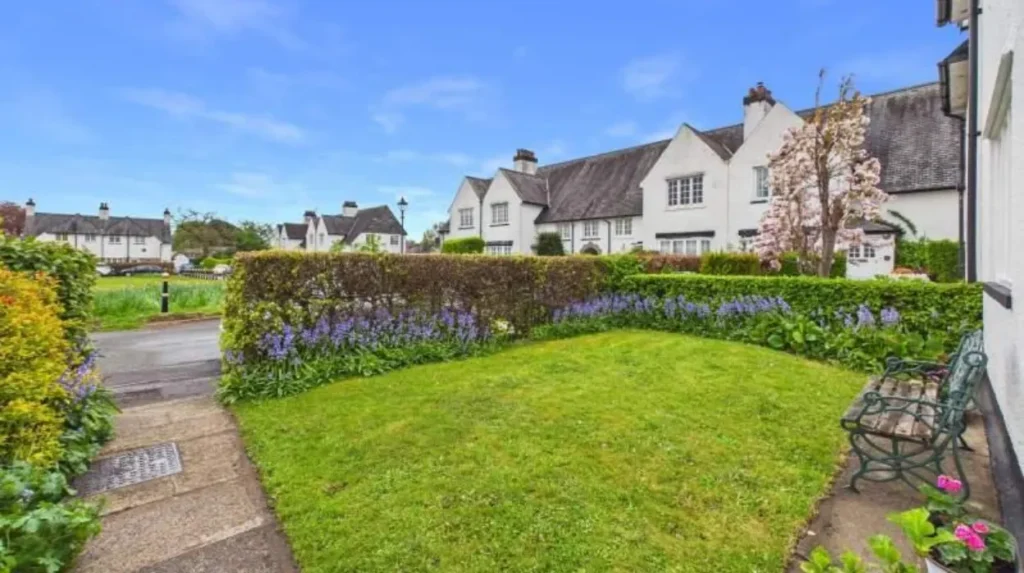
Private gardens provided residents with direct access to outdoor space. The gardens also contributed to the visual character of the neighbourhood.
Roads were planned in relation to the housing and landscape. This approach differed from the repetitive street grids used in many nineteenth-century urban developments.
Architectural variation also helped create a distinct suburban character. Houses were designed within a common planning framework without producing complete uniformity.
The emphasis on greenery reflected broader Garden City thinking. Landscape was treated as an integral component of residential planning.
Cadw’s research into twentieth-century Welsh architecture identifies the importance of working with a site’s topography in Garden City planning. The approach encouraged planners to respond to the physical characteristics of the land rather than impose an entirely rigid layout.
This principle is important when understanding why garden villages often feel different from conventional speculative housing estates. Their character comes from the relationship between buildings, streets, gardens and open areas.
What role did transport play in Cardiff’s garden-suburb development?
Transport played a major role in Cardiff’s garden-suburb development because residential districts needed reliable connections with employment and city services. Rhiwbina Garden Village was deliberately positioned beside the Cardiff Railway, linking its low-density housing with the expanding urban economy.
The Garden City concept depended on connections between residential communities and larger towns.
Rhiwbina’s position beside the Cardiff Railway was therefore significant. The railway provided a practical connection between the new residential development and Cardiff.
This relationship also demonstrates an important feature of early twentieth-century suburbanisation. Improved transport allowed housing development to move beyond the most densely built parts of the city.
Railways reduced the need for every home to sit within walking distance of an industrial workplace. They supported the separation of residential and employment areas.
The Cardiff Railway was particularly relevant to Rhiwbina’s development. Its presence helped make a location north of the established urban core suitable for a planned residential community.
Transport infrastructure therefore formed part of the garden-village story from the beginning.
The relationship between transport and suburban development continued throughout the twentieth century. Cardiff’s later expansion produced larger suburban districts, although many later developments differed from the social and planning ideals of the original Garden City movement.
Who was Thomas Alwyn Lloyd and why does he matter?
Thomas Alwyn Lloyd was a Welsh architect and planner who helped transfer Garden City planning ideas into Wales. His professional experience with Raymond Unwin connected Welsh housing design with the wider British planning movement and influenced developments including Barry Garden Suburb.
Thomas Alwyn Lloyd occupies an important position in the history of Welsh planning.
Cadw identifies Lloyd as a significant figure in the early development of planning in Wales. He had worked as an assistant to Raymond Unwin at Hampstead Garden Suburb, one of Britain’s best-known planned residential developments.
This experience gave Lloyd direct exposure to Garden City planning principles.
His Welsh work applied those ideas to local housing problems. Cadw specifically connects Lloyd with the design of Barry Garden Suburb, demonstrating the wider influence of Garden City planning across South Wales.
His importance lies in the transfer of planning knowledge. Garden City ideas originated as a national and international movement, but their practical application depended on architects and planners adapting them to specific sites.
Wales presented distinctive conditions. Industrial communities had developed rapidly around coal, steel, docks and railways. Garden planning therefore needed to respond to industrial landscapes, local topography and changing housing expectations.
Lloyd’s career illustrates how international planning principles became part of Wales’s own architectural history.
Was Rhiwbina Garden Village the only garden suburb near Cardiff?
Rhiwbina was not the only Garden City-inspired development in the wider Cardiff region. Welsh examples included Barry Garden Suburb and other garden villages, showing that planned residential design formed part of a broader South Wales response to industrial housing conditions.
The wider South Wales context is essential.
Cadw identifies Rhiwbina Garden Village, Oakdale model village and Wrexham Garden Village among Welsh developments influenced by the Garden City Movement. It also identifies Thomas Alwyn Lloyd’s involvement with Barry Garden Suburb.
Barry Garden Suburb is particularly relevant because Barry was closely connected to Cardiff through the regional economy and transport network.
Other Welsh examples demonstrate how Garden City thinking crossed administrative boundaries.
Oakdale Village, for example, was developed between 1909 and 1924 for workers associated with the Tredegar Iron & Coal Company and Oakdale Steam Navigation Company. It contained 660 houses, most constructed by 1913. The village included front and rear gardens, running water, electric lighting and bathrooms.
These developments show how garden-village planning could be used for different social and economic purposes.
Some schemes were linked directly to industrial employers. Others were associated with housing organisations and private development.
Rhiwbina’s importance comes from its survival within Cardiff and its continued recognition as a distinct historic neighbourhood.
How did Rhiwbina change after its original construction?
Rhiwbina developed beyond its original garden-village construction during the twentieth century, while the historic core retained enough architectural and spatial character to become a recognised conservation area within modern Cardiff.
The original Garden Village was not frozen in time.
Construction continued during the 1920s after the first houses appeared in 1914. The complete historic scheme eventually reached 189 houses.
Later twentieth-century development expanded Rhiwbina beyond the original garden-village boundaries.
This distinction matters because modern Rhiwbina is larger than the historic Garden Village. The term “Rhiwbina” describes the wider suburb, while “Rhiwbina Garden Village” identifies the historically planned residential area.
The original development retained enough of its historic character to receive conservation recognition.
Coflein records that the village is now a conservation area and retains a distinctive character.
Cardiff Council’s conservation programme also lists Rhiwbina Garden Village among Cardiff’s conservation areas and provides a dedicated appraisal for the area.
This recognition reflects the importance of the area’s surviving layout, architecture and landscape.
Why is Rhiwbina Garden Village a conservation area?
Rhiwbina Garden Village is a conservation area because its historic layout, buildings, gardens, streetscape and architectural character provide evidence of early twentieth-century Garden City planning and form a distinctive historic environment within modern Cardiff.
A conservation area is an area recognised for its special architectural or historic interest.
The designation does not mean every building remains unchanged. It means the overall character of the area has recognised historic value.
Rhiwbina’s importance comes from the combination of individual buildings and the wider layout.
Its streets, gardens, house forms and relationship with the landscape work together to express the original planning concept.
Cardiff Council includes Rhiwbina Garden Village within its conservation work alongside historic areas such as Roath Park, Roath Mill Gardens, Tredegarville and other parts of the city.
Conservation status therefore protects the broader character of the neighbourhood rather than treating individual houses as isolated historic objects.
This distinction is particularly important for garden suburbs. Their significance comes from spatial relationships. Changing a single house, garden boundary or streetscape feature can affect the appearance and coherence of the wider planned environment.
How did Cardiff’s garden suburbs influence later housing design?
Cardiff’s garden-suburb developments helped establish planning principles that later appeared in twentieth-century housing, including lower-density layouts, private gardens, open space, landscape-sensitive streets and stronger separation between residential areas and heavy industry.
The influence of Garden City planning extended beyond the original developments.
The movement contributed to a broader transformation in British housing design.
Housing became increasingly associated with sunlight, ventilation, gardens and open space. These principles influenced local authorities, housing trusts and private developers.
The ideas also shaped professional town planning.
Cadw’s research notes that Garden City principles influenced new types of suburban housing in Wales during the early twentieth century.
The influence continued into later decades. Post-war housing programmes adopted some garden-suburb characteristics, although large-scale estates often used different architectural and planning approaches.
The movement also influenced discussions about the relationship between urban growth and landscape.
This remains relevant to Cardiff because the city continues to expand. Decisions about housing density, green space, transport and historic neighbourhoods still involve many of the same planning questions that confronted early twentieth-century reformers.
What makes Cardiff’s garden suburbs historically important today?
Cardiff’s garden suburbs remain historically important because they document a major shift from dense industrial-era housing towards planned residential environments that combined homes, gardens, greenery, transport access and landscape design within a coherent suburban framework.
Rhiwbina Garden Village is especially valuable because its original planning concept remains visible.
The development records a specific period in Cardiff’s growth. The city was expanding because of industrial employment, port activity and transport investment.
At the same time, housing reformers were questioning the quality of dense urban neighbourhoods.
Garden Village planning offered a practical response.
The historic houses also provide evidence of changing architectural preferences. Early twentieth-century residential design moved away from purely repetitive Victorian terrace forms and embraced greater variation in house types, setbacks, gardens and landscaped streets.
The area’s conservation status ensures that its historic character remains part of Cardiff’s contemporary urban landscape.
Its significance also extends beyond architecture. It represents changing ideas about health, domestic life, community planning and the relationship between housing and nature.
Explore More Area Guide
Hidden Communities That Shaped Butetown: Cardiff History 2026
Strongest Community Areas in Cardiff: Local Guide 2026
How is Cardiff protecting its historic garden-suburb character?
Cardiff protects its historic garden-suburb character through conservation-area management and planning controls that recognise the architectural, spatial and landscape value of historic neighbourhoods such as Rhiwbina Garden Village.
Conservation planning is central to managing historic suburban areas.
Cardiff Council maintains conservation information for Rhiwbina Garden Village and other historic areas. These appraisals identify features that contribute to local character and help guide planning decisions.
Historic environment protection also operates at Welsh national level.
Cadw maintains the statutory register of historic parks and gardens in Wales. The register recognises sites with special historic interest and provides a framework for considering their protection through the planning system.
The statutory register operates under the Historic Environment (Wales) Act 2023. Cadw states that the register covers nearly 400 sites across Wales. Registration does not create a separate consent regime, but registered sites and their settings receive consideration within planning decisions.
This framework demonstrates that historic landscape protection forms part of wider Welsh planning policy.
Why does the Garden City story still matter for Cardiff’s future?
The Garden City story remains relevant to Cardiff because modern housing growth still requires decisions about density, gardens, green space, transport, community facilities and historic character. Rhiwbina provides a surviving example of how these elements were integrated into one planned neighbourhood.
Cardiff continues to face housing and transport pressures associated with metropolitan growth.
The lessons of historic garden suburbs remain relevant because their physical design demonstrates how residential development can incorporate greenery and outdoor space.
Modern planning operates under different economic, environmental and regulatory conditions. However, questions about housing quality remain central.
The historic Garden City approach also provides evidence about the importance of designing neighbourhoods as complete environments rather than treating individual houses as separate projects.
Rhiwbina shows the long-term value of coordinated planning.
Its 1912 foundation, 107-acre original landholding, first 34 houses in 1914 and eventual 189-house historic scheme provide measurable evidence of an early twentieth-century experiment in planned suburban development.
Its survival as a conservation area gives Cardiff a tangible record of that experiment.
The wider lesson is architectural as well as urban. Streets, gardens, buildings, transport and landscape operate together. Their combined character explains why Rhiwbina Garden Village remains significant more than a century after its creation.
Cardiff’s garden-suburb story is therefore not simply a history of attractive houses. It is a record of a major change in British and Welsh ideas about housing.
The movement connected industrial-era housing reform with modern town planning. It brought greenery and landscape into residential design. It encouraged planners to consider health, movement, open space and community together.
Rhiwbina remains the strongest surviving Cardiff example of this transformation. Its historic layout connects present-day Cardiff with the planning debates of the early twentieth century and provides a clear example of how Garden City principles were adapted to a growing Welsh city.
What is the most famous garden suburb in Cardiff?
Rhiwbina Garden Village is Cardiff’s best-known historic garden suburb. It was established by the Rhiwbina Garden Village Society in 1912 and developed according to Garden City principles, including planned streets, gardens, greenery and lower-density housing.