Cardiff is a historic Welsh capital where medieval street patterns, Victorian commercial architecture, industrial heritage and modern urban development shape the city centre. Its oldest streets preserve evidence of Roman occupation, Norman settlement, medieval trade, coal exports and the transformation of Cardiff into Wales’s principal administrative and cultural centre.
- How Did Cardiff’s Historic Streets Develop Over Time?
- Which Streets Preserve Cardiff’s Medieval Heritage?
- Why Is St Mary Street Important to Cardiff’s History?
- What Makes The Hayes One of Cardiff’s Most Historic Streets?
- Which Architectural Features Define The Hayes?
- Why Are Cardiff’s Victorian Shopping Arcades Significant?
- How Does Castle Street Reflect Cardiff’s Architectural History?
- What Historical Importance Does Queen Street Hold in Cardiff?
- Why Is Bute Street Important to Cardiff’s Industrial Heritage?
- How Did Cardiff’s Docks Transform Bute Street?
- What Was the Connection Between Bute Street and Tiger Bay?
- What Can Visitors Discover Along Duke Street?
- What Is the Historical Significance of Quay Street?
- Which Historic Buildings and Landmarks Are Connected to Cardiff’s Streets?
- Cardiff Castle
- St John’s Parish Church
- Cardiff Market
- Cardiff Old Library
- Royal Arcade and Morgan Arcade
- How Did Industrialisation Change Cardiff’s Historic Streets?
- How Are Cardiff’s Historic Streets Protected and Preserved?
- How Can Visitors Explore Cardiff’s Most Historic Streets on Foot?
- Start at Cardiff Castle
- Explore High Street and Womanby Street
- Visit St John’s Parish Church
- Discover St Mary Street and Cardiff Market
- Finish at The Hayes and the Shopping Arcades
- Why Do Cardiff’s Historic Streets Remain Important Today?
The most historic streets in Cardiff include The Hayes, High Street, St Mary Street, Womanby Street, Castle Street, Queen Street, Duke Street and Bute Street. Each street reflects a different period of the city’s development. Together, they explain how Cardiff evolved from a small settlement around Cardiff Castle into a major port, industrial centre and modern capital.
Exploring Cardiff’s historic streets provides a practical way to understand the city’s architecture, commercial history, cultural identity and urban development. The streets also connect important landmarks, including Cardiff Castle, the Old Library, the Principality Stadium, Cardiff Market and the historic arcades.
How Did Cardiff’s Historic Streets Develop Over Time?
Cardiff’s historic streets developed through Roman military occupation, Norman settlement, medieval trade and nineteenth-century industrial expansion. Their layouts reflect the city’s relationship with Cardiff Castle, the River Taff, local markets, religious institutions and the expanding coal-exporting port.
Cardiff’s urban history spans almost 2,000 years. Its development began with Roman military activity around the River Taff during the first century AD. The Romans selected the location because it provided access to a strategic river crossing and routes towards the Bristol Channel.
The Roman fort occupied the site of present-day Cardiff Castle. Archaeological evidence identifies several successive fortifications, including a substantial stone fort constructed around the late third century.
Following the Roman withdrawal during the early fifth century, the settlement continued around the former fortification. The Norman conquest of Glamorgan introduced another important stage in Cardiff’s development. Robert Fitzhamon established a Norman castle in 1091, using the foundations of the Roman fort.
During the twelfth century, Cardiff developed into a walled market town. Its streets expanded around the castle, St John’s Church and commercial areas. Narrow lanes, irregular street patterns and long property boundaries preserved elements of this medieval settlement.
The nineteenth century transformed Cardiff again. The expansion of the South Wales coal industry increased demand for shipping facilities, warehouses, shops and residential accommodation. New commercial streets and substantial buildings reflected the growing wealth of the port.
The city’s historic streets therefore represent different stages of urban development rather than one uniform architectural period.
Which Streets Preserve Cardiff’s Medieval Heritage?
High Street, Womanby Street, Working Street, Church Street and Quay Street preserve important elements of medieval Cardiff’s street network. Their positions reveal the relationship between the Norman castle, historic churches, town boundaries, commercial activity and the original settlement.
Medieval Cardiff developed around a compact settlement close to Cardiff Castle. The town expanded gradually as trade increased and defensive boundaries developed.
The historical street pattern remains particularly visible around the castle and St John’s Parish Church.
High Street
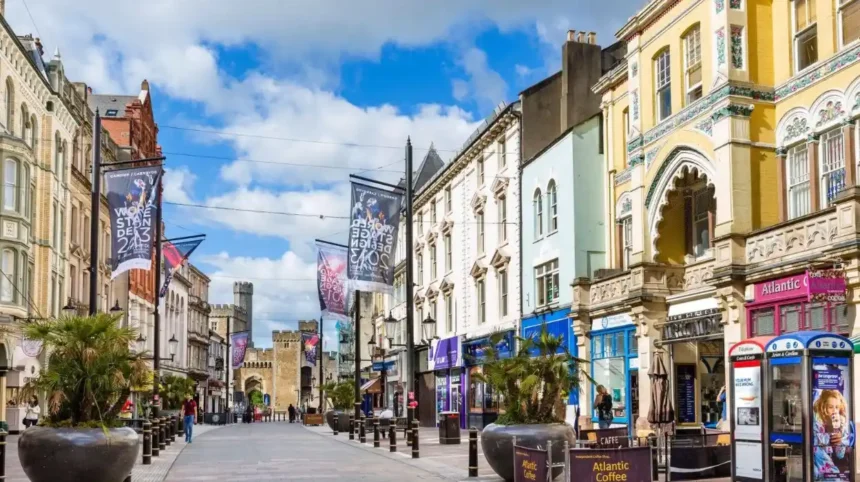
High Street is among the most important historic routes in the city centre. It runs beside Cardiff Castle and connects the northern part of the medieval town with the central commercial district.
The street’s alignment is particularly significant. Historical research published by Museum Wales identifies its relationship with the earlier Roman entrance to the castle site.
High Street also connects visitors with the historic commercial area surrounding St John’s Church and Cardiff Market.
Its present appearance combines older architectural elements with modern retail and hospitality businesses. The pedestrianised environment makes the street an accessible route for exploring the castle and neighbouring historic landmarks.
Womanby Street
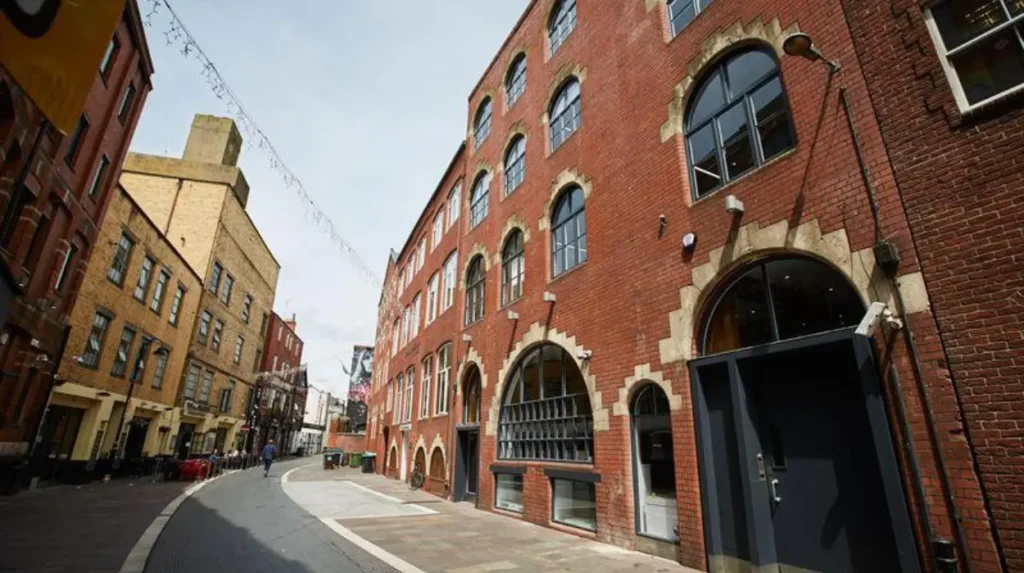
Womanby Street is one of Cardiff’s most distinctive surviving medieval routes.
The street forms part of the early settlement pattern around the castle. Its historical name is associated with the Norse-influenced place names found in medieval Cardiff.
Museum Wales identifies Womanby Street and Working Street as important boundaries of the town’s first medieval development area.
Womanby Street also demonstrates how Cardiff’s urban identity changed over time. Its historic street alignment remains, while its modern character includes independent music venues, pubs and entertainment businesses.
The street connects Cardiff’s medieval history with its contemporary live-music culture. Its relatively narrow layout provides a contrast with the larger commercial streets developed during the Victorian period.
Working Street
Working Street preserves another important section of medieval Cardiff’s urban framework.
Its historic significance comes from its relationship with Womanby Street and the original settlement around Cardiff Castle. Medieval burgage plots, which were narrow property strips extending backwards from street frontages, influenced the arrangement of land in this part of the town.
These property divisions supported residential accommodation, workshops and small commercial activities. Although modern buildings have replaced many historic structures, the underlying street pattern remains important archaeological evidence.
Church Street
Church Street takes its historical importance from its connection with St John’s Parish Church.
The church dates from the twelfth century and is one of Cardiff’s oldest surviving religious buildings. Its current structure largely reflects rebuilding after the destruction associated with the Owain Glyndŵr attack on Cardiff in 1404.
The church became an important religious and civic institution as the medieval town expanded. Its location helps explain how religious buildings influenced the organisation of historic streets.
Church Street remains a useful starting point for exploring Cardiff’s medieval centre.
Why Is St Mary Street Important to Cardiff’s History?
St Mary Street is one of Cardiff’s principal historic commercial routes. It follows part of the medieval town’s southward street network and preserves Victorian and early twentieth-century architecture, historic shopping arcades, former religious associations and important commercial landmarks.
St Mary Street is one of the best-known streets in Cardiff city centre. Its development reflects the transition from medieval settlement to Victorian commercial capital.
The street takes its name from the former St Mary’s Church, which once served the southern part of medieval Cardiff.
Changes to the River Taff affected the church and surrounding settlement. Flooding and the river’s changing course contributed to the eventual abandonment and destruction of the medieval church. Its historical identity survives through the street name.
During the nineteenth century, St Mary Street became an important location for department stores, hotels, public buildings and shopping facilities.
The construction of larger commercial buildings reflected Cardiff’s economic expansion. The street attracted businesses serving residents, dock workers, merchants and visitors.
What Historic Buildings Can Visitors See on St Mary Street?
The street contains several important architectural and commercial landmarks.
The Royal Arcade: Opened in 1858, the Royal Arcade is Cardiff’s oldest surviving shopping arcade. Its entrance connects St Mary Street with The Hayes. The building features Victorian architectural detailing and an internal glazed roof.
The Royal Hotel: The historic hotel contributes to the architectural character of the street and reflects the importance of commercial hospitality during Cardiff’s nineteenth-century expansion.
Cardiff Market: Located nearby, the Victorian market building represents the city’s long tradition of public trading. Its covered structure accommodates independent traders and food businesses.
Historic department-store buildings: Former department-store premises demonstrate how Cardiff’s expanding population and commercial economy encouraged larger retail developments.
St Mary Street also connects with several historic arcades, including Royal Arcade, Morgan Arcade and Wyndham Arcade.
The street’s architectural character includes Gothic Revival, Classical Revival, Georgian Revival and Dutch-influenced designs. These styles reflect different construction periods and commercial ambitions.
The St Mary Street Conservation Area was designated in 1975 to protect the historic character of the former walled medieval borough south of Cardiff Castle.
What Makes The Hayes One of Cardiff’s Most Historic Streets?
The Hayes is a historic commercial street in central Cardiff, recognised for its Victorian shopping heritage, historic arcades and connections with the city’s retail development. Its architecture demonstrates the transition from medieval property plots to organised nineteenth-century shopping districts.
The Hayes occupies an important position within Cardiff’s commercial centre.
Its development is closely connected with the growth of Victorian retailing. During the nineteenth century, Cardiff’s increasing population and expanding economy created demand for more organised shopping facilities.
The street became associated with department stores, specialist retailers and covered shopping arcades.
The redevelopment of The Hayes also demonstrates how Cardiff adapted historic commercial land to modern urban requirements.
Which Architectural Features Define The Hayes?
The Hayes contains a mixture of Victorian, Edwardian and modern architecture.
The historic shopping arcades are particularly important. They preserve traditional commercial layouts while accommodating contemporary independent retailers, cafés and specialist businesses.
The street also provides access to Cardiff Central Library and the wider civic and commercial district.
The modern redevelopment of The Hayes introduced pedestrian-friendly public spaces, landscaping and cultural facilities. This created a connection between Cardiff’s historic retail identity and its contemporary city-centre environment.
Why Are Cardiff’s Victorian Shopping Arcades Significant?
Cardiff is widely recognised for its collection of Victorian and Edwardian shopping arcades.
The Royal Arcade opened in 1858 and is the oldest surviving arcade in the city. It originally connected two important commercial streets: St Mary Street and The Hayes.
The arcade was developed to improve pedestrian movement between these areas and create additional retail space.
Other notable arcades include:
- Morgan Arcade: Opened in 1898 and known for its Victorian architectural character.
- Castle Arcade: Developed in the late nineteenth century, with distinctive upper-floor galleries and traditional shopfronts.
- Wyndham Arcade: A Victorian shopping passage connecting St Mary Street with the Mill Lane area.
- High Street Arcade: A historic shopping arcade connecting High Street with the surrounding commercial network.
These arcades preserve Cardiff’s historic retail architecture and provide sheltered pedestrian connections through the city centre.
The Royal Arcade’s surviving building fabric is recognised in Cadw’s listed-building records.
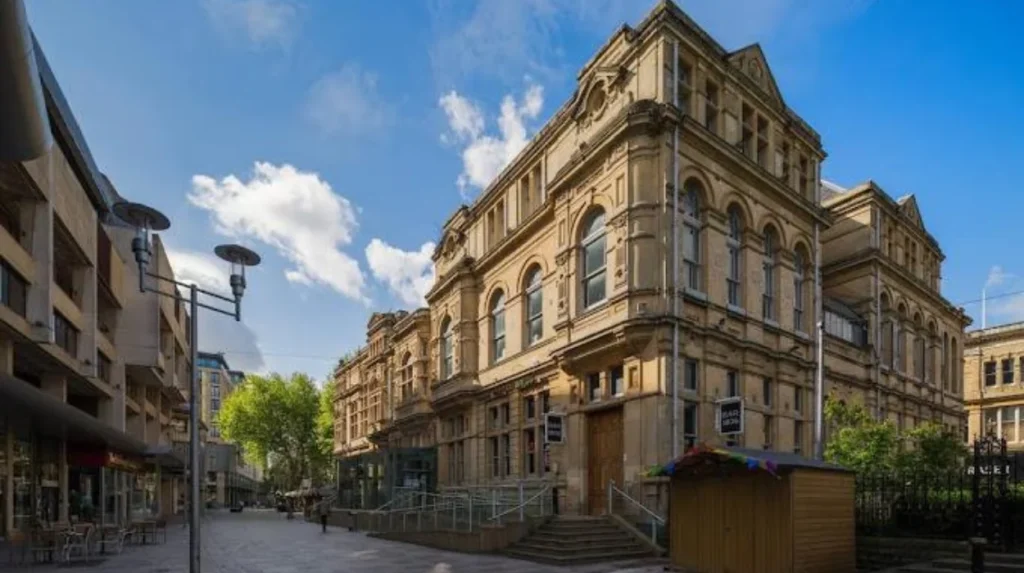
How Does Castle Street Reflect Cardiff’s Architectural History?
Castle Street reflects Cardiff’s historic relationship with its Norman castle, medieval town centre and Victorian commercial development. Its location beside the castle makes it an important route for understanding the city’s changing defensive, civic and architectural landscape.
Castle Street runs alongside Cardiff Castle and forms part of the central historic street network.
Its importance comes from its proximity to one of Wales’s most significant historic landmarks.
Cardiff Castle contains evidence of Roman military occupation, Norman settlement and later aristocratic redevelopment. The castle’s present architectural character includes substantial nineteenth-century work associated with the Bute family.
Castle Street provides a visual connection between the castle walls and the commercial buildings of central Cardiff.
The street also forms part of the wider pedestrian environment around the city centre’s historic landmarks.
What Is the Connection Between Cardiff Castle and the Street Network?
Cardiff Castle influenced the original settlement’s growth and defensive organisation.
The Norman castle established in 1091 became the principal landmark around which the medieval town developed. The surrounding streets supported markets, residential properties, religious institutions and commercial activities.
The town’s defensive boundaries controlled access and influenced the location of important routes.
Today, Castle Street provides access to Cardiff Castle, nearby shopping districts and the city-centre entertainment area.
The street is particularly useful for visitors researching Cardiff’s Roman and Norman history because it connects the modern city with the archaeological and architectural remains of earlier periods.
What Historical Importance Does Queen Street Hold in Cardiff?
Queen Street is a major historic commercial thoroughfare in Cardiff, reflecting the city’s nineteenth and twentieth-century expansion. Its changing architecture documents the development of retail businesses, public transport connections and commercial buildings during Cardiff’s growth.
Queen Street is one of the most important shopping streets in the Welsh capital.
Its modern retail character developed through Cardiff’s rapid urban and economic expansion during the nineteenth century.
The growth of the coal-exporting economy increased the demand for commercial premises, banking services, transport facilities and consumer businesses.
Queen Street subsequently became an important destination for shopping and everyday commercial activity.
How Did Queen Street’s Architecture Change?
Queen Street’s buildings reflect several periods of commercial development.
Earlier residential and commercial properties gradually gave way to larger retail buildings. During the twentieth century, new architectural styles appeared alongside older Victorian structures.
Some surviving buildings contain Art Deco-inspired details, including symmetrical façades, decorative pilasters and carefully arranged window openings.
The Queen Street Conservation Area protects the architectural and historic character of the area. Cardiff Council identifies Queen Street among the city’s designated conservation areas.
The street’s history demonstrates how commercial centres adapt to changes in population, transport, retail demand and architectural design.
Why Is Bute Street Important to Cardiff’s Industrial Heritage?
Bute Street is an important historic route connecting Cardiff city centre with Butetown and the former docks. Developed during the nineteenth-century port expansion, it reflects coal exports, maritime trade, dockside employment and Cardiff’s multicultural industrial communities.
Bute Street has a different historical character from Cardiff’s medieval and Victorian shopping streets.
Its importance is connected with the industrial expansion of Cardiff during the nineteenth century.
Before major dock development, the area south of the historic town contained low-lying marshland and grazing land.
The growth of the South Wales coal and iron industries created demand for improved transportation and shipping infrastructure.
The Second Marquess of Bute played a major role in the development of the docks. Bute Street was established as an important route serving the expanding dockland area.
How Did Cardiff’s Docks Transform Bute Street?
The opening of Bute West Dock in 1839 marked a major stage in Cardiff’s industrial development.
Bute East Dock followed in the 1850s, while further expansion included Roath Dock in 1887 and Queen Alexandra Dock in 1907.
These developments increased the importance of the dockland transport network.
Bute Street became an essential connection between the commercial centre and the waterfront. Businesses, public houses, accommodation providers and religious institutions developed around the needs of maritime workers and visitors.
What Was the Connection Between Bute Street and Tiger Bay?
Tiger Bay became a recognised name for Cardiff’s historic dockland community.
The area attracted sailors, merchants, dockworkers and families from different parts of the world. Cardiff Harbour Authority records that at least 50 nationalities settled in the dockland community.
This international population shaped the cultural and social identity of Butetown.
Bute Street therefore represents more than industrial transport infrastructure. It provides an important connection to Cardiff’s maritime migration history and the development of a multicultural port community.
The Royal Commission on the Ancient and Historical Monuments of Wales also documents the surviving dockland heritage around Butetown and Cardiff Bay.
What Can Visitors Discover Along Duke Street?
Duke Street is a historic commercial street near Cardiff Castle, recognised for its connection with Victorian shopping development and the city’s traditional retail network. Its surrounding buildings and arcades demonstrate how Cardiff’s commercial centre expanded during the nineteenth century.
Duke Street sits within Cardiff’s historic commercial district, close to Cardiff Castle and the traditional shopping streets.
Its significance is closely connected with the development of Victorian retail architecture.
The nearby Castle Arcade provides an important example of the period’s commercial design. Its construction began in 1887, creating a covered shopping passage between High Street and the surrounding commercial streets.
The arcade is particularly notable for its traditional wooden galleries, decorative ironwork and glazed roof.
Duke Street also provides access to Cardiff’s historic hospitality and retail areas. Visitors exploring this part of the city can examine the relationship between the castle, commercial streets and Victorian shopping buildings.
The surrounding architecture demonstrates how Cardiff’s commercial centre developed around established medieval routes rather than replacing the entire historic street network.
What Is the Historical Significance of Quay Street?
Quay Street preserves an important connection with Cardiff’s early commercial and maritime geography. Its name reflects the historic relationship between the settlement, the River Taff and the trading activities that supported Cardiff before the expansion of its nineteenth-century docks.
Quay Street is an important part of Cardiff’s historic urban geography.
The street name provides evidence of the city’s earlier relationship with river-based trade.
Before the development of large dock facilities, Cardiff’s maritime activities centred on the river and its associated quays. The Glamorganshire Canal, opened in 1798, also strengthened connections between Cardiff and the industrial communities of South Wales.
Iron transported from Merthyr Tydfil and surrounding industrial districts contributed to the expansion of Cardiff’s trading economy.
The subsequent growth of coal exports transformed the scale of maritime activity. Dedicated docks replaced the limitations of the earlier river-based facilities.
Quay Street therefore helps explain the transition from a small trading settlement into an internationally connected industrial port.
Its location within the historic city centre makes it useful for understanding the relationship between medieval Cardiff, early commercial activity and the nineteenth-century waterfront.
Which Historic Buildings and Landmarks Are Connected to Cardiff’s Streets?
Cardiff’s historic streets connect important architectural landmarks, including Cardiff Castle, St John’s Parish Church, Cardiff Market, the Old Library and Victorian shopping arcades. These buildings represent Roman, medieval, Victorian and modern periods of the city’s architectural development.
The city’s street network provides access to several important historic buildings.
Cardiff Castle
Cardiff Castle is the central historic landmark of the city centre.
Its history includes Roman fortifications, a Norman stronghold and extensive Victorian redevelopment.
The castle’s Roman walls preserve archaeological evidence of military occupation dating from the first century AD.
Its location beside High Street and Castle Street makes it a natural starting point for exploring Cardiff’s historic streets.
St John’s Parish Church
St John’s Parish Church stands near Church Street and the central market district.
Its origins date to the twelfth century. The current building largely reflects fifteenth-century reconstruction following the destruction associated with the attack on Cardiff in 1404.
The church is an important surviving example of medieval religious architecture.
Cardiff Market
Cardiff Market is a Victorian covered market located within the historic commercial centre.
Its building dates from the nineteenth century and reflects the importance of organised public trading.
The market accommodates independent traders selling food, household goods and specialist products.
Its position near St Mary Street and St John’s Church makes it an important landmark within Cardiff’s traditional commercial district.
Cardiff Old Library
The Old Library stands at The Hayes and provides another connection with the city’s civic and cultural history.
The building has served important educational and cultural functions. It now houses cultural facilities, including the Cardiff Story Museum.
The museum documents the city’s development through collections relating to its people, industries, communities and urban history.
Royal Arcade and Morgan Arcade
These arcades demonstrate the architectural and commercial ambitions of Victorian Cardiff.
Royal Arcade opened in 1858, while Morgan Arcade opened in 1898.
Their traditional shopfronts, glazed roofs and decorative architectural details preserve the character of nineteenth-century shopping architecture.
How Did Industrialisation Change Cardiff’s Historic Streets?
Industrialisation transformed Cardiff from a relatively small market town into a major coal-exporting port. The expansion of docks, railways, commercial premises and housing changed the city’s street network and encouraged substantial Victorian and Edwardian architectural development.
The industrial transformation of Cardiff accelerated during the late eighteenth and nineteenth centuries.
The Glamorganshire Canal connected Cardiff with the industrial districts of South Wales. This transport connection helped move iron towards the port for export.
The opening of Bute West Dock in 1839 increased shipping capacity. Bute East Dock followed between 1855 and 1859, while further dock developments expanded the port’s international importance.
During the nineteenth century, Cardiff became one of the world’s leading coal-exporting ports.
This growth influenced the development of streets throughout the city.
Commercial development: St Mary Street, The Hayes and Queen Street attracted shops, hotels, banks and offices.
Dockland development: Bute Street and surrounding roads supported maritime businesses, accommodation and dockside communities.
Residential expansion: New housing accommodated workers, merchants and families associated with the growing port.
Transport development: Railway stations, dock connections and improved roads supported the movement of passengers and industrial goods.
The industrial economy also changed Cardiff’s population. Migrants from different parts of Britain and overseas established communities around the docks.
These developments created the multicultural identity historically associated with Tiger Bay and Butetown.
Cardiff’s surviving historic streets therefore provide evidence of the economic and demographic changes associated with industrialisation.
How Are Cardiff’s Historic Streets Protected and Preserved?
Cardiff’s historic streets receive protection through conservation areas, listed-building designation, planning controls and heritage management. Cardiff Council identifies 27 conservation areas across the city, safeguarding buildings, archaeological remains and historic urban character.
Historic streets require preservation because their architectural features and layouts provide evidence of earlier urban development.
Cardiff Council uses conservation policies to manage changes affecting buildings and streets with recognised architectural or historical importance.
What Is a Conservation Area?
A conservation area is a designated geographical area recognised for its special architectural or historic interest.
The designation helps protect the character of streets, buildings, public spaces and surrounding environments.
Cardiff has 27 conservation areas covering locations such as:
- St Mary Street and the central commercial district.
- Queen Street and its surrounding streetscape.
- Cathays Park and its civic architecture.
- Mount Stuart Square and the historic docklands.
- Llandaff and its historic settlement.
- Cathedral Road and its Victorian residential architecture.
Each area has its own historical and architectural characteristics.
What Is a Listed Building?
A listed building is a structure recognised for its special architectural or historic interest.
In Wales, Cadw maintains the national system for listing buildings and monuments.
Listed buildings receive different levels of protection according to their significance:
- Grade I: Buildings of exceptional interest.
- Grade II:* Particularly important buildings of more than special interest.
- Grade II: Buildings of special interest.
Alterations to listed buildings require the appropriate consent where they affect protected features.
Why Is Heritage Preservation Important?
Preservation maintains the physical evidence of Cardiff’s development.
Historic shopfronts, stone façades, traditional windows, street layouts and architectural details help explain how different generations used the city.
Conservation also supports tourism, education and local cultural identity.
The preservation of historic buildings requires appropriate maintenance and carefully managed redevelopment. Cardiff Council’s conservation guidance provides information about planning controls and the protection of historic buildings.
Explore More Area Guide
History of Splott, Cardiff: Industry, Steelworks and Community
The History of Grangetown, Cardiff: Heritage and Growth
How Can Visitors Explore Cardiff’s Most Historic Streets on Foot?
Visitors can explore Cardiff’s historic streets through a central walking route connecting Cardiff Castle, High Street, Womanby Street, St John’s Church, St Mary Street, The Hayes and the Victorian shopping arcades. The route combines medieval landmarks with nineteenth-century commercial architecture.
Start at Cardiff Castle
Begin at Cardiff Castle and examine its Roman walls, Norman keep and Victorian Gothic architecture.
The castle provides historical context for understanding the development of the surrounding medieval streets.
Explore High Street and Womanby Street
Continue towards High Street and Womanby Street.
These streets preserve important elements of Cardiff’s medieval street pattern. Their relationship with the castle helps explain the structure of the early settlement.
Visit St John’s Parish Church
Walk towards Church Street and visit St John’s Parish Church.
The building provides an opportunity to examine medieval religious architecture and understand the role of churches in Cardiff’s historic community.
Discover St Mary Street and Cardiff Market
Continue towards Cardiff Market and St Mary Street.
Explore the market’s Victorian architecture and examine the surrounding commercial buildings.
Finish at The Hayes and the Shopping Arcades
Complete the walk through Royal Arcade and The Hayes.
The arcades provide examples of Victorian commercial design, while The Hayes demonstrates how Cardiff’s historic shopping district has adapted to modern urban development.
Visitors interested in Cardiff’s wider industrial history can extend their exploration towards Bute Street and Butetown.
This additional route provides a different perspective on the city’s development through maritime trade, migration and dockland industry.
Why Do Cardiff’s Historic Streets Remain Important Today?
Cardiff’s historic streets remain important because they preserve the city’s architectural identity, medieval street patterns, commercial traditions and industrial heritage. They also support tourism, independent businesses, cultural activities and the ongoing regeneration of the Welsh capital.
The historic streets of Cardiff serve several important functions within the modern city.
Cultural significance: Streets such as Womanby Street and Church Street preserve connections with medieval Cardiff and its historic communities.
Architectural significance: St Mary Street, The Hayes and Queen Street contain buildings representing different architectural periods.
Economic significance: Historic commercial streets support independent retailers, cafés, restaurants and tourism businesses.
Educational significance: Cardiff Castle, St John’s Church and Cardiff Market provide opportunities to understand the city’s historical development.
Community significance: Butetown and Bute Street preserve connections with Cardiff’s multicultural dockland communities.
The future of these streets depends on balancing conservation with modern requirements. Public access, building maintenance, sustainable transport and appropriate commercial development all contribute to the long-term management of historic urban environments.
Cardiff’s 27 conservation areas demonstrate the importance of protecting the city’s architectural and historical character.
The city’s historic streets are therefore not simply remnants of an earlier period. They remain active parts of Cardiff’s identity, connecting its Roman foundations, medieval settlement, industrial prosperity and modern cultural life.
What is the most historic street in Cardiff?
High Street is one of Cardiff’s most historic streets. It follows part of the medieval town’s original street network and runs beside Cardiff Castle, a landmark with Roman and Norman origins.