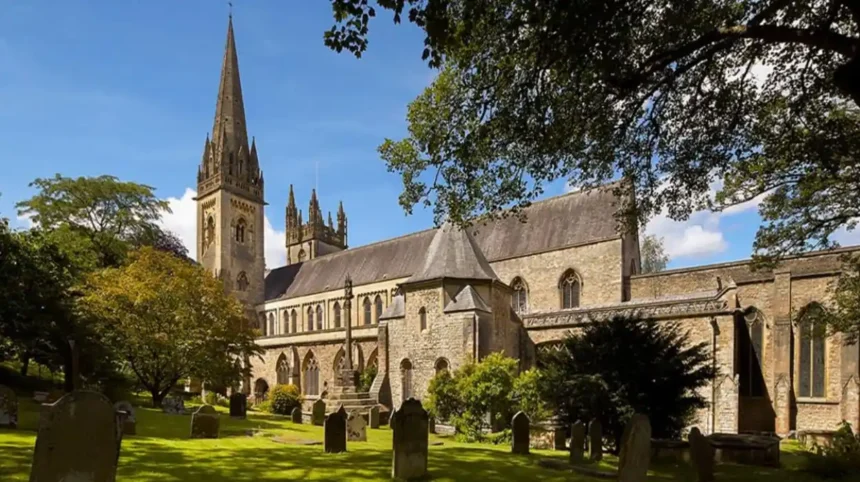
Historic pub culture in Llandaff originated during the early medieval period as hospitality establishments served pilgrims, clergy, and merchants visiting Llandaff Cathedral. These early alehouses expanded alongside market charters granted in 1205, establishing permanent commercial drinking venues along central routes.
- Early Medieval Pilgrimage Routes and Hospitium Foundations
- The Transition to Commercial Coaching Inns in the Eighteenth Century
- Which historic pubs operate in Llandaff today?
- The Maltsters: History and Structural Evolution
- The Black Lion: Heritage and Architectural Features
- The Heathcock: Bridge Street Settlement and Culinary Adaptation
- How did trade routes and Llandaff Cathedral influence local public house development?
- The Economic Impact of Llandaff Cathedral Administration
- Transport Infrastructure along the River Taff Corridor
- What architectural characteristics define Llandaff historic pub buildings?
- Structural Materials and Vernacular Masonry Techniques
- Interior Layouts and Victorian Commercial Modifications
- How do Llandaff historic pubs contribute to the local economy and community structure?
- What conservation regulations protect historic pub structures in Llandaff?
Early Medieval Pilgrimage Routes and Hospitium Foundations
Llandaff is a historic cathedral city located within the northern boundaries of Cardiff, Wales. Llandaff Cathedral was founded in 1120 by Bishop Urban on a site dedicated to Saint Teilo in the sixth century. The establishment of the cathedral created a continuous stream of religious pilgrims, visiting clergy, and legal litigants traveling to the ecclesiastical court.
Early hospitality infrastructure consisted of church-managed hospitiums and private domestic alehouses. The Assize of Ale in 1267 regulated the price, quality, and measurement of bread and ale across the Kingdom of England and Wales. Local brewing occurred on private domestic premises. Brewing transformed from a domestic household chore into a regulated commercial trade as foot traffic along the River Taff increased. King John granted Llandaff its formal market charter in 1205. The market charter authorized an annual fair and weekly markets on the High Street, which generated demand for permanent licensed drinking establishments.
The Transition to Commercial Coaching Inns in the Eighteenth Century
The passage of Turnpike Acts in 1767 altered the transportation network of Glamorgan. Turnpike roads connected the agricultural areas of the Vale of Glamorgan to the industrializing valleys in Merthyr Tydfil, with Llandaff acting as a pivotal crossing point over the River Taff.
Domestic alehouses adapted to accommodate horse-drawn coaches, livestock drovers, and commercial traders. Coaching inns provided 3 primary services, including overnight guest lodging, horse stabling, and secure cargo storage. Pub owners expanded their physical footprints during this period, constructing rear stables, maltings, and carriage arches. Public houses functioned as civic venues where parish assemblies met, land auctions occurred, and local magistrates held coroner’s inquests. By 1800, Llandaff contained several established public houses positioned along Cardiff Road, High Street, and Bridge Street.
Which historic pubs operate in Llandaff today?
Three primary historic public houses operate in Llandaff: The Maltsters, The Black Lion, and The Heathcock. These venues reside within the Llandaff Conservation Area, occupying buildings constructed or substantially rebuilt between the seventeenth century and the late nineteenth century period.
The Maltsters: History and Structural Evolution
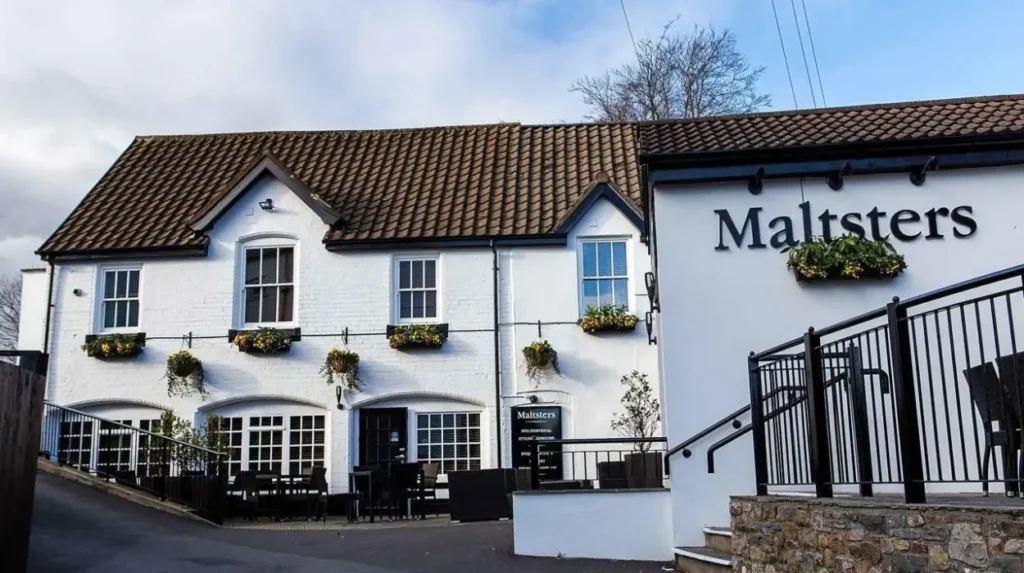
The Maltsters occupies a prominent site at 42 Cardiff Road, Llandaff, Cardiff CF5 2DZ. The establishment takes its name from the historic malting industry that supplied malted barley to Cardiff breweries.
The physical structure of The Maltsters dates to the late nineteenth century, built upon foundations of earlier eighteenth-century hostelry structures. The facade features a 2-story rendered exterior, timber sash windows, and Victorian architectural embellishments. The interior space contains 3 distinct trading areas, including a main service bar, a dining saloon, and a paved outdoor courtyard. The venue operates as a pub and hotel, containing 9 guest bedrooms on the upper levels. The Maltsters represents a continuous line of commercial hospitality on Cardiff Road spanning over 200 years.
The Black Lion: Heritage and Architectural Features
The Black Lion stands at 58 Cardiff Road, Llandaff, Cardiff CF5 2ED. The pub traces its origins to an eighteenth-century inn that served travelers on the main road between Cardiff and Llantrisant.
The building underwent a complete reconstruction in 1899 under the direction of local architects who incorporated Victorian pub design standards. The name references the heraldic black lion present on the coat of arms of local landowning families, including the Mathew family of Llandaff Court. The building design features 3 prominent architectural elements, including a symmetrical painted stone facade, slate roofing, and interior mahogany wood paneling. The Black Lion retains traditional room divisions, maintaining a separate public bar and lounge space.
The Heathcock: Bridge Street Settlement and Culinary Adaptation
The Heathcock is located at 58-60 Bridge Street, Llandaff, Cardiff CF5 2LD. The venue sits at the base of Llandaff Green near the historic crossing of the River Taff.
The pub building was constructed in the early nineteenth century to serve boatmen, quarrymen, and travelers using the 1796 stone bridge. The name refers to the black grouse, historically native to the Glamorgan hills. The structure consists of 2 combined stone cottages featuring whitewashed walls, low-ceilinged bar spaces, and exposed timber ceiling joists. The Heathcock incorporates 3 functional customer zones, including a front taproom, two formal dining rooms, and an elevated rear garden space.
How did trade routes and Llandaff Cathedral influence local public house development?
Trade routes and Llandaff Cathedral directed foot traffic, economic capital, and settlement density into Llandaff, establishing sustained demand for licensed premises. The proximity of episcopal administration and river crossings generated consistent patron volume for local public houses across several centuries.
The Economic Impact of Llandaff Cathedral Administration
Llandaff Cathedral served as the administrative center of the Diocese of Llandaff from 1120 onward. The presence of the Bishop of Llandaff, the cathedral chapter, and ecclesiastical courts drew visiting legal professionals, clerical candidates, and diocesan administrators.
Public houses established themselves along the immediate perimeter of the cathedral precincts to cater to these visitors. Business ledgers from 1851 document 4 licensed victuallers operating within 500 meters of the cathedral gate. The cathedral administration generated secondary demand by hiring stonemasons, carpenters, and glaziers for structural repairs. These tradesmen utilized local public houses as informal labor exchanges and pay stations on weekends.
Transport Infrastructure along the River Taff Corridor
The River Taff formed a natural geographical boundary on the eastern edge of Llandaff. Prior to 1796, travelers crossed the river using a ferry system or shallow ford points during low tide. The completion of the Llandaff Bridge in 1796 created a permanent terrestrial link between Llandaff and northern Cardiff.
Public houses on Bridge Street catered directly to transport workers who operated horse-drawn wagons carrying limestone, iron ore, and timber. The public houses provided 3 logistics solutions, including horse refreshment troughs, secure overnight cart storage, and hot meals for long-distance drivers.
What architectural characteristics define Llandaff historic pub buildings?
Llandaff historic pub buildings feature vernacular Welsh masonry, slate roofing, stone rubble walls, timber-framed sash windows, and symmetrical facades. These structures incorporate nineteenth-century alterations, including decorative tiled interiors, cast-iron fireplace surrounds, and carved mahogany bar counters throughout their main rooms.
Structural Materials and Vernacular Masonry Techniques
Historic pubs in Llandaff utilize construction materials sourced directly from the Glamorgan region. The exterior walls consist of 2 stone types, including Carboniferous limestone from local quarries and Pennant sandstone from the South Wales coalfield.
Wall thickness ranges between 50 centimeters and 75 centimeters, providing natural thermal insulation and structural durability. Exterior surfaces feature either exposed stone rubble with lime mortar pointing or smooth painted hydraulic lime render. The roofs feature Welsh blue slate tiles sourced from North Wales quarries, held in place by hand-split oak battens. Chimney stacks are constructed from red brick or dressed stone, housing multiple flues connected to ground-floor heating fireplaces
Interior Layouts and Victorian Commercial Modifications
Interior spatial layouts changed significantly during the Victorian commercial boom between 1870 and 1900. Public houses transitioned from multi-purpose domestic rooms into specialized commercial drinking environments.
Pub owners introduced structural internal divisions containing 3 specific operational rooms, including the public bar, the saloon lounge, and the bottle and jug department. The public bar featured hard-wearing quarry tile floors, timber bench seating, and plain plaster walls. The saloon lounge featured carpeted floors, padded bench seating, decorative brass light fittings, and etched glass windows. The physical bar counter emerged as a central architectural element, constructed from polished mahogany wood with integrated beer engines, brass hand pumps, and mirror-backed spirit displays.
Explore More Area Guide
Local Florists in Penylan Guide – Penylan 2026
Cardiff’s Oldest Bike Shops Guide – Cardiff 2026
How do Llandaff historic pubs contribute to the local economy and community structure?
Llandaff historic pubs contribute to the local economy through direct employment, supply chain purchasing, and local tourism generation. They function as social infrastructure, hosting civic assemblies, local sports clubs, neighborhood associations, and community fundraising events throughout the entire calendar year.
Direct Economic Output and Employment Generation
Historic public houses function as commercial drivers within the Llandaff retail economy. The venues employ local residents across 4 employment categories, including pub managers, head chefs, kitchen assistants, and front-of-house bar staff.
Public houses support regional agricultural and brewing supply chains by purchasing goods from local suppliers. Pubs source cask ales from independent Welsh craft breweries situated in Glamorgan and Monmouthshire. Food operations source meat, dairy, and vegetables from farm producers in the Vale of Glamorgan. This localized supply chain maintains economic capital within the regional Cardiff economy.
Civic Function and Social Cohesion Mechanisms
Public houses serve as physical meeting places that maintain social infrastructure within suburban residential areas. The venues offer non-exclusive gathering spaces that bridge different demographic groups within the community.
Llandaff public houses accommodate 3 distinct community organizations, including the Llandaff Society history group, local amateur football and rugby clubs, and resident association committees. The venues host regular non-sectarian community gatherings, including pub quizzes, live acoustic musical performances, and charity fundraising auctions. These events strengthen social ties and reduce social isolation among elderly residents in the suburb.
What conservation regulations protect historic pub structures in Llandaff?
Conservation regulations protecting Llandaff historic pub structures derive from the Planning Act 1990 and the Llandaff Conservation Area Designation of 1969. These statutory frameworks enforce strict planning controls on structural alterations and exterior modifications across all designated historical properties here.
Statutory Conservation Area Status and Planning Controls
Cardiff City Council designated Llandaff as a Conservation Area in 1969 under the Civic Amenities Act 1967. The conservation area encompasses the historic core of the city, including Llandaff Green, High Street, Cardiff Road, and Bridge Street.
Conservation area status imposes statutory planning restrictions on all commercial properties. Property owners must obtain Permitted Development Rights approvals and specific planning permission before making alterations to exterior building envelopes. Regulations restrict modifications to 4 exterior building components, including window frames, roof materials, external paint colors, and commercial signage. Plastic UPVC window replacements, synthetic roof tiles, and illuminated neon signage are prohibited within the conservation boundary.
Listed Building Classifications and Preservation Protocols
Individual public house structures hold statutory protection through the Listed Building framework administered by Cadw, the historic environment service of the Welsh Government.
Grade II listing applies to structures deemed nationally important and worthy of special protection. Listed Building Consent is required for both external repairs and internal renovations. Protected internal elements include 3 key structural items, including original fireplaces, timber staircases, and historic wood-paneled bar fixtures.
Unauthorized structural alterations to Grade II listed public houses constitute a criminal offense under the Planning (Listed Buildings and Conservation Areas) Act 1990. Local planning authorities hold power to issue Enforcement Notices requiring property owners to restore illegal modifications back to their original historical state.
What is the history of historic pubs in Llandaff?
Historic pubs in Llandaff developed from early medieval hospitality traditions connected to Llandaff Cathedral, pilgrimage routes, and local markets. Early alehouses provided accommodation and refreshments for pilgrims, clergy, merchants, and travelers. Over time, these establishments evolved into coaching inns and modern public houses serving the local community.