Cardiff’s historic streets preserve the development of the Welsh capital from its early settlement and medieval market town to a major Victorian commercial centre. High Street, St Mary Street, Womanby Street, Working Street and The Hayes reveal different stages of the city’s history through street layouts, historic buildings, shopping arcades and surviving place names.
- What makes a street historic in Cardiff?
- Which streets in Cardiff preserve the city’s medieval history?
- How did High Street develop?
- What is the historical importance of Womanby Street?
- Why is Working Street historically significant?
- Why is St Mary Street one of Cardiff’s most important historic streets?
- What can visitors discover on Castle Street in Cardiff?
- How does The Hayes reflect Cardiff’s commercial history?
- Which Cardiff streets reveal the city’s Victorian shopping heritage?
- What is the significance of Royal Arcade?
- What makes High Street Arcade historically important?
- How does Duke Street Arcade contribute to Cardiff’s heritage?
- How did Cardiff’s coal industry change its historic streets?
- Where can visitors find historic residential streets in Cardiff?
- How does Cardiff protect its historic streets and buildings?
- How can visitors explore Cardiff’s historic streets on foot?
- Why are Cardiff’s historic streets important to future generations?
Historic streets are important because their significance extends beyond individual buildings. Their routes, street names, property boundaries and relationship with Cardiff Castle and the River Taff help explain how the city developed. Cardiff Council recognises the importance of this built heritage through its conservation policies and designated conservation areas.
What makes a street historic in Cardiff?
A historic street in Cardiff is a road or thoroughfare associated with the city’s medieval settlement, commercial expansion, architectural development or cultural heritage. High Street, Womanby Street and St Mary Street illustrate how historic routes continue to shape the modern city centre.
A street does not need to retain its original buildings to qualify as historically significant. Its alignment, name, former use and relationship with archaeological remains can preserve evidence of earlier periods.
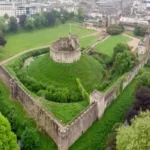
Cardiff’s central streets developed around Cardiff Castle and the River Taff. The castle occupies the site of a Roman fort, while the medieval town grew around its defences, market activity and religious institutions. Successive periods of development introduced new roads, commercial buildings, public spaces and transport connections.
The visible streetscape therefore contains several historical layers. Medieval routes coexist with nineteenth-century shops, Victorian arcades, modern retail buildings and contemporary public spaces.
Cardiff’s historic street network also reflects the city’s changing economic role. The settlement developed into a regional market town before becoming a major industrial and coal-exporting centre during the nineteenth century. This transformation increased demand for shops, markets, offices, hotels and transport infrastructure.
Understanding historic Cardiff requires attention to both the age of individual buildings and the historical development of the streets themselves.
Which streets in Cardiff preserve the city’s medieval history?
High Street, Womanby Street, Working Street, St John Street and St Mary Street are important routes for understanding medieval Cardiff. Their names, alignments and connections with Cardiff Castle provide evidence of the town’s early urban structure and subsequent expansion.
Medieval Cardiff developed around the castle and its surrounding settlement. The town expanded in stages, creating streets that served residents, traders, religious institutions and visitors entering through its gates.
Museum Wales explains that the early medieval settlement included a relatively small enclosure associated with Womanby Street and Working Street. Cardiff subsequently expanded southwards, with the River Taff providing a natural boundary along the western side of the town.
These streets remain useful for interpreting the historic centre, although modern buildings and road layouts differ from those of the medieval period.
How did High Street develop?
High Street forms part of the principal historic route beside Cardiff Castle. Its alignment is associated with the earlier Roman settlement rather than solely with the later medieval town. The street subsequently became a central part of Cardiff’s commercial and civic life.
Today, High Street connects the castle area with the city centre’s shopping district. Its surroundings include historic commercial frontages and access to High Street Arcade, which opened in 1885.
The street demonstrates how an old urban route can retain its importance while its buildings, businesses and transport arrangements change.
What is the historical importance of Womanby Street?
Womanby Street is one of Cardiff’s notable medieval streets. Its name appears in historical discussions of the early town enclosure, and its relationship with Working Street helps researchers interpret the settlement’s development.
The street also belongs to the modern cultural geography of central Cardiff. Its established music and entertainment venues give it a contemporary role alongside its historical significance.
Womanby Street illustrates how historic urban spaces continue to serve new purposes without losing their connection to the city’s past.
Why is Working Street historically significant?
Working Street is associated with the early enclosure of medieval Cardiff. Together with Womanby Street, it helps indicate the scale and arrangement of an earlier settlement near the castle.
The street forms part of a wider network rather than an isolated historical attraction. Reading it alongside High Street, St John Street and nearby historic routes provides a clearer understanding of Cardiff’s medieval townscape.
Its significance lies in the evidence it contributes to the historical layout of the city.
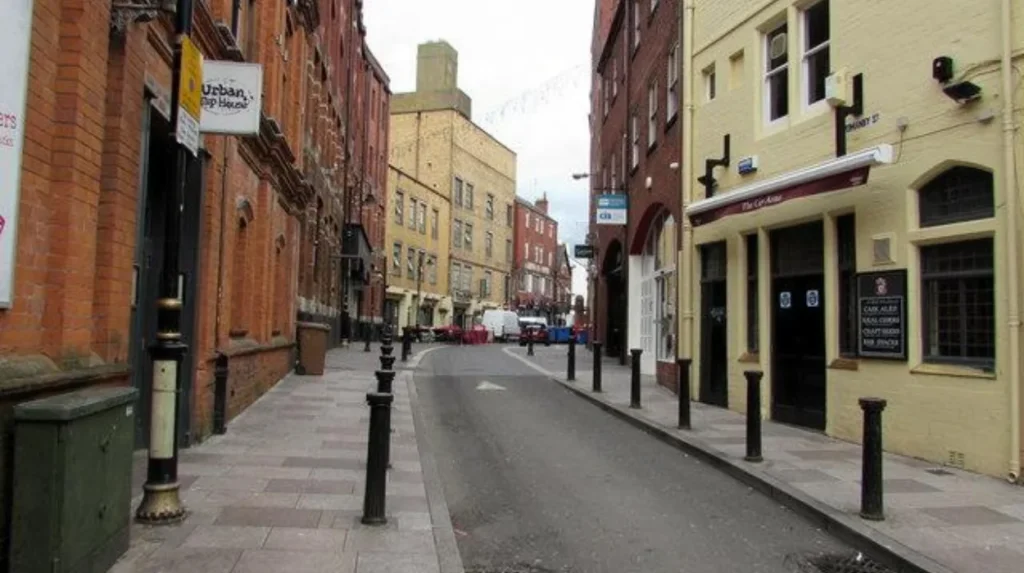
Why is St Mary Street one of Cardiff’s most important historic streets?
St Mary Street is a major historic thoroughfare connecting Cardiff’s medieval urban centre with its southern commercial district. Named after the former St Mary’s Church, the street preserves the memory of Cardiff’s religious history and its development into a Victorian shopping and civic centre.
St Mary Street occupies an important position in Cardiff’s historical geography. The medieval town extended south from the castle, and St Mary’s Church stood near the southern end of the settlement. The church was damaged by flooding associated with the changing course of the River Taff and was abandoned during the seventeenth century. The church disappeared, but its name survived in the street.
During the nineteenth century, St Mary Street became an important location for retail businesses, hotels and civic activity. Cardiff’s expansion created demand for larger commercial premises, while improved transport connections supported the growth of the city centre.
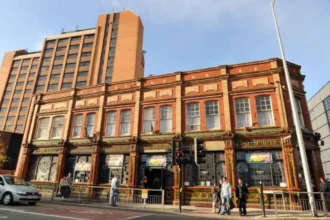
Historic buildings and commercial frontages reflect this period of development. The Cardiff Council conservation appraisal documents the changing character of St Mary Street, including the former town hall, established department stores, the Central Market and Victorian shopping arcades.
The street’s importance also comes from its connection with neighbouring historic routes. High Street leads north towards Cardiff Castle, while nearby Church Street and Quay Street belong to the historic network around the medieval centre.
St Mary Street remains a functioning urban thoroughfare. Its current commercial role continues a long tradition of shopping, hospitality and public activity.
What can visitors discover on Castle Street in Cardiff?
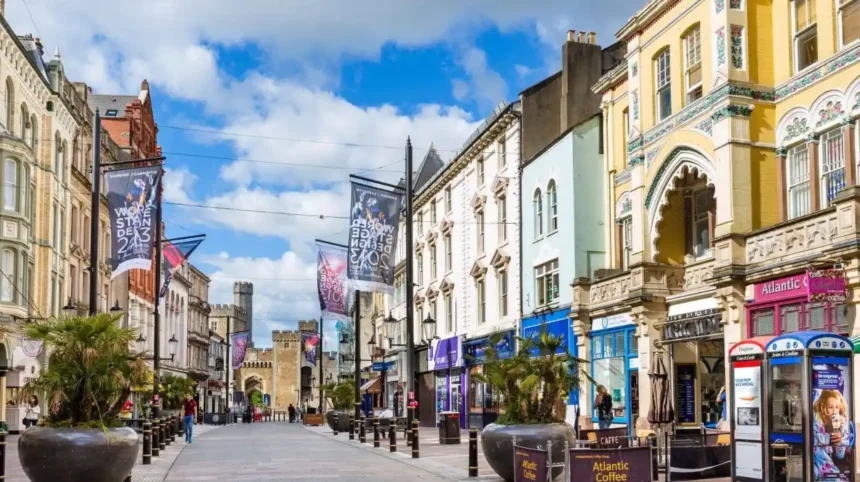
Castle Street is a central Cardiff thoroughfare beside Cardiff Castle, connecting the historic castle area with the wider city centre. Its location provides a starting point for exploring medieval urban history, nineteenth-century commercial development and the historic shopping arcades surrounding the castle.
Castle Street is closely associated with Cardiff’s most recognisable historic landmark, Cardiff Castle. The site contains evidence of Roman occupation, Norman fortifications and later architectural development. The castle therefore provides important context for understanding the streets that grew around it.
The street also connects with commercial routes and shopping arcades. Castle Arcade and Duke Street Arcade are accessible from the Castle Street and High Street area, linking the main streets with covered pedestrian shopping passages.
Castle Street is particularly useful for visitors interested in the relationship between heritage and modern city life. Historic landmarks stand alongside shops, hospitality businesses and contemporary transport infrastructure.
Although the street’s appearance has changed over time, its position beside the castle preserves a strong connection with Cardiff’s historic core.
Visitors can use Castle Street as a starting point before continuing along High Street, exploring the arcades or walking towards St Mary Street.
How does The Hayes reflect Cardiff’s commercial history?
The Hayes is a historic central Cardiff street and public-space area associated with markets, retail development and the city’s changing commercial identity. Its surroundings connect Cardiff’s traditional trading history with the Victorian and Edwardian architecture, shopping arcades and modern public spaces of the city centre.
The Hayes developed through gradual changes in land use rather than as a single planned historic street. Cardiff Council’s St Mary Street conservation appraisal identifies the area as an important part of the city’s historical commercial geography. It records that The Hayes was associated with open-air markets and street traders, while Mill Lane also served a similar role during the late nineteenth century.
The surrounding district reflects Cardiff’s expansion during the nineteenth and early twentieth centuries. Department stores, commercial buildings and covered shopping arcades created a more developed retail environment.
The Hayes now forms part of a modern public and shopping district. Its relationship with nearby historic streets allows visitors to explore different stages of Cardiff’s commercial development within a relatively compact area.
The historical importance of the area rests on continuity of use. Market activity, independent retail, large commercial premises and public-space redevelopment all represent different responses to the changing needs of Cardiff’s population.
Which Cardiff streets reveal the city’s Victorian shopping heritage?
High Street, St Mary Street, Duke Street and the surrounding arcade connections reveal Cardiff’s Victorian and Edwardian shopping heritage. Their commercial frontages and covered passages demonstrate how nineteenth-century population growth transformed the city centre into a major regional retail destination.
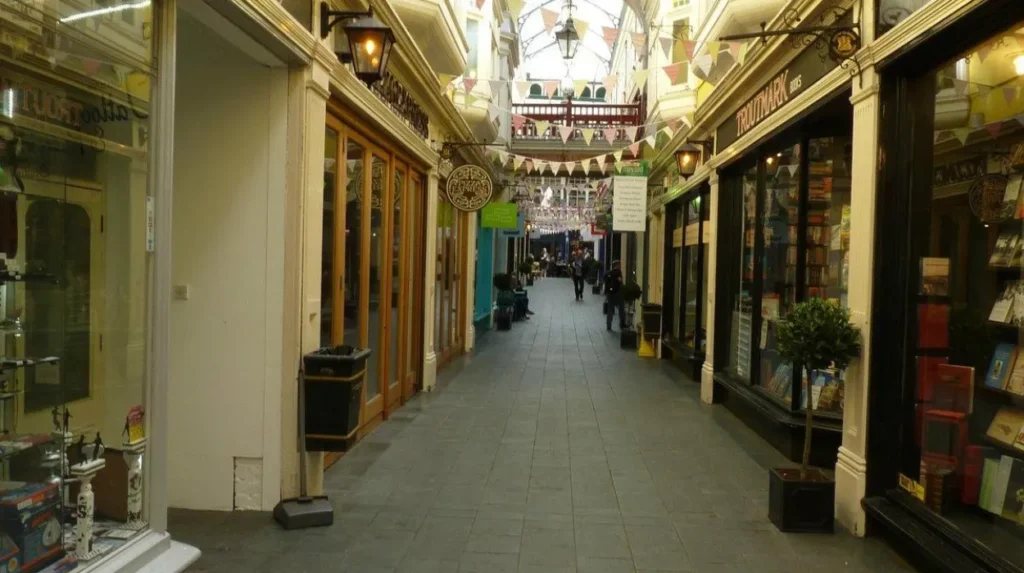
Cardiff’s shopping heritage is closely connected with the development of its Victorian arcades. These covered passages created pedestrian routes between principal streets and provided space for specialist retailers, small businesses and commercial services.
The arcades also demonstrate how architecture influenced the organisation of urban commerce. Instead of placing every shop directly on a main road, developers created interconnected passages that expanded the available retail frontage.
What is the significance of Royal Arcade?
Royal Arcade is widely recognised as Cardiff’s oldest surviving shopping arcade. It opened in 1858 and connects St Mary Street with The Hayes. Its historical importance lies in its early role in the development of Cardiff’s covered retail network.
The arcade’s entrance architecture and relationship with neighbouring commercial buildings contribute to the historic character of the surrounding streets.
What makes High Street Arcade historically important?
High Street Arcade opened in 1885 and links High Street with St John Street. Its continued use for independent retail demonstrates how historic commercial buildings adapt to changing shopping habits.
The arcade provides a practical example of continuity in urban design. Its covered passage retains a nineteenth-century commercial function while accommodating contemporary businesses.
How does Duke Street Arcade contribute to Cardiff’s heritage?
Duke Street Arcade was completed in 1902 and retains architectural details associated with its original design. Its curved passageway connects with High Street Arcade, creating a link between two historic shopping routes.
Together, these arcades demonstrate that Cardiff’s commercial heritage consists of a connected network of streets and passages rather than a collection of isolated buildings.
How did Cardiff’s coal industry change its historic streets?
Cardiff’s nineteenth-century coal-exporting expansion transformed its urban streets through population growth, commercial construction, transport improvements and investment in public buildings. Historic central routes increasingly served department stores, hotels, offices and markets as the city developed into a major industrial port.
Cardiff’s industrial growth accelerated during the nineteenth century, when the South Wales coalfield became an important source of fuel for domestic and international markets. Cardiff’s docks connected inland coal-producing areas with maritime trade.
This economic expansion increased demand for housing, retail premises, offices and public services. Historic streets in the centre responded through redevelopment and the construction of larger commercial buildings.
Cardiff Council’s conservation appraisal identifies the expansion of railways during the late nineteenth century as a factor in the development of large premises, including hotels and theatres around St Mary Street.
The effects extended beyond individual buildings. Increased commercial activity changed pedestrian movement, the use of public spaces and the relationship between retail streets and transport connections.
Historic streets consequently preserve evidence of the transition from a comparatively small medieval town to an expanding industrial city. Their present layouts and buildings reflect successive periods of investment rather than one consistent architectural period.
The same streets now support retail, tourism, hospitality and everyday travel. Their continued use connects Cardiff’s industrial history with its modern service economy.
Where can visitors find historic residential streets in Cardiff?
Historic residential streets in Cardiff include areas around Cathedral Road, Llandaff and selected conservation areas in Roath and other established neighbourhoods. These locations preserve architectural character through traditional buildings, historic street layouts, mature landscapes and the relationship between residential development and public spaces.
Cardiff’s residential heritage extends beyond the medieval city centre. During the nineteenth and twentieth centuries, urban expansion created new neighbourhoods with terraces, villas, larger houses and planned residential developments.
Cathedral Road is recognised within Cardiff’s conservation framework. Its architectural setting contributes to the historic character of the Riverside area. Llandaff also has a designated conservation area associated with its long-established settlement and religious heritage.
Other examples include Oakfield Street, Tredegarville and Rhiwbina Garden Village. These locations demonstrate different approaches to residential planning and architectural design across Cardiff’s development.
Residential streets provide evidence of social and economic change. Building size, materials, property boundaries and street arrangements help explain how different parts of the city developed to accommodate changing populations.
These streets are primarily lived-in neighbourhoods rather than museums. Their historical character depends on the relationship between buildings, streets, gardens and the surrounding urban environment.
How does Cardiff protect its historic streets and buildings?
Cardiff protects historic streets through conservation-area designation, listed-building controls, planning policies and heritage assessments. These measures help preserve architectural character, historic layouts and important buildings while allowing appropriate changes that support the city’s continued development.
Cardiff Council identifies 27 conservation areas within the city. These areas are designated because of their special architectural or historic interest. The council also records around 1,000 listed buildings and approximately 300 locally listed buildings.
These figures demonstrate the scale of the city’s heritage responsibilities. Protection applies to more than individual landmarks: the wider setting, building relationships and character of streets can also contribute to historical significance.
What is a conservation area?
A conservation area is a defined location recognised for its special architectural or historic interest. Cadw, the Welsh Government’s historic environment service, explains that its character can include settlement patterns, street networks, building plots, construction materials and architectural details.
This approach is particularly relevant to Cardiff’s historic streets. Preserving a street’s identity involves maintaining relationships between buildings and public spaces, not simply retaining one prominent façade.
What is a listed building?
A listed building is a structure formally recognised for its special architectural or historic interest. Cadw administers listed-building designations in Wales, and alterations affecting a listed building’s special character require the appropriate consent.
These controls help manage redevelopment and prevent inappropriate changes to historically significant structures.
Conservation does not prevent all development. It establishes a framework for assessing how proposed changes affect heritage value, with the aim of balancing preservation and the needs of a functioning modern city.
Explore More Area Guide
The Oldest Buildings in Cardiff: Historic Landmarks and Their Stories
Hidden Historical Places in Cardiff: 10 Heritage Gems
How can visitors explore Cardiff’s historic streets on foot?
Visitors can explore Cardiff’s historic streets through a central walking route linking Cardiff Castle, High Street, Womanby Street, St John Street, St Mary Street and The Hayes. This route combines medieval urban history, Victorian commercial architecture, historic arcades and modern public spaces.
The city centre’s compact layout makes walking an effective way to understand its historical development. Visitors can examine street alignments, compare architectural periods and identify connections between the castle, former religious sites and commercial districts.
A practical walking itinerary follows the historic centre in stages.
Begin at Cardiff Castle to understand the Roman and Norman history associated with the site. Continue along High Street and explore the nearby High Street Arcade. Walk towards Womanby Street and Working Street to examine routes associated with medieval Cardiff.
Proceed through the central commercial area towards St Mary Street. From there, explore the historic shopping passages, including Royal Arcade and nearby connections leading towards The Hayes.
Finish around The Hayes to examine the relationship between historic commercial development and modern public space.
The route is suitable for visitors interested in architecture, urban history, shopping heritage and photography. Walking conditions, pedestrian access and opening arrangements vary by location, so visitors should check current access information before travelling.
Why are Cardiff’s historic streets important to future generations?
Cardiff’s historic streets preserve evidence of the city’s settlement, trade, religion, industrial growth and architectural development. Their conservation supports cultural identity, historical research, tourism and local economic activity while ensuring that future generations can understand how the Welsh capital evolved.
Historic streets connect physical places with documented events and changes in everyday life. Street names preserve references to former religious buildings, while surviving routes help historians interpret the growth of medieval Cardiff.
Commercial streets provide evidence of changing shopping patterns and economic activity. Residential streets reveal how urban expansion shaped neighbourhoods and living conditions. Conservation areas preserve the wider settings that give these places their historical significance.
Heritage also contributes to Cardiff’s visitor economy. Cardiff Castle, historic arcades and the city’s established central streets provide connected destinations for people exploring the capital.
Future conservation depends on accurate historical records, appropriate building maintenance and careful planning. Climate pressures, changes in retail, redevelopment and the adaptation of older buildings all influence how historic streets are managed.
Cardiff Council’s conservation framework provides a foundation for protecting designated areas and important buildings. Cadw’s guidance also explains why the historic environment must be considered as a combination of buildings, routes, spaces and wider settlement patterns.
The continuing use of these streets is central to their significance. Cardiff’s historic streets remain part of an active city, connecting its medieval origins and industrial expansion with modern businesses, public spaces and daily life.
Historic streets in Cardiff offer a direct way to understand the city’s development across different periods. High Street, Womanby Street and Working Street preserve connections with the medieval settlement, while St Mary Street and The Hayes reveal the growth of commercial and civic activity.
Castle Street connects visitors with Cardiff Castle, and the Victorian arcades preserve important elements of the city’s retail history. Residential conservation areas extend this story beyond the centre into established neighbourhoods.
Together, these streets demonstrate that Cardiff’s heritage exists in its complete urban landscape, including street patterns, buildings, commercial passages and surviving place names. Protecting these features keeps the city’s history accessible while allowing Cardiff to remain a living and evolving capital.
What are the most historic streets in Cardiff?
Some of Cardiff’s most historic streets include High Street, Womanby Street, Working Street, St Mary Street and Castle Street. These streets preserve connections with the city’s medieval settlement, Cardiff Castle and its later commercial development.