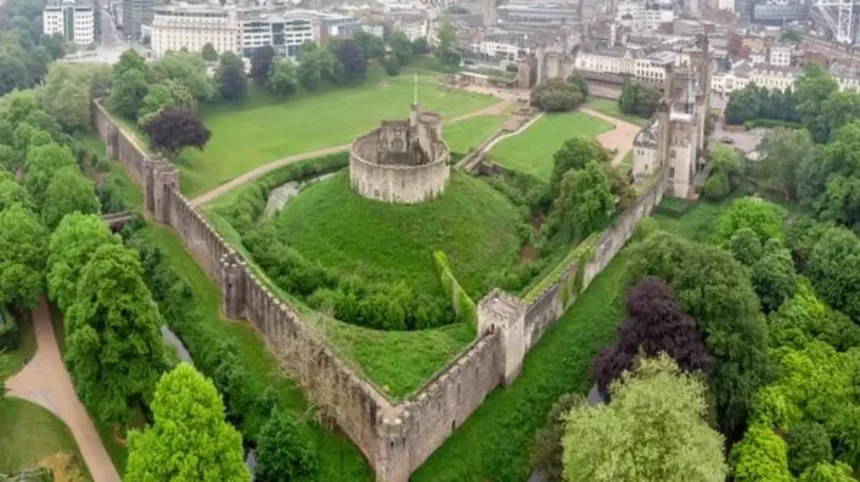
Cardiff’s oldest buildings reveal the city’s development from a medieval settlement into the capital of Wales. Cardiff Castle, St John the Baptist Church, St Fagans Castle, and Llandaff Cathedral preserve different stages of Welsh history. Their surviving walls, towers, chapels, and architectural features document centuries of religious life, Norman conquest, medieval trade, and aristocratic power.
- What Are the Oldest Buildings in Cardiff?
- Why Does Cardiff Have Buildings Dating Back to the Roman and Medieval Periods?
- How Old Is Cardiff Castle and What Remains From Its Earliest Period?
- What is the Roman history of Cardiff Castle?
- When was Cardiff Castle built by the Normans?
- Why does Cardiff Castle look different from other medieval castles?
- Is St John the Baptist Church the Oldest Surviving Church in Cardiff City Centre?
- How far back does St John the Baptist Church date?
- What architectural features make the church historically important?
- Why did St John the Baptist Church become important to Cardiff?
- How Old Is Llandaff Cathedral in Cardiff?
- What is the connection between Llandaff Cathedral and the sixth century?
- When was the present Llandaff Cathedral constructed?
- What should visitors look for inside Llandaff Cathedral?
- What Is the History of the Bishop’s Palace in Llandaff?
- Is St Fagans Castle One of Cardiff’s Oldest Historic Buildings?
- How Can Historians Determine the Age of Cardiff’s Oldest Buildings?
- What role do historical records play?
- How does archaeology reveal earlier structures?
- Why do restoration records matter?
- Where Can Visitors See Cardiff’s Oldest Buildings?
- Which historic buildings are easiest to visit in central Cardiff?
- How can visitors explore historic Llandaff?
- Why Are Cardiff’s Oldest Buildings Important to the City’s Future?
- Which Cardiff Buildings Should Be Included in a Historic Architecture Guide?
Understanding the oldest buildings in Cardiff requires distinguishing between a building’s original foundation, its surviving medieval fabric, and later architectural alterations. Some landmarks occupy sites used for centuries, while others retain substantial sections of their original structures despite reconstruction and restoration.
This guide examines Cardiff’s oldest surviving historic buildings, their dates, architectural features, historical importance, and accessibility to visitors. It also explains how historians establish building ages and why Cardiff’s medieval heritage remains important to the city today.
What Are the Oldest Buildings in Cardiff?
The oldest buildings in Cardiff include Cardiff Castle, whose origins reach back to Roman fortifications, St John the Baptist Church, which retains medieval fabric, Llandaff Cathedral, and St Fagans Castle. Their ages depend on whether the original foundations, surviving walls, or completed structures are considered.
Cardiff developed around a strategic crossing of the River Taff and a defensible settlement close to the Bristol Channel. Roman military occupation established an early presence in the area, while Norman rule introduced a new phase of castle building and urban development after the late eleventh-century conquest of Glamorgan.
The city’s oldest surviving buildings represent different purposes. Castles protected territory and demonstrated political authority. Churches served growing communities and preserved religious traditions. Historic houses recorded the wealth and influence of landowning families.
Not every ancient site contains an ancient building. Archaeological remains beneath a modern structure do not automatically make the present building Roman or medieval. Historians therefore distinguish between an original site, surviving historic fabric, and later rebuilding.
Cardiff’s historic landmarks also differ in their accessibility. Some are established visitor attractions, while others operate as active places of worship or have restricted areas. Checking official visitor information before travelling helps visitors plan a heritage itinerary.
Why Does Cardiff Have Buildings Dating Back to the Roman and Medieval Periods?
Cardiff’s oldest buildings survive because the settlement occupied a strategically important location, developed under Norman control, and became a centre of religious and commercial activity. Later restoration, continued worship, and heritage protection preserved important structures through centuries of urban expansion.
Roman forces established a fort at Cardiff during the first century AD, although the precise chronology of the earliest occupation and successive fortifications requires archaeological interpretation. The Roman fort occupied a strategic position beside the River Taff, close to routes connecting settlements across southern Wales.
After Roman administration ended in Britain, Cardiff developed through successive early medieval and Norman phases. The Norman conquest of Glamorgan in the late eleventh century transformed the settlement’s political and defensive landscape. Cardiff Castle became a major centre of authority, while the surrounding town expanded around its fortified core.
Religious institutions also supported the survival of historic buildings. Parish churches provided continuous community functions, and Llandaff became an important ecclesiastical centre. Buildings that remained in use received repairs and alterations rather than disappearing entirely.
Cardiff’s later industrial growth created additional pressures. The expansion of coal exports, docks, railways, and housing transformed the city during the nineteenth century. Some older buildings disappeared, but others survived because of their religious importance, ownership, architectural value, or later conservation.
Today, historic buildings provide physical evidence of these changes. Their masonry, architectural styles, inscriptions, and documented repairs help researchers reconstruct Cardiff’s development across different periods.
How Old Is Cardiff Castle and What Remains From Its Earliest Period?
Cardiff Castle occupies a site fortified by Roman forces from around AD 50. Successive Roman forts, a Norman castle established after the conquest, medieval stone defences, and Victorian interiors make it one of Cardiff’s most historically layered buildings.
Cardiff Castle stands in the city centre and provides the clearest example of the city’s long architectural history. Its importance comes from the different structures occupying the same site rather than from a single construction date.
What is the Roman history of Cardiff Castle?
The Romans established a fort at Cardiff around AD 50. Archaeological evidence indicates that successive forts occupied the site, with the final Roman fort featuring substantial stone defences. The location helped Roman forces control movement along the River Taff and routes through southern Wales.
Cadw, the Welsh government’s historic environment service, identifies the Roman remains within the castle grounds as evidence of this military occupation. Parts of the Roman wall survive within the later castle complex, although the original fort no longer stands as a complete building.
These remains are important because they establish Cardiff’s earliest substantial known fortified architecture. They do not mean that the entire present castle dates from Roman times.
When was Cardiff Castle built by the Normans?
After the Norman conquest of Glamorgan, a timber motte-and-bailey castle was established on the site around the late eleventh century. A motte-and-bailey castle consisted of a raised defensive mound and an enclosed courtyard. Later stone construction strengthened the complex.
The surviving Norman keep is a central feature of the castle. Its elevated position and defensive layout demonstrate the military priorities of the medieval period. The surrounding walls also preserve traces of earlier phases of construction.
Why does Cardiff Castle look different from other medieval castles?
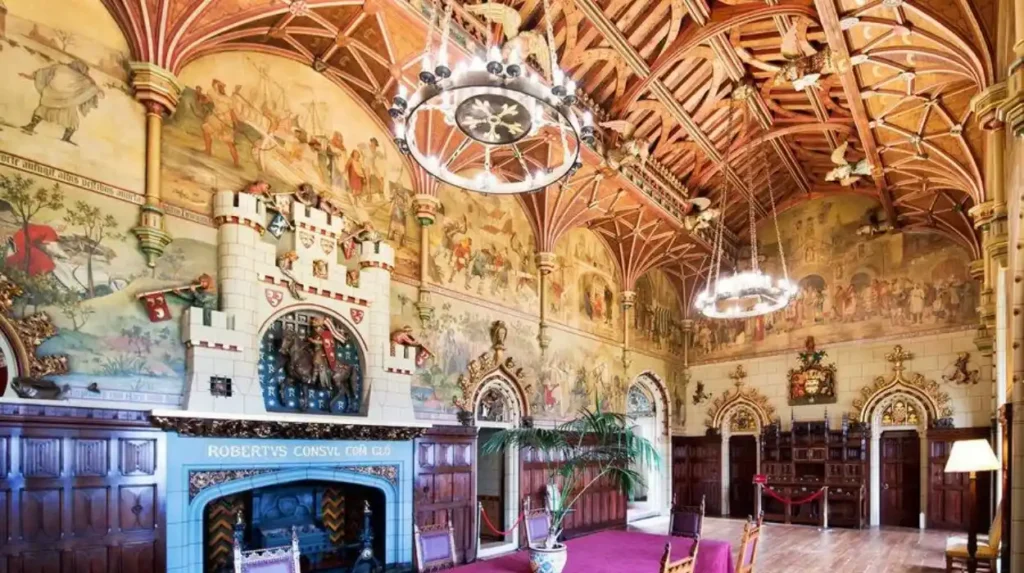
Much of Cardiff Castle’s present appearance reflects substantial alterations undertaken during the nineteenth century. The Bute family, particularly the third Marquess of Bute, commissioned major improvements, with architect William Burges responsible for elaborate interiors and decorative designs.
The result combines medieval fortifications with Gothic Revival architecture. Gothic Revival was a nineteenth-century movement that reintroduced forms associated with medieval churches and castles. Cardiff Castle’s richly decorated rooms therefore belong to a different historical period from its Roman walls and Norman keep.
The castle also served as an air-raid shelter during the Second World War. Its walls contained tunnels used by residents and workers during bombing raids. In 1947, the castle and its remaining parklands were given to the people of Cardiff by the fifth Marquess of Bute’s estate.
Cardiff Castle demonstrates why the oldest building in a city is not always a structure from one specific century. Archaeology, medieval architecture, Victorian restoration, and twentieth-century wartime adaptations all contribute to its identity.
Is St John the Baptist Church the Oldest Surviving Church in Cardiff City Centre?
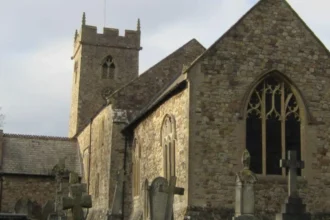
St John the Baptist Church is one of Cardiff city centre’s oldest surviving buildings. Documentary evidence records its existence in 1173, while its earliest surviving architectural fabric dates from the thirteenth century. Later medieval rebuilding and Victorian restoration shaped its present appearance.
Located on St John Street in Cardiff’s historic commercial centre, St John the Baptist Church remains an active place of Christian worship. Its history is closely connected to the growth of medieval Cardiff and the development of the surrounding town.
How far back does St John the Baptist Church date?
The Glamorgan-Gwent Archaeological Trust’s historic environment record states that the church existed by 1173. This written evidence establishes a firm historical reference point, although it does not prove that every part of the present building dates from the twelfth century.
The earliest surviving parts of the church date from the thirteenth century. Other medieval features reflect later phases of construction, including work in the Perpendicular Gothic style. Perpendicular Gothic is an English architectural style characterised by strong vertical lines, large windows, and elaborate stone tracery.
The church underwent major Victorian restoration and enlargement in 1852, 1880, and 1889. These changes helped preserve the building while altering parts of its appearance.
What architectural features make the church historically important?
The church’s tall tower is one of its most recognisable features. Its medieval structure, stonework, internal arches, and historic furnishings provide evidence of the development of ecclesiastical architecture in Cardiff.
Inside, visitors can examine memorials and stained glass that reflect different periods of the church’s history. The building’s architectural layers show how medieval parish churches evolved through repairs, enlargement, and changing religious practices.
The church’s continued use is also significant. Unlike a ruined medieval monument, St John the Baptist Church remains part of the city’s living religious and community life.
Why did St John the Baptist Church become important to Cardiff?
The church’s importance increased after the destruction of the medieval parish church of St Mary, which was damaged by river erosion and subsequently disappeared. The severe flooding of 1607 is also associated with the loss of St Mary’s as a functioning parish church.
St John the Baptist consequently became Cardiff’s principal parish church. Its location in the commercial centre connected religious life with the town’s markets, streets, and civic activity.
Today, the church offers a direct connection to medieval Cardiff. Its documented history, surviving fabric, and continuing use make it a key landmark for understanding the city’s earliest urban architecture.
How Old Is Llandaff Cathedral in Cardiff?
Llandaff Cathedral stands on a Christian religious site associated with the sixth century, while the present cathedral originated around 1120 under Bishop Urban. Medieval extensions, nineteenth-century restoration, wartime bombing, and twentieth-century rebuilding created the building visible today.
Llandaff Cathedral stands in the historic village of Llandaff, now part of Cardiff. It is one of Wales’s most important religious buildings and occupies a site with a long history of Christian worship.
What is the connection between Llandaff Cathedral and the sixth century?
According to the cathedral’s historical account, Christian activity at Llandaff dates to at least the sixth century. Early religious traditions associate the site with St Dyfrig, also known as Dubricius, and St Teilo, figures central to the development of early Welsh Christianity.
The original early medieval church does not survive as an intact building. However, early Christian memorials and the remains of a cross provide evidence of religious activity before the Norman period.
This distinction is important when determining the cathedral’s age. The religious site is much older than the majority of the surviving architectural structure.
When was the present Llandaff Cathedral constructed?
Bishop Urban initiated the construction of a larger cathedral around 1120, during the Norman period. The building developed over subsequent centuries as later bishops extended and modified the structure.
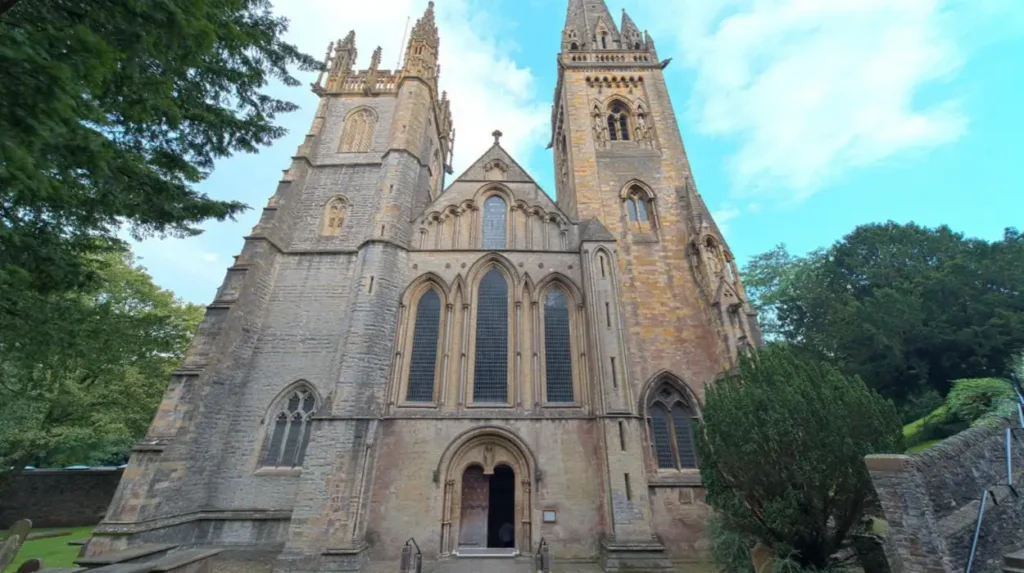
The cathedral retains important medieval features, including elements of the Norman sanctuary arch and historic doorways. Its medieval west front and other architectural details reflect changes in building techniques and religious design during the twelfth and thirteenth centuries.
The cathedral also suffered periods of decline and extensive restoration. Work in the nineteenth century altered important parts of the building, while a German landmine severely damaged it in 1941. Post-war restoration, led by architect George Pace, integrated surviving historic fabric with modern architectural elements.
What should visitors look for inside Llandaff Cathedral?
One of the best-known features is Christ in Majesty, a large sculpture by Jacob Epstein installed in 1957. The modern artwork contrasts with the cathedral’s medieval stonework and illustrates how historic religious buildings continue to incorporate new artistic work.
Visitors can also examine the historic west front, stone arches, chapels, memorials, and the cathedral’s relationship with Cathedral Green. The surrounding conservation area preserves the character of historic Llandaff, including streets and buildings associated with the former ecclesiastical settlement.
Llandaff Cathedral is both a historic monument and an active place of worship. Its continuing religious function helps maintain the site’s connection with the community, while its architecture documents nearly nine centuries of construction in the present cathedral building.
What Is the History of the Bishop’s Palace in Llandaff?
The Bishop’s Palace in Llandaff is a medieval fortified residence associated with the bishops of Llandaff. Its origins are linked to the thirteenth century, and surviving gatehouse remains document the religious authority, defensive architecture, and political importance of medieval Cardiff’s surrounding settlements.
The Bishop’s Palace stands close to Llandaff Cathedral and Cathedral Green. Unlike Cardiff Castle, which developed as a major military stronghold, the palace served as a residence for senior church officials.
When was the Bishop’s Palace built?
The palace is associated with Bishop William de Braose, who became Bishop of Llandaff in 1266. The original complex developed as a fortified residence, combining accommodation with defensive features.
Its location reflected Llandaff’s status as a religious centre. The bishops exercised ecclesiastical authority and held significant land and property, making a substantial residence an expression of their position.
The palace was damaged during the rebellion led by Owain Glyndŵr in 1402–1405. The Welsh uprising challenged English rule in Wales and affected settlements and fortified buildings across the region. The bishops subsequently preferred a more secure residence elsewhere.
The palace remained standing for a period after its abandonment, but it was probably destroyed during the English Civil War in the seventeenth century. The substantial remains now visible are primarily associated with the gatehouse.
What remains of the medieval palace today?
Visitors can see the surviving stone gatehouse and parts of the medieval enclosure. These ruins provide evidence of the site’s original scale and defensive character, although they do not represent the complete palace.
The surrounding grounds now form an ornamental public landscape. The combination of cathedral, historic green, and ruined palace makes Llandaff particularly important for understanding the relationship between religious institutions and medieval settlement.
The Bishop’s Palace also demonstrates that historic buildings do not need complete roofs or intact interiors to remain valuable historical evidence. Surviving masonry, archaeological context, and documentary records help researchers interpret the site’s former functions.
Is St Fagans Castle One of Cardiff’s Oldest Historic Buildings?
St Fagans Castle is an Elizabethan manor house dating from the sixteenth century, rather than a surviving Roman or early medieval structure. Its historic architecture and landscaped grounds now form part of St Fagans National Museum of History, a major Welsh heritage attraction.
St Fagans Castle stands within the grounds of St Fagans National Museum of History, west of Cardiff city centre. Its architecture represents a later phase of Welsh history, when wealthy landowners built substantial domestic residences rather than primarily defensive fortifications.
When was St Fagans Castle built?
The house was constructed during the Elizabethan period, in the late sixteenth century, and existed before 1596. Its multi-gabled exterior reflects the architectural character of a substantial country house from this period.
The building’s history differs from that of Cardiff Castle. Its primary purpose was residential, reflecting the wealth, status, and domestic requirements of its owners.
St Fagans Castle is particularly useful for understanding the transition from medieval fortified residences to more comfortable manor houses. Although older castles continued to be used and modified, elite domestic architecture increasingly incorporated features designed for everyday living and display.
Why is St Fagans important to Welsh architectural history?
The castle forms part of a wider museum landscape dedicated to Welsh history, culture, and everyday life. The museum preserves historic buildings, traditional crafts, and examples of domestic architecture from different periods.
This wider context helps visitors compare the castle with buildings representing later changes in housing, agriculture, industry, and community life. The site is not the oldest building in Cardiff, but it contributes important evidence about how Welsh homes and estates developed after the medieval period.
How Can Historians Determine the Age of Cardiff’s Oldest Buildings?
Historians determine the age of Cardiff’s oldest buildings by combining documentary evidence, architectural analysis, archaeological excavation, inscriptions, and scientific dating where suitable material survives. These methods distinguish a site’s earliest occupation from the construction date of its surviving walls and later alterations.
The age of a historic building is not always a single, exact date. A structure can contain masonry from several centuries, and a church can occupy a religious site that predates its present architecture by hundreds of years.
What role do historical records play?
Written records provide dates for grants, religious foundations, repairs, ownership changes, and major building works. St John the Baptist Church, for example, appears in a documentary record from 1173. This evidence establishes that the church existed by that year, even though the earliest surviving fabric is later.
Historical records can also identify patrons and architects. Documents associated with Llandaff Cathedral and Cardiff Castle help researchers connect particular phases of construction with named individuals and periods of political change.
How does archaeology reveal earlier structures?
Archaeologists study foundations, buried walls, construction materials, and the relationships between different building layers. At Cardiff Castle, archaeological discoveries identified Roman fortifications beneath and within the later medieval complex.
The principle of stratigraphy helps researchers establish relative chronology. Where one wall cuts through or covers another structure, the physical relationship provides evidence about which feature came first.
Archaeological interpretation also helps distinguish original material from reconstruction. A historic wall containing reused Roman stone, for example, does not necessarily date from the Roman period itself.
Why do restoration records matter?
Restoration records identify alterations that changed a building’s appearance. Victorian repairs to medieval churches and post-war rebuilding at Llandaff Cathedral demonstrate how historic structures evolve over time.
Listed-building descriptions, historic environment records, and conservation assessments provide information about architectural features and the significance of surviving material. In Wales, Cadw and the Royal Commission on the Ancient and Historical Monuments of Wales contribute to the protection and documentation of historic places.
Combining these sources produces a more reliable history than assigning a building a date based solely on its appearance.
Where Can Visitors See Cardiff’s Oldest Buildings?
Visitors can explore Cardiff’s oldest historic buildings across the city centre and the historic district of Llandaff. Cardiff Castle and St John the Baptist Church are central landmarks, while Llandaff Cathedral and the Bishop’s Palace provide additional medieval heritage nearby.
The most practical way to explore Cardiff’s historic architecture is to group landmarks by location. This reduces travel time and helps visitors understand the relationship between the medieval town centre and the older ecclesiastical settlement of Llandaff.
Which historic buildings are easiest to visit in central Cardiff?
Cardiff Castle is a major visitor attraction in the city centre, with access arrangements and admission charges determined by the operator. Its grounds, Roman remains, Norman keep, and Victorian interiors provide a concentrated introduction to the city’s architectural history.
St John the Baptist Church stands within walking distance of the castle, close to Cardiff’s historic shopping streets. Visitors can examine its exterior and, when the church is open, explore its interior while respecting services and other religious activities.
The two buildings complement each other. Cardiff Castle demonstrates the evolution of military and aristocratic architecture, while St John the Baptist Church documents the development of parish worship and medieval town life.
How can visitors explore historic Llandaff?
Llandaff Cathedral and the Bishop’s Palace are located close to one another around Cathedral Green. This makes them suitable for a combined visit focused on medieval religious architecture and the remains of the bishop’s former residence.
The cathedral remains an active place of worship, so opening arrangements can change around services and special events. Visitors should consult the cathedral’s official website before travelling.
St Fagans Castle offers a different experience farther west. It is associated with the wider St Fagans National Museum of History, where historic buildings and exhibitions provide broader context for Welsh social and architectural history.
Explore More Area Guide
Abandoned and Lost Places of Cardiff: Forgotten Heritage
Forgotten Buildings in Cardiff: Hidden Historic Landmarks and Heritage
Why Are Cardiff’s Oldest Buildings Important to the City’s Future?
Cardiff’s oldest buildings preserve evidence of Roman occupation, medieval government, religious traditions, and later architectural change. Their conservation supports historical research, education, cultural tourism, and local identity while helping future generations understand how the Welsh capital developed.
Historic buildings are important because they provide physical evidence that complements written history. Cardiff Castle preserves traces of Roman military architecture, while St John the Baptist Church documents medieval urban religious life. Llandaff Cathedral connects the city with early Christian traditions and Norman-era construction.
These buildings also contribute to Cardiff’s cultural economy. Heritage attractions draw visitors, support guided tours, and encourage exploration of historic neighbourhoods. Their educational value extends beyond tourism because students and researchers can study construction techniques, changing architectural styles, and the relationship between buildings and political authority.
Conservation requires more than maintaining attractive exteriors. Historic masonry needs appropriate repairs, structural problems require careful assessment, and restoration projects must distinguish original material from modern interventions. Poorly planned alterations risk damaging the features that make a building historically significant.
Listed-building protection and conservation-area controls help manage these risks in Wales. Cadw provides guidance on the historic environment, while local planning authorities administer relevant planning controls. These measures support the long-term preservation of significant buildings and their surroundings.
Cardiff’s oldest buildings also have continuing relevance as the city expands. Protecting historic structures alongside modern development preserves architectural diversity and keeps evidence of earlier communities visible within the contemporary urban landscape.
Which Cardiff Buildings Should Be Included in a Historic Architecture Guide?
A comprehensive guide to Cardiff’s oldest buildings should prioritise Cardiff Castle, St John the Baptist Church, Llandaff Cathedral, the Bishop’s Palace, and St Fagans Castle. Together, these landmarks represent Roman fortifications, medieval churches, ecclesiastical residences, and Elizabethan domestic architecture.
The buildings should be presented according to their documented histories rather than ranked solely by age. Cardiff Castle contains Roman remains and medieval fortifications, but its current appearance includes substantial later work. St John the Baptist Church has a documented medieval history and surviving medieval fabric.
Llandaff Cathedral occupies a religious site associated with the sixth century, while its present structure began in the Norman period. The Bishop’s Palace illustrates the former influence of Llandaff’s bishops, even though only substantial ruins survive. St Fagans Castle represents a later stage in the evolution of Welsh domestic architecture.
This approach gives readers a more accurate understanding of Cardiff’s architectural heritage. It also avoids treating archaeological remains, historic sites, and complete surviving buildings as if they were equivalent categories.
Cardiff’s oldest buildings are valuable not simply because they have survived for centuries, but because each preserves different evidence of the city’s past. Their continued study and conservation ensure that Roman, medieval, and early modern history remains accessible to residents, visitors, and future generations.
What is the oldest building in Cardiff?
Cardiff Castle occupies a site with Roman fortifications dating from around AD 50. Its surviving Roman walls, Norman keep, and later structures make it one of Cardiff’s oldest historic sites.