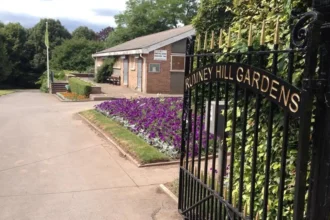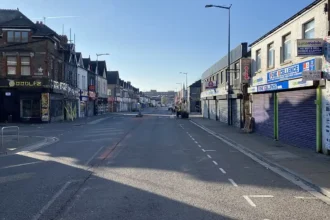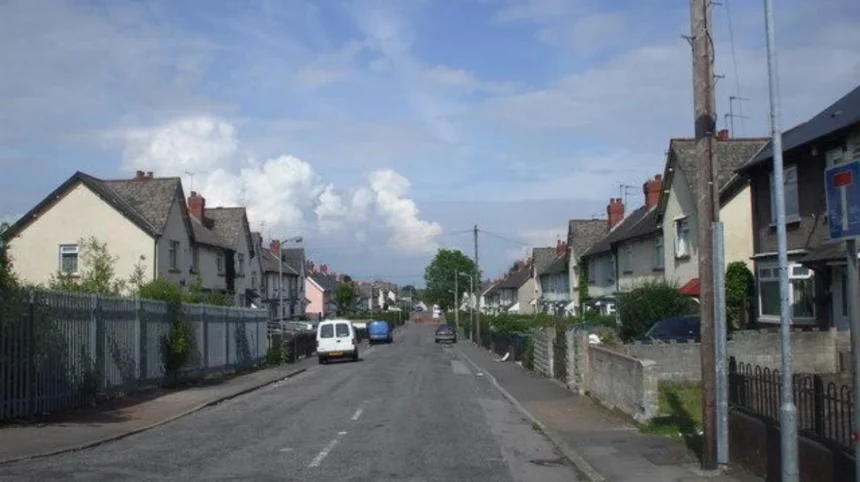
Cardiff has several large residential estates that developed during major periods of post-war housebuilding, suburban expansion and council housing provision. Ely, Caerau, Llanrumney, Llanedeyrn, Pentwyn and Fairwater are among the city’s most substantial established residential areas. More recent developments, including Plasdŵr, represent a new phase of large-scale housing growth.
- What are the largest housing estates in Cardiff?
- Why did Cardiff develop such large housing estates?
- How large is the Ely housing estate?
- What makes Caerau one of Cardiff’s largest housing areas?
- How significant is Llanrumney as a Cardiff housing estate?
- What is the history of the Llanedeyrn housing estate?
- Why is Pentwyn considered a major Cardiff residential estate?
- How does Fairwater compare with Cardiff’s other large estates?
- Is Plasdŵr the largest new housing estate in Cardiff?
- How has council housing shaped Cardiff’s largest estates?
- What role do regeneration projects play in Cardiff’s largest estates?
- How does housing growth affect Cardiff’s future?
- What should visitors and residents know about Cardiff’s largest housing estates?
The term housing estate describes a planned residential area containing a concentration of homes built as part of a coordinated development. In Cardiff, housing estates include traditional council estates, mixed-tenure neighbourhoods and newer planned communities.
There is no single official Cardiff Council league table ranking housing estates by the number of homes. Estate boundaries also differ from electoral ward boundaries and statistical areas. As a result, comparisons are best made using documented development history, population, housing scale and the physical extent of each neighbourhood.
Cardiff’s housing pattern reflects more than a century of urban growth. The city expanded rapidly during the industrial era, then developed extensive suburban and council housing areas during the twentieth century. By the 1950s, 1960s and 1970s, large estates had become an important part of Cardiff’s residential structure.
Census 2021 data shows the continuing importance of rented housing in Cardiff. Around 58.0% of Cardiff households owned their home, while 17.2% lived in socially rented accommodation and 24.3% rented privately. Cardiff therefore has a substantial mixture of owner-occupied, social-rented and private-rented housing.
What are the largest housing estates in Cardiff?
Cardiff’s largest established housing estates include Ely, Caerau, Llanrumney, Llanedeyrn, Pentwyn and Fairwater, while Plasdŵr is one of the city’s largest new planned residential developments, with around 7,000 homes planned across five neighbourhoods.
The phrase “largest housing estates” needs careful interpretation because Cardiff does not publish one definitive ranking based solely on dwelling numbers.
Ely and Caerau form a major residential concentration in west Cardiff. Llanrumney is one of the largest established residential communities in east Cardiff. Llanedeyrn and Pentwyn form another substantial concentration in the north-east. Fairwater is another significant post-war residential area in the west.
These neighbourhoods were developed at different times and under different planning conditions. Some originated primarily as council housing estates. Others evolved into mixed-tenure communities through later house sales, private development and redevelopment.
Plasdŵr represents a different category. It is a large strategic urban extension rather than a traditional post-war estate. The masterplanned development is planned for approximately 7,000 dwellings across five neighbourhoods and covers around 900 acres.
Cardiff Council identifies strategic development sites containing 500 or more dwellings as major strategic sites within its Local Development Plan framework. These developments are planned alongside transport, schools, community facilities and green infrastructure.
Why did Cardiff develop such large housing estates?
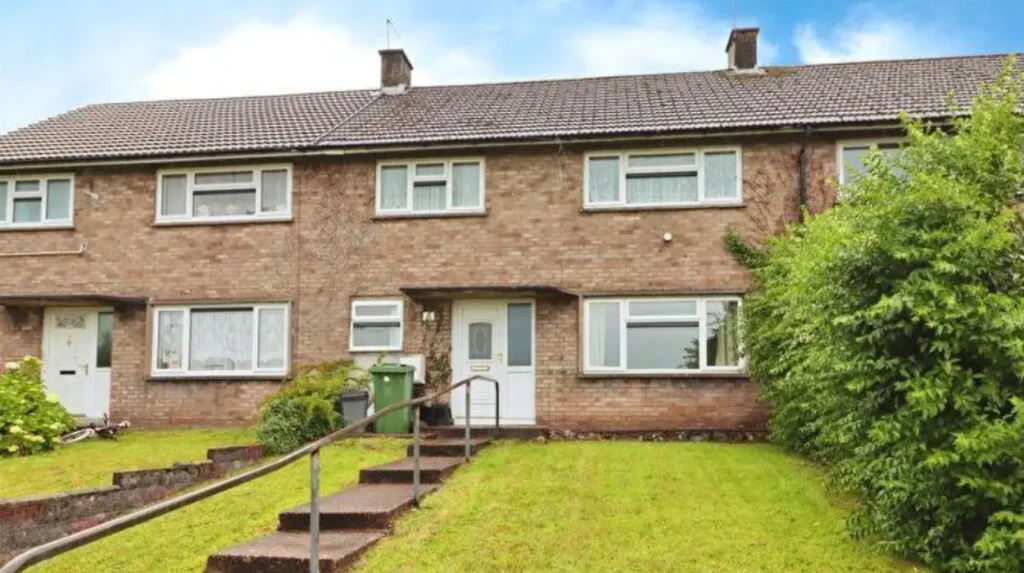
Cardiff developed large housing estates because rapid population growth, industrial employment, post-war housing demand and twentieth-century planning required substantial new residential areas outside the historic urban core, particularly in west, east and north-east Cardiff.
The growth of Cardiff was closely connected with coal, docks, manufacturing, railways and port activity. Population growth created pressure for new housing, while older inner-city areas often contained dense terraces with limited space and poorer housing conditions.
The twentieth century brought a major shift towards planned suburban housing. Local authorities acquired land and developed neighbourhoods with houses, roads, schools, shops, parks and community facilities.
Ely provides an important example of this transition. Historical research on the area records that Ely became part of Cardiff in 1922 and subsequently experienced a major programme of housebuilding based on garden-suburb principles. The population had exceeded 10,000 by the 1960s.
Post-war construction accelerated the process. Temporary prefabricated homes appeared alongside permanent houses, while later development expanded existing communities.
The same period saw major housing growth in Llanrumney, Llanedeyrn, Caerau and other peripheral areas. These developments allowed Cardiff to accommodate larger populations while providing purpose-built streets, schools, recreational spaces and local services.
The result is a city with several large residential concentrations rather than one single dominant housing estate.
How large is the Ely housing estate?
Ely is one of Cardiff’s largest established residential communities, with its modern housing landscape created through twentieth-century expansion and substantial council-led development; the wider Ely area is also historically significant because its population exceeded 10,000 during the 1960s.
Ely lies in west Cardiff and forms part of the city’s wider Caerau and Ely residential area.
The area has a much longer history than its modern estate architecture suggests. Ely contains archaeological evidence including the Ely Roman Villa, while Caerau contains the nationally important Caerau Hillfort. Coflein records Caerau Hillfort as a 5.1-hectare scheduled ancient monument with substantial Iron Age earthworks.
Modern housing development transformed the landscape during the twentieth century.
Ely entered Cardiff’s administrative boundary in 1922. A large programme of housebuilding followed, using garden-suburb principles. The expansion continued after the Second World War and included prefabricated housing and later permanent developments. By the 1960s, the wider area had more than 10,000 residents.
The scale of the community supported schools, shops, churches, community facilities and transport infrastructure.
Today, Ely remains a distinct Cardiff neighbourhood and electoral ward. The Office for National Statistics lists Ely among Cardiff’s electoral wards and separately identifies Ely East and Ely West among the city’s statistical areas.
The area’s housing stock is now more diverse than the original council-estate model. Owner-occupied, social-rented and privately rented properties form part of the contemporary housing mix.
What makes Caerau one of Cardiff’s largest housing areas?
Caerau became a major west Cardiff residential area through extensive twentieth-century housebuilding, with large estates serving a growing population alongside Ely; its modern community developed around older settlements and historic landscapes including the 5.1-hectare Caerau Iron Age hillfort.
Caerau is situated immediately south and west of Ely and forms part of Cardiff’s major western residential belt.
The modern housing landscape expanded substantially after the Second World War. New streets and housing estates replaced much of the earlier rural landscape.
Coflein describes Glyn Derw High School as having served the large housing estate of Caerau and part of Ely. This provides direct historical evidence of the scale of the residential community and the need for major educational infrastructure.
Caerau is also significant because its residential growth sits alongside a much older archaeological landscape.
Caerau Hillfort covers approximately 5.1 hectares. It contains three earthwork ramparts and associated ditches. Archaeological investigations identified occupation extending back to the Iron Age, with evidence of activity from around 600 BC and later Roman-period occupation.
The contrast between ancient settlement and twentieth-century estate development is a defining feature of west Cardiff’s built environment.
Modern Caerau is served by schools, community facilities, open spaces and transport routes. Its close relationship with Ely means that the two areas are often discussed together when considering large housing concentrations in west Cardiff.
How significant is Llanrumney as a Cardiff housing estate?
Llanrumney is one of Cardiff’s major east-side residential estates, developed largely during the post-war housing expansion; its community includes extensive residential streets, schools, recreation facilities and local services extending across a substantial area between Rumney and the eastern Cardiff urban fringe.
Llanrumney lies east of central Cardiff and north of Rumney. It is one of the principal residential communities identified within Cardiff’s eastern area.
Cardiff Council groups Llanrumney with Rumney and Trowbridge within its Cardiff East service area, while the Office for National Statistics recognises Llanrumney as a separate electoral ward.
The estate developed mainly after the Second World War. Land associated with the former Llanrumney Hall estate was used for new housing, with most of the development consisting of council homes alongside private properties.
Education became a major part of the estate’s infrastructure. Secondary schools opened in 1958, later expanding and eventually combining into a comprehensive school serving up to 1,800 pupils. The Eastern Leisure Centre opened in 1982.
Llanrumney therefore demonstrates the planning model used for many large British post-war estates. Housing was accompanied by schools, recreation, community facilities and transport links.
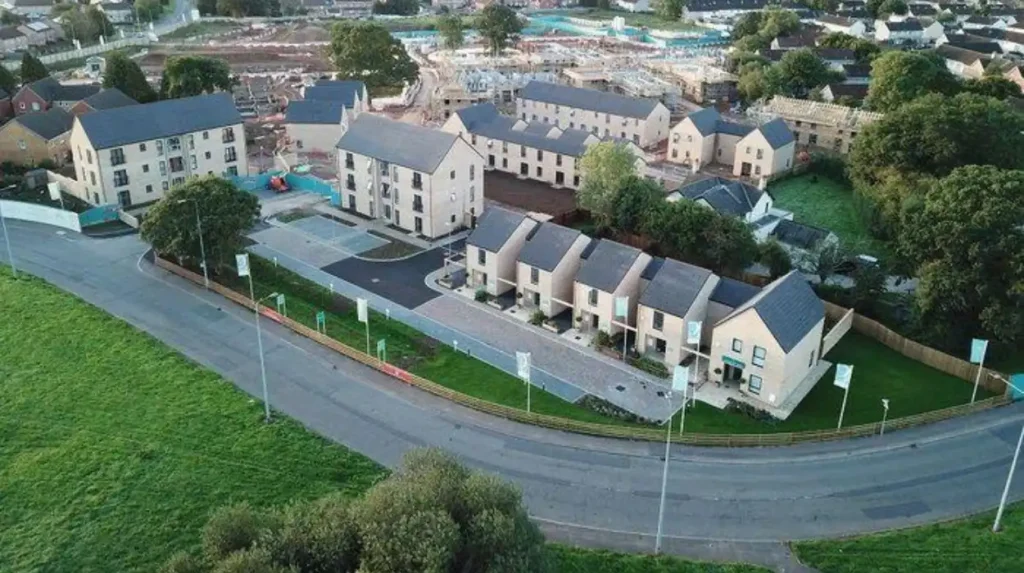
The neighbourhood continues to experience housing investment. Maple Fields, developed on the former Llanrumney High School site, added 98 new homes, including 28 council homes and 70 homes for open-market sale. The project forms part of Cardiff Living, the city’s long-term housing partnership programme.
What is the history of the Llanedeyrn housing estate?
Llanedeyrn expanded rapidly as a planned residential community during Cardiff’s post-war suburban growth, creating a large concentration of homes in the north-east of the city and establishing schools, community facilities, open spaces and transport connections around the estate.
Llanedeyrn is located in north-east Cardiff, close to Pentwyn and the A48 corridor.
The neighbourhood is recognised separately by Cardiff’s statistical geography. The Office for National Statistics identifies Llanedeyrn as both a parish and a middle-layer statistical area.
The estate formed part of Cardiff’s expansion beyond older inner-city neighbourhoods. Its planned layout reflects the post-war preference for lower-density housing, landscaped spaces, segregated residential streets and local facilities.
Llanedeyrn also illustrates the continuing regeneration of established estates. Cardiff Council has invested in new housing and community infrastructure in the area.
A net-zero pilot scheme in Llanedeyrn forms part of Cardiff’s council housebuilding programme. The scheme was planned to deliver 50 new zero-carbon council homes in partnership with the Welsh Government.
A community well-being hub also opened in Llanedeyrn in July 2022 as part of wider investment in Cardiff’s communities.
The neighbourhood remains closely connected with Pentwyn and the wider north-east Cardiff urban area. Together, these communities form a substantial residential zone with extensive housing, schools, leisure facilities and local services.
Why is Pentwyn considered a major Cardiff residential estate?
Pentwyn is a major planned residential suburb in north-east Cardiff, developed around family housing, local services, open spaces and transport connections; its location beside Llanedeyrn and near the A48 has helped establish it as an important part of the city’s eastern housing structure.
Pentwyn lies on the north-eastern side of Cardiff and is recognised as a separate electoral ward by the Office for National Statistics.
The neighbourhood contains a mixture of terraced, semi-detached and detached housing. Current property records show streets containing different house types and residential developments, demonstrating how the original planned estate has evolved into a mixed housing market.
Pentwyn also has strong strategic transport connections. Its relationship with the A48 provides a direct road connection towards central Cardiff and the wider motorway network.
Cardiff Council identifies Pentwyn within its northern service area alongside Rhiwbina, Heath, Lisvane, Llanishen, Cyncoed, Penylan, Pontprennau and Old St Mellons.
The neighbourhood has also been included in citywide infrastructure programmes. Cardiff Council’s active-travel planning includes a dedicated Pentwyn ward map, reflecting the continuing development of walking and cycling infrastructure.
Pentwyn is therefore important not only because of its housing volume but also because it forms part of a wider planned urban structure linking housing, schools, employment areas, leisure facilities and transport.
How does Fairwater compare with Cardiff’s other large estates?
Fairwater is a major west Cardiff residential community that developed through twentieth-century suburban expansion, with predominantly family housing, schools, green spaces and local services; its scale places it within Cardiff’s established network of large post-war residential neighbourhoods.
Fairwater is situated west of the city centre between Canton, Ely and Llandaff North.
The area is recognised as a separate Cardiff electoral ward and as two statistical areas, Fairwater North and Fairwater South.
Fairwater’s development reflects Cardiff’s wider outward expansion during the twentieth century. The neighbourhood contains substantial residential streets and community infrastructure rather than functioning as a single isolated housing project.
Its location gives it a strong relationship with west Cardiff. Residents have access to nearby employment, schools, retail facilities and transport routes serving the wider city.
Fairwater also demonstrates how the definition of an “estate” becomes difficult over time. Original council housing can become privately owned through sales, while adjoining private developments can gradually merge with the original planned neighbourhood.
This makes current ward populations and housing tenure useful indicators, but they do not provide an exact historical count of the original estate homes.
Is Plasdŵr the largest new housing estate in Cardiff?
Plasdŵr is one of Cardiff’s largest new planned residential developments, with around 7,000 dwellings planned across five neighbourhoods on approximately 900 acres, making it substantially larger in planned scale than most individual traditional housing estates.
Plasdŵr is located in north-west Cardiff and represents a major change in the city’s approach to housing expansion.
The development is planned as a large urban extension rather than simply a conventional housing estate. The masterplan includes approximately 7,000 dwellings across five neighbourhoods.
The development is designed around multiple land uses and community facilities. Its planning approach includes homes, schools, parks, playing fields, local centres, cycle routes and public transport connections.
Cardiff Council’s strategic-site framework reflects this approach. Major development sites are planned with supporting infrastructure rather than housing alone. The council identifies strategic sites containing at least 500 dwellings or significant employment uses.
Plasdŵr is therefore important when discussing the future meaning of “largest housing estate in Cardiff.”
Traditional estates such as Ely, Caerau and Llanrumney were largely products of twentieth-century municipal and suburban expansion. Plasdŵr is part of a twenty-first-century masterplanned growth model.
The distinction matters because a development planned for thousands of homes is not necessarily equivalent to an older neighbourhood whose boundaries evolved gradually over decades.
How has council housing shaped Cardiff’s largest estates?
Council housing played a central role in Cardiff’s major estate development, particularly during the twentieth century, while later home sales, private development and housing-association activity created increasingly mixed-tenure communities across areas such as Ely, Caerau, Llanrumney, Llanedeyrn and Pentwyn.
Council housing refers to homes owned and managed by a local authority for social rent. Housing associations provide another major form of social housing.
Cardiff Council operates a common waiting list with the city’s main housing associations. The council states that its housing stock is limited and uses allocation rules to prioritise applicants according to housing need.
The importance of social housing remains clear in Census 2021 data. Socially rented accommodation accounted for 17.2% of Cardiff households in 2021, compared with 17.1% in 2011.
The composition of large estates has changed considerably.
Right-to-buy and other forms of home ownership transferred some properties from public ownership into the private sector. New private development also added different property types to established communities.
Housing associations now own and manage homes across several major Cardiff neighbourhoods. Cardiff Community Housing Association, for example, reported more than 3,000 homes across Cardiff in 2024–25, including substantial holdings in Llanrumney, Llanedeyrn and other established communities.
The result is a housing landscape where the traditional distinction between council estate and private suburb is less clear than it was when many of the estates were first built.
What role do regeneration projects play in Cardiff’s largest estates?
Regeneration programmes modernise established housing estates through improvements to homes, streets, public spaces, community facilities and infrastructure, helping large residential neighbourhoods respond to changing housing standards, environmental requirements and community needs.
Cardiff Council describes estate regeneration as a programme focused on improving the environment of housing estates across the city.
Regeneration can involve housing improvements, street upgrades, public-space projects, parks, community facilities and safety measures.
Housing quality is particularly important for large estates because many properties were built during the same construction periods. This creates concentrated requirements for insulation, energy efficiency, repairs and adaptation.
Environmental standards are also becoming increasingly important. New Cardiff housing programmes include low-carbon and zero-carbon projects, while older estates require retrofit and energy-efficiency improvements.
Llanedeyrn provides an example of this transition through its net-zero council housing pilot. Llanrumney provides another through new council and private homes delivered on a former school site.
Regeneration therefore changes the physical appearance and housing performance of established estates without necessarily replacing their community identity.
Explore More Area Guide
Cardiff’s Historic Public Squares: Heritage, History and Landmarks
Oldest Libraries in Cardiff: History of Cardiff’s Historic Libraries
How does housing growth affect Cardiff’s future?
Cardiff’s future housing growth combines regeneration of established estates with large strategic developments, reflecting continued demand for affordable and market housing, new infrastructure, energy-efficient homes and better-connected communities across the city.
Cardiff Council’s Local Housing Market Assessment identifies significant future housing requirements.
The assessment states that Cardiff needs 14,407 additional affordable homes over a 15-year period, equivalent to about 960 affordable homes annually. It also identifies a requirement for 11,490 additional market homes, or approximately 766 homes annually.
These figures demonstrate why both established estates and new developments remain important.
Older estates already contain large concentrations of housing and established infrastructure. Their regeneration can improve existing homes without requiring entirely new communities.
New developments provide additional capacity where suitable land is available. Cardiff Council identifies strategic sites such as North East Cardiff and land around Pontprennau as major growth areas. North East Cardiff is planned for approximately 4,500 homes, while another strategic site east of the Pontprennau Link Road is planned for around 1,300 homes.
This creates two complementary housing processes.
The first is estate regeneration, which upgrades existing neighbourhoods.
The second is strategic urban expansion, which creates new communities with housing, schools, transport infrastructure, green space and local facilities.
Both approaches will shape Cardiff’s residential geography during the coming decades.
What should visitors and residents know about Cardiff’s largest housing estates?
Cardiff’s largest housing estates are important parts of the city’s geography, history and housing supply, with west Cardiff communities such as Ely and Caerau, east Cardiff’s Llanrumney, and north-east areas such as Llanedeyrn and Pentwyn showing different stages of urban development.
For understanding Cardiff, these estates are significant because they reveal how the city expanded beyond its historic centre.
Ely and Caerau demonstrate the scale of west Cardiff’s twentieth-century growth. Llanrumney represents major post-war development in the east. Llanedeyrn and Pentwyn show the planned expansion of the north-east. Fairwater forms another substantial west Cardiff residential community.
Plasdŵr demonstrates the next generation of large-scale housing development.
The estates also show how housing policy changes over time. Council estates were originally developed to address major housing shortages and improve living conditions. Later decades introduced greater home ownership, private development, housing-association provision and regeneration.
Cardiff’s current housing strategy continues to address both affordability and supply. The city’s housing assessment identifies substantial requirements for affordable and market homes, while strategic development sites are planned with transport, schools, community facilities and green spaces.
The largest housing estates in Cardiff are therefore not simply collections of houses. They are major urban neighbourhoods shaped by planning, demographic change, public investment, private ownership, community infrastructure and continuing regeneration.
Their development provides a clear record of Cardiff’s transformation from an industrial city into a growing modern capital. The established estates remain central to the city’s housing structure, while large new developments such as Plasdŵr are extending Cardiff’s urban footprint and creating the residential communities of the future.
What is the largest housing estate in Cardiff?
Ely, Caerau, Llanrumney, Llanedeyrn, Pentwyn and Fairwater are among Cardiff’s largest established housing estates. Plasdŵr is one of the largest new planned residential developments, with around 7,000 homes planned across five neighbourhoods.