Cardiff is the capital of Wales today, but its history as a settlement, trading centre and political hub stretches back long before it received capital status in 1955. Its development began with Roman military occupation, continued through medieval Norman rule, and accelerated during the industrial expansion of South Wales. Understanding Cardiff before it became a capital city reveals how its geography, castle, port and coal trade shaped its rise.
- What was Cardiff like before it became the capital of Wales?
- How did Cardiff develop during the Roman period?
- How did Cardiff develop after the Romans left Britain?
- When did the Normans establish medieval Cardiff?
- How important was Cardiff during the medieval period?
- Why was Cardiff still a relatively small town before the Industrial Revolution?
- How did canals, railways and docks transform Cardiff?
- How did Cardiff become a major city before receiving capital status?
- Why was Cardiff chosen as the capital of Wales in 1955?
- Did Cardiff become important only after 1955?
- How did Cardiff’s capital status change its development?
- What historical evidence reveals Cardiff’s development before 1955?
- Why does Cardiff’s pre-capital history matter today?
What was Cardiff like before it became the capital of Wales?
Before Cardiff became the capital of Wales in 1955, it was a historic settlement shaped by Roman military occupation, medieval castle building, maritime trade and industrial growth. Its position beside the River Taff connected inland communities with the Bristol Channel and wider trading networks.
Cardiff developed over many centuries rather than emerging as a major city at a single moment. Its location in south-east Wales placed it close to fertile agricultural land, coastal routes and the valleys that later supplied coal and iron to industrial Britain.
The settlement’s history includes several distinct phases. Roman forces established a military presence in the area during the first century AD. After Roman authority ended in Britain, local communities continued to occupy the region. Norman conquest subsequently introduced a castle and a new pattern of feudal administration.
During the medieval period, Cardiff functioned as a market town and port. Its importance increased during the nineteenth century when the export of coal and iron transformed South Wales into a major industrial region. The docks attracted merchants, workers and migrants from across Britain and beyond.
By the early twentieth century, Cardiff had developed into a major commercial, administrative and cultural centre. Its selection as the Welsh capital in 1955 recognised an established position rather than marking the beginning of its importance.
How did Cardiff develop during the Roman period?
Roman Cardiff developed around a military fort established near the River Taff during the first century AD. The fort protected strategic routes and supported Roman control of south-east Wales, creating the earliest major urban settlement within modern Cardiff.
The Romans entered south-east Wales during their conquest of Britain in the first century AD. The region was associated with the Silures, a people who resisted Roman expansion. Roman military campaigns eventually established control over important parts of the area.
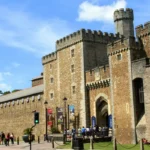
A fort was constructed at the site now occupied by Cardiff Castle. Its position near the River Taff provided access to transport routes and supported military movement through the surrounding countryside.
What was the purpose of the Roman fort?
The fort formed part of the Roman military network in Wales. Roman authorities used military installations to maintain control, move troops and protect communications. The Cardiff site also provided a base for interaction between the occupying forces and nearby communities.
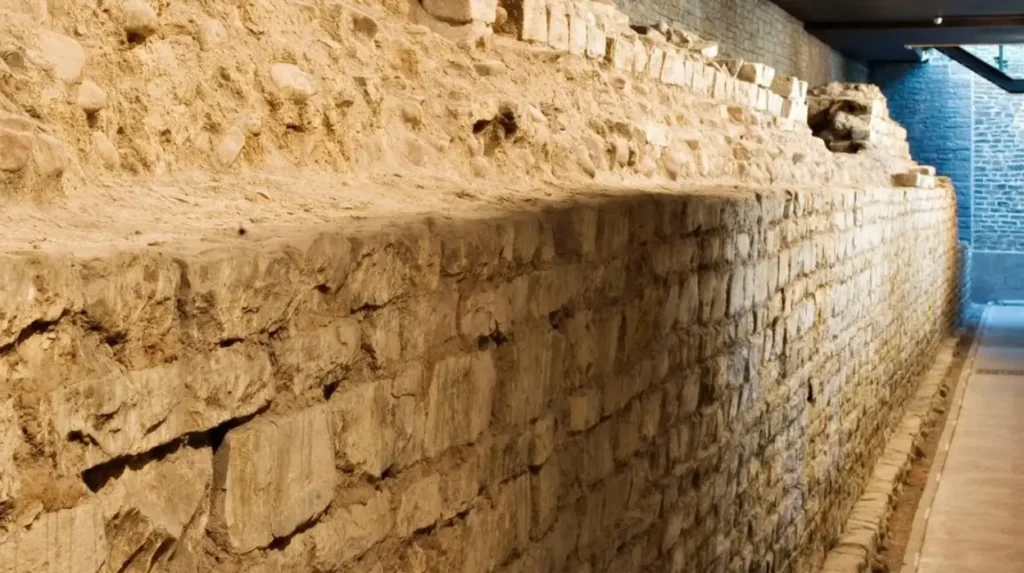
Archaeological evidence from Cardiff Castle includes surviving Roman masonry and evidence of successive fortifications. The fort underwent changes during Roman occupation, reflecting the continuing strategic value of the location.
Roman military installations were not simply isolated defensive structures. They supported supply systems, crafts, administration and exchanges with civilian settlements. However, the scale and precise organisation of civilian life around Roman Cardiff changed over time.
What happened to Cardiff after Roman rule ended?
Roman authority in Britain weakened during the early fifth century. Military and administrative systems were gradually withdrawn, and settlements developed under changing local political conditions.
Cardiff did not immediately become the large urban centre known today. Its later development depended on the settlement’s strategic location, regional power structures and the construction of a medieval castle.
The Roman period nevertheless established an important foundation. The fort’s position remained central to Cardiff’s later history, as successive rulers reused the same strategic site.
How did Cardiff develop after the Romans left Britain?
After Roman rule ended, Cardiff developed within the changing political landscape of early medieval Wales. The area remained strategically important because of its river crossing, coastal connections and proximity to fertile lowland territory, although evidence for continuous urban life remains limited.
The centuries following Roman withdrawal brought major political and social changes across Wales. Regional rulers controlled territories through local power structures rather than the centralised administration previously imposed by Rome.
The region around Cardiff became part of the wider history of Glywysing, an early medieval Welsh kingdom associated with south-east Wales. Its political boundaries and rulers changed over time as regional powers competed for influence.
Archaeological and documentary evidence for this period is less detailed than for Roman or later medieval Cardiff. Historians therefore distinguish between evidence of occupation in the wider region and claims about the size or continuity of a settlement at the precise site of the modern city.
Why did Cardiff’s geographical position remain important?
The River Taff offered a natural route between inland areas and the coast. Nearby lowlands supported agriculture, while the Bristol Channel connected south Wales with settlements across south-west England and beyond.
These geographical advantages continued to matter even when no large urban settlement existed. Communities used river corridors for movement and exchange, and political authorities valued places that controlled crossings and access routes.
Cardiff’s later growth built on these enduring advantages. Its river, coastal access and location at the edge of the South Wales valleys helped turn a strategic settlement into a regional centre.
When did the Normans establish medieval Cardiff?
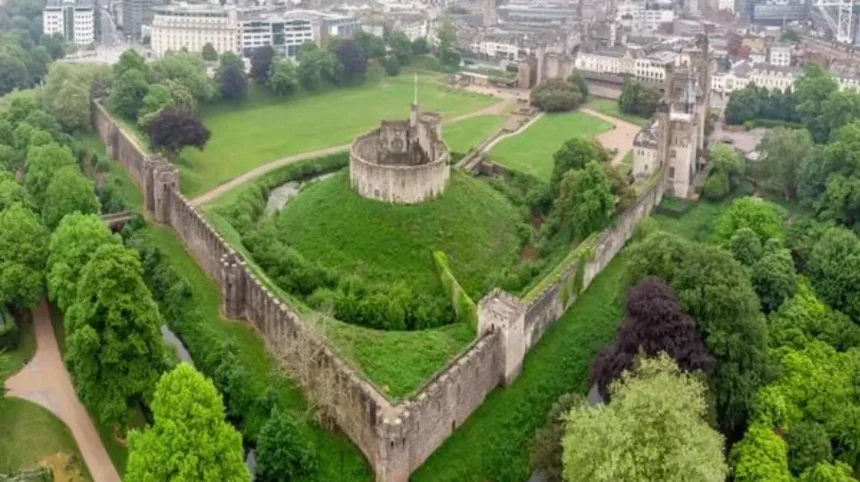
The Normans established Cardiff as a medieval administrative and defensive centre in the late eleventh century. Around 1091, Robert Fitzhamon built a motte-and-bailey castle within the former Roman fort, encouraging settlement and strengthening Norman control over Glamorgan.
The Norman Conquest of England in 1066 changed political relationships across Britain. Norman lords subsequently extended their influence into Wales, establishing castles and lordships to control territory and secure strategic routes.
Robert Fitzhamon became a central figure in the Norman expansion into Glamorgan, the historic region covering much of present-day south-east Wales. His castle at Cardiff used the remains of the Roman fort, taking advantage of an established defensive location.
How did Cardiff Castle shape the medieval settlement?
A motte-and-bailey castle consisted of a raised mound, or motte, and an enclosed courtyard, or bailey. Timber buildings and defensive barriers initially formed important parts of these structures.
The castle housed the lord, his household and the garrison. Its presence also created demand for food, tools, clothing, building materials and other supplies. Traders and craftspeople settled nearby to serve these needs.
Cardiff’s castle became the administrative centre of the surrounding lordship. The Norman rulers used this position to manage estates, exercise authority and defend their interests against resistance from Welsh rulers.
The settlement gradually developed streets, commercial activity and a more established market. Cardiff’s medieval growth therefore depended on both military power and the economic activity generated around the castle.
How did Welsh and Norman rule interact?
Norman expansion did not remove Welsh political influence from the surrounding region. Welsh rulers continued to resist Norman authority, and control over Glamorgan shifted through conflict, inheritance and political agreements.
The lordship passed through several aristocratic families. Gilbert de Clare, who inherited the lordship in 1217, became particularly significant in the history of Cardiff and the wider region.
This period established Cardiff’s long-standing role as a place where territorial power, administration and commerce intersected. The castle remained a defining feature of the settlement long before the city acquired national political status.

How important was Cardiff during the medieval period?
Medieval Cardiff was a small but strategically important market town within the lordship of Glamorgan. Its castle, commercial activities, religious institutions and position near the River Taff supported local government, trade and regional connections, although it remained far smaller than a modern capital.
Cardiff’s medieval identity developed around its castle and market. The surrounding countryside supplied agricultural produce, livestock and raw materials, while the town provided services to residents, travellers and the military establishment.
The settlement’s growth reflected its position within a wider regional network. Cardiff connected rural communities with the coast and offered a location for exchanging goods and conducting administrative business.
What role did Cardiff’s market play?
Markets allowed agricultural producers and craftspeople to exchange goods and obtain supplies. Cardiff’s market served the surrounding rural population and supported merchants working within the town.
The exact scale of medieval trade changed over time. Cardiff did not yet possess the extensive docks, railway links or industrial infrastructure that later transformed it into an international port.
Nevertheless, the combination of a castle, market and river access created a durable foundation for urban development. These functions supported Cardiff’s survival through changing political conditions and helped distinguish it from smaller settlements in the surrounding countryside.
How did religion influence medieval Cardiff?
Religious institutions played an important role in medieval Welsh society. Churches and religious establishments provided places of worship, organised community life and maintained connections with wider ecclesiastical networks.
Llandaff, now a district within Cardiff, had a particularly important religious history. Llandaff Cathedral developed as a significant centre of Christian worship in south-east Wales, although its history and institutional development differed from that of the castle-centred settlement.
The presence of religious institutions in the wider Cardiff area demonstrates that the region’s historical importance extended beyond military administration. Religious, agricultural and commercial networks all contributed to its development.
Why was Cardiff still a relatively small town before the Industrial Revolution?
Before the Industrial Revolution, Cardiff remained a comparatively small town because its maritime trade and transport infrastructure were limited. Swansea held a stronger commercial position for much of the seventeenth and eighteenth centuries, while the South Wales coalfield remained difficult to exploit economically. UK Parliament+1
Cardiff’s geographical advantages did not automatically make it a major port. Large-scale commerce required reliable transport, suitable harbour facilities and access to goods that overseas markets wanted to purchase.
During the eighteenth century, the iron industry expanded around places such as Merthyr Tydfil. Coal and iron resources existed in the valleys north of Cardiff, but moving heavy materials to the coast was expensive and difficult.
Swansea benefited from an earlier concentration of industrial and maritime activity. According to the UK Parliament’s historical account, Swansea recorded registered shipping tonnage of 4,929 tons in 1796, compared with 1,069 tons at Cardiff.
What prevented Cardiff from growing faster?
Transport limitations restricted the movement of minerals from inland industrial centres. Poor connections increased costs and reduced the competitiveness of exporting coal and iron through Cardiff.
The port also lacked the extensive dock facilities needed to handle the large cargo volumes associated with industrial expansion. Existing maritime activity was not enough to establish Cardiff as the leading export centre in the region.
Landownership influenced the town’s economic development as well. The Bute family controlled substantial property in the region and later played a major role in developing the port infrastructure.
These conditions began to change as industrial production expanded and investors recognised the commercial value of connecting the valleys with the Bristol Channel.
How did canals, railways and docks transform Cardiff?
Canals, railways and expanding dock facilities transformed Cardiff from a small port into a major industrial trading centre. The Glamorganshire Canal, completed in the late eighteenth century, connected the town with inland ironworks, while nineteenth-century railways and docks accelerated coal exports.
The completion of the Glamorganshire Canal in 1798 marked a major change in Cardiff’s economic prospects. The canal linked Cardiff with Merthyr Tydfil and other industrial areas, providing a more effective route for transporting iron and other heavy goods to the coast.
The canal’s connection to the sea supported a growing export trade. As industrial production increased, Cardiff became an increasingly important outlet for the minerals produced in the South Wales valleys.
When did Cardiff’s modern dock system begin?
The construction of the Bute West Dock in 1839 represented a major step in Cardiff’s port development. The facility provided additional capacity for ships and helped accommodate the expanding mineral trade.
Bute East Dock opened in stages between 1855 and 1859. Further expansion followed as coal exports increased and shipping companies demanded more facilities.
The Taff Vale Railway, opened in 1841, strengthened the connection between Cardiff and the industrial valleys. Rail transport moved raw materials more efficiently and reduced dependence on canal transport.
The combined effect of canals, railways and docks was significant. Cardiff developed into an industrial port with direct links between inland production, international shipping and overseas markets.
How much coal did Cardiff export?
Cardiff’s coal trade expanded dramatically during the nineteenth and early twentieth centuries. Museum Wales records that the port exported approximately 2 million tonnes of coal in 1862, rising to around 10.7 million tonnes in 1913.
The figures demonstrate the scale of Cardiff’s industrial transformation. Coal from the Rhondda, Cynon and Rhymney valleys passed through the port to industrial customers overseas.
Shipping companies, dock workers, merchants and related businesses contributed to the city’s economy. The port also attracted people from different parts of Britain and other countries, changing Cardiff’s population and cultural life.
This industrial prosperity helped establish the economic foundations that later supported Cardiff’s growth as a major Welsh city.
How did Cardiff become a major city before receiving capital status?
Cardiff became a major city through industrial wealth, population growth, commercial expansion and improved transport during the nineteenth century. It received official city status in 1905, fifty years before its recognition as the capital of Wales in December 1955. Coflein+2
The growth of Cardiff’s docks stimulated construction throughout the town. Commercial buildings, housing, markets, transport infrastructure and public institutions expanded to serve a growing population.
Victorian and Edwardian development reshaped the urban centre. The construction of civic buildings and shopping arcades reflected Cardiff’s rising commercial importance, while new neighbourhoods accommodated workers and their families.
Why was Cardiff granted city status in 1905?
Cardiff received city status in 1905 after decades of rapid economic and demographic growth. Its docks had made it one of Britain’s most important coal-exporting ports, giving the town a commercial profile that extended far beyond Wales.
City status recognised Cardiff’s established urban importance. It did not automatically make the city the political capital of Wales, because those were separate questions of civic recognition and national representation.
Cardiff continued to develop public institutions and cultural facilities during the early twentieth century. Its role as a major port and administrative centre strengthened its position when the question of a Welsh capital became more prominent.
What happened to Cardiff’s coal economy?
The coal trade reached its peak before the First World War, but the industry faced serious challenges during the twentieth century. Economic depression, changing energy markets and declining demand affected coal production and shipping.
Cardiff’s port remained important, but its economy gradually diversified. Public administration, retail, education, culture and services became increasingly significant.
The industrial period nevertheless left a lasting physical legacy. Historic docks, warehouses, railway infrastructure and civic buildings reveal how trade and industrial wealth shaped the city before its capital designation.
Why was Cardiff chosen as the capital of Wales in 1955?
Cardiff was officially recognised as the capital of Wales in December 1955 following discussions about which Welsh city should hold that distinction. Its population, economic importance, transport connections and established civic institutions supported its claim, although the decision did not require a formal Act of Parliament.
Before 1955, Wales did not have an officially recognised capital city. Cardiff, Swansea, Aberystwyth and Caernarfon were among the places considered in discussions about national representation.
Cardiff had developed a strong case through its growth into the largest city in Wales and its position as a major centre of commerce and administration. Its city status, awarded in 1905, had already recognised its urban importance.
The decision was confirmed in a written parliamentary answer on 20 December 1955. Home Secretary Gwilym Lloyd-George stated that the government recognised Cardiff as the capital in response to support for the city. The answer also confirmed that no formal legislative measures were necessary. UK Parliament API+1
Did Cardiff become important only after 1955?
No. Cardiff’s capital designation formalised its national standing rather than creating its importance from nothing. Roman military occupation, Norman administration, medieval commerce and industrial trade had shaped the settlement over almost two millennia.
Its economic rise during the nineteenth century was especially significant. The docks connected South Wales with international markets, while railways and civic development strengthened Cardiff’s position within Britain.
The capital designation subsequently reinforced the city’s role in Welsh public life. National institutions and organisations established a stronger presence in Cardiff over the following decades.
How did Cardiff’s capital status change its development?
Capital status strengthened Cardiff’s position as a centre for Welsh government, public administration and national representation. Later political developments expanded that role, particularly following the establishment of devolved government in Wales.
The Senedd, the Welsh Parliament, now operates in Cardiff Bay and provides a national legislative institution for Wales. Its presence reflects the city’s continuing political significance, although the Senedd’s establishment occurred decades after the original capital designation.
Cardiff’s transformation therefore followed several distinct stages: Roman occupation, medieval settlement, industrial expansion, city status and official recognition as the Welsh capital.
Explore More Area Guide
How Cardiff Became the Capital of Wales in 1955
History of Cardiff Docks: Coal Trade, Tiger Bay and Regeneration
What historical evidence reveals Cardiff’s development before 1955?
Cardiff’s early history is documented through archaeological remains, historic buildings, parliamentary records and industrial archives. Roman walls at Cardiff Castle, medieval castle structures, historic dock records and the 1955 parliamentary statement provide evidence of the city’s transformation from a strategic settlement into Wales’s capital.
Different sources reveal different aspects of Cardiff’s past. Archaeology helps establish the location and development of Roman military installations, while medieval records explain the growth of Norman rule and the castle-centred town.
Industrial archives document the expansion of the canal, railway and dock systems. Parliamentary records provide direct evidence of the decision to recognise Cardiff as the capital in 1955.
Visitors can explore these historical layers at several locations across the city.
Where can visitors see Cardiff’s earlier history?
Cardiff Castle preserves remains associated with the Roman fort and the later medieval castle. Its buildings illustrate how successive generations adapted the same strategic location.
Cardiff Bay contains evidence of the city’s industrial maritime past. Historic dock structures and surviving warehouses help explain the growth of the coal-exporting economy.
Llandaff Cathedral represents the religious history of the wider Cardiff area. Its significance demonstrates that the region’s development extended beyond the military and commercial centre around the castle.
Together, these places connect Cardiff’s Roman origins, medieval development and industrial expansion with its modern identity.
Why does Cardiff’s pre-capital history matter today?
Cardiff’s history before 1955 explains why the city became the political and administrative centre of Wales. Its Roman location, medieval castle, industrial port and established civic institutions created the foundations for national recognition, while its surviving heritage connects modern Cardiff with earlier periods.
Cardiff’s development was not the result of one event. Its location initially attracted Roman military authorities, while Norman rulers later reused the strategic site to establish a castle and administrative centre.
The medieval town developed through local commerce, agriculture and regional administration. The Industrial Revolution then produced a much larger transformation by connecting Cardiff with the coal and iron resources of the South Wales valleys.
By the early twentieth century, Cardiff had the economic strength and civic infrastructure of a major British city. Its recognition as the capital in 1955 followed this long process of development.
Understanding this chronology also explains the relationship between Cardiff and the surrounding region. The city’s growth depended on resources, workers, transport links and trade networks that extended well beyond its boundaries.
Cardiff’s pre-capital history remains relevant to its heritage, tourism, urban development and cultural identity. The city is both a modern Welsh capital and a place whose importance developed through centuries of military, commercial and industrial change.
When did Cardiff become the capital of Wales?
Cardiff was officially recognised as the capital of Wales in December 1955. The decision followed the city’s long development as a major commercial, industrial and administrative centre.