Llandaff Cathedral Walk combines one of Cardiff’s oldest Christian sites with the historic village of Llandaff, riverside paths and architectural landmarks. The route provides a focused way to explore the cathedral’s medieval heritage, Victorian restoration, wartime history and connection with the River Taff.
- What is the Llandaff Cathedral Walk?
- Why is Llandaff Cathedral historically important?
- What can you see on a Llandaff Cathedral Walk?
- How should you plan a Llandaff Cathedral walking route?
- What historical landmarks should you understand during the walk?
- How accessible is the Llandaff Cathedral Walk?
- When is the best time to visit Llandaff Cathedral?
- What makes Llandaff Cathedral Walk important for Cardiff visitors?
- How can you make the Llandaff Cathedral Walk more informative?
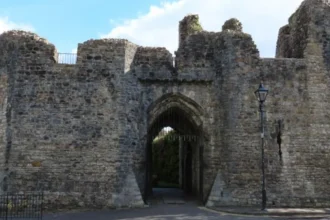
Llandaff is located approximately two miles northwest of Cardiff city centre. The cathedral stands within Cathedral Close, surrounded by historic buildings, mature greenery and the streets of the former village. Its location gives visitors access to a quieter heritage environment while remaining within Cardiff’s urban area.
The cathedral is the Anglican Cathedral of Cardiff and the seat of the Bishop of Llandaff. Cadw identifies it as one of Wales’s ancient Christian sites. The present cathedral originated during the Norman period, around 1120, although Christian activity at the site dates back at least to the sixth century.
A Llandaff Cathedral Walk is therefore more than a short sightseeing route. It connects several layers of Cardiff’s history. Early medieval Christianity, Norman architecture, Gothic rebuilding, Victorian restoration and Second World War damage are all represented within a relatively compact area.
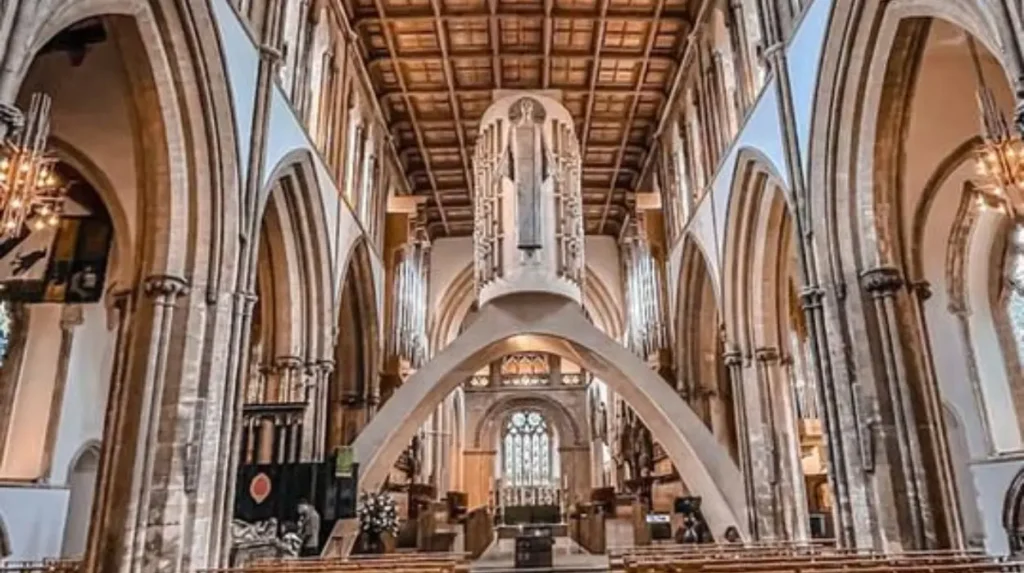
The cathedral itself contains important architectural and artistic features. These include medieval stonework, the Chapter House, Lady Chapel, Victorian elements, memorials, stained glass and post-war work. The building also contains significant works of modern cathedral art, including the Majestas and the Rossetti Triptych.
For visitors, the walk is suitable as a dedicated heritage outing or as part of a longer Cardiff walking itinerary. The route can also connect with wider walking opportunities around Llandaff and the River Taff.
What is the Llandaff Cathedral Walk?
The Llandaff Cathedral Walk is a heritage-focused route around Llandaff Cathedral, Cathedral Close and nearby historic streets. It combines medieval architecture, religious heritage, village landmarks, green spaces and access routes towards the River Taff in northwest Cardiff.
The term “Llandaff Cathedral Walk” does not describe one officially fixed public walking trail with a single mandatory start and finish point. Instead, it describes a practical walking experience centred on Llandaff Cathedral and its surrounding historic area.
This distinction is important for visitors. The cathedral is the principal attraction, while Cathedral Close and Llandaff village provide the wider context. Walkers can extend the route towards the River Taff, nearby green spaces and other local landmarks.
Llandaff has a distinctive relationship with the River Taff. The cathedral’s location developed in an area associated with an important crossing of the river. The cathedral’s own historical material describes the site as part of an ancient Christian landscape, with the early church associated with Saints Dyfrig, Teilo and Euddogwy.
The cathedral is also an active place of worship. Visitors therefore share the building with religious services, community activities and musical events. The cathedral states that it welcomes visitors, pilgrims and worshippers.
The walk is particularly useful for understanding how Cardiff developed beyond its central commercial district. Llandaff retains the character of an historic settlement despite its incorporation into the modern city.
The walking experience therefore combines heritage interpretation with an urban green-space setting. Visitors can examine the cathedral before continuing through the surrounding streets rather than treating the building as an isolated attraction.

Why is Llandaff Cathedral historically important?
Llandaff Cathedral is historically important because Christian activity at the site dates from at least the sixth century, while the present building began around 1120. Norman, medieval, Victorian and post-war phases created the layered architectural heritage visible today.
The earliest history of Llandaff Cathedral reaches beyond the present building. The cathedral records Christian presence at the site from at least the sixth century. The early tradition connects the area with Saints Dyfrig and Teilo, two important figures in Welsh Christian history.
Archaeological evidence supports the site’s long development. A late tenth- or early eleventh-century cross remains in the south aisle. Grave markers incorporated into the western end of the building also provide evidence of earlier Christian activity.
The present cathedral has Norman origins. Bishop Urban began construction around 1120. He also brought the remains of Saint Dyfrig from Bardsey Island to Llandaff. This development strengthened the cathedral’s role as a religious centre.
The Norman period is visible in parts of the cathedral that survive today. The sanctuary arch belongs to Urban’s period, while the north and south doorways represent later Norman work.
During the late twelfth and thirteenth centuries, the cathedral expanded. Bishop William Saltmarsh extended or rebuilt parts of Urban’s church. His successor, Henry of Abergavenny, was associated with the early Gothic west front and nave.
The Chapter House was added by the middle of the thirteenth century. The Lady Chapel followed during the episcopate of William de Braose. These additions demonstrate the gradual expansion of the cathedral complex during the medieval period.
The cathedral experienced periods of decline and structural damage. In the early eighteenth century, the collapse of the south-west tower left the nave roofless. Architect John Wood the Elder subsequently created a new church beyond the ruined nave.
That eighteenth-century building was later removed during the Victorian restoration. Architects John Prichard and John Pollard Seddon led major nineteenth-century restoration work. The Prichard Tower was constructed between 1867 and 1869.
The cathedral then suffered severe damage during the Cardiff Blitz on 2 January 1941. A German parachute mine exploded near the cathedral, damaging the Chapter House, roof, nave, south aisle and chancel. Much of the interior was also destroyed or damaged.
Post-war restoration was led by architect George Pace. The restoration included repairs and the addition of the St David or Welch Regiment Chapel. A service marking the restoration was held in 1960 and attended by Queen Elizabeth II and Prince Philip.
This sequence gives the Llandaff Cathedral Walk its historical depth. A short walk around the cathedral can reveal evidence from more than a millennium of religious and architectural development.
What can you see on a Llandaff Cathedral Walk?
A Llandaff Cathedral Walk includes the cathedral, Cathedral Close, medieval architectural remains, historic churchyard features, Victorian restoration work, wartime evidence, nearby village streets and routes towards the River Taff and surrounding green spaces.
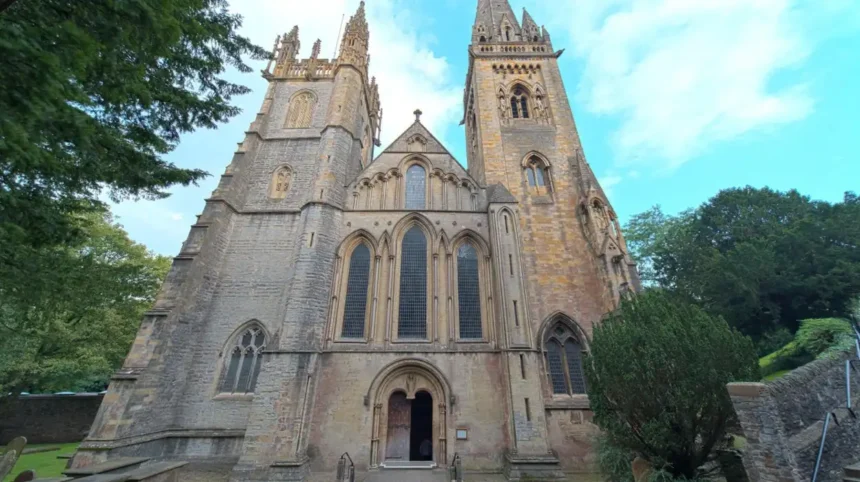
The cathedral should form the central point of the walk. Visitors can begin outside the building by examining its west front, towers and surrounding churchyard.
The west front contains surviving elements of the early Gothic cathedral. Its architectural development reflects the medieval expansion that followed the Norman foundation.
The cathedral interior provides another major section of the route. Visitors can observe architectural details from different periods rather than a single uniform design. Norman stonework, medieval structures, Victorian restoration and twentieth-century reconstruction appear within the same building.
The Chapter House is an important medieval component. It was added by the middle of the thirteenth century and forms part of the cathedral’s medieval architectural development.
The Lady Chapel also contributes to the historical structure. It dates from the thirteenth century and is associated with Bishop William de Braose.
The south aisle contains evidence of the cathedral’s earlier history. The cathedral identifies a late tenth- or early eleventh-century cross in this area. Such surviving material provides an architectural connection to the pre-Norman period.
The cathedral also contains medieval monuments. These include carved effigial monuments dating from the thirteenth to sixteenth centuries. Some memorials have uncertain identities, while others preserve information about medieval individuals connected with the cathedral.
Art is another important part of the visitor experience. The cathedral’s tour information identifies the Pulpitum, Majestas and Rossetti Triptych among its significant artworks. The Rossetti Triptych is also known as The Seed of David.
The Victorian restoration provides a further layer. John Prichard and John Pollard Seddon transformed the building during the nineteenth century. Victorian artistic influences can be seen alongside earlier medieval structures.
The Second World War is equally significant. The 1941 bombing caused extensive damage, and the restoration that followed changed parts of the cathedral’s appearance and interior. The wartime history therefore forms an essential part of the walking interpretation.
Outside the cathedral, Cathedral Close provides the transition from the religious complex to Llandaff village. Historic streets and buildings create a compact walking environment.
Visitors can then extend the walk towards the River Taff. This changes the experience from architectural heritage to riverside landscape. The combination provides a broader understanding of Llandaff’s geographical setting.
How should you plan a Llandaff Cathedral walking route?
A practical Llandaff Cathedral walking route starts at Cathedral Close, explores the cathedral and churchyard, continues through historic Llandaff, then extends towards the River Taff before returning through the village or connecting with Cardiff’s wider walking network.
A simple route structure keeps the visit focused. Start at Llandaff Cathedral and allow enough time to examine both the exterior and interior.
The cathedral currently publishes opening information for visitors. Its listed regular opening hours are Monday to Saturday from 8:00am to 5:30pm and Sunday from 8:00am to 4:00pm. Services and events can affect access, so visitors should check the cathedral’s current information before travelling.
The first walking section should remain within Cathedral Close. This provides the clearest introduction to the historic environment.
After viewing the cathedral, walk through the surrounding streets of Llandaff. The village setting provides context for the cathedral and demonstrates the relationship between the religious centre and the historic settlement.
The route can then continue towards the River Taff. The river section introduces a different landscape and provides an opportunity to combine heritage walking with riverside scenery.
Visitors should treat the route length as flexible. A short cathedral-focused walk works for visitors with limited time. A longer itinerary that includes the village and river requires additional walking time.
The cathedral itself recommends allowing approximately 45 minutes to one hour for a typical guided tour. Its current visitor information also states that guided tours can range from 45 to 95 minutes depending on the itinerary.
For independent visitors, a longer visit is useful because the building contains multiple historical periods. Rushing through the cathedral reduces the opportunity to understand the differences between Norman, medieval, Victorian and post-war architecture.
The route also works well as part of a broader Cardiff walking day. Llandaff is close enough to Cardiff’s urban core to connect with other walking and transport options.
Public transport provides another planning option. Cadw states that trains from Cardiff Central to Fairwater take approximately 10 minutes, followed by a 10-to-15-minute walk to the cathedral. Bus routes 25, 63 and 66 from Westgate Street take approximately 25 to 30 minutes to reach the Black Lion stop near Llandaff High Street.
Car access is also available. Cadw states that parking in the area of the cathedral is free and unrestricted, while a car park off Llandaff High Street provides the first two hours free.
Visitors should still verify parking conditions and transport information before travelling because local arrangements change.
What historical landmarks should you understand during the walk?
The principal historical landmarks include the Norman cathedral remains, medieval Chapter House and Lady Chapel, historic monuments, Victorian restoration features, Prichard Tower, wartime damage evidence and post-war architectural additions that define Llandaff Cathedral’s present appearance.
The Norman period provides the first major architectural layer. Bishop Urban’s building campaign around 1120 established the foundation of the present cathedral. The sanctuary arch and later Norman doorways remain important evidence from this period.
The early Gothic west front represents the next major phase. Bishop Henry of Abergavenny was responsible for the west front and nave, with work connected to the West Country school of masons associated with centres such as Wells and Glastonbury.
The Chapter House represents thirteenth-century expansion. Chapter houses were important spaces for cathedral administration and the formal life of the cathedral chapter.
The Lady Chapel provides another medieval reference point. Its construction is associated with William de Braose, who served as Bishop of Llandaff during the thirteenth century.
Medieval monuments also contribute to the walking experience. The cathedral preserves carved effigies and memorial slabs from the thirteenth to sixteenth centuries. These features connect the architecture with individual people who formed part of the cathedral’s historical community.
The eighteenth century represents a period of major structural decline. The collapse of a tower caused severe damage, leaving the nave roofless. John Wood the Elder later constructed a new building as part of an attempt to restore the cathedral.
The Victorian restoration replaced much of this eighteenth-century intervention. John Prichard and John Pollard Seddon played major roles in reshaping the building during the nineteenth century.
The Prichard Tower is one of the most recognisable elements associated with this restoration. Construction took place between 1867 and 1869.
The Cardiff Blitz forms another essential historical landmark in the route. On 2 January 1941, a German parachute mine exploded near Llandaff Cathedral. The blast caused substantial structural and interior damage.
The bombing destroyed or damaged the roof, south aisle, chancel, Chapter House and numerous furnishings. The cathedral’s Rossetti Triptych and some Victorian stained glass had already been moved to safety, which helped preserve important works.
George Pace led the post-war restoration. His work created another architectural layer that visitors can identify when examining the cathedral today.
The St David or Welch Regiment Chapel was added during this restoration period. Its presence also demonstrates the cathedral’s role as a place of commemoration.
Understanding these historical layers changes how visitors interpret the walk. The route is not simply a journey between attractions. Each section represents a different phase in the development, destruction and restoration of Llandaff Cathedral.
How accessible is the Llandaff Cathedral Walk?
Llandaff Cathedral provides wheelchair access at its east and west ends, while nearby transport and parking options support different visitor needs. Visitors should check current conditions because individual streets, paths, services and events can affect accessibility.
The cathedral states that wheelchair access is available at both the east and west ends of the building. This provides designated access points for visitors with mobility requirements.
Accessibility outside the cathedral depends on the specific route selected. Cathedral Close and surrounding streets form the core heritage area, while the route towards the River Taff introduces additional paths and outdoor surfaces.
Visitors with mobility requirements should therefore distinguish between cathedral accessibility and full-route accessibility. Access to the building does not automatically mean every section of an extended riverside walk has identical conditions.
Transport planning also affects accessibility. Cadw identifies the Fairwater rail option as involving a 10-to-15-minute walk from the station to the cathedral. Bus routes stop near Llandaff High Street.
Car parking provides another option for visitors who require shorter transfers. Cadw states that parking in the cathedral area is free and unrestricted, with additional parking available off Llandaff High Street.
Visitors should check the cathedral’s current visitor information before travelling. The cathedral states that services and events can lead to short-notice closures or restrictions.
The best accessibility strategy is to plan the route around the cathedral first. Visitors can then determine whether extending the walk towards the village or River Taff fits their individual mobility requirements.
When is the best time to visit Llandaff Cathedral?
The best time to visit depends on the purpose of the walk. Morning visits provide early access, while quieter periods support architectural exploration. Visitors should check services, concerts and events because cathedral activities can change visitor access.
Llandaff Cathedral operates as an active place of worship. This distinguishes it from a heritage building that functions solely as a museum.
The cathedral publishes regular opening times, but its visitor guidance specifically warns that services and events can require short-notice changes to access.
Morning visits provide a practical option for visitors who want to explore the building before spending additional time around Llandaff village and the River Taff.
Sunday visits require additional planning because the cathedral has a programme of worship. The cathedral lists multiple Sunday services, including Holy Eucharist, Choral Eucharist and Choral Evensong or evening services.
Weekday visits can provide greater flexibility for an independent heritage walk, although visitors should still check the current events calendar.
Seasonal conditions also affect the outdoor part of the walk. The cathedral itself remains an indoor attraction, but paths and streets around Llandaff are exposed to Cardiff’s weather.
A practical visit therefore begins with checking three factors: cathedral opening information, scheduled services or events, and the condition of the chosen outdoor route.
This approach keeps the itinerary flexible without changing the historical focus of the walk.
Explore More Area Guide
Best Fish and Chips in Rumney: Cardiff Guide 2026
What makes Llandaff Cathedral Walk important for Cardiff visitors?
Llandaff Cathedral Walk connects Cardiff’s modern urban identity with more than a thousand years of religious, architectural and cultural history. It provides concentrated heritage access within Llandaff while linking the cathedral with streets, green spaces and the River Taff.
Llandaff Cathedral is important within Cardiff because it represents a historical centre that predates the modern capital city.
The site’s Christian history reaches back to at least the sixth century. The present cathedral began during the Norman period around 1120. This gives the site a documented historical sequence spanning medieval and modern Wales.
The cathedral also demonstrates how religious buildings change through time. Its architecture contains evidence of Norman construction, medieval enlargement, Victorian restoration and twentieth-century reconstruction.
The 1941 bombing adds an important modern historical dimension. The cathedral was severely damaged during the Cardiff Blitz, linking its history directly to the wider wartime experience of Cardiff.
The building’s survival also demonstrates the importance of conservation. Post-war restoration preserved the cathedral as an active place of worship and a heritage site.
The walk contributes to Cardiff’s wider visitor economy by extending tourism beyond the city centre. Visitors who travel to Llandaff encounter a different urban environment while remaining within Cardiff.
The cathedral also functions as a cultural venue. Cadw identifies it as an important place of worship and heritage and notes its use as a concert venue.
This combination of functions makes the cathedral relevant to several types of visitors. Heritage tourists can study its architecture. Religious visitors can attend worship. Architecture enthusiasts can examine different construction periods. Walkers can combine the cathedral with Llandaff’s streets and riverside environment.
The route therefore has long-term relevance as a Cardiff heritage experience. Its principal attractions are historical rather than dependent on a temporary event or seasonal trend.
For search users looking for a Cardiff walking route, the cathedral provides a clearly identifiable destination with strong historical context. For visitors looking for historic places in Cardiff, the surrounding village provides an additional layer beyond the cathedral itself.
The result is a compact walking experience that combines architecture, religion, local history and landscape.
How can you make the Llandaff Cathedral Walk more informative?
The most informative approach is to treat the walk as a chronological heritage route. Begin with early Christian history, examine Norman and medieval architecture, identify Victorian restoration, understand the 1941 bombing, then finish with post-war reconstruction and the surrounding landscape.
A chronological approach makes the architecture easier to understand.
Begin with the early Christian history associated with Saints Dyfrig and Teilo. The cathedral’s historical record places Christian activity at the site at least as early as the sixth century.
Move next to the Norman period. Bishop Urban’s construction campaign around 1120 established the main medieval cathedral that later bishops expanded.
Continue to the medieval architectural additions. The Chapter House and Lady Chapel demonstrate the cathedral’s expansion during the thirteenth century.
Then examine the later changes that resulted from periods of decline and structural damage. The eighteenth-century collapse of the tower represents one of the building’s most significant episodes of deterioration.
Victorian restoration should be viewed as a separate architectural phase. Prichard and Seddon restored and reshaped the cathedral during the nineteenth century.
The 1941 bombing then provides the twentieth-century turning point. The cathedral’s records document extensive damage to its roof, Chapter House, nave, south aisle and chancel.
Finally, examine the post-war restoration. George Pace’s work restored the cathedral and added new elements, including the St David or Welch Regiment Chapel.
This sequence provides a clear framework for interpreting the building without relying on a guidebook alone.
Visitors interested in deeper historical research can arrange a guided tour. The cathedral states that tours normally last approximately 45 minutes to one hour, while its visitor information gives a possible range of 45 to 95 minutes depending on the itinerary.
A guided tour also provides additional information about artworks and architectural features. The cathedral specifically identifies the Pulpitum, Majestas and Rossetti Triptych among the subjects that can form part of its tours.
For an independent visitor, the most useful method is to identify the historical period represented by each major feature. This turns the walk into a structured heritage study.
Llandaff Cathedral Walk ultimately works because the geographical distance between its main features is manageable while the historical distance between them spans centuries. The route provides a concentrated introduction to Cardiff’s religious and architectural heritage.
Llandaff Cathedral Walk is a compact Cardiff heritage experience centred on one of Wales’s oldest Christian sites. Christian activity dates from at least the sixth century, while the present cathedral began around 1120 under Bishop Urban.
The route brings together Norman architecture, medieval additions, Victorian restoration, wartime destruction and post-war reconstruction. The surrounding village and River Taff provide additional walking opportunities beyond the cathedral itself.
For visitors, the strongest approach is to begin at Cathedral Close, explore the cathedral and churchyard, continue through historic Llandaff, then extend the route towards the River Taff according to available time and mobility requirements.
Current opening arrangements, services, events and access conditions should be checked before travelling. The cathedral provides the latest visitor information and transport guidance through its official visitor pages.
What is the Llandaff Cathedral Walk?
The Llandaff Cathedral Walk is a heritage-focused walking route around Llandaff Cathedral, Cathedral Close, historic Llandaff village and nearby routes towards the River Taff.