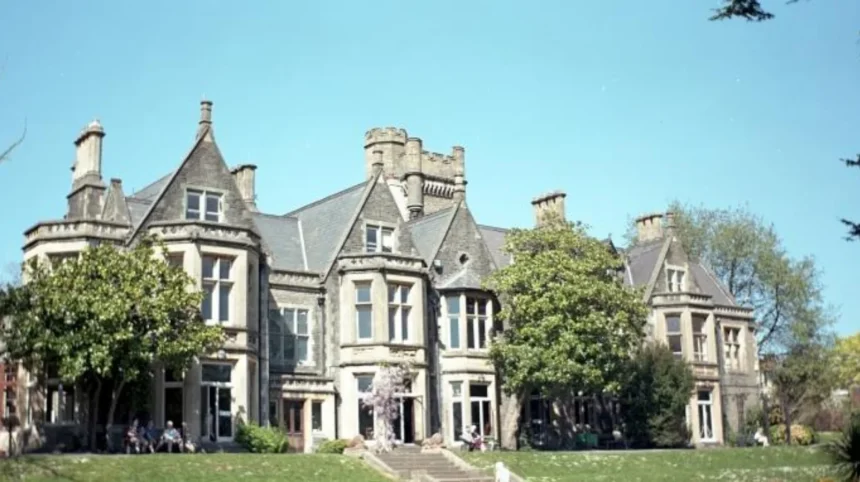
Llandaff is one of Cardiff’s most historically significant residential areas. Its architectural character combines medieval ecclesiastical buildings, eighteenth-century houses, Victorian villas, Gothic Revival mansions, landscaped estates, and later suburban development. The area developed around Llandaff Cathedral and the River Taff, then expanded as Cardiff became a major industrial and commercial city.
- Why does Llandaff contain so many historic villas?
- When did Llandaff’s historic villa development accelerate?
- What is Insole Court and why is it important?
- What happened to Insole Court after the Insole family left?
- What is Llandaff House and how old is it?
- What can visitors see at Llandaff Place?
- What is Rookwood and how does it fit Llandaff’s villa history?
- Which architectural styles appear in Llandaff’s historic villas?
- How did Cardiff’s coal industry influence Llandaff’s villas?
- Why is The Cathedral Green important when studying historic villas?
- How are Llandaff’s historic villas protected today?
- What makes Llandaff’s historic villas significant for visitors from Bristol?
- Why do Llandaff’s historic villas remain relevant today?
- What should visitors look for when exploring Llandaff’s historic villas?
The historic villas of Llandaff are especially important because they record the growth of wealthy residential life in nineteenth-century Cardiff. Coal owners, shipping entrepreneurs, industrialists, clergy, professionals, and senior civic figures invested in substantial houses around Fairwater Road, Cardiff Road, The Cathedral Green, and the surrounding streets.
The surviving buildings also show how architectural tastes changed. Georgian domestic Palladian design appears alongside Victorian Gothic Revival and Italianate architecture. Insole Court provides the clearest example of a house that expanded repeatedly as its owner’s wealth increased. Llandaff House represents an earlier eighteenth-century tradition, while Llandaff Place demonstrates the emergence of large mid-nineteenth-century urban villas.
Cadw, the Welsh Government’s historic environment service, protects buildings of special architectural or historic interest through statutory listing. Cardiff Council also manages conservation areas and local heritage controls. Cardiff contains around 1,000 listed buildings, while Llandaff itself contains an important concentration of historic structures.
For visitors from Bristol, Llandaff offers a particularly accessible architectural heritage destination. The historic core sits within Cardiff and provides a compact area for viewing historic houses, cathedral buildings, walls, gardens, and streetscapes.
Why does Llandaff contain so many historic villas?
Llandaff contains historic villas because its medieval cathedral setting, rural position beside Cardiff, and proximity to nineteenth-century industrial wealth attracted affluent residents who built substantial houses as Cardiff expanded. Coal, shipping, commerce, professional employment, and ecclesiastical status all contributed to this residential development.
Llandaff’s residential history is closely connected to its position outside the historic centre of Cardiff. Before modern suburban expansion, it was a distinct settlement with a powerful ecclesiastical identity centred on Llandaff Cathedral.
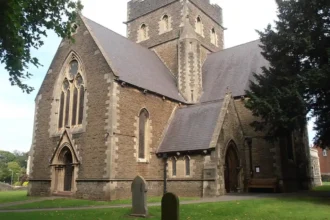
The cathedral has Christian associations dating from at least the sixth century. The present cathedral developed substantially from the Norman period, beginning around 1120 under Bishop Urban. This long ecclesiastical history established Llandaff as a settlement with considerable institutional importance.
By the eighteenth century, substantial houses already existed around the village. Llandaff House was rebuilt during the mid-eighteenth century, while Llandaff Court was constructed in the 1740s for Admiral Thomas Mathews. The resulting architectural landscape provided an established upper-status residential environment before the major Victorian expansion.
The nineteenth century transformed the scale of this development. Cardiff became one of Britain’s major coal-exporting ports and industrial centres. Wealth generated through coal mining, shipping, docks, railways, and related businesses created a new class of affluent property owners.
Llandaff offered these residents larger plots and a more spacious environment than the increasingly dense commercial centre of Cardiff. Historic villas therefore formed part of a wider pattern of suburbanisation associated with industrial prosperity.

When did Llandaff’s historic villa development accelerate?
Historic villa development accelerated during the nineteenth century, particularly from the 1850s to the 1890s. Industrial prosperity, Cardiff’s expanding population, improved transport, and changing residential preferences encouraged wealthy families to establish large houses around Llandaff’s historic village and surrounding roads.
The 1850s were particularly important. James Harvey Insole began constructing Ely Court, now Insole Court, in 1855. The house was initially a relatively modest gentleman’s residence designed by W. G. and E. Habershon.
The building expanded as the Insole family’s commercial fortunes increased. George Robinson and Edwin Seward became involved in later alterations, and further work transformed the original house into a much larger Victorian mansion.
Other substantial residences appeared during the same period. Llandaff Place was built around 1855 as a group of large semi-detached houses. Its design incorporated Italianate characteristics, rendered elevations, large sash windows, balconies, canted bays, and substantial rear wings. Cadw identifies the group as an unusual mid-nineteenth-century urban house type for Cardiff.
Rookwood provides another important example. The original house was built in 1866 for Colonel Edward Stock Hill. Extensions followed in 1881, including a porte-cochère and additional wing designed by John Prichard. The development reflected the increased wealth and status of its owner.
These buildings demonstrate that Llandaff’s villa development was not a single architectural project. It was a gradual process shaped by individual families, architects, landowners, professional networks, and Cardiff’s expanding economy.
What is Insole Court and why is it important?
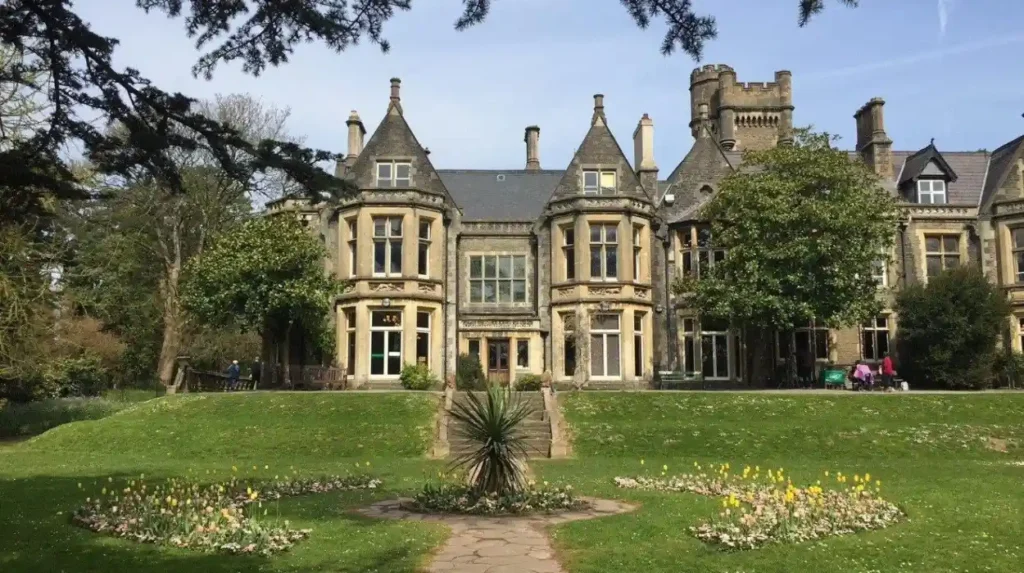
Insole Court is a Grade II listed Victorian mansion in Llandaff, originally built in 1855 as Ely Court for coal and shipping entrepreneur James Harvey Insole. Successive extensions between 1873 and 1909 created its distinctive Gothic Revival and Edwardian architectural character.*
Insole Court is the most prominent historic villa associated with Llandaff’s industrial heritage. Cadw records the building as Grade II*, a designation reflecting particularly important architectural or historic interest.
The original house was constructed in 1855 by W. G. and E. Habershon for James Harvey Insole. It was then called Ely Court. The original design was substantially smaller than the building seen today.
George Robinson remodelled the property in 1873. Edwin Seward became involved in subsequent work, and the house was greatly enlarged in 1875. Further alterations took place in 1898 and between 1906 and 1909.
The architectural development reflects the family’s changing economic position. James Insole operated in the coal industry and controlled interests connected with Cymmer Colliery in the Rhondda Valley. His commercial activities extended into coal transportation and international markets. The Dictionary of Welsh Biography records that Insole and his father revived collieries at Cymmer and developed extensive coal-trading connections.
Insole Court therefore provides direct evidence of the relationship between South Wales industrial wealth and elite residential architecture.
The building’s Gothic Revival character became increasingly elaborate during later extensions. Its architectural development included substantial internal remodelling and features influenced by William Burges’s work at Cardiff Castle.
Its surrounding estate is equally important. The grounds include historic terraces, garden structures, a drive, stable buildings, and other features associated with the original estate. The stable block is itself Grade II listed.
What happened to Insole Court after the Insole family left?
The Insole family left Insole Court in 1938. The property subsequently served wartime and community purposes, entered a period of decline, and underwent major conservation work in 1995. It now functions as a heritage and community destination within Llandaff.
The property’s twentieth-century history demonstrates the changing role of large private houses.
Cardiff City Corporation acquired the wider estate in 1932. Much of the surrounding land was subsequently used for roads and housing. The Insole family left the mansion in 1938.
A serious fire damaged the property in 1939. During the Second World War, the building became associated with Cardiff’s Air Raid Precautions organisation. Its use therefore shifted from private residence to civic and emergency functions.
After the war, the property was used for community purposes. A public library occupied part of the building until the late 1970s.
The mansion then experienced a prolonged period of decline. Its future became uncertain, and demolition was considered. Conservation efforts eventually secured the building’s survival.
Major repair and conservation work in 1995 restored much of the appearance associated with the final Insole building programme of 1909. Cadw records this conservation history as a significant part of the building’s modern story.
Today, Insole Court operates as a community and heritage venue. Cadw describes it as a Grade II* listed mansion with restored grounds and a programme of public activity.
What is Llandaff House and how old is it?
Llandaff House is an eighteenth-century domestic Palladian house at the junction of Fairwater Road and Cardiff Road. The surviving building dates from around 1750 and later served as a deanery before being enlarged and divided into separate residences.
Llandaff House is important because it predates the major Victorian villa expansion. It represents an earlier architectural phase in the development of Llandaff.
Cadw records the building at 4 Fairwater Road as Grade II listed. Its origins are traced to the mid-eighteenth century, with the surviving architectural evidence indicating a date close to 1750.
The house was rebuilt for Thomas Edwards, who was steward to Cardiff Castle. Its design is described as domestic Palladian in character. Palladian architecture draws from classical architectural principles associated with symmetry, proportion, formal façades, and classical detailing.
Llandaff House later became the Deanery between 1847 and 1860. Dean John Conybeare, who was associated with the rebuilding of Llandaff Cathedral, occupied the property for part of this period.
Further alterations occurred around 1880. The house was subsequently divided into two residences in the early twentieth century. Cadw’s record identifies the surviving original features and later alterations as important components of its architectural significance.
Its location is also significant. It stands at a major entrance point to the historic village and helps establish the architectural transition between Llandaff’s historic core and later residential development.
What can visitors see at Llandaff Place?
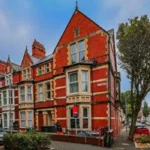
Llandaff Place consists of historic mid-nineteenth-century houses built around 1855, recognised for their Italianate design and unusual urban character. Their rendered façades, sash windows, canted bays, balconies, slate roofs, and substantial rear wings remain important architectural features.
The buildings at Llandaff Place illustrate a different form of historic villa development from Insole Court.
Cadw lists Nos. 1–4 Llandaff Place as a group of large houses positioned back from Cardiff Road. The group contains two semi-detached pairs. Two houses remain domestic in character, while another has had a different institutional history.
Their architecture combines Italianate influences with the scale expected of substantial Victorian residences.
Important features include three-storey elevations, semi-basements, large plate-glass sash windows, canted bays, decorative porches, fanlights, balconies, bracketed eaves, Welsh slate roofs, and rear wings.
The use of stucco or rendered façades distinguishes the houses from some of Llandaff’s local-stone buildings. Cadw specifically identifies the group as an unusual example of a mid-nineteenth-century urban house type in Cardiff.
For architectural visitors, Llandaff Place is significant because it demonstrates how Victorian villa architecture could be adapted to a more compact urban setting. It also illustrates the variety of residential forms that appeared alongside larger detached mansions.
What is Rookwood and how does it fit Llandaff’s villa history?
Rookwood began as a substantial nineteenth-century residence built in 1866 for Colonel Edward Stock Hill. Later additions by John Prichard increased its scale and status, and the property subsequently became associated with institutional healthcare as Rookwood Hospital.
Rookwood stands on Fairwater Road and forms part of Llandaff’s important concentration of historic residential architecture.
The original building was known simply as Rookwood. Cadw records the main building as Grade II listed. The nucleus dates from 1866 and was constructed for Colonel Stock Hill.
The property expanded in 1881. John Prichard, an important Cardiff architect associated with Llandaff Cathedral’s nineteenth-century restoration, designed the porte-cochère and south-west wing. A Camellia House was also added.
These changes reflect the architectural culture of Victorian wealth. Large houses were frequently expanded with reception spaces, service facilities, ornamental features, carriage access, and landscaped grounds.
Rookwood’s earlier estate history also connects it to Llandaff House. A summerhouse and underground vaulted chamber within the later Rookwood grounds are separately listed. Cadw’s record identifies the summerhouse as probably dating from the mid-eighteenth century and originally associated with the grounds of Llandaff House.
This connection demonstrates how later Victorian estates sometimes absorbed or incorporated elements from earlier landscapes.
Which architectural styles appear in Llandaff’s historic villas?
Llandaff’s historic villas represent several architectural traditions, including Georgian Palladian, Italianate, Victorian Gothic Revival, and Edwardian design. Llandaff House illustrates Palladian architecture, Llandaff Place represents Italianate design, while Insole Court demonstrates Gothic Revival and later Edwardian development.
The architectural diversity of Llandaff reflects changes in British taste between the eighteenth and twentieth centuries.
Georgian Palladian architecture appears most clearly at Llandaff House. Its formal proportions and classical character belong to an eighteenth-century tradition of country and suburban houses.
Italianate architecture appears at Llandaff Place. Its decorative façades, large windows, balconies, canted bays, and bracketed eaves demonstrate the popularity of Italian architectural references during the Victorian period.
Gothic Revival dominates the later development of Insole Court and appears elsewhere around Llandaff’s ecclesiastical setting. Gothic Revival was especially compatible with a district dominated by a medieval cathedral and ecclesiastical buildings.
Insole Court’s successive alterations also demonstrate how architectural styles evolved within a single building. Its Victorian Gothic character was followed by substantial Edwardian additions.
The architectural history therefore cannot be reduced to one “Llandaff style”. The surviving villas provide a chronological record of changing design preferences and changing patterns of wealth.
How did Cardiff’s coal industry influence Llandaff’s villas?
Cardiff’s coal industry created substantial private wealth that financed large houses in residential districts such as Llandaff. Coal owners and associated entrepreneurs invested in substantial villas, landscaped estates, architectural extensions, and domestic facilities that expressed their economic and social position.
The relationship between coal wealth and Llandaff’s architecture is particularly clear at Insole Court.
James Harvey Insole was a colliery proprietor whose business interests included Cymmer Colliery in the Rhondda Valley. His family’s commercial activity expanded into coal transportation and international trade.
The construction of Ely Court in 1855 occurred during this period of industrial expansion. The later enlargement of the property followed increasing family wealth.
The architectural chronology therefore provides a physical record of economic development. A modest 1855 house became a much larger Victorian and Edwardian mansion through successive commissions.
Rookwood provides another connection between industrial wealth and residential architecture. It was built for Colonel Stock Hill, associated with Hill’s Dry Docks in Cardiff. The Llandaff Society records Rookwood’s construction in 1866.
These houses also reveal the wider economic network behind Cardiff’s prosperity. Coal required railways, docks, shipping, engineering, finance, construction, and professional services. Wealth from these interconnected industries supported the creation of substantial residential districts.
Why is The Cathedral Green important when studying historic villas?
The Cathedral Green is important because it preserves a concentrated historic streetscape containing ecclesiastical buildings, houses, walls, and former residences. Its architectural group demonstrates how Llandaff’s medieval cathedral setting remained central to later residential development.
The Cathedral Green forms the historic heart of Llandaff.
Its significance extends beyond the cathedral itself. Several listed buildings and associated structures contribute to the character of the area.
Pendinas, for example, is a Grade II listed house built between 1861 and 1863. It was designed by Ewan Christian and constructed as a canonry. Its design uses polychromatic local stone, Bath limestone dressings, a steeply pitched slate roof, and Gothic architectural details.
The associated garden wall is separately listed because of its contribution to the historic group around The Cathedral Green.
The Cathedral Green therefore illustrates a distinctive relationship between domestic and ecclesiastical architecture. Houses were not isolated from the cathedral environment. Their materials, scale, boundaries, gardens, and architectural forms contributed to a unified historic landscape.
The Cathedral School is another important building. The existing structure originated as Llandaff Court in 1744–51 and was later used as the Bishop’s Palace. Cadw lists it at Grade II*.
How are Llandaff’s historic villas protected today?
Llandaff’s historic villas are protected through statutory listed-building controls, conservation-area policies, planning requirements, and recognition of historic landscapes. Cadw manages national listing in Wales, while Cardiff Council administers local planning and conservation controls.
Listing is a legal heritage designation. Cadw explains that listing recognises buildings and structures of special architectural or historic interest under the Historic Environment (Wales) Act 2023.
Listed status does not simply protect a building’s front façade. The statutory definition can include the entire building, fixed structures, and qualifying historic structures within its curtilage.
Cardiff Council states that listed building consent is required where proposed alterations or extensions affect the character of a listed building or its curtilage. A Heritage Impact Statement is required for listed-building consent applications.
Conservation areas provide another layer of protection. Cardiff Council identifies a Llandaff Conservation Area and publishes an appraisal describing its character and heritage significance.
These controls are important for historic villas because architectural significance extends beyond individual houses. Windows, doors, roofs, boundary walls, garden structures, mature landscapes, and relationships between buildings can all contribute to historic character.
Owners therefore need to consider heritage requirements before undertaking substantial external or structural alterations.
What makes Llandaff’s historic villas significant for visitors from Bristol?
Llandaff offers visitors from Bristol a concentrated architectural heritage experience within Cardiff, combining eighteenth-century houses, Victorian villas, Gothic Revival mansions, cathedral buildings, historic gardens, and protected streetscapes within a compact historic district.
The area is particularly suitable for visitors interested in architectural history rather than a single landmark.
A visit can begin around Llandaff Cathedral and The Cathedral Green before continuing towards Llandaff House and Llandaff Place. Fairwater Road provides access to several important buildings, including Insole Court and the historic Rookwood site.
The architecture demonstrates several centuries of development within a relatively small geographical area.
The eighteenth-century period is represented by Llandaff House and Llandaff Court. The Victorian period introduced larger villas such as Insole Court, Rookwood, Llandaff Place, and Pendinas. Later twentieth-century changes demonstrate how these buildings acquired new uses as Cardiff expanded.
The cathedral provides the essential historical context. Its origins reach back to the early medieval period, while its Norman, Gothic, Victorian, and post-war phases explain why Llandaff became such an important architectural centre.
For visitors travelling from Bristol, Llandaff also provides a useful comparison with historic residential areas across the Bristol region. Both cities developed strong architectural connections with trade, industry, shipping, professional wealth, and Victorian urban growth.
Explore More Area Guide
Hidden Art Deco Buildings Around Cardiff, Wales 2026
History of Cardiff’s Terraced Housing: Victorian Cardiff 2026
Why do Llandaff’s historic villas remain relevant today?
Llandaff’s historic villas remain relevant because they preserve evidence of Cardiff’s industrial expansion, changing architectural tastes, social history, and suburban development. Their continued conservation also supports heritage tourism, community use, architectural research, and understanding of Cardiff’s transformation.
Historic villas are valuable records of urban development.
Insole Court demonstrates the direct connection between industrial wealth and residential architecture. Llandaff House preserves an earlier eighteenth-century tradition. Llandaff Place records the development of substantial Victorian urban housing. Rookwood illustrates the transformation of a private residence into an institutional site.
Their significance extends beyond appearance. The buildings document the people who commissioned them, the architects who designed them, the industries that financed them, and the social structures that shaped nineteenth-century Cardiff.
Research into Insole Court has also demonstrated the value of architectural archives. Academic research has reconstructed room names and aspects of the building’s Edwardian remodelling using historic documentation.
Conservation ensures that these physical records remain available for future research.
The historic landscape also has educational value. Visitors can observe how architectural styles changed over time without travelling between distant parts of the city.
Llandaff’s villas therefore form part of Cardiff’s wider historic environment rather than functioning as isolated old houses. Their value comes from the relationship between buildings, roads, gardens, walls, the cathedral, and the surrounding landscape.
What should visitors look for when exploring Llandaff’s historic villas?
Visitors should look beyond façades and examine architectural details, building materials, roof forms, windows, entrances, boundary walls, gardens, estate buildings, and relationships with surrounding streets. These features reveal the different periods and social functions represented across Llandaff’s historic residential landscape.
Architectural details provide the clearest evidence of different construction periods.
At Llandaff House, visitors can identify the formal character associated with eighteenth-century domestic Palladian architecture. At Llandaff Place, large sash windows, canted bays, balconies, rendered façades, and decorative entrances illustrate Victorian Italianate design.
At Insole Court, the scale of the mansion and its surrounding estate reveal the ambitions of a wealthy industrial family. The historic stable block and landscaped grounds add important evidence about how the estate operated.
At Pendinas, local stone, Bath limestone, steep slate roofs, and Gothic detailing reflect its nineteenth-century ecclesiastical residential function.
Boundary walls also deserve attention. Cadw lists several walls around The Cathedral Green and Pendinas because they contribute to the architectural group and historic setting.
This approach provides a more accurate understanding of Llandaff’s heritage. Historic villas are not simply attractive old buildings. They are surviving evidence of how architecture, industry, religion, wealth, planning, and suburban growth interacted across several centuries.
Historic villas in Llandaff form an important part of Cardiff’s architectural and social history. Their development reflects the transformation of Llandaff from an ancient cathedral settlement into an affluent residential district connected to Cardiff’s nineteenth-century industrial expansion.
Llandaff House provides an eighteenth-century foundation. Llandaff Place records the emergence of substantial Victorian urban villas. Rookwood demonstrates the relationship between industrial wealth and large private residences. Pendinas connects domestic architecture with the cathedral’s ecclesiastical environment. Insole Court provides the most complete example of a mansion repeatedly expanded as the Insole family’s wealth increased.
The preservation of these buildings is supported by Cadw’s listed-building system and Cardiff Council’s conservation policies. Their continued protection safeguards architectural details, historic landscapes, boundary walls, gardens, and estate structures alongside the main houses.
For visitors from Bristol, Llandaff provides a compact and historically dense destination. Its villas offer direct evidence of Georgian, Victorian, Gothic Revival, Italianate, and Edwardian architecture while also revealing the economic history of South Wales.
The result is a residential heritage landscape where individual houses form part of a much larger historical record of Cardiff, Llandaff Cathedral, industrial prosperity, and suburban development.
What are the most important historic villas in Llandaff?
The most important historic villas and houses in Llandaff include Insole Court, Llandaff House, Llandaff Place, Rookwood, and Pendinas. These buildings represent different periods, including Georgian, Victorian, Italianate, Gothic Revival, and Edwardian architecture.