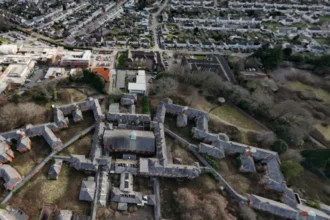
Llanishen is a residential suburb located in the north of Cardiff, the capital city of Wales, United Kingdom. The area is home to thousands of residents and encompasses a mix of housing estates, green spaces, schools, and local amenities. Like many urban and suburban communities across Wales and England, Llanishen faces challenges related to antisocial behaviour, which affects the quality of life for residents and places pressure on local authorities, police services, and housing providers.
- What Is Antisocial Behaviour and How Is It Defined in Law?
- What Types of Antisocial Behaviour Are Most Common in Llanishen?
- What Legal Powers Do Authorities Have to Address Antisocial Behaviour in Llanishen?
- How Can Llanishen Residents Report Antisocial Behaviour?
- What Role Does Cardiff Council Play in Tackling Antisocial Behaviour in Llanishen?
- What Is the Community Trigger and How Does It Help Llanishen Residents?
- How Does Antisocial Behaviour Affect the Llanishen Community?
- What Preventive Approaches Are Used to Reduce Antisocial Behaviour in Llanishen?
- What Should Llanishen Residents Do If They Feel Unsafe Due to Antisocial Behaviour?
Understanding what antisocial behaviour means, how it is defined under law, and what tools exist to address it is essential for every person living in or connected to the Llanishen area.
What Is Antisocial Behaviour and How Is It Defined in Law?
Antisocial behaviour is legally defined under the Anti-Social Behaviour, Crime and Policing Act 2014 as conduct that has caused, or is likely to cause, harassment, alarm, or distress to any person. This definition applies across England and Wales, including Llanishen in Cardiff.
The Anti-Social Behaviour, Crime and Policing Act 2014 replaced earlier legislation and introduced a range of new enforcement tools for authorities. Under this Act, antisocial behaviour is not a single offence but a broad category of conduct that disrupts communities. It includes persistent noise, harassment, intimidation, vandalism, substance misuse in public areas, and threatening behaviour. The key legal threshold is whether the conduct causes or is likely to cause harassment, alarm, or distress to a member of the public.
Cardiff Council, South Wales Police, and registered social landlords operating in Llanishen all use this legal definition when assessing complaints and deciding on enforcement responses. The definition is deliberately wide so that authorities retain the flexibility to respond to both minor and serious incidents. Welsh Government guidance supports local authorities in interpreting and applying these powers consistently across communities, including in suburban areas like Llanishen.
What Types of Antisocial Behaviour Are Most Common in Llanishen?
The most commonly reported forms of antisocial behaviour in residential areas like Llanishen include noise nuisance, youth disorder, fly-tipping, criminal damage, drug-related activity, and neighbour disputes. These categories account for the majority of complaints received by Cardiff Council and South Wales Police.
Noise nuisance is one of the most frequently reported issues in suburban communities. This includes loud music, domestic arguments audible from outside properties, barking dogs, and late-night disturbances. Cardiff Council’s noise enforcement team has powers to issue noise abatement notices under the Environmental Protection Act 1990, which applies directly to Llanishen residents.
Youth disorder is another significant concern in areas containing parks, play areas, and shopping precincts. Groups of young people gathering in public spaces can sometimes engage in intimidating behaviour, vandalism, or substance misuse. South Wales Police operates community policing initiatives targeting youth engagement in Cardiff North, the policing area that covers Llanishen. Fly-tipping, the illegal dumping of waste on public or private land, is a growing problem in many Cardiff suburbs and contributes to environmental degradation and a sense of neglect in affected streets and open spaces.
Criminal damage, including graffiti and the destruction of public or private property, is recorded and investigated by South Wales Police. Drug-related antisocial behaviour, including the use of controlled substances in open spaces or communal areas of residential blocks, presents serious public health and safety concerns. Neighbour disputes covering boundary issues, parking conflicts, and persistent harassment round out the most common categories dealt with by local agencies in Llanishen.
What Legal Powers Do Authorities Have to Address Antisocial Behaviour in Llanishen?
Authorities in Llanishen, including Cardiff Council and South Wales Police, hold a range of legal powers under the Anti-Social Behaviour, Crime and Policing Act 2014. These include Civil Injunctions, Criminal Behaviour Orders, Community Protection Notices, and Public Spaces Protection Orders.
A Civil Injunction can be granted by a civil court to prohibit a named individual from engaging in specific antisocial conduct. It can include positive requirements, such as attending a rehabilitation programme. Civil Injunctions replaced Anti-Social Behaviour Orders (ASBOs) as the primary civil tool following the 2014 Act. A breach of a Civil Injunction is treated as contempt of court and can result in imprisonment for adults.
A Criminal Behaviour Order (CBO) is issued by a criminal court following a conviction and can impose conditions on an offender to prevent further antisocial conduct. Cardiff Council and South Wales Police jointly apply for CBOs where persistent offenders have already been convicted of related offences in the Llanishen area. A Community Protection Notice (CPN) is issued directly by a council officer or police constable to stop behaviour that is having a detrimental effect on the quality of life of those in the locality. Breach of a CPN is a criminal offence carrying a fine.
A Public Spaces Protection Order (PSPO) is made by Cardiff Council to restrict certain activities within a defined public area. PSPOs have been used across Cardiff to address issues such as alcohol consumption in designated spaces and the control of dogs in public parks. Llanishen residents and councillors can petition Cardiff Council to consider a PSPO where recurring problems in specific locations are identified.
How Can Llanishen Residents Report Antisocial Behaviour?
Llanishen residents report antisocial behaviour through three main channels: Cardiff Council’s online reporting portal, South Wales Police via 101 for non-emergency matters, and directly to registered social landlords if the perpetrator is a social housing tenant. Emergency situations require a 999 call.
Cardiff Council operates a dedicated antisocial behaviour reporting service. Residents can submit complaints online, detailing the nature of the incident, the location, the time, and the frequency of the behaviour. Cardiff Council’s housing antisocial behaviour team handles cases involving council tenants and leaseholders. Reports submitted through the council are assessed against a priority framework, with the most serious cases receiving a response within 24 hours.
South Wales Police accepts reports of antisocial behaviour on their non-emergency number 101 or through the South Wales Police website. Officers from the Cardiff North Neighbourhood Policing Team are assigned to the Llanishen area and conduct regular patrols, community engagement activities, and targeted operations. In emergencies where violence or an immediate threat to safety is present, residents must call 999. Keeping a written log of incidents, including dates, times, and descriptions, significantly strengthens any complaint made to authorities and supports decisions about enforcement action.
What Role Does Cardiff Council Play in Tackling Antisocial Behaviour in Llanishen?
Cardiff Council is the primary local authority responsible for coordinating the response to antisocial behaviour in Llanishen. The council works through its housing, environmental enforcement, and community safety departments, and participates in the Cardiff Community Safety Partnership.
Cardiff Council’s Community Safety Team works alongside South Wales Police, South Wales Fire and Rescue Service, Cardiff and Vale University Health Board, and other statutory partners through the Cardiff Community Safety Partnership. This partnership was established under the Crime and Disorder Act 1998, which places a statutory duty on local councils and police to develop and implement strategies to reduce crime and disorder, including antisocial behaviour, in their areas.
The council employs dedicated antisocial behaviour case officers who investigate complaints, gather evidence, and initiate enforcement proceedings where appropriate. Case officers also have a role in early intervention, referring individuals displaying antisocial behaviour to support services including mental health services, substance misuse programmes, and youth offending teams. Cardiff Council publishes an annual community safety plan that sets out priorities and targets for reducing antisocial behaviour across the city, including in northern suburbs such as Llanishen. This plan is publicly available and informed by resident surveys, police data, and local intelligence gathered from community meetings.
What Is the Community Trigger and How Does It Help Llanishen Residents?
The Community Trigger, also called the Anti-Social Behaviour Case Review, is a legal right introduced under the Anti-Social Behaviour, Crime and Policing Act 2014. It allows residents who have reported antisocial behaviour three or more times within six months to request a formal review of their case.
The Community Trigger gives residents in Llanishen a direct mechanism to escalate persistent cases that they feel have not been adequately addressed. Once a resident meets the threshold of three reports within six months, they submit a Trigger application to Cardiff Council. Cardiff Council then convenes a multi-agency panel, which may include representatives from South Wales Police, housing providers, and other relevant agencies, to review the case and agree on an action plan.
The purpose of the Community Trigger is to ensure that agencies are held accountable for their response to ongoing antisocial behaviour. It prevents cases from being closed prematurely or falling between the responsibilities of different organisations. Cardiff Council publishes data annually on the number of Community Trigger applications received, reviewed, and the outcomes achieved. Residents in Llanishen who feel their complaints are not progressing are legally entitled to use this process without requiring a solicitor or legal representation.
How Does Antisocial Behaviour Affect the Llanishen Community?
Antisocial behaviour in Llanishen reduces residents’ sense of safety, lowers property values, discourages community participation, and increases fear of crime. Research published by the Home Office confirms that perceived antisocial behaviour has a direct negative impact on wellbeing and community cohesion.
The psychological impact of persistent antisocial behaviour on victims is well documented. Victims report increased anxiety, sleep disturbances, reluctance to use local public spaces, and a general deterioration in quality of life. The Crime Survey for England and Wales consistently records that areas with high perceived levels of antisocial behaviour report lower levels of trust in public institutions, including police and local government.
In residential areas like Llanishen, sustained antisocial behaviour can contribute to physical environmental decline. Vandalism, fly-tipping, and graffiti create visible signs of disorder that erode community pride and signal neglect to potential investors, businesses, and incoming residents. Research conducted by Cardiff University’s School of Social Sciences has examined the relationship between neighbourhood disorder and social capital in Welsh urban communities, finding that informal social networks deteriorate in areas where residents feel unsafe or unsupported by authorities. The economic cost to Cardiff Council of responding to antisocial behaviour, including environmental clean-up, legal proceedings, and housing management, represents a significant allocation of public resources each year.
What Preventive Approaches Are Used to Reduce Antisocial Behaviour in Llanishen?
Preventive approaches to antisocial behaviour in Llanishen include early intervention programmes for young people, community policing, environmental improvements, restorative justice schemes, and housing tenancy support. Prevention is recognised as more cost-effective than reactive enforcement.
South Wales Police supports youth engagement activities in Cardiff North through the Violence Prevention Unit, a Wales-wide initiative funded by the Welsh Government. The Violence Prevention Unit promotes public health approaches to violence and antisocial behaviour, addressing root causes such as adverse childhood experiences, educational disengagement, and social isolation. Schools in Llanishen participate in education programmes designed to build resilience and conflict resolution skills among young people.
Cardiff Council’s tenancy sustainment officers work with social housing tenants in Llanishen who are at risk of breaching their tenancy conditions due to antisocial behaviour. Early intervention at this stage prevents escalation to formal legal action and supports individuals with underlying needs. Environmental design improvements, such as improved lighting in alleyways, CCTV installation in identified hotspot locations, and the maintenance of public green spaces, reduce the opportunity for antisocial behaviour to occur. Restorative justice programmes, where perpetrators are brought face-to-face with those affected by their behaviour, are used as a diversion from formal legal proceedings for first-time or low-level offenders in the Cardiff area.
What Should Llanishen Residents Do If They Feel Unsafe Due to Antisocial Behaviour?
Residents in Llanishen who feel unsafe due to antisocial behaviour should contact South Wales Police on 101, report to Cardiff Council, keep a detailed incident log, speak to their housing officer if applicable, and access Victim Support Wales for independent assistance.
Documenting incidents is the single most important step a resident can take. A detailed log that records the date, time, location, description of events, names or descriptions of individuals involved, and any witnesses present provides authorities with the evidence base needed to take formal action. Photographic or video evidence of vandalism, fly-tipping, or public disorder is highly valuable in supporting enforcement decisions.
Victim Support Wales provides free, independent support to anyone affected by crime and antisocial behaviour in Wales. Support workers assist residents in understanding their rights, navigating reporting processes, and accessing counselling or practical help. Cardiff Council also operates a hate crime and harassment reporting service for cases where antisocial behaviour is motivated by a victim’s race, religion, disability, sexual orientation, or gender identity. Llanishen residents do not need to be in immediate danger to access these services. Persistent low-level antisocial behaviour that accumulates over time qualifies for support and investigation under the same frameworks as more acute incidents.
Llanishen antisocial behaviour is a documented community concern that Cardiff Council, South Wales Police, and partner agencies actively work to address through a combination of legal enforcement, early intervention, and environmental improvement. Residents hold legal rights under the Anti-Social Behaviour, Crime and Policing Act 2014 to report, escalate, and seek formal review of cases that have not been adequately resolved. Using established reporting channels, maintaining detailed records, and engaging with the Community Trigger process are the most effective actions available to Llanishen residents seeking resolution to ongoing antisocial behaviour in their neighbourhood.
How does anti social Behaviour affect the community?
Antisocial behaviour in areas like Llanishen reduces residents’ sense of safety, increases fear of crime, lowers property values, damages community cohesion, and strains public resources. It discourages community participation and contributes to environmental decline across residential neighbourhoods in Cardiff.
What are the two types of antisocial behavior?
The two types are personal antisocial behaviour, which targets specific individuals such as harassment and intimidation, and environmental antisocial behaviour, which affects the wider community such as fly-tipping, vandalism, and public disorder reported across Llanishen and Cardiff.
Is Llanishen part of Cardiff?
Yes, Llanishen is a residential suburb located in the north of Cardiff, the capital city of Wales. It falls under Cardiff Council’s administrative jurisdiction and is policed by South Wales Police under the Cardiff North Neighbourhood Policing Team area.
What does goshen mean biblically?
Goshen is a biblical term referring to the fertile land in Egypt where the Israelites settled during Joseph’s time, as recorded in Genesis. It represented safety and provision. This term has no direct connection to Llanishen antisocial behaviour or Cardiff communities.
Is London close to Cardiff?
London is approximately 150 miles east of Cardiff. By train, the journey takes around two hours via Great Western Railway. While both are major UK cities, Cardiff operates under separate Welsh Government legislation governing antisocial behaviour reporting and community safety responses like Llanishen.