
Cardiff’s St Mellons area grapples with escalating rush hour chaos that turns everyday commutes into frustrating ordeals. Narrow lanes like St Mellons Road, ill-equipped for modern volumes, routinely jam with heavy goods vehicles and coaches, despite clear signage warning against their use. This persistent issue underscores a broader challenge: can these roads truly handle the surge in traffic driven by population growth and urban expansion?
- Historical Roots of St Mellons Infrastructure
- Anatomy of Rush Hour Gridlock
- Impact on Daily Lives and Economy
- Key Causes: Growth vs. Capacity
- Proposed Solutions: Spine Road and Beyond
- Short-Term Fixes for Immediate Relief
- Long-Term Strategies for Sustainable Roads
- Community Voices and Council Response
- Environmental and Health Toll
- Future Outlook: Resilience or Breakdown?
- Navigating St Mellons Today
Historical Roots of St Mellons Infrastructure
St Mellons, a suburb on Cardiff’s eastern fringe, evolved from rural parish lands into a residential hub over decades. Originally a quiet countryside stretch linking villages like Lisvane and Pontprennau, its roads were designed for horse-drawn carts and light local traffic in the early 20th century. Post-World War II housing booms transformed the area, yet infrastructure lagged, with St Mellons Road retaining its single-lane character amid fields and farmsteads.
By the 1980s and 1990s, proximity to the M4 motorway positioned St Mellons as a commuter gateway, funneling workers toward Cardiff’s city center. Government planning documents from Cardiff Council highlight how this shift overloaded legacy routes without proportional upgrades. The road’s sharp bends, such as the notorious 90-degree turn near Heol Las, amplify risks, contributing to frequent near-misses and crashes that locals now avoid entirely during peak times.
This historical mismatch persists today. Academic studies on UK suburban sprawl, including those from Cardiff University’s transport research, note that areas like St Mellons exemplify “path dependency” in infrastructure—early designs lock in vulnerabilities that resist quick fixes.
Anatomy of Rush Hour Gridlock
Rush hour in St Mellons typically peaks between 7-9 AM and 4-6 PM, when M4 access routes choke under synchronized commuter flows. St Mellons Road, a key connector, sees HGVs and coaches ignoring “unsuitable for heavy vehicles” signs, causing tailbacks stretching into residential zones. Residents report daily blockages where lorries wedge into narrow bends, halting all movement for 20-30 minutes.
Contributing factors include inconsistent speed limits—plunging from 60mph to 20mph abruptly—and poor enforcement. One Marshfield resident witnessed multiple crashes in a single week at the Heol Las junction, attributing them to drivers accelerating through the natural curve. Construction traffic exacerbates this; proposals for 2,500 new homes north of the area predict up to 73 daily HGVs routing through these lanes, pushing existing strain to breaking point.
Data from local journalism underscores the scale: council meetings in 2025 revealed no immediate relief, with Cllr. Dan De’Ath acknowledging sympathy but offering no timelines. This chaos ripples outward, delaying buses, school runs, and emergency services across eastern Cardiff.
Impact on Daily Lives and Economy

For St Mellons residents, rush hour chaos erodes quality of life. Parents detour longer routes to avoid school-time pileups, while workers lose hours weekly in idling traffic, spiking stress and fuel costs. A petition launched by accident victims at the St Mellons Road junction demands safety barriers and signage upgrades, reflecting widespread frustration.
Economically, the fallout hits local businesses hard. Delivery vans trapped in gridlock delay goods to shops in Pontprennau and Lisvane, while commuters bypass the area, reducing footfall in cafes and services. Cardiff Council’s own reports link such congestion to broader productivity losses, estimating millions in regional economic drag from inefficient transport networks.
Environmentally, idling engines pump excess emissions into this semi-rural pocket, countering Wales’ net-zero goals. Research from UK transport academics highlights how unmanaged suburban traffic like this accelerates air pollution hotspots, disproportionately affecting vulnerable communities.
Key Causes: Growth vs. Capacity
Rapid housing development fuels St Mellons’ traffic woes. Plans for thousands of homes in northern Cardiff, debated in council committees as recently as 2023, promise population influx without matching road widening. St Mellons Road, once a backroad bypass, now shoulders overflow from M4 closures and city-bound queues.
Heavy vehicle misuse compounds this. Coaches to rural sites and construction lorries flout restrictions, as enforcement relies on sporadic patrols rather than tech like ANPR cameras. Speed fluctuations—high on open stretches, low near schools—create hazard zones, with locals like Ms. Lijertwood refusing the road outright for safer alternatives.
Underlying it all is deferred maintenance. Government audits of Welsh roads flag eastern Cardiff suburbs for underinvestment, prioritizing city-center projects over peripheral fixes.
Proposed Solutions: Spine Road and Beyond
Cardiff Council touts a new “spine road” as the long-term savior, designed to replace St Mellons Road’s burden by linking Lisvane directly to the M4. Discussed in 2025 meetings, it promises smoother HGVs flows and residential relief, though timelines remain vague—”in the future,” per Cllr. De’Ath.
Immediate measures could include enforceable HGV bans via weight sensors and fines, alongside gradual speed transitions like those on Marshfield’s coast road. Community calls urge highways officers to act urgently, preventing further deterioration before mega-developments greenlight more traffic.
Short-Term Fixes for Immediate Relief
While awaiting major builds, practical steps offer hope. Enhanced signage with LED warnings and physical barriers at pinch points, like the Heol Las reen bank, have shown promise—recent council installations reduced some incidents. Public transport boosts, such as dedicated bus lanes on parallel routes, could siphon commuters, easing private vehicle loads.
Tech interventions shine brightest. Smart traffic lights syncing with real-time M4 data, piloted elsewhere in Wales, prevent spillover jams. Resident-led apps for crowd-sourced alerts already help locals reroute, proving community ingenuity fills council gaps.
Enforcement ramps up viability too. Partnerships with Newport Council, given boundary overlaps, could deploy joint patrols, targeting rush hour offenders systematically.
Long-Term Strategies for Sustainable Roads
Visionary planning reimagines St Mellons beyond asphalt patches. Integrating cycle superhighways and pedestrian paths aligns with Welsh Government’s active travel mandates, reducing car dependency amid housing booms. Multimodal hubs near the M4 junction would park-and-ride commuters, slashing local volumes.
Developer contributions fund this shift. Section 106 agreements in new housing plans mandate road upgrades, ensuring growth pays its way. Academic models from Cardiff University advocate “predictive infrastructure,” using AI to forecast traffic from population data and preempt congestion.
Regional coordination elevates impact. Aligning Cardiff with Newport and Valleys authorities on M4 relief corridors prevents isolated fixes, fostering resilient networks for decades.
Community Voices and Council Response
Locals amplify urgency through petitions and meetings. Cllr. Reid-Jones pressed for HGV halts in 2025, spotlighting construction chaos, yet responses stayed non-committal. Residents like Mr. Dawkes contact dual councils for Heol Las fixes, highlighting cross-border snarls.
This grassroots push influences policy. Community councils debate crashes weekly, pressuring for barriers and limits. Such engagement models successful UK campaigns, like London’s suburban road diets, proving voices drive change.
Environmental and Health Toll
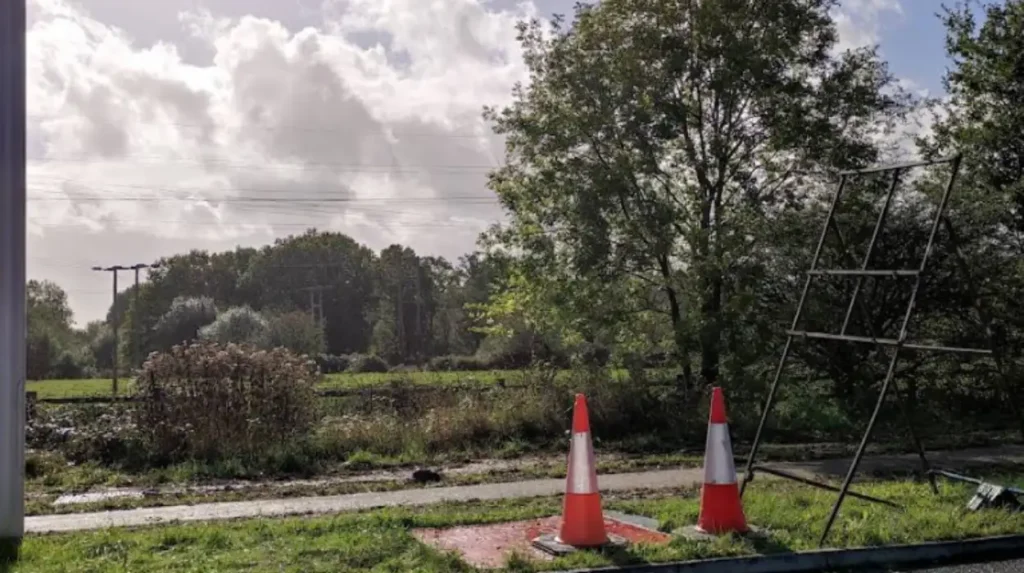
Beyond inconvenience, gridlock harms health. Prolonged exposure to tailpipe fumes elevates respiratory issues in St Mellons’ family-heavy neighborhoods, per Public Health Wales data. Idling during rush hour spikes particulates, clashing with clean air zones elsewhere in Cardiff.
Noise pollution disrupts sleep near bends, while stress from delays correlates with higher anxiety reports. Holistic fixes—greening verges, electric vehicle incentives—mitigate these, supporting Wales’ wellbeing goals.
Future Outlook: Resilience or Breakdown?
St Mellons roads teeter at capacity, but proactive steps could tip toward resilience. With spine road progress, enforced rules, and growth-tied investments, rush hour chaos might fade into manageable flows. Delays risk entrenching dysfunction, alienating residents and stunting suburb vitality.
Optimism lies in momentum: recent roadworks off St Mellons Road signal investment intent, minimizing peak disruptions.
Navigating St Mellons Today
Until upgrades arrive, savvy driving helps. Opt for pre-7 AM starts or apps like Waze for live detours via A48 or B4562. Carpooling cuts volumes, while advocating via petitions sustains pressure.
St Mellons embodies Cardiff’s suburban evolution pains—growth demanding adaptation. By blending history, data, and innovation, its roads can evolve to serve tomorrow’s traffic sustainably.
Why is 17 banned in F1?
In Formula One, the number 17 was retired after the death of driver Jules Bianchi in 2015. He had raced with that number, and the sport banned it as a mark of respect.
Is DRS going away in 2026?
Formula One plans major rule changes in 2026, including improved aerodynamics that may reduce reliance on DRS (Drag Reduction System). However, officials have not fully confirmed whether it will disappear completely.
Why is Aston Martin switching to Honda?
Aston Martin F1 Team will partner with Honda starting in 2026 for their power units. The deal allows Aston Martin to become a full works team and benefit from Honda’s advanced hybrid engine technology.
Why is Toto Wolff so rich?
Toto Wolff built his wealth through investments and motorsport management. As team principal and part-owner of Mercedes-AMG Petronas Formula One Team, he earns from team success, sponsorships, and business ventures.
What is the most unreliable engine of all time?
Many fans consider the early turbo engines of the 1980s among the least reliable due to frequent failures under extreme pressure. Some infamous examples include experimental engines used by smaller teams in early Formula One seasons.