
St Mellons, a bustling suburb on the eastern edge of Cardiff, has long been a gateway for commuters traveling between the city center, Newport, and beyond. Yet beneath its residential charm lies a persistent traffic crisis that turns routine journeys into frustrating ordeals. Drivers face daily gridlock on key routes like St Mellons Road, where bottlenecks, accidents, and surging volumes create hours of delays.
This evergreen issue stems from a mix of rapid urban expansion, outdated infrastructure, and behavioral challenges among road users. As Cardiff grows, St Mellons bears the brunt, affecting thousands of local workers, families, and businesses. Understanding the root causes reveals why simple fixes fall short and why bolder solutions are essential.
Historical Roots of Congestion
St Mellons’ traffic woes trace back decades, evolving alongside Cardiff’s post-war suburban boom. Originally a rural parish, the area transformed in the late 20th century with housing estates and retail parks drawing more residents and shoppers. By the 1990s, major roads like the A48 and St Mellons Road struggled to handle increased car dependency, a common plight in UK suburbs lacking robust public transport.
Government reports from the early 2000s highlighted early warning signs, noting that minor traffic upticks led to outsized delays due to narrow lanes and sharp bends. The South East Wales Transport Commission later emphasized how small volume increases—often from nearby developments—exacerbate gridlock in corridors like St Mellons. This historical underinvestment set the stage for today’s crisis, where legacy roads clash with modern demands.
Academic studies on urban sprawl in Wales reinforce this pattern, showing how piecemeal planning in areas like St Mellons prioritizes housing over road capacity. Without integrated transport strategies, commuters inherited a system prone to breakdowns during peak hours.
Key Causes of Daily Gridlock
The core of St Mellons’ traffic crisis lies in a perfect storm of infrastructure deficits and external pressures. St Mellons Road, a narrow artery slicing through Marshfield village, exemplifies the problem with its 90-degree bends, inconsistent speed limits jumping from 60mph to 20mph, and absent safety mirrors. These design flaws create blind spots, inviting collisions and forcing sudden braking that ripples into tailbacks stretching miles.
Heavy goods vehicles (HGVs) compound the chaos, ignoring signs deeming roads “unsuitable for HGVs” and causing blockages. Residents report daily tailbacks from lorries accessing construction sites, a issue amplified by developments in nearby Lisvane and Pontprennau. Cardiff Council’s own assessments note that even modest HGV spikes damage pavements and heighten risks for pedestrians and cyclists.
Urban growth fuels the fire. Proposals for 2,500 homes in eastern Cardiff threaten to add hundreds of vehicles daily, overwhelming roads already at capacity. Councillors have warned of “breaking point” infrastructure, with population estimates previously overblown yet still straining routes. Beyond housing, retail hubs like the Cardiff Gate Business Park draw freight and commuters, peaking during school runs and evenings.
Driver behavior seals the gridlock. Aggressive overtaking on blind bends, failure to yield at unmarked junctions, and speeding through villages turn manageable flow into standoffs. Local accounts describe vans and coaches barreling straight at intersections, disregarding natural road curves.
Impact on Commuters and Economy
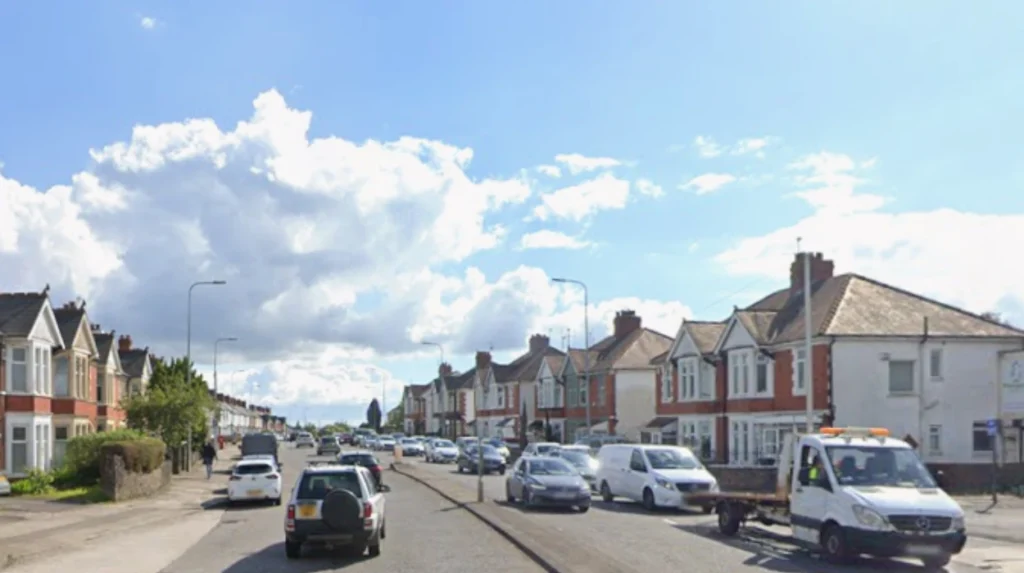
For St Mellons residents, the crisis erodes quality of life. Journeys that should take 10 minutes balloon to over an hour, spiking stress and fuel costs. Parents like those at Bassaleg High School avoid St Mellons Road entirely during rush hour, opting for longer detours to shield children from crash-prone zones.
Safety data underscores the human toll. Multiple accidents cluster around Heol Las and St Mellons Road, including severe incidents traumatizing young passengers. Petitions with hundreds of signatures demand reviews, citing poor markings and council inaction across the Cardiff-Newport borders. Emergency responses crawl through jams, delaying aid.
Economically, gridlock hampers Cardiff’s eastern flank. Businesses at retail parks lose customers deterred by parking woes, while commuters burn time equivalent to unpaid labor—studies peg UK congestion at billions in lost productivity annually. In St Mellons, delayed HGVs disrupt supply chains, inflating costs for local shops and construction firms.
Communities feel the ripple effects too. Noise pollution from idling engines disturbs quiet neighborhoods, and air quality dips near schools, raising health concerns backed by Welsh government emissions reports. This cycle discourages cycling or walking, locking residents into car reliance.
Dangerous Hotspots Exposed
Pinpointing gridlock epicenters clarifies the crisis. St Mellons Road’s Marshfield stretch tops the list, where a sharp bend meets Heol Las without barriers or signage. Witnesses recount two crashes in a week, with drivers cutting corners at national speed limits.
The A48 junction near Cardiff Gate amplifies issues, funneling business park traffic onto suburban lanes. Construction from Lisvane developments funnels 73 HGVs daily through residential paths, sparking resident fury. Even minor merges, like those at Llanedeyrn, snarl during peaks.
Border ambiguities worsen enforcement—Cardiff and Newport councils bicker over ownership, stalling upgrades like mirrors or markings. These hotspots not only delay but endanger, with recent crash barriers a band-aid on deeper flaws.
Failed Attempts at Relief
Past interventions highlight systemic shortcomings. Cardiff Council installed barriers at Heol Las after crashes, yet core issues like speed transitions persist. Petitions for safety audits go unanswered, with locals blaming jurisdictional gaps.
Broader plans falter too. The South East Wales Transport Commission’s call for a St Mellons rail station aims to ease roads but remains unfunded amid budget squeezes. Housing proposals include vague HGV routing, ignoring proven tailbacks.
Speed cameras and signage yield partial wins, but without capacity boosts, they merely shift jams. Academic papers on Welsh traffic critique this reactive approach, advocating integrated modeling over patchwork fixes.
Proposed Solutions for Lasting Change

Sustainable relief demands multifaceted action. Prioritize infrastructure: widen St Mellons Road bends, add mirrors and gradual speed ramps, and enforce HGV bans with fines. Cardiff Council could lead joint taskforces with Newport for cross-border upgrades.
Public transport upgrades offer escape. Revive the St Mellons station push, linking it to Metro lines for commuters bypassing cars. Bus priority lanes on the A48 would cut peaks, drawing from successful Welsh models.
Smarter growth planning is key. Mandate traffic impact assessments for all developments, capping vehicles via remote work incentives or carpool apps. Tech like adaptive signals, proven in other UK cities, could dynamically ease flows.
Community involvement accelerates change. Expand petitions into resident forums, feeding data to planners. Promote cycling networks with protected paths, reducing car volumes long-term.
Future Outlook Amid Growth Pressures
As Cardiff eyes 2030 population booms, St Mellons’ crisis risks entrenchment without urgency. Welsh government visions stress multimodal transport, yet local execution lags. Optimism lies in Metro expansions and net-zero goals pushing rail and bus shifts.
Residents must stay vocal—past petitions forced barriers; scaled action could deliver stations and widenings. Balancing growth with mobility ensures St Mellons thrives, not stalls.
Community Voices and Resilience
Locals like Ms. Lijertwood embody resolve, launching Change.org drives after personal tragedies. Villagers in Marshfield unite at council meetings, spotlighting crashes and HGVs. This grassroots energy pressures officials, proving commuter frustration fuels progress.
Business owners echo calls for action, noting lost revenue from unreliable access. Their stories humanize data, reminding planners of real stakes.
In summary, St Mellons’ traffic crisis endures from intertwined historical neglect, growth surges, and inaction. Yet with targeted infrastructure, transport alternatives, and community push, gridlock yields to flow. Cardiff Daily readers, share your experiences—your voice shapes the roads ahead.
What is the most common cause of traffic congestion?
The most common cause of traffic congestion is too many vehicles using the same roads during peak hours. In areas like St Mellons, daily commuting, roadworks, and limited alternative routes often worsen the gridlock.
What is the safest type of car to drive?
Cars with advanced safety features such as automatic emergency braking, lane assist, and strong crash-test ratings are considered safest. Many modern SUVs and sedans from brands like Volvo and Subaru are well known for high safety standards.
Which car brand has the fewest accidents?
Studies often show that brands focusing heavily on safety technology, such as Volvo and Subaru, tend to have lower accident rates. However, driver behavior and road conditions also play a major role in accident statistics.
Which car is the top 1 in the world?
There is no single “number one” car globally because rankings depend on factors like reliability, sales, and performance. Popular global leaders often include models from Toyota, Tesla, and Mercedes-Benz.
Is Jaguar 100% owned by Tata?
Yes, the luxury car brand Jaguar is owned by Tata Motors, an Indian automotive company. Tata acquired Jaguar and Land Rover from Ford Motor Company in 2008.