
Welsh culture is a living national culture built around language, music, poetry, sport, faith, and community, and St David’s Day on 1 March is the clearest annual expression of that identity. In Cardiff, the day brings the whole story into focus: Welsh symbols, Welsh songs, Welsh food, and public celebrations that connect the capital to the wider nation.
- What is Welsh culture?
- Why is St David’s Day important?
- Who was St David?
- What symbols represent Wales?
- How is St David’s Day celebrated?
- What food is linked to Welsh identity?
- How does the Welsh language shape the day?
- Why does Cardiff matter in Welsh culture?
- What makes Welsh culture distinct today?
- How should visitors understand St David’s Day?
What is Welsh culture?
Welsh culture is the shared national identity of Wales, shaped by the Welsh language, history, literature, music, religion, and everyday traditions. It combines ancient Celtic roots, strong local communities, and modern public life across cities such as Cardiff and rural areas across Wales.
Welsh culture is not limited to historic customs. It is present in language, education, public events, sports, choirs, chapel traditions, publishing, and place names. The Welsh Government treats Welsh as a living national language, and modern Wales uses both Welsh and English in public life. That bilingual character is one of the most visible markers of Welsh identity.
The core of Welsh culture is language. Welsh is one of the oldest living languages in Europe, and it remains a central symbol of national continuity. The language appears in road signs, schools, media, government, and public ceremonies. It also shapes how Welsh history and identity are expressed in songs, prayers, poetry, and greetings.
Welsh culture also includes strong traditions of collective performance. Male voice choirs, community choirs, hymn singing, harp music, and eisteddfodau all sit at the centre of cultural life. These are not fringe traditions. They are part of the public image of Wales and still influence local and national celebrations today.
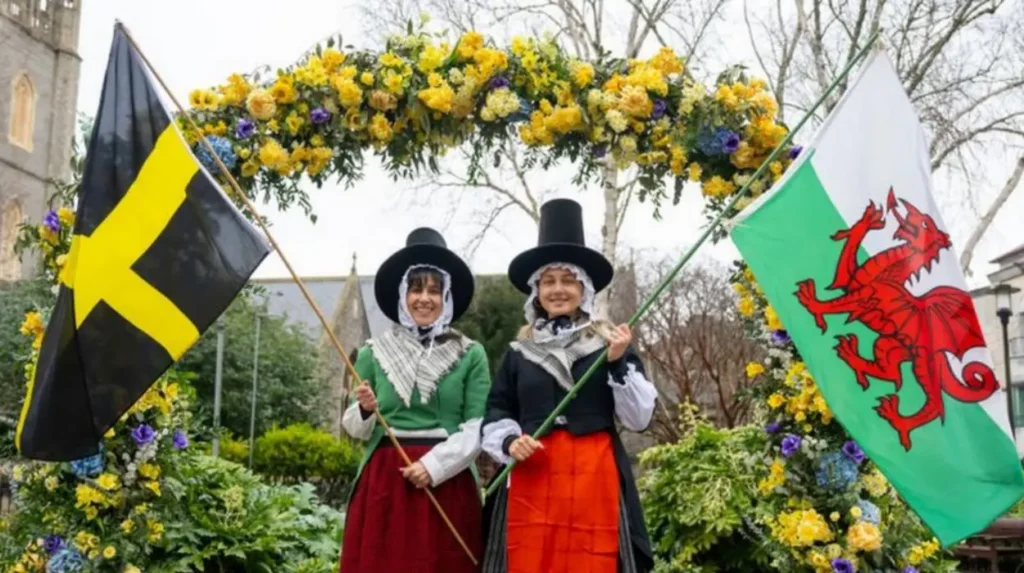
Why is St David’s Day important?
St David’s Day is Wales’s national day, observed on 1 March in honour of St David, the patron saint of Wales. It is important because it expresses Welsh identity through language, symbols, food, music, and public celebration across Wales and in Welsh communities abroad.
St David, known in Welsh as Dewi Sant, is associated with Christian leadership, monastic discipline, and Welsh spiritual history. His feast day became a focus for cultural memory and national pride over time. By the medieval period, 1 March was established as the day to mark his life and legacy.
The day matters because it turns Welsh identity into a shared public event. Schools, workplaces, councils, museums, and cultural organisations use the date to promote Welsh language use and national symbols. In Cardiff, this often includes parades, performances, bilingual events, and heritage activities.
St David’s Day also matters beyond religion. For many people, it is a civic and cultural occasion rather than a strictly devotional one. That makes it broadly accessible to children, families, visitors, and Welsh communities overseas. It works as a national day because it links history to modern identity.
Who was St David?
St David was a sixth-century Welsh church leader and saint, remembered as the patron saint of Wales. Tradition places his life in south-west Wales, and his legacy is tied to monastic discipline, preaching, and the growth of early Welsh Christianity.
St David’s historical life is difficult to separate fully from later tradition, which is common for early saints. He is linked with the south-west of Wales, especially the city of St Davids in Pembrokeshire, which is named after him. He is remembered as a spiritual authority in the early medieval Welsh church.
His most famous teaching is often summarised as a call to simplicity and discipline. The traditional phrase associated with him is “Do the little things,” which has become one of the best-known expressions linked to Welsh religious heritage. Whether used in faith or culture, it remains part of how St David is understood today.
The saint’s importance grew because Wales used him as a national patron. That patronage gave Wales a single figure through whom religion, language, and identity could be connected. Over time, St David became one of the strongest symbols of Welsh nationhood.
What symbols represent Wales?
The main Welsh symbols are the leek, the daffodil, the red dragon, the Welsh flag, and the Welsh language. These symbols appear on St David’s Day, in schools, at public events, and in Cardiff celebrations across the capital.
The leek is one of the oldest national emblems of Wales. Tradition links it to battlefield stories and to the wearing of leeks for protection or identification. On St David’s Day, leeks often appear as badges or costume accessories.
The daffodil is a later, more decorative national flower. It became especially popular in the 19th and 20th centuries because it blooms around 1 March and is visually easy to wear or display. In many modern settings, the daffodil is now as recognisable as the leek.
The red dragon on the Welsh flag is another powerful symbol. It appears in official settings, school events, sport, and national celebrations. Together, these symbols give St David’s Day a clear visual identity that is easy to recognise in Cardiff and beyond.
How is St David’s Day celebrated?
St David’s Day is celebrated through parades, school events, concerts, chapel services, bilingual activities, traditional dress, and Welsh food. In Cardiff, public celebrations often include music, market events, heritage displays, and city-centre parades.
The day is highly visible in schools. Children often wear traditional Welsh costume, national colours, or daffodils and leeks. Schools also use the day to teach Welsh history, recite poetry, sing hymns, and practise Welsh phrases.
Public celebrations vary by place. In Cardiff, St David’s Day regularly includes parades and cultural events across the city centre, along with performances from choirs, musicians, and community groups. Museums, markets, and public buildings often join in with themed programming.
Religious observance also remains part of the day. Some churches and chapels hold special services, reflecting the saint’s Christian background. This gives St David’s Day a dual identity: it is both a cultural celebration and a religious remembrance.
What food is linked to Welsh identity?
Welsh food linked to St David’s Day includes Welsh cakes, cawl, bara brith, laverbread, and local dairy or meat dishes. These foods reflect rural heritage, domestic cooking, and the seasonal ingredients of Wales.
Welsh cakes are one of the best-known national foods. They are griddle-baked, lightly spiced, and often eaten warm with butter or sugar. They are common at St David’s Day events because they are easy to share and strongly associated with Welsh home cooking.
Cawl is a traditional soup or stew usually made with lamb or beef, potatoes, leeks, and root vegetables. It is one of the most important heritage dishes in Wales. Because it uses simple ingredients, it connects the celebration to everyday Welsh life rather than to luxury dining.
Bara brith is a fruit loaf or tea bread, while laverbread is a seaweed-based food closely linked to the Welsh coast. These dishes show the range of Welsh cuisine, from inland farming traditions to coastal food culture. On St David’s Day, they help make the national day feel grounded in real regional practice.
How does the Welsh language shape the day?
The Welsh language shapes St David’s Day by giving it its own name, symbols, songs, and public messaging. The day is often called Dydd Gŵyl Dewi, and bilingual celebration reinforces the language as a living part of Welsh national identity.
The Welsh name for St David’s Day is Dydd Gŵyl Dewi. Using that name matters because it places the celebration inside the language, not just beside it. Language is one of the strongest markers of cultural continuity in Wales.
Bilingual signs, speeches, songs, and printed materials are common in Cardiff and across Wales during the celebration period. This public use of Welsh helps normalise the language in daily life. It also gives children and visitors repeated exposure to simple Welsh phrases and place-based vocabulary.
Songs and hymns are especially important. Choirs and school groups often sing in both Welsh and English, and national songs such as “Hen Wlad Fy Nhadau” reinforce the connection between language and nationhood. On St David’s Day, Welsh is not just taught; it is performed in public.
Why does Cardiff matter in Welsh culture?
Cardiff matters because it is the capital of Wales and one of the main places where Welsh culture is presented at national scale. The city connects government, media, education, museums, sport, and festivals, so St David’s Day becomes both local and national in Cardiff.
Cardiff gives Welsh culture visibility. The city hosts national institutions, the Senedd, major venues, museums, and sports events that all help frame St David’s Day as a modern civic occasion. That matters because Welsh identity is not only rural or historic. It also lives in a capital city.
The city’s role is practical as well as symbolic. Public transport, shopping areas, cultural venues, and schools all help spread celebrations into daily life. Cardiff allows St David’s Day to reach residents, commuters, students, and visitors in one shared urban setting.
The capital also shows how Welsh culture adapts. In Cardiff, traditional symbols sit alongside modern bilingual programming, concerts, and public events. This makes the day relevant to both heritage audiences and younger urban communities.
What makes Welsh culture distinct today?
Welsh culture is distinct because it combines national language revival, strong musical traditions, Christian heritage, civic pride, and everyday bilingual life. It is a modern culture with deep historical roots and clear public expression in Cardiff and across Wales.
One distinctive feature is continuity. Wales has preserved a strong sense of historical identity through centuries of political change. That continuity appears in the survival of Welsh, the endurance of choral music, and the repeated use of national symbols in public life.
Another feature is community participation. Welsh culture depends on schools, local organisations, churches, choirs, and sports clubs as much as on museums or official bodies. That makes it highly social and highly repeatable, which is ideal for annual events such as St David’s Day.
A third feature is bilingual normality. Welsh culture today is not locked in the past. It is visible in government communications, public events, place names, and education. That gives it a practical future, not just a ceremonial one.

How should visitors understand St David’s Day?
Visitors should understand St David’s Day as Wales’s national day, not just a themed festival. It is the clearest annual entry point into Welsh identity, because it links history, language, food, music, and symbols in one public celebration.
Visitors gain the most by treating the day as a cultural introduction to Wales. The leek, daffodil, Welsh songs, bilingual signs, and Welsh foods all work together to explain the nation’s identity in a simple form. That is why the day is useful for tourism, education, and family participation.
In Cardiff, the day offers a particularly strong experience because the capital brings many cultural layers together. A visitor can see official, civic, and community celebrations in one place. That makes the capital a strong base for understanding Welsh culture at a glance.
For publishers and SEO, this topic works well because it answers a broad intent. People search for the meaning of St David’s Day, Welsh traditions, Welsh symbols, and Cardiff celebrations. A strong evergreen article should connect all of those entities in one clear narrative, exactly as this topic does.
Welsh culture and St David’s Day belong together because one explains the other. The culture gives the day its meaning, and the day gives the culture its most visible annual showcase in Cardiff and across Wales.
Why is Wales different from England culturally?
Wales has its own language, national symbols, music traditions, history, and cultural identity that developed separately from England over centuries.