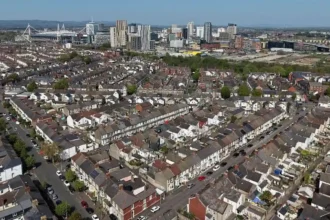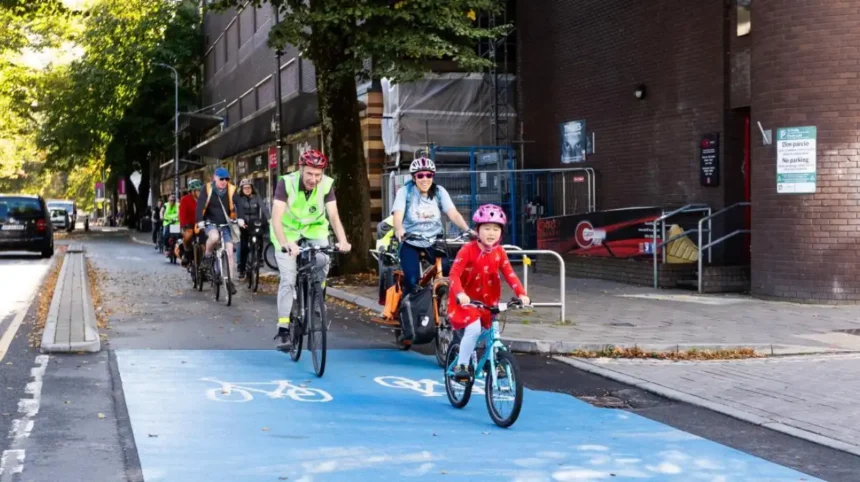
Cardiff is one of Wales’s strongest cities for everyday cycling, with established cycle routes, riverside paths, neighbourhood connections and an expanding network of segregated cycleways. The city has also developed a long-term active-travel programme linking residential communities with employment centres, universities, parks, transport hubs and Cardiff Bay.
- Which Cardiff neighbourhoods are most suitable for cyclists?
- Why does cycling infrastructure influence where people live in Cardiff?
- Is Canton a practical place to live for cyclists?
- Does Pontcanna suit people who cycle regularly?
- Why do cyclists consider Roath, Plasnewydd and Penylan?
- Is Heath a good location for cycle commuters?
- What makes Llandaff attractive to people who cycle?
- How does Riverside compare with other cycling-friendly Cardiff areas?
- Is Grangetown useful for people who cycle to Cardiff Bay?
- Which Cardiff areas benefit from future cycleway investment?
- What does Census data show about cycling in Cardiff?
- How should cyclists compare Cardiff neighbourhoods before moving?
- How is Cardiff’s cycling network expected to develop?
- Where should cyclists look when choosing a home in Cardiff?
For people choosing where to live in Cardiff, cycling access is therefore closely connected to neighbourhood location. Areas close to continuous routes can reduce dependence on cars and make journeys to the city centre, workplaces, universities and leisure destinations more direct.
Cardiff Council’s Active Travel Network Map provides the official framework for cycling and walking infrastructure. The map includes existing routes and proposed routes planned over a 15-year period. It operates under the Active Travel (Wales) Act 2013 and uses Welsh Government active-travel design standards.
The city also has six proposed Cycleways connecting the centre with different residential and employment areas. These include routes towards Roath Park, north-east Cardiff, St Mellons, Cardiff Bay, north-west Cardiff and Caerau.
Which Cardiff neighbourhoods are most suitable for cyclists?
Cardiff neighbourhoods with strong cycling connections include Canton, Pontcanna, Riverside, Roath, Plasnewydd, Penylan, Heath, Llandaff, Grangetown and parts of Splott. Their suitability comes from proximity to established routes, planned Cycleways, employment areas, universities, parks and Cardiff city centre.
No official ranking identifies a single neighbourhood as Cardiff’s preferred area for cyclists. Residential suitability instead depends on the relationship between a home and the cycling network.
Canton, Pontcanna and Riverside sit close to the River Taff corridor and routes towards the city centre. Roath, Plasnewydd and Penylan benefit from the developing eastern cycling network, including connections associated with Cycleway 6.
Heath and nearby north Cardiff neighbourhoods connect with Cycleway 1, which is planned between the city centre, Cathays, University Hospital of Wales, Heath High Level station, Heath Low Level station and the north-east Cardiff development area.
Llandaff provides access towards north-west Cardiff through Cycleway 4. Grangetown connects with routes towards Cardiff Bay, while Splott sits within the eastern side of Cardiff’s cycling network and future active-travel planning.
These areas demonstrate an important principle for cyclists: proximity to a continuous route often matters more than simply being close to the city centre.
Why does cycling infrastructure influence where people live in Cardiff?
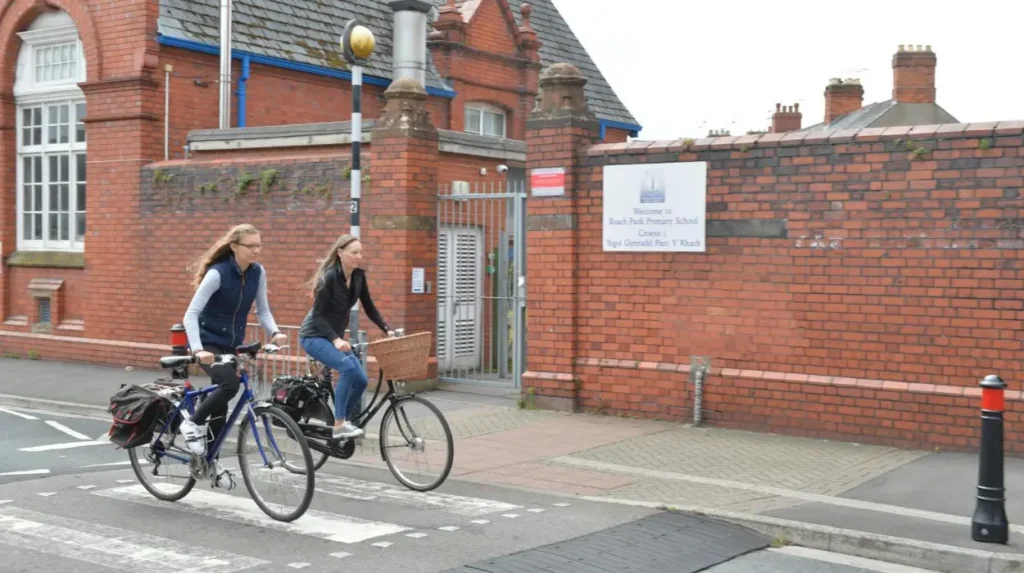
Cycling infrastructure affects residential decisions because direct routes reduce journey barriers between homes and destinations. Cardiff’s active-travel network connects residential communities with workplaces, education, retail, healthcare, leisure facilities and transport interchanges.
A cycle-friendly neighbourhood is not defined only by painted cycle lanes. Useful cycling infrastructure includes protected cycleways, low-traffic streets, junction treatments, crossings, secure cycle parking and connections between separate routes.
Cardiff Council’s Active Travel Network Map identifies routes suitable for everyday journeys such as travel to work and school. Routes are assessed against Welsh Government Active Travel Design Guidance before they appear as existing routes on the official network.
This distinction is important for residential searches. A leisure trail close to a property does not automatically provide an efficient commuting route.
A cyclist travelling to Cardiff city centre needs continuity. A route that ends at a busy junction or requires repeated crossings can be less useful for commuting than a slightly longer route with better connections.
Cardiff’s six Cycleway proposals reflect this network-based approach. They are designed to connect residential communities with major destinations rather than treating cycling as an isolated recreational activity.
Is Canton a practical place to live for cyclists?
Canton is practical for cyclists because it sits west of Cardiff city centre near the River Taff corridor, Riverside and established routes towards central Cardiff. Its location supports cycling for commuting, shopping, education, leisure and access to nearby neighbourhoods.
Canton is a dense residential and commercial district west of central Cardiff. Its location places residents within cycling distance of the city centre and the western side of Cardiff.
The River Taff corridor is particularly important because it provides a major north-south movement corridor. The wider Taff Trail extends between Cardiff and Brecon, with Sustrans listing the Cardiff-to-Brecon route at 55 miles or 88.5 kilometres.
For everyday residents, the most relevant sections are the Cardiff-area portions rather than the entire long-distance route.
Canton also connects with Riverside and routes towards Llandaff. This makes the area relevant to cyclists travelling between western residential districts and central Cardiff.
The neighbourhood has another practical advantage: cycling is not dependent on reaching the city centre first. Local shops, services, parks and community facilities are distributed through the surrounding districts.
Does Pontcanna suit people who cycle regularly?
Pontcanna suits regular cyclists because it lies close to the River Taff, Cardiff city centre, Riverside and major green corridors. Its western-central location supports short urban journeys and access to longer routes heading north along the Taff corridor.
Pontcanna is a residential district immediately north-west of central Cardiff. Its proximity to the River Taff places it close to one of Cardiff’s most important cycling corridors.
The area also borders Canton, Riverside and Bute Park. These geographical relationships create several potential connections rather than a single route.
For commuters, the key benefit is distance. A cyclist living in Pontcanna can reach central Cardiff without crossing the wider suburban road network that affects more distant neighbourhoods.
The location also works for recreational cycling. The Taff Trail provides a long-distance route extending north from Cardiff, while the city’s central cycling network provides connections towards employment, education and transport destinations.
Pontcanna’s residential environment therefore aligns with a common cycling requirement: the ability to combine everyday urban journeys with access to longer traffic-free or lower-traffic routes.
Why do cyclists consider Roath, Plasnewydd and Penylan?
Roath, Plasnewydd and Penylan are important cycling locations because Cardiff Council’s Cycleway 6 connects the city centre with Plasnewydd, Penylan, Cyncoed and Roath Park. Infrastructure development therefore directly links these residential districts with central Cardiff.
Cycleway 6 is one of Cardiff’s six major proposed cycle corridors. Cardiff Council states that the route runs from the city centre through Plasnewydd and Penylan towards Cyncoed and Roath Park. Phase 1 has already started.
The route is significant for residential planning because it follows an established eastward movement pattern.
Roath is a large inner-city residential district containing Roath Park and several neighbourhood shopping areas. Plasnewydd sits closer to central Cardiff, while Penylan extends east and north-east from the city centre.
Roath Park is also an important destination in its own right. Cycling access to parks provides a different type of residential benefit from commuting infrastructure.
Welsh Government transport funding has included £4.15 million for Roath Park Cycleway phases 1 and 2, including work around Roath Recreation Ground and the Albany Road-to-Richmond Road section.
This investment demonstrates how cycling infrastructure is increasingly planned around complete neighbourhood connections rather than isolated cycle lanes.
Is Heath a good location for cycle commuters?
Heath is strategically positioned for cyclists travelling towards central Cardiff, university facilities and north-east Cardiff. Cycleway 1 connects the city centre with Cathays, University Hospital of Wales, Heath railway stations and the planned north-east Cardiff development area.
Heath is particularly relevant to people whose daily destinations are connected with healthcare, education and northern Cardiff.
Cycleway 1 is planned as a city-centre-to-north-east Cardiff route. Its destinations include Cathays, University Hospital of Wales, Heath High Level station, Heath Low Level station and the North East Cardiff Strategic Development Site. The section between Stuttgart Strasse and University Hospital Wales is already complete.
This creates a clear relationship between cycling infrastructure and residential geography.
For residents, access to a railway station also strengthens multimodal travel. A cyclist can combine a bicycle journey with rail travel rather than relying exclusively on a car.
Heath’s position also places it near Cathays, another important inner-city district with a large student and residential population. The resulting network provides access to central Cardiff without requiring every journey to follow the same road.
What makes Llandaff attractive to people who cycle?
Llandaff is relevant to cyclists because Cardiff Council’s Cycleway 4 connects the city centre towards Llandaff, Danescourt and north-west Cardiff. The area also provides access to the Taff corridor and longer cycling routes beyond central Cardiff.
Llandaff is a historic district in north-west Cardiff. Its location beside the River Taff gives it direct relevance to Cardiff’s wider cycling geography.
Cycleway 4 is planned from central Cardiff towards Llandaff, Danescourt and the North West Strategic Development Site.
This route supports a different residential pattern from inner-city cycling. Residents can combine local cycling with longer north-west journeys.
The Taff Trail is also important to this part of Cardiff. The wider National Cycle Network route connects Cardiff with destinations north of the city, creating opportunities for commuting, recreation and longer-distance cycling. Sustrans identifies the full Cardiff-to-Brecon Taff Trail as 55 miles.
For cyclists choosing housing, the relevant factor is therefore not only whether a route exists but where it connects next.
How does Riverside compare with other cycling-friendly Cardiff areas?
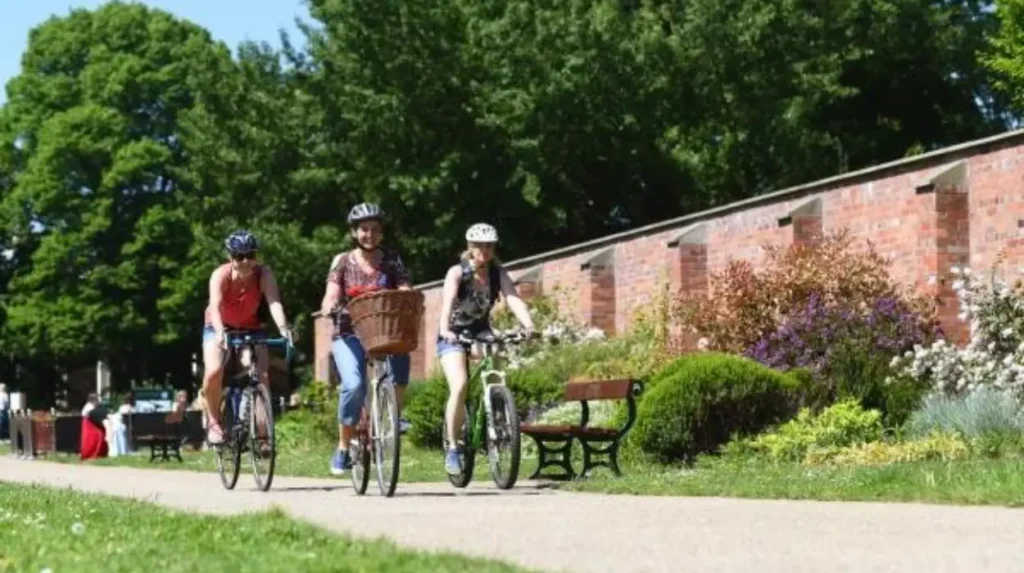
Riverside benefits from its location immediately west of central Cardiff and beside the River Taff corridor. Its position creates short cycling distances to the city centre, Canton, Pontcanna, Bute Park and routes continuing north from central Cardiff.
Riverside is a compact inner-city district positioned between the River Taff and central Cardiff.
Its geography makes it significant for cycling because several destinations are close together. The city centre lies to the east, Canton lies further west, and Pontcanna and Bute Park are nearby to the north.
The River Taff corridor also provides a continuous geographical reference for cycling journeys.
Riverside therefore suits people whose priority is reducing the distance between home and central destinations. The area is also connected to a wider network rather than functioning as a cycling destination on its own.
Housing decisions in Riverside still require attention to individual streets. A property’s distance from a usable cycle route, secure cycle storage and junctions can differ substantially within the same district.
Is Grangetown useful for people who cycle to Cardiff Bay?
Grangetown is useful for cyclists travelling between southern Cardiff, the city centre and Cardiff Bay. Its location places residents close to the Bay’s cycling network, while the wider network links southern neighbourhoods with central Cardiff destinations.
Grangetown lies south of Cardiff city centre and north of Cardiff Bay. Its position creates a natural connection between central and waterfront destinations.
The Cardiff Bay Trail is a 4.5-mile, 7.3-kilometre National Cycle Network route. Sustrans describes it as a traffic-free circular route around Cardiff Bay that also crosses towards Penarth via Pont Y Werin bridge.
This provides an important recreational and commuting asset for residents in southern Cardiff.
Cardiff Council’s Cycleway 3 is planned as the city-centre-to-Cardiff-Bay route.
The combination of existing Bay routes and planned city-centre connections makes the wider Grangetown area relevant to cyclists who regularly travel south.
Which Cardiff areas benefit from future cycleway investment?
Future cycleway investment is concentrated along six major corridors linking Cardiff city centre with Roath Park, north-east Cardiff, St Mellons, Cardiff Bay, north-west Cardiff and Caerau. These corridors influence the long-term cycling potential of surrounding residential neighbourhoods.
Cardiff Council’s six Cycleways form the central structure of the city’s cycling expansion programme.
Cycleway 1 connects the city centre with Cathays, Heath and north-east Cardiff. Cycleway 2 follows the eastern corridor towards Adamsdown, Newport Road, Rumney, Llanrumney and St Mellons Business Park. Cycleway 3 connects the centre with Cardiff Bay.
Cycleway 4 heads towards Llandaff and Danescourt. Cycleway 5 connects the centre with Riverside, Ely and Caerau. Cycleway 6 connects the centre with Plasnewydd, Penylan, Cyncoed and Roath Park.
These corridors cover a substantial part of Cardiff’s residential geography.
The Active Travel Network Map provides the longer-term framework behind these connections. Cardiff Council describes the future network as a 15-year plan for walking, wheeling and cycling.
For people searching for a home, proposed routes should be treated as future infrastructure rather than existing facilities. Detailed designs, delivery dates and final alignments can change as individual projects progress.
What does Census data show about cycling in Cardiff?
Census 2021 recorded Cardiff as the Welsh local authority with the highest proportion travelling to work by bicycle, at 2.9%, representing about 4,700 people. The result provides evidence of established cycling for commuting across Cardiff.
Welsh Government analysis of Census 2021 data recorded 4,700 Cardiff residents, or 2.9% of workers, travelling to work mainly by bicycle. This was the highest proportion among Welsh local authorities in that census analysis.
The figure needs careful interpretation.
Census 2021 was collected during a period strongly affected by the COVID-19 pandemic. Cardiff had a particularly high proportion of people working mainly from home, at 36.1%. Welsh Government notes that pandemic restrictions and changes in workplace practices affected travel patterns in 2021.
The cycling figure therefore provides a historical benchmark rather than a real-time measure of cycling in 2026.
Nevertheless, the data establishes Cardiff as an important Welsh cycling city for commuting.
The statistic also supports the relevance of cycling infrastructure to residential planning. Thousands of residents already used bicycles for work journeys in 2021, while Cardiff’s infrastructure programme has continued to develop since then.
How should cyclists compare Cardiff neighbourhoods before moving?
Cyclists should compare neighbourhoods by route continuity, junction quality, secure cycle storage, distance to daily destinations, access to railway stations and connections to Cardiff’s wider network. These factors provide a more reliable assessment than neighbourhood reputation alone.
The first factor is route continuity. A home beside a short cycle lane is less useful when the route stops before reaching a major destination.
The second factor is junction design. Cardiff Council’s active-travel planning considers safety, collision data and route quality when assessing network priorities.
The third factor is cycle storage. Cardiff Council provides information about secure cycle lockers and residential cycle hangars as part of its cycling facilities.
The fourth factor is destination distance. A cyclist should map regular journeys to work, university, schools, shops, railway stations and leisure facilities.
The fifth factor is network resilience. A neighbourhood connected to several routes provides more journey options than one dependent on a single corridor.
These considerations apply equally to renters and homeowners.
Explore More Area Guide
Cardiff Areas Popular with Dog Owners: Parks & Walks
Best Quiet Neighbourhoods in Cardiff: Llandaff, Lisvane & Rhiwbina
How is Cardiff’s cycling network expected to develop?
Cardiff’s cycling network is moving towards a connected citywide system rather than isolated routes. The council’s 15-year Active Travel Network Map, six Cycleways and continuing investment provide the framework for expanding everyday cycling connections.
Cardiff’s current planning framework extends beyond individual cycle lanes.
The Active Travel Network Map is updated under the Active Travel (Wales) Act 2013. Cardiff’s existing map was approved by the Welsh Government in December 2022, while the council consulted on an updated map in 2026.
The 2026 consultation covered future routes in locations including Rumney, Splott, Trowbridge, Whitchurch and Tongwynlais.
The council also continues to develop the Newport Road sustainable transport corridor. Its proposals include Cycleway 2, bus infrastructure and controlled parking zones, linking central Cardiff towards eastern employment and residential areas.
Welsh Government funding has also supported Cardiff cycling schemes, including Roath Park Cycleway and a Taff Trail upgrade at Hailey Park.
The long-term direction is therefore increasingly network-based. Residential areas gain cycling value when they connect to other routes, destinations and transport modes.
Where should cyclists look when choosing a home in Cardiff?
Cyclists should focus on neighbourhoods with direct access to established or developing routes, including Canton, Pontcanna, Riverside, Roath, Plasnewydd, Penylan, Heath, Llandaff, Grangetown and parts of eastern Cardiff. Exact street-level access remains important.
Cardiff does not have an official list of neighbourhoods where cyclists prefer to live. Residential preference is personal and depends on housing, price, employment location, family requirements and transport needs.
Cycling suitability can be assessed objectively through infrastructure and geography.
Canton, Pontcanna and Riverside provide western and central connections around the River Taff. Roath, Plasnewydd and Penylan are connected to the Cycleway 6 corridor. Heath and Cathays sit within the Cycleway 1 corridor. Llandaff forms part of the north-west network. Grangetown provides an important southern connection towards Cardiff Bay.
Eastern districts including Adamsdown, Splott, Rumney and Llanrumney also have relevance because of current and proposed active-travel projects.
The strongest approach is to evaluate the individual property rather than rely only on the neighbourhood name. A cyclist should check the route from the front door to the workplace, railway station, university, school or other regular destination.
Cardiff’s cycling network continues to change. Existing infrastructure, funded schemes and future proposals should therefore be considered separately.
For anyone choosing where to live in Cardiff, the central question is straightforward: how easily does the property connect to the cycling network needed for everyday life?
The answer depends on route continuity, destination access, infrastructure quality and the specific street where the property is located. Cardiff’s ongoing Cycleway programme and 15-year active-travel planning indicate that cycling will remain an important part of the city’s transport geography.
Which areas of Cardiff are best suited to cyclists?
Canton, Pontcanna, Riverside, Roath, Plasnewydd, Penylan, Heath, Llandaff, Grangetown and parts of eastern Cardiff have strong cycling connections. Suitability depends on access to continuous routes and daily destinations.