Key Points
- A loan system has been put in place where library members can borrow therapeutic light boxes for up to three weeks at no charge in Cardiff libraries.
- This program will allow the people in Cardiff to mitigate the effects of poor mental health due to lack of light and Seasonal Affective Disorder (SAD).
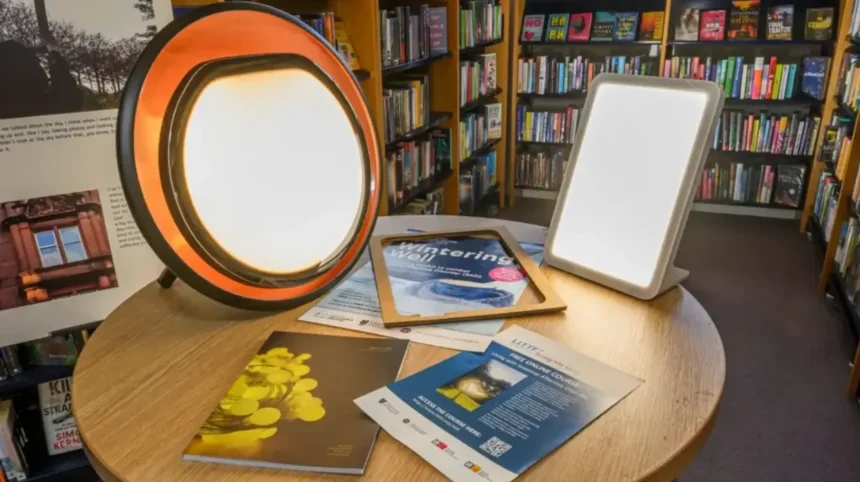
- This program features light boxes, which feature a therapeutic light box, which mimics natural light, together with a guidebook on what activities can be done indoors and outdoors to create healthy winter habits.
- As Isobel Hunter, the chief executive officer of Libraries Connected states, “public libraries continue to champion the wellbeing of their communities in many varied and accessible ways.”
- The program has come up based on wider research programs done by the Universities of Edinburgh and Glasgow.
Cardiff (Cardiff Daily) October 30, 2026 — Residents across Cardiff are being encouraged to check out a dose of sunshine alongside their regular reading materials this autumn and winter, thanks to an innovative library loan scheme. Local public libraries have rolled out a project offering specialized light boxes to help individuals combat the winter blues, low moods, and Seasonal Affective Disorder (SAD). Available free of charge to library members for up to three weeks, the initiative seeks to make mental health support more accessible right in the heart of local communities.
How Do Cardiff Libraries’ New Light Box Loans Work For Residents?
Under the newly launched scheme, Cardiff library members can borrow a “Wintering Well Box” for a period of up to three weeks. As detailed by the community reporting team at InYourArea, these kits contain essential items tailored to improve psychological well-being during the darkest period of the calendar year.
At the core of each kit is a therapeutic light lamp designed to mimic natural outdoor sunlight. Medical and geographical researchers note that exposure to these lamps helps counteract the physiological impacts of reduced daylight hours on human serotonin and melatonin levels—chemicals that regulate human mood and sleep cycles.
In addition to the therapeutic lamp, the boxes include a practical guidebook filled with expert tips on simple indoor and outdoor activities. These resources are structured to help users cultivate healthy winter routines, encouraging gentle behavioral adjustments that foster resilience against seasonal depression.
What Are Experts And Officials Saying About The Wintering Well Initiative?
The expansion of the Wintering Well scheme into Cardiff taps into a broader national movement driven by academic research and public library networks. Isobel Hunter, chief executive of Libraries Connected, praised the program’s practical approach to community health. As reported by ITV News, Isobel Hunter stated that: “Public libraries support wellbeing in countless ways, and the Wintering Well Box loan scheme is a brilliant example of how they help people take positive steps for their mental and physical health.”
Furthermore, community project partners emphasize that the scheme moves beyond passive treatment. The initiative was originally developed through collaborative research by academics at the Universities of Edinburgh and Glasgow, in close consultation with individuals who experience severe winter low moods. Professor Hester Parr of the University of Glasgow previously noted that the light boxes are deliberately configured so that people are not just passively receiving light, but are actively and creatively engaging with it to reshape their daily routines.
Local library leaders echo these sentiments, pointing out that public spaces remain uniquely positioned to bridge the gap for individuals who might otherwise lack access to specialized medical or psychological resources during the winter months. By offering these kits locally and free of charge, Cardiff libraries are aiming to remove economic and geographical barriers to wellness support.
Explore more Cardiff Council News
Welsh Parliament Connects to Cardiff Low-Carbon Heat Network 2026
Cardiff Council Urges Families to Claim £200 School Support in Cardiff 2026
Background of the Particular Development
Seasonal Affective Disorder (SAD) is a recognized mental health condition characterized by recurrent depressive episodes occurring at a specific time of year, typically during the autumn and winter months when sunlight hours decrease significantly. According to data from the Royal College of Psychiatrists, more than a million people across Britain experience the debilitating symptoms of SAD, which include persistent low energy, feelings of anxiety, disruption to sleep patterns, and a general lack of interest in everyday activities.
Historically, light therapy has stood out as a primary non-pharmaceutical intervention for mitigating SAD symptoms. However, therapeutic light boxes can often carry a financial cost that places them out of reach for vulnerable or low-income households. To address this disparity, researchers from the Universities of Edinburgh and Glasgow initiated the “Living with SAD” project, funded by grants from UKRI’s ESRC Impact Acceleration Account. Following successful pilot schemes in regions such as East Dunbartonshire, the initiative has steadily expanded into a nationwide cooperative effort. Public library services across Scotland, England, Wales, and Northern Ireland have begun adopting the Wintering Well Boxes to serve as frontline community health hubs, transforming local libraries into accessible spaces for mental health resilience.
The introduction of the Wintering Well Box loan scheme across Cardiff libraries is expected to positively impact local residents by providing immediate, cost-free access to evidence-based light therapy tools right when seasonal daylight hours hit their lowest points. For Cardiff library members—particularly elderly residents, remote workers, and individuals prone to winter lethargy or diagnosed seasonal affective disorder—this initiative removes financial barriers to crucial wellness equipment. Over the coming months, this increased local availability could lead to noticeable improvements in community mental health resilience, reduced strain on primary care services, and higher overall footfall and engagement with wider public library programs across Cardiff.