Key Points
- New Leadership Confirmed: Councillor Chris Weaver has been officially confirmed as the new Leader of Cardiff Council during the local authority’s Annual General Meeting.
- Predecessor’s Exit: The leadership transition follows the departure of former council chief Huw Thomas, who vacated the local government role following his successful election to the Senedd (Welsh Parliament). Nation.Cymru
- Cabinet Realignment: Alongside the leadership appointment, a comprehensive reshuffle of the authority’s Cabinet has been enacted, featuring the introduction of newly created portfolios.
- Extensive Governance Experience: Councillor Weaver steps into the leadership role after serving nine years as the council’s Cabinet Member for Finance, Modernisation, and Performance. Nation.Cymru
- Political Continuity: The selection maintains political continuity within the local authority ahead of the next round of Cardiff Council local government elections scheduled for 2027.
Cardiff Council (Cardiff Daily) May 22, 2026, has appointed a new leader following the departure of former council chief Huw Thomas to the Senedd, alongside a reshuffle of the authority’s Cabinet and the creation of new portfolios. Councillor Chris Weaver was formally elected as Leader of Cardiff Council at the authority’s Annual General Meeting.
Who is the New Leader of Cardiff Council?
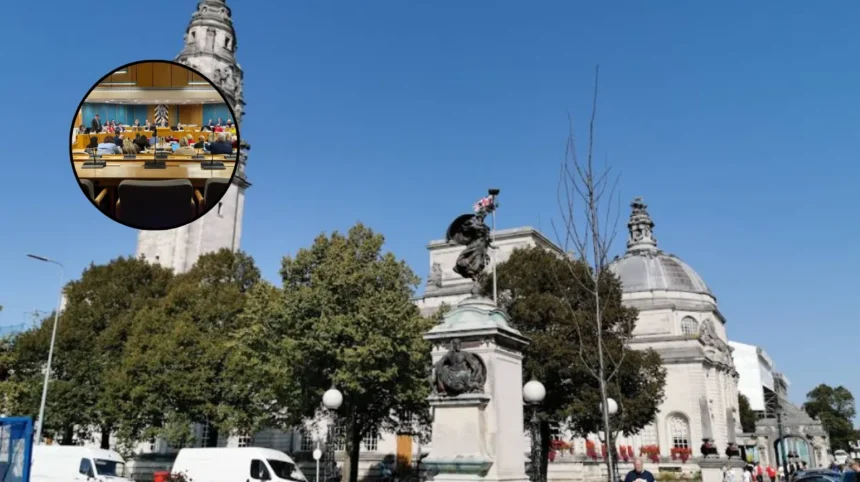
Councillor Chris Weaver has officially assumed the role of Leader of Cardiff Council following a formal vote of confirmation at the local authority’s Annual General Meeting. The appointment marks a significant transition in the governance of Wales’ capital city, capping a political process that began when the council’s Labour Group unanimously backed him to succeed the outgoing leader.
Councillor Weaver, who has represented the Cathays ward as a Labour Party member since 2012, brings nearly a decade of high-level financial administration to the position.
For the past nine years, he operated as the Cabinet Member for Finance, Modernisation, and Performance, managing complex municipal budgets and overseeing local authority modernization strategies.
His professional background also includes serving as the Chair of the Cardiff and Vale Pensions Committee and representing local authority interests on the Welsh Local Government Association (WLGA) General Assembly.
How Has the Cardiff Council Cabinet Been Reshuffled?
As reported by Kieran Molloy, a Local Democracy Reporter writing for Nation.Cymru, the governance shift extends beyond the top leadership post to encompass a wider restructuring of the authority’s executive body. The transition has triggered a comprehensive reshuffle of the Cardiff Council Cabinet, resulting in the creation of new portfolios designed to address shifting municipal priorities.
While full operational specificities of the individual portfolio allocations remain within the administrative purview of the incoming leadership, the restructuring aims to redistribute executive responsibilities across the council’s ruling group.
Councillor Weaver will work closely with Deputy Leader Councillor Sarah Merry to manage the transition.
The inclusion of new portfolios represents an effort to recalibrate municipal focus areas, though the core policy pillars established during the previous administration are expected to remain central to the cabinet’s operational agenda.
What Statements Were Made by Local Government Figures Regarding the Transition?
In an official public statement released by the Cardiff Council Labour Group, a spokesperson expressed confidence in the transition, noting that Councillor Weaver brings a wealth of experience to the position. The spokesperson stated:
“Chris is passionate about Cardiff and its residents, and is determined to build on our successes — including new schools across the city, Cardiff’s biggest council house building programme in decades, the highest recycling rates of any core city, and significant investment in our local economy.”
Following his unanimous selection by political colleagues, Councillor Chris Weaver expressed his gratitude and detailed his forward-looking commitment to the municipality. Councillor Weaver stated:
“I’m truly humbled to have the unanimous support of my colleagues and will work tirelessly with them, and with our deputy leader, councillor Sarah Merry, to deliver for our city and its residents.”
Councillor Weaver also took the opportunity to acknowledge the work of his predecessor, adding:
“I would also like to thank Councillor Huw Thomas for all he achieved as Leader of Cardiff Council and to congratulate him on his election to the Senedd.”
Background of the Particular Development
The political transition within County Hall at Atlantic Wharf was precipitated by the 2026 Senedd election held on 7 May 2026. Former Council Leader Huw Thomas, who had successfully led Cardiff Council since 2017, contested and won a seat in the Welsh Parliament (Senedd Cymru) representing the constituency of Caerdydd Penarth.
Under statutory rules and party conventions regarding dual mandates, his elevation to national parliamentary politics necessitated his resignation from local government leadership.
The previous administration under Councillor Thomas had established a firm political footprint, securing a widened majority during the 2022 Cardiff Council election, where Labour captured 55 out of 79 available seats.
During that cycle, the administration utilized devolved legislative powers to implement innovative cabinet structures, including job-sharing arrangements designed to broaden executive experience among backbenchers. Councillor Weaver’s long tenure as finance chief under Councillor Thomas means he was central to formulating major civic initiatives, including capital investments in local schools, municipal recycling strategies, and the city’s expanded public housing initiatives.
Prediction: How This Development Can Affect the Particular Audience
The transition in council leadership directly impacts the residents, taxpayers, and business owners of Cardiff, who rely on the local authority for education, housing, waste management, and economic development. Because Councillor Weaver has managed the city’s finances for nearly a decade, local residents can anticipate a high degree of fiscal continuity and a measured approach to budgetary allocations.
His familiar hand at the financial wheel suggests that dramatic, unexpected shifts in council tax or public service funding are unlikely in the immediate term.
However, the introduction of new cabinet portfolios indicates that the local authority will likely adjust its operational focus to meet emerging urban challenges.
For residents navigating housing shortages, the administration’s stated focus on expanding the council house building programme remains a critical area of deliverable policy.
For the business community, the restructuring of executive portfolios could lead to updated approaches regarding urban regeneration, commercial investment, and infrastructure development.
With the next round of Cardiff Council local elections scheduled to take place next year in 2027, the primary objective for the incoming leadership will be to demonstrate tangible progress on these core portfolios to an electorate assessing the council’s performance under new executive management.