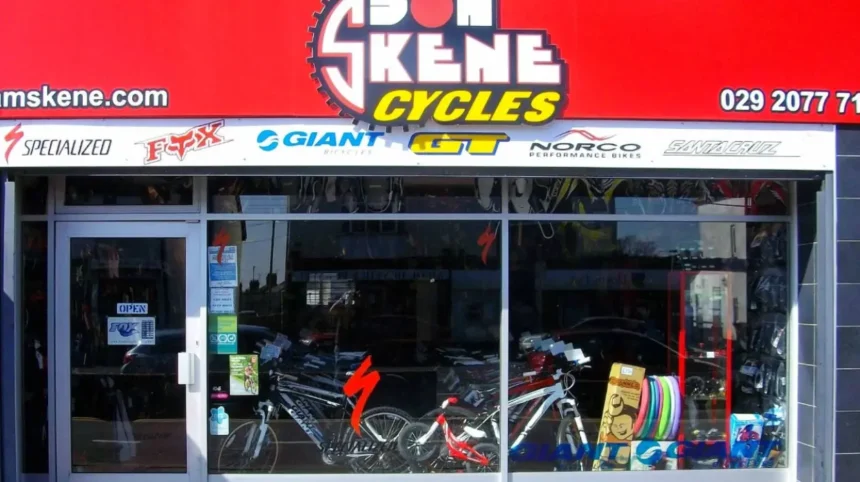
Don Skene Cycles is a historic independent bicycle retailer located on Newport Road in Rumney, Cardiff, Wales. Established in the mid-twentieth century by competitive cyclist Don Skene, the shop provides commercial bicycle sales, component repair, and community infrastructure.
- What types of bicycles and cycling equipment does the retail shop provide?
- What mechanical maintenance and workshop services are executed on-site?
- Routine Tuning and Safety Screenings
- Advanced Hydraulic and Suspension Services
- Wheel Wheel Building and Truing Processes
- How does the shop support the Cardiff cycling community and infrastructure?
- Implementation of Statutory Tax Incentive Programs
- Sponsorship and Integration with Regional Athletic Clubs
- Advocacy for Enhanced Active Travel Networks
- What are the business hours, location dynamics, and access routes for the storefront?
- Geographical Placement and Transit Connectivity
- Spatial Organization of the Retail Facility
- Temporal Availability and Operational Cycles
- What is the economic relevance of independent bike shops in the modern retail landscape?
- Retaining Wealth Within the Foundational Economy
- Technical Expertise as a Shield Against Digital Disintermediation
- Ergonomic Bike Fitting and Diagnostic Adjustments
- What future trends will shape the evolution of local bicycle retail hubs?
The establishment of independent cycling hubs in South Wales aligns with the broader socio-economic growth of the Cardiff Capital Region. As suburban communities like Rumney expanded along major transit corridors like Newport Road, localized commercial infrastructure developed to serve commuter and recreational populations. Don Skene Cycles developed a specific corporate identity by anchoring its services in mechanical expertise and competitive athletic experience.
The retail entity operates within the foundational economy of Cardiff, supplying logistical goods that support carbon-neutral transport initiatives. Local municipal policies, such as the Cardiff Cycle Design Guide, have structured urban infrastructure to encourage bicycle usage over private motor vehicles. Within this framework, long-standing independent establishments serve as critical distribution points for personal transportation hardware.
The background of the institution is tied to the athletic career of its founder, Don Skene, who established prominent regional ties through competitive cycling events. This specialization allowed the storefront to transition from a localized repair shop into a destination retail outlet drawing consumers from across South Wales. The store has maintained continuous family-led operation across decades, preventing corporate consolidation from absorbing the localized retail footprint.
What types of bicycles and cycling equipment does the retail shop provide?
The inventory at Don Skene Cycles comprises three distinct categories of bicycles including mountain bikes, road racing bicycles, and electric hybrid models. The retailer supplies associated components, safety helmets, specialized performance apparel, and professional maintenance tools.
The commercial structure of modern bicycle retail requires diverse product categorization to meet specific commuter and recreational demographics. Every category of bicycle available at the Rumney facility features specialized engineering properties tailored to distinct operational environments.
Off-Road and Mountain Biking Systems
The off-road inventory focuses on full-suspension and hardtail mountain bikes engineered for technical terrain. These units feature hydraulic disc brakes, pneumatic tires with pronounced tread patterns, and advanced alloy or carbon fiber frames.
The primary consumer base for these systems utilizes the regional trail networks across the South Wales valleys. The store sources equipment from global manufacturers to ensure compliance with modern mechanical standards, including tubeless tire configurations and 12-speed drivetrain assemblies.
Road and Commuter Assemblies
For pavement-based transit, the retailer stocks drop-bar road bicycles and flat-bar commuter configurations. These models optimize rolling efficiency using lightweight frame geometries and narrow, high-pressure pneumatic tires.
The commuting demographic relies on these assemblies for daily transport along the Newport Road arterial corridor connecting East Cardiff to the city center. Performance variants incorporate electronic shifting mechanisms and aerodynamic frame integrations designed for competitive club cycling.
E-Bikes and Micro-Mobility Vehicles
Electric bicycles represent a rapidly growing segment within the retail framework of urban transit. The store provides pedal-assist e-bikes powered by integrated lithium-ion battery packs and mid-drive electric motors.
These vehicles comply with UK Electrically Assisted Pedal Cycles (EAPC) legislation, capping motor outputs at 250 watts and limiting assisted speeds to 15.5 miles per hour. The availability of these units lowers barrier entries for individuals navigating the hilly topography of the broader Cardiff landscape.
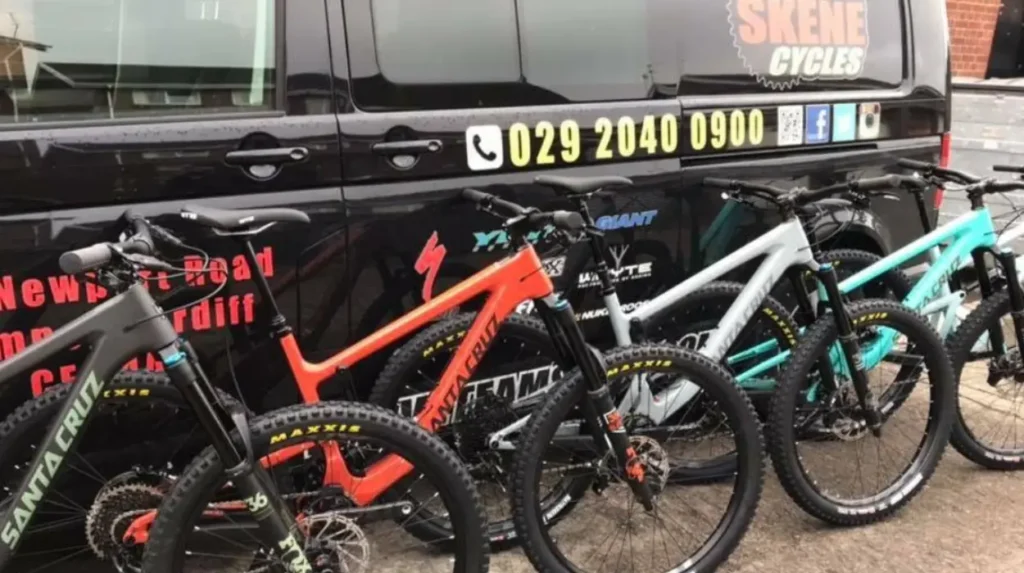
What mechanical maintenance and workshop services are executed on-site?
The on-site workshop performs precise mechanical interventions including drivetrain calibrations, hydraulic brake bleeds, wheel building, and comprehensive suspension overhauls. Certified bicycle technicians utilize specialized diagnostic machinery to service conventional mechanical systems and integrated e-bike electronic units.
The operational core of an independent bicycle shop rests upon its mechanical service department. The workshop at this facility manages structural wear and component fatigue resulting from environmental exposure and operational stress.
Routine Tuning and Safety Screenings
Standard maintenance cycles require systematic inspection of torque specifications, cable tension, and wear tolerances. Technicians assess chain elongation using precision gauge tools to prevent premature degradation of cassettes and chainrings.
Brake pads are evaluated for friction material thickness, and shifting systems undergo indexed alignment to ensure reliable gear transitions. These preventative services reduce catastrophic component failures during operation.
Advanced Hydraulic and Suspension Services
High-performance mountain and road configurations necessitate complex fluid dynamic servicing. The workshop executes hydraulic brake bleeds using specific mineral oils or DOT fluids to purge trapped air bubbles from braking lines, restoring optimal modulation and stopping power.
Suspension service tracks include the extraction of degraded wiper seals, cleaning of internal damper cartridges, and replacement of suspension fluid at specified hourly thresholds. This maintains traction characteristics over irregular topographies.
Wheel Wheel Building and Truing Processes
Wheel maintenance involves structural tension balancing across steel or titanium spokes. Technicians utilize digital wheel truing stands to correct radial and lateral runout variations down to millimeter tolerances.
Custom wheel building services allow customers to select specific hubs, spoke counts, and rim profiles to optimize strength-to-weight ratios for specific athletic or utility applications. Proper spoke tension distribution prevents premature rim failure under high load states.
How does the shop support the Cardiff cycling community and infrastructure?
The institution supports regional cycling infrastructure by participating in government-backed Cycle to Work schemes, sponsoring local athletic clubs, and advising on regional route safety. These actions lower financial barriers to bicycle acquisition while fostering safe riding networks.
Independent retail institutions function as socioeconomic links that translate national environmental policy into local behavioral changes. The shop acts as a key touchpoint for municipal transit goals.
Implementation of Statutory Tax Incentive Programs
By participating in the UK Green Transport Plan initiatives, the shop facilitates the acquisition of commuter equipment via salary sacrifice frameworks. These programs allow employees to offset the purchase costs of bicycles and safety gear against gross salary income, reducing total tax liabilities.
This financial mechanism makes premium commuter packages accessible to a broader demographic within the Cardiff workforce, directly increasing the volume of bicycle commuters on municipal routes.
Sponsorship and Integration with Regional Athletic Clubs
The retail entity maintains historical ties to competitive cycling clubs across Glamorgan and Monmouthshire. By hosting mechanical clinics and supporting local cycling events, the establishment reinforces the social fabric underlying recreational sports in the region.
This long-term relationship generates generational consumer loyalty while providing a centralized location for information dissemination regarding race logistics, trail conditions, and safety protocols.
Advocacy for Enhanced Active Travel Networks
The leadership team provides experiential feedback regarding local cycling infrastructure, including lanes along the A48 and Newport Road corridors. Through informal consultation and community engagement, the entity highlights problematic designs, such as inadequate lane widths or poor pavement markings.
This commercial advocacy supports the objectives outlined in the Active Travel (Wales) Act, which mandates local authorities to continuously improve pedestrian and cycling networks.
What are the business hours, location dynamics, and access routes for the storefront?
The storefront is positioned prominently on Newport Road within the Rumney commercial district, accessible via major automotive roads and municipal bus networks. The business maintains structured retail hours throughout the week, accommodating both commuter traffic and weekend recreational consumers.
Navigating to the retail location requires an understanding of the transport geography of eastern Cardiff. The shop occupies a strategic position along one of the primary entry arteries of the city.
Geographical Placement and Transit Connectivity
The building resides on Newport Road, a major dual-carriageway that links central Cardiff with the electrical utilities and residential zones of St. Mellons and Marshfield. This positioning provides high visibility to daily automotive commuters.
For visitors using public transport, multiple municipal bus routes stop within short walking distances of the storefront, enabling access for patrons who do not possess private motor vehicles. Dedicated customer parking spaces facilitate the transport of bicycles requiring heavy repair or collection.
Spatial Organization of the Retail Facility
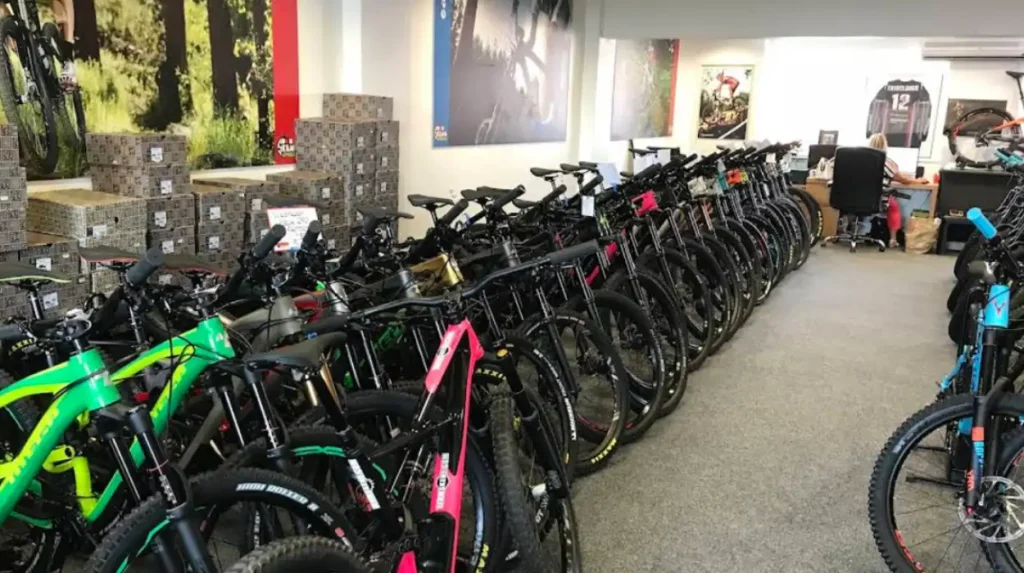
The internal layout divides the square footage between an open-plan showroom floor and a closed mechanical workshop zone. The showroom arranges inventory by application, allowing consumers to inspect frame geometries and component specs directly.
Clear structural separation ensures that dangerous mechanical procedures, such as frame facing or hydraulic presses, occur safely away from consumer foot traffic areas. Component walls display peripheral items including lighting arrays, luggage racks, and security locks.
Temporal Availability and Operational Cycles
The facility operates on a standard weekly commercial schedule designed to align with consumer shopping habits. High-volume service requests generally concentrate around spring and summer periods, reflecting seasonal changes in regional weather patterns.
The workshop utilizes an appointment booking system to regulate workflow density, ensuring that commuter vehicles receive rapid turnaround times to minimize disruptions to workplace transit schedules.
What is the economic relevance of independent bike shops in the modern retail landscape?
Independent bicycle shops sustain local economic resilience by retaining revenue within the community, providing specialized technical labor, and offering personalized sizing calibrations that e-commerce platforms cannot replicate. These businesses counter corporate retail consolidation by prioritizing technical services over bulk commoditization.
The survival of single-location specialized retailers requires adaptation to changing digital landscapes. Independent shops have pivoted toward experiential and service-oriented business frameworks.
Retaining Wealth Within the Foundational Economy
Unlike multinational online retail platforms, independent storefronts recirculate a significant percentage of gross revenue back into the local municipality via business rates, local sourcing, and regional employment. The wages paid to technical and sales staff support other businesses within the Cardiff area.
This localized multiplier effect contributes to community economic stability, counteracting the capital flight typically associated with large-scale digital commerce entities.
Technical Expertise as a Shield Against Digital Disintermediation
While consumers can purchase components directly from overseas manufacturing digital clearinghouses, physical configuration and safety tuning require manual labor. Independent workshops provide specialized mechanical skills that cannot be digitized or automated.
The precision assembly of safety-critical parts, such as hydraulic disc calipers and electronic shifting algorithms, requires physical diagnosis and specialized tool utilization, ensuring steady demand for local technical facilities.
Ergonomic Bike Fitting and Diagnostic Adjustments
Human anatomy requires precise bicycle geometry alignment to prevent repetitive strain injuries across joints, including knee and lumbar regions. Physical stores allow customers to undergo static and dynamic bike fitting procedures before capital allocation.
Technicians measure inseam parameters, torso lengths, and shoulder widths to select appropriate frame sizes, stem lengths, and saddle profiles. This individualized calibration minimizes physical discomfort during long-duration cycling operations.
What future trends will shape the evolution of local bicycle retail hubs?
The evolution of localized bicycle retail hubs will depend on the integration of smart e-bike diagnostics, circular economy recycling programs, and expansion of micro-mobility maintenance infrastructure. Retailers must adapt facilities to handle complex electronics and sustainable waste stream materials.
Socio-ecological transformations alter consumer expectations and manufacturing mandates. Local bicycle shops must transition alongside these shifting technical paradigms (De Laurentis et al., 2024).
Integration of IoT Diagnostics and Battery Telemetry
As electric bikes incorporate advanced Internet of Things (IoT) sensors and smart connectivity suites, traditional mechanical repair spaces must evolve into electronic diagnostic labs. Technicians routinely interface with proprietary software systems via Bluetooth or physical bus links to update motor firmware and analyze battery health cells.
Managing lithium-ion battery arrays requires adherence to specific thermal storage guidelines and chemical disposal protocols to mitigate environmental risks and fire hazards.
Adoption of Circular Economy Principles in Waste Stream Management
Future business viability requires strict tracking of material lifecycles, moving from linear waste models to closed-loop recovery methods (Liu et al., 2024). Bicycle shops handle significant volumes of consumable metals and polymers, including worn steel cassettes, aluminum rims, and vulcanized rubber inner tubes.
Establishing formal partnerships with industrial recycling firms ensures that scrap materials undergo reclamation processing, reducing the environmental footprint of local maintenance infrastructure.
Expansion into Secondary Micro-Mobility Classifications
The legislative environment surrounding personal light electric vehicles (PLEVs) continues to shift across the United Kingdom. Local retail hubs are well-positioned to expand service capacities to encompass alternative micro-mobility options, including cargo e-bikes and authorized electric scooters, should public road access laws change.
Diversifying service portfolios ensures that independent retailers remain central to the logistical infrastructure of urban communities.
What is Don Skene Cycles?
Don Skene Cycles is an independent bicycle shop based on Newport Road in Rumney, Cardiff. The business is known for bicycle sales, repairs, servicing, and long-standing involvement in the South Wales cycling community.