Key Points
- A woman in her 50s fell from an operating table while unconscious during gallbladder surgery at the University Hospital of Wales on June 5.
- The patient says she was not securely strapped to the table and has suffered “unbearable” right shoulder pain since the incident.
- She disputes the Cardiff and Vale University Health Board’s claim that she sustained no injuries, and says the hospital has downplayed the event.
- A whistleblower first alerted WalesOnline to the “unbelievable” blunder, saying the patient was lucky not to suffer fatal injury.
- The patient spent around four weeks chasing an update on the internal investigation before receiving a response only after WalesOnline intervened.
- The health board says the incident is under thorough review and that the internal investigation will conclude in September, but has not addressed inconsistencies between its earlier statements and the patient’s account.
Cardiff (Cardiff Daily) August 6, 2026 — A patient has spoken out after falling from an operating table while under general anaesthetic for gallbladder removal surgery at the University Hospital of Wales, describing ongoing “unbearable” pain and a sense of being let down by the health board’s handling of the incident.
- What happened during the surgery at University Hospital of Wales?
- What has the patient said about her injuries and the hospital’s response?
- What has the health board said about the incident?
- How did the incident come to light?
- What is the status of the internal investigation?
- What wider concerns exist about the University Hospital of Wales?
- Background to the development at University Hospital of Wales
- Prediction: How this development could affect patients, staff and public trust
What happened during the surgery at University Hospital of Wales?
The woman, who is in her 50s, arrived at the Cardiff facility at around 3:30pm on June 5 expecting a routine day-case procedure and discharge by 6pm. Instead, she remained under anaesthetic for approximately seven hours. According to her account, she woke up with the anaesthetist beside her who said:
“I’m so sorry. We dropped you from the table.”
As previously reported by WalesOnline after a whistleblower raised concerns, the fall occurred roughly 30 minutes into the procedure while the operating table was angled. Hospital staff told the patient a chest strap had loosened and she was not securely fastened. The fall was estimated at around four feet; although she did not hit the floor with full force, she did make contact. She was required to stay overnight to receive intravenous antibiotics because the surgical ports had touched the floor.
What has the patient said about her injuries and the hospital’s response?
The patient told WalesOnline that her right shoulder has been in “unbearable” pain since the incident, contradicting the Cardiff and Vale University Health Board’s earlier characterisation that she suffered no injuries. She said she feels “very let down” after spending around four weeks chasing an update on the internal investigation into the incident.
According to her, it was only in the hours after WalesOnline raised the matter with the health board that she finally heard back. She said the hospital has downplayed the incident in its communications and that the delay in receiving information about the investigation left her feeling abandoned.
What has the health board said about the incident?
The Cardiff and Vale University Health Board has stated that the incident “is undergoing a thorough review to understand what transpired and to identify any lessons learned.” It also told the patient that the internal investigation would conclude in September.
In earlier communications, the health board described the event as a “controlled move” from the table rather than an uncontrolled fall, and said clinical teams identified no injuries from the slip and that the patient was discharged as anticipated post-surgery. When asked about the inconsistencies between those statements and the patient’s account of ongoing pain and an uncontrolled fall, the health board did not respond.
How did the incident come to light?
The incident was first brought to public attention after a whistleblower contacted WalesOnline to report what they described as an “unbelievable” blunder. The whistleblower claimed the patient was fortunate not to have suffered a fatal injury. Following that disclosure, WalesOnline published an initial report on the incident, prompting further scrutiny of the circumstances surrounding the fall.
What is the status of the internal investigation?
The health board has confirmed that an internal investigation is ongoing and is expected to conclude in September. It says the review aims to understand what happened and to identify lessons to be learned. However, the patient has expressed frustration at the length of time it has taken to receive updates, and at what she perceives as minimisation of the seriousness of the event in the board’s communications.
What wider concerns exist about the University Hospital of Wales?
The incident has occurred against a backdrop of repeated controversies at the University Hospital of Wales and within the Cardiff and Vale University Health Board over the past 18 months. Previous reviews have uncovered serious problems in operating theatres, including drug misuse and criminal behaviour tolerated by management, as well as issues in the sterilisation unit involving sabotage, aggression and “system failures at all levels of the organisation”.
A separate service review into the cardiology department, completed after a six-month battle by WalesOnline to obtain details, highlighted management failings, unacceptable behaviour and inadequate training. The health board has faced sustained criticism for withholding full details of some reports while releasing others in greater depth, raising questions about transparency and accountability.
In July 2025, the entire health board was placed under level four escalation by the Welsh Government — one step below special measures — following a series of scandals. An independent assessment of the health board is expected to be highly critical when published.
Background to the development at University Hospital of Wales
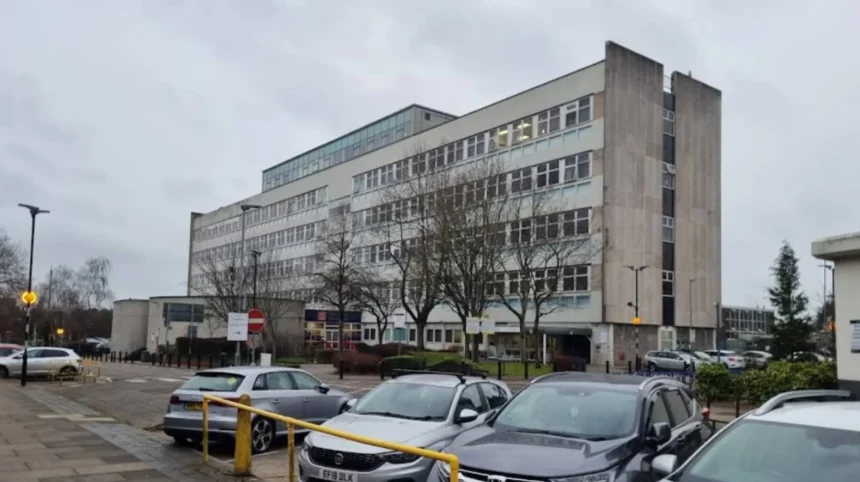
The University Hospital of Wales in Heath, Cardiff, is the largest hospital in Wales and a major teaching centre. Over the last two years it has been the subject of multiple service reviews after whistleblowers and staff raised concerns about culture, safety and governance. Reviews of operating theatres uncovered drug use, theft and misconduct that management failed to address adequately. A review of the sterilisation unit found bullying, harassment and violent or aggressive behaviour, with disciplinary action taken against five staff members — two resignations, two redeployments outside the unit and one dismissal.
Further investigations revealed allegations that members of the public were allowed to observe surgeries in operating theatres without clear authorisation, and an inquest into the death of a patient, Donald Gough, identified multiple failings after he was incorrectly injected with insulin. In response to mounting pressure, the Welsh Government escalated oversight of the Cardiff and Vale University Health Board to level four in July 2025, signalling deep concern about leadership and patient safety.
Against this context, the June 5 operating table incident has intensified scrutiny of theatre safety protocols, patient positioning and strapping procedures, and the health board’s communications with patients and the public. The ongoing internal investigation is expected to feed into broader efforts to restore confidence in the hospital’s governance and clinical standards.
Prediction: How this development could affect patients, staff and public trust
If the internal investigation confirms that safety protocols were not followed and that the patient’s fall resulted from preventable errors, the immediate effect is likely to be renewed pressure on the Cardiff and Vale University Health Board to tighten theatre safety checks, improve staff training on patient positioning, and strengthen incident reporting. For patients, this could mean more rigorous pre-operative checks and clearer communication about risks, but it may also heighten anxiety among those awaiting surgery at the hospital.
For staff, the outcome could prompt stricter compliance requirements, additional supervision in theatres and possible disciplinary action if individual negligence is identified. In the longer term, repeated scandals risk eroding public trust in the health board and could influence patient choice, referral patterns and morale among clinicians who feel let down by systemic failures.
If the health board is seen to minimise the incident or delay transparency, the reputational damage may extend beyond Cardiff, affecting perceptions of NHS Wales more broadly. Conversely, a thorough, candid investigation followed by visible improvements could help rebuild confidence, provided patients and staff see tangible changes in practice and culture.