In a multicultural city such as Cardiff, the curriculum can do more than transmit knowledge. It can help children understand where they live, recognise the experiences of others and see their own histories as part of a shared story. Cultural heritage, expressive arts and project-based learning offer practical ways to make that happen.
A city of many stories
Cardiff is a city of many languages, histories and communities. Children can share the same classroom while bringing very different family stories, cultural references and experiences with them. For schools, this creates an important educational question: how can we build classrooms in which children do not simply learn alongside one another, but learn with and from one another?
One answer may already be around us. Our buildings, neighbourhoods, family objects, stories, songs, traditions, museums and local landscapes are all forms of cultural heritage. Yet heritage in education is still sometimes treated as something encountered occasionally: a museum visit, a historic site, an object from the past. These experiences matter, but they can also become the beginning of something much richer.
I believe cultural heritage can become part of the learning process itself. It can provide the starting point for children to explore language, history, geography, identity, place, migration and community. Drama and the expressive arts then give learners different ways to investigate, interpret and communicate what they discover.
Learning through heritage, not only about it
This idea sits at the heart of Cultural Heritage in Education, or CHE, an approach developed in our 2025 volume Education VIA Culture, which I co-edited with Fiona Dalziel. The book is freely available as an open-access publication through Sidestone Press, reflecting the same principle that underpins the approach itself: educational ideas and resources are most valuable when they can be accessed, adapted and shared.
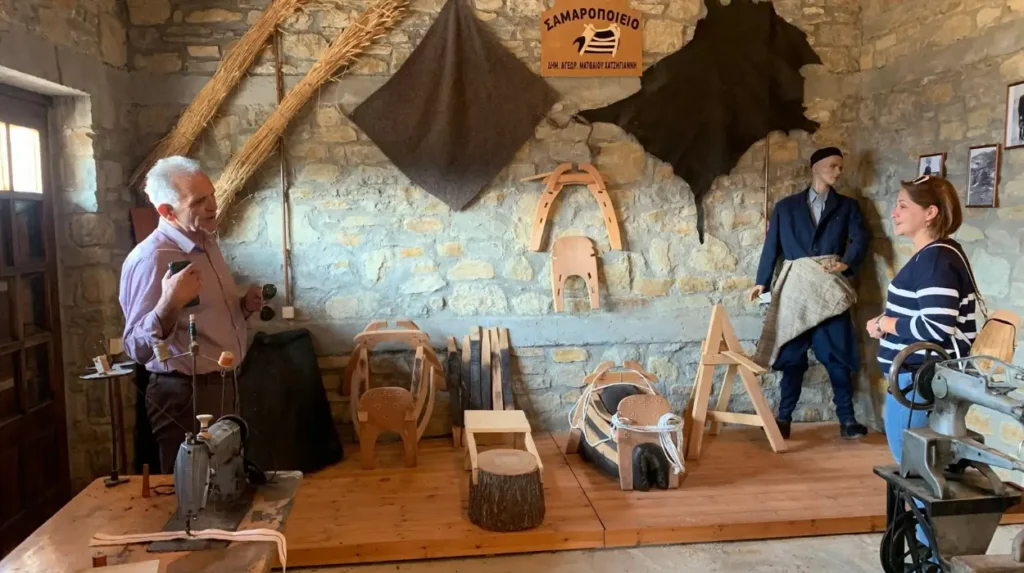
A local building can lead to historical enquiry, mapping, photography, oral history and creative writing. A family object can open discussion about migration, memory and identity. A song can connect music with language and social history. An artefact can become the starting point for drama, as learners imagine the people, places and events that shaped its journey.
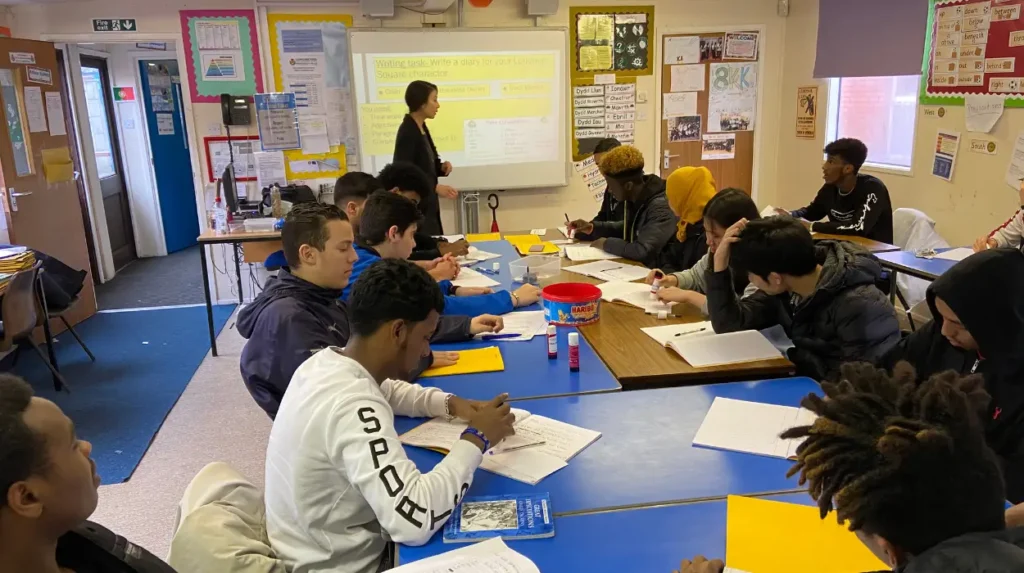
The aim is not to make lessons more entertaining. It is to create learning that is experiential, connected and purposeful. Cross-curricular, project-based teaching allows children to encounter a question from several directions and to see relationships between areas of knowledge that are often separated by the timetable.
Why this matters in Wales
This approach aligns closely with the Curriculum for Wales, particularly its emphasis on identity, heritage, cynefin, diversity and belonging. It encourages learners to understand the histories and landscapes of their locality while making connections with Wales and the wider world.
It also supports integrated and interdisciplinary learning across Areas of Learning and Experience. The Expressive Arts can therefore be more than enrichment around a topic: drama, art, music, film and digital media can become ways of thinking, enquiring and communicating.
This matters because children do not all demonstrate understanding in the same way. Performance, drawing or film may give one learner a route into complex ideas, while a multilingual learner may contribute linguistic or cultural knowledge that would otherwise remain outside the lesson. This is not about lowering expectations, but widening access to rigorous learning.
The same principle shapes my work in teacher education. In 2022 I designed Local, Global, and Pioneering Approaches in Education, the concluding Year Three module of Cardiff Metropolitan University’s Primary Education (3-11) with QTS degree. It is reviewed and developed each year so that student teachers engage critically with local and international practice. In 2026, I was grateful to be nominated for Lecturer of the Year, which I see as encouragement to keep designing learning that is inclusive, reflective and relevant.
Inclusion has to be lived
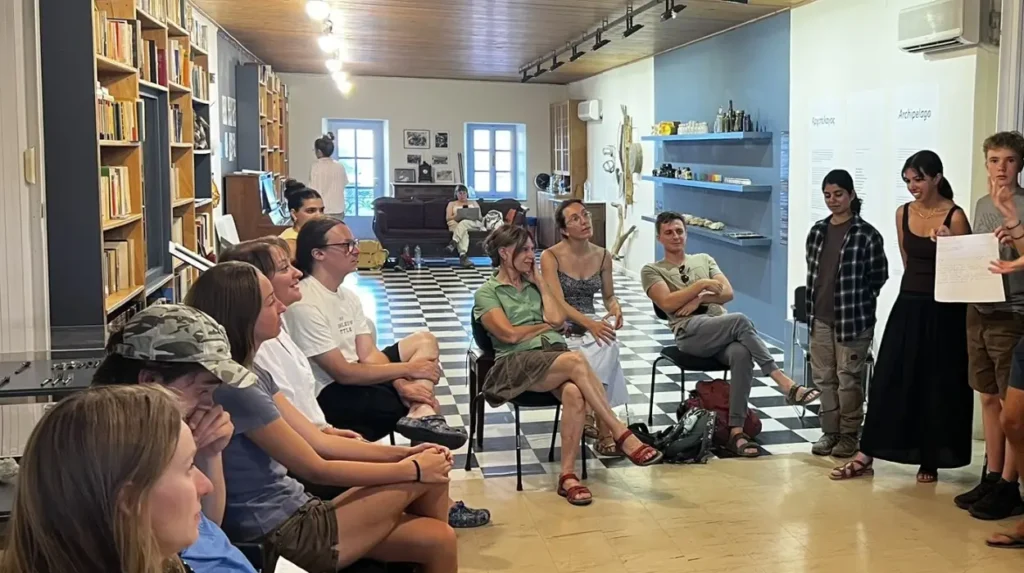
For me, inclusion, diversity, respect and belonging are not additions to a successful curriculum. They are among its central purposes. Multicultural classrooms are not automatically cohesive simply because children from different backgrounds share the same space; cohesion grows through meaningful encounters, listening and participation.
Heritage-based project work can help. A shared enquiry allows learners to contribute different forms of knowledge and experience: a migration story, a language, a religious tradition, a piece of music, a family object or knowledge of the local area. Diversity is then experienced through collaboration rather than discussed only as an abstract value.
Butetown: when Cardiff itself became the classroom
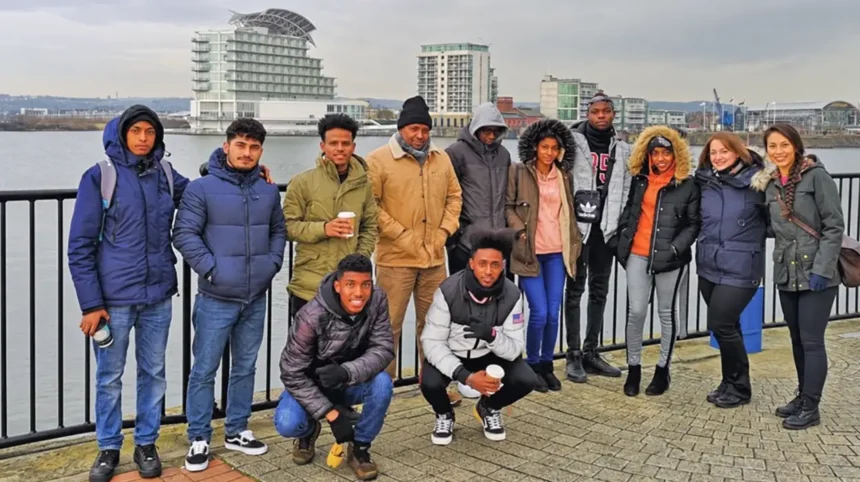
An earlier project I co-led in Cardiff with Dr Konstantinos Trimmis, an archaeologist specialising in landscape archaeology and cultural landscapes, A Town of Many, showed what this can look like in practice. Funded by the National Lottery Heritage Fund, the project used the cultural landscape of Butetown and Cardiff Bay to support second-language learning and social inclusion with refugees, migrants and newly arrived learners.
Instead of learning about Butetown only through a textbook, participants explored places, buildings and community histories, gathered stories and interpreted them through language and drama. The local environment became both a source of knowledge and a space for learning. A short film from the project offers a glimpse of this work in practice.
The project reinforced an idea that remains central to my work: belonging should not require learners to leave previous identities behind. People can build attachment to a new place while retaining meaningful connections to other languages, memories and histories. In Cardiff, that is part of how inclusive communities are made.
What can one object teach us?
My later research has continued to explore relationships between heritage, mobility and learning. The Finds Stories project, for example, examines how people, objects and landscapes move and acquire new meanings across regions and communities.
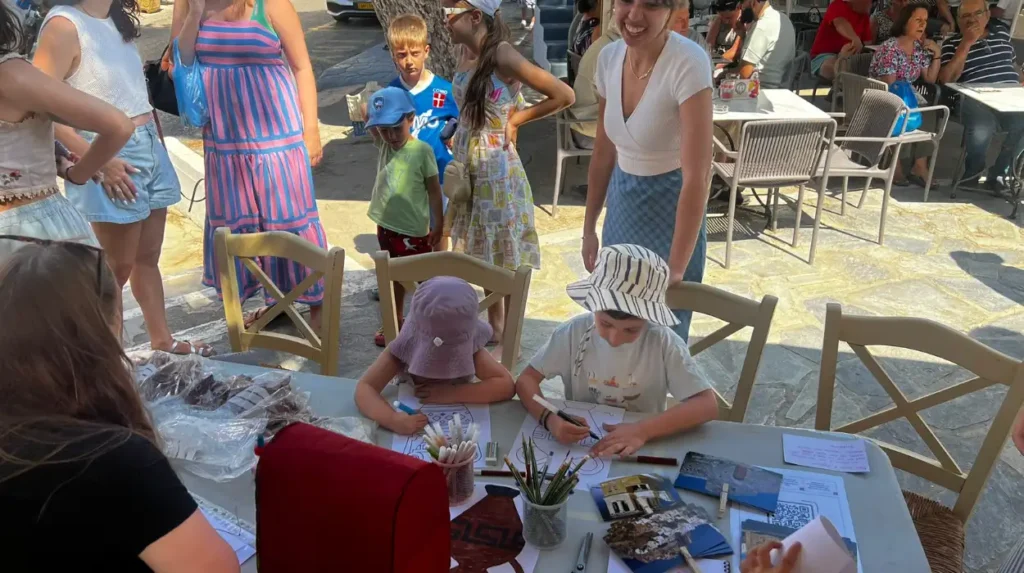
Objects make large ideas tangible. Learners can ask who made an artefact, who used it, where it travelled, why it was kept and what it meant to different people. Through Creative Object Biographies, an object’s documented journey can then inspire drawing, storytelling, making or performance. Creativity does not replace evidence; it offers another way of interpreting and communicating it.
From archaeological research to participatory learning
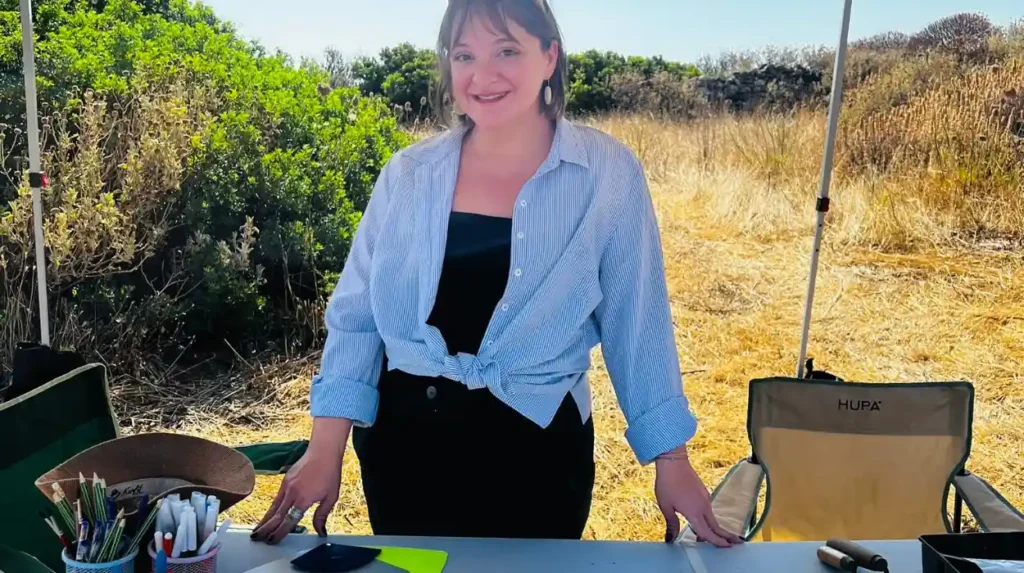
This summer I developed these ideas further through EVOKE, Exploring Vythoulas Origins in Kythera Environs, part of the wider DIORAMAS programme on Kythera. As Cultural Heritage Specialist and Education Consultant, I led the educational and public engagement strand connected with the Vythoulas excavation.
With undergraduate and postgraduate students from the University of Sydney and Harvard University, we explored how archaeological evidence could become purposeful public education. Students considered questions of preservation, access, community identity and the contemporary value of historic places, then worked with museum and archaeological material through drawing, assemblage and performance.
One Creative Object Biography followed a teapot manufactured in Sheffield, taken to Australia within Greek migrant life and later returned to Kythera. Through one object, students could explore industrial production, migration, family memory, diaspora and cultural identity.
At Kythera Nursery School, children aged three and four became ‘little archaeologists’, excavating objects from sand, reconstructing ceramic vessels, drawing from ancient pottery and classifying finds. Across very different age groups, the same principles emerged: learner voice, dialogue and ownership matter, and creative approaches can widen access without reducing intellectual ambition.
Cardiff already has the resources
Schools in Wales do not need an archaeological excavation in Greece to work in this way. Cardiff itself is full of starting points: a street, place of worship, family photograph, industrial building, park, archive, Welsh song, market, public artwork or an object brought here from somewhere else.
The question is not only, ‘What information can children learn?’ It is also, ‘Whose stories are here? How might different people interpret them? What can learners create in response, and how can the local connect with Wales and the wider world?’ A single enquiry can bring together literacy, Humanities, Expressive Arts, digital competence and, where appropriate, science and numeracy.
For this to have lasting value, teachers need time to adapt ideas to their own pupils and communities. My work across funded education and cultural heritage projects has included teacher-development workshops that translate research into classroom practice. These approaches can also be developed through INSET or focused consultancy on cross-curricular and project-based curriculum design, not as ready-made packages, but through collaboration around local assets, meaningful questions and realistic classroom needs.
A classroom where children can belong
The value of cross-curricular education goes beyond meeting several curriculum objectives at once. At its best, it helps learners connect knowledge with lived experience and with one another. It creates opportunities to encounter difference with curiosity and to understand that sharing a community does not require everyone to share the same story.
A successful multicultural classroom should allow children to grow in confidence about who they are while becoming genuinely interested in who others are. Cultural Heritage in Education, drama and the expressive arts cannot solve every challenge facing schools, but they can help teachers create learning that is participatory, holistic and human.
Perhaps the museum visit should not be regarded as the culmination of learning. It may simply be where the questions begin.
| Explore the work For readers who would like to see an example from practice, the A Town of Many short film offers a glimpse of the Butetown project in action. Special thanks to Executive Producer Dr Konstantinos Trimmis, filmmaker and director Joe Kelly, classical guitarist and bouzouki player Evangelos Nikolaidis, and harpist and pianist Gwenno Glyn. The ideas behind Cultural Heritage in Education are explored further in Education VIA Culture, which is available to read and download free through open access. Readers interested in the research underpinning Creative Object Biographies can also access the peer-reviewed article A study on creative object biographies: Can creative arts be a medium for understanding object–human interaction?, published open access by Cambridge University Press in Archaeological Dialogues. |
| Author bio Dr Konstantina Kalogirou is Senior Lecturer in Teacher Education and Professional Learning at Cardiff Metropolitan University. Her research connects interactive pedagogy, language learning, drama, expressive arts and cultural heritage. She is co-editor of the 2025 open-access volume Education VIA Culture and has led heritage and teacher-development projects in Cardiff and internationally. |