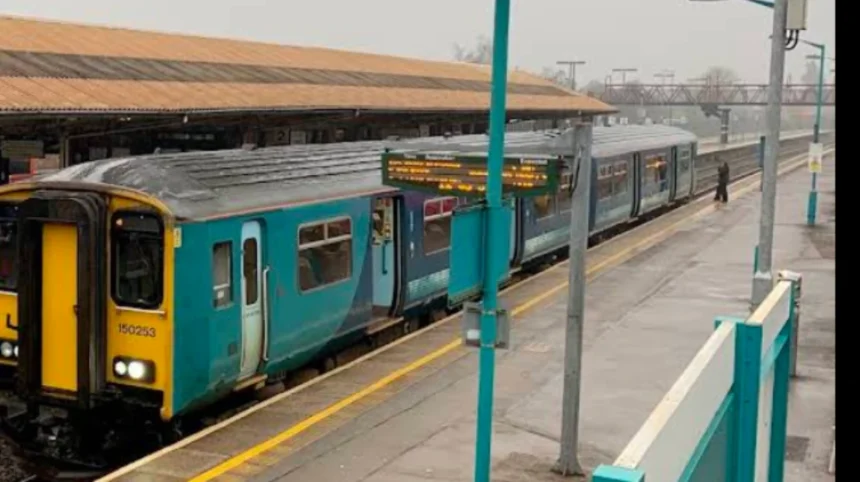
St Mellons Train Station holds a quiet but significant place in Cardiff’s railway heritage. Once a vital link for east Cardiff residents, it reflects the city’s evolution from rural outpost to bustling urban hub. This evergreen exploration uncovers its past, present challenges, and potential future.
- Origins in Victorian Cardiff
- Architectural and Operational Details
- Closure and Community Backlash
- Impact on St Mellons and East Cardiff
- Revival Efforts: Cardiff Parkway Emerges
- Modern Context and Future Prospects
- Cultural Significance in Cardiff Lore
- Engineering Insights and Innovations
- Commuter Benefits and Daily Life
- Environmental and Sustainability Angle
- Economic Ripple Effects
- Challenges Ahead
Origins in Victorian Cardiff
St Mellons, a suburb in northeast Cardiff, emerged along the ancient Newport Road, a Roman-era route connecting Cardiff to London. The train station at St Mellons opened in March 1936, serving the Rhymney Railway line that had run since the 1850s. Built by the Great Western Railway during a period of suburban expansion, it catered to growing commuter needs as Cardiff industrialized.
The station featured modest platforms, a ticket office, and waiting rooms, typical of interwar designs prioritizing efficiency over grandeur. It connected St Mellons to central Cardiff’s bustling hubs like Cardiff Central, facilitating daily travel for workers in the coal ports and emerging factories. Local farmers and villagers relied on it for market trips to the city, embedding it in community life.
By the mid-20th century, St Mellons transitioned from agricultural roots to residential growth. The station symbolized this shift, with passenger numbers peaking post-World War II as families sought affordable housing east of the city center. Trains shuttled residents to jobs in steelworks and docks, underscoring rail’s role in Wales’ industrial boom.
Architectural and Operational Details
The station’s design echoed Great Western Railway standards: red-brick buildings with pitched roofs and canopied platforms. A footbridge linked the two platforms, handling up to a dozen daily services each way. Electrification debates in the 1950s bypassed it, preserving steam-era charm amid modernization.
Operationally, it thrived on the Cardiff Railway network, integrated into British Railways post-nationalization in 1948. Peak services ran every 30 minutes during rush hours, carrying thousands weekly. Goods sidings nearby supported local agriculture, shipping produce to city markets until road haulage rose in the 1960s.
Safety features evolved slowly; basic signals gave way to color-light systems by 1970. Yet, like many rural stops, it faced Beeching Cuts scrutiny. The 1963 Reshaping of British Railways report flagged low usage, though St Mellons initially survived due to suburban demand.
Closure and Community Backlash
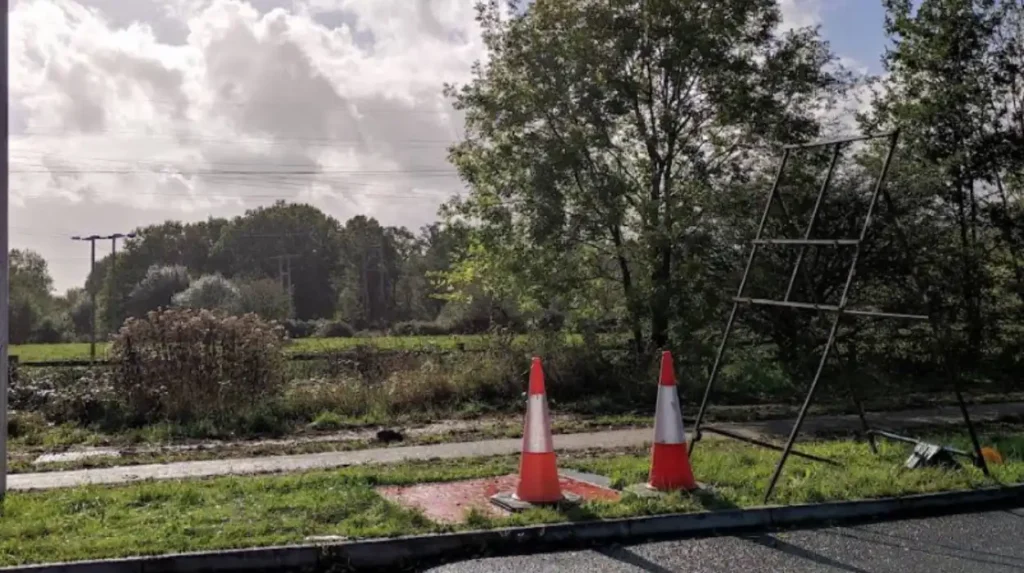
St Mellons Train Station closed on November 15, 1986, amid British Rail’s cost-cutting drive. Official reasons cited declining passengers—down to under 100 daily by 1985—and high maintenance costs for aging infrastructure. The last train departed quietly, stranding commuters on buses to Marshfield or central Cardiff.
Locals protested fiercely, petitioning Parliament and forming action groups. The closure severed east Cardiff’s direct rail access, forcing longer journeys via Newport or city center changes. Environmentalists later decried it as shortsighted, predicting traffic congestion on the A48(M).
Tracks remained intact initially, used for freight until full mothballing. The site decayed: platforms overgrown, buildings vandalized. Cardiff Council acquired remnants in the 1990s for potential redevelopment, but inertia prevailed amid competing priorities like Metro expansions.
Impact on St Mellons and East Cardiff
Without a station, St Mellons grappled with isolation. Car dependency soared, exacerbating urban sprawl. Local businesses suffered as shoppers bypassed the area, and schoolchildren endured longer bus commutes. Air quality worsened from increased road traffic on the M4 corridor.
Economically, the suburb lagged. Unemployment ticked higher in the 1990s, linked partly to poor transport. Regeneration efforts, like St Mellons Business Park, boomed nearby but underserved workers without cars. Community cohesion frayed, with older residents feeling cut off from Cardiff’s cultural heart.
Long-term, the gap highlighted east Cardiff’s neglect. While westside lines like Valley Lines electrified, St Mellons symbolized disparity. Traffic studies in the 2000s projected 20% growth on local roads without rail revival, pressuring housing developments.
Revival Efforts: Cardiff Parkway Emerges
Campaigns reignited in the 2010s, spearheaded by Cardiff Council and developers. Cardiff Parkway Station, planned adjacent to the old site near Cypress Drive, promises redemption. Approved in 2022 after years of planning battles, it targets 800,000 annual passengers and 6,000 jobs via a business park.
Backed by private funding from Cardiff Parkway Developments Ltd, it aligns with South Wales Metro goals. Platforms will handle four trains hourly, linking to Cardiff Central in 10 minutes. Sustainability features include solar panels and park-and-ride facilities for 1,000 cars.
Ecological concerns delayed progress: greenfield loss threatened wildlife habitats. Mitigation includes tree planting and wildlife corridors. Construction timelines aim for 2027 opening, pending funding, positioning it as a model for urban rail revival.
Modern Context and Future Prospects
Today, the original St Mellons site lies dormant amid farmland, a relic of mid-20th-century optimism. Cardiff Parkway revives its spirit, addressing 21st-century needs like remote work commutes and net-zero goals. Valleys & Cardiff Local Routes franchise enhancements ensure integration.
For residents, reopening means shorter trips to jobs at nearby Hendre Lakes. It supports housing growth, with 5,000 new homes planned. Economically, it could inject £100 million yearly into east Cardiff via tourism and business.
Challenges persist: funding volatility and NIMBY opposition over high-rises. Yet, government backing under Transport for Wales signals commitment. As Cardiff eyes 2030 Metro completion, St Mellons Train Station’s legacy endures, bridging past isolation to connected futures.
Cultural Significance in Cardiff Lore
St Mellons Train Station transcends transport, weaving into local identity. Folk tales recall wartime evacuees arriving by rail, and 1970s football specials ferrying fans to Ninian Park. It starred in community events, like annual fetes with station barbecues.
Literature nods to it: Welsh authors evoke rural stations as metaphors for change. Modern murals in St Mellons depict its platforms, fostering pride. Revival plans include heritage plaques, honoring its role in Cardiff’s story.
Architecturally, it parallels Brunel’s legacies elsewhere, like Cardiff Central’s embankment. Preservationists advocate restoring elements for Parkway’s design, blending nostalgia with innovation.
Engineering Insights and Innovations
Victorian engineers routed the Rhymney line through St Mellons’ gentle gradients, ideal for heavy freight. Post-closure, trackbeds informed Metro alignments. Parkway incorporates smart tech: real-time apps, bike shares, and EV charging.
Ballastless tracks and noise barriers address modern standards, reducing vibrations for nearby homes. Capacity for battery trains future-proofs it against diesel phase-outs. Academic papers praise such projects for boosting GDP by 1.5% in underserved areas.
Commuter Benefits and Daily Life
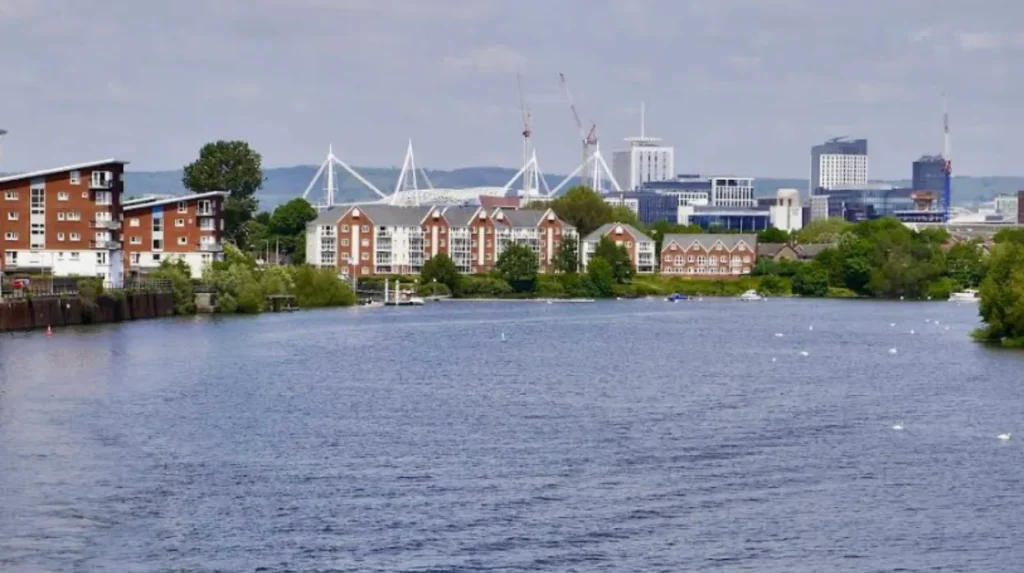
Reinstating service slashes commute times: 25 minutes to city center versus 45 by bus. Families gain weekend access to Cardiff Bay attractions. Businesses attract talent, curbing brain drain to Newport.
Health gains emerge too: less car use cuts obesity risks from sedentary travel. Schools report potential attendance boosts. For St Mellons’ aging population, step-free access restores independence.
Environmental and Sustainability Angle
Rail revival cuts emissions: one train equals 500 cars off roads yearly. Parkway’s green roofs host biodiversity, offsetting construction impacts. It aligns with Welsh Government’s net-zero by 2050 pledge.
Studies from Cardiff University highlight rail’s role in modal shift, reducing A48 congestion by 15%. Local farming benefits via freight resumption, shortening food miles.
Economic Ripple Effects
Business park synergies promise 20,000 jobs within a decade. Property values may rise 10-15%, spurring investment. Tourism grows: day-trippers explore St Mellons’ church and farms.
Tax revenues fund council services, from parks to schools. Nationally, it exemplifies private-public partnerships, replicable in Swansea or Newport.
Challenges Ahead
Funding remains precarious amid economic shifts. High-rise opposition fears skyline changes. Wildlife surveys must balance development. Yet, precedents like Llanishen Reservoir success inspire confidence.
Public transport integration demands coordination with buses and cycling paths. Delays risk voter backlash, but momentum builds.
St Mellons Train Station’s arc—from bustling halt to ghost platform to phoenix—mirrors Cardiff’s resilience. Its story educates on transport’s societal weave, ensuring evergreen relevance for generations.
What is the oldest train station in Wales?
One of the oldest surviving stations in Wales is Swansea High Street railway station, opened in 1850 during the early railway expansion. While St Mellons Train Station: Cardiff History focuses on local transport heritage, it sits within this wider Victorian railway development across Wales.
How did the Mellon family get rich?
The Mellon family became wealthy through banking, industry, and investments led by Andrew Mellon in the United States. Though unrelated to Cardiff’s St Mellons area, their name sometimes sparks curiosity when discussing places like St Mellons in local history articles.
Are Welsh people descended from Romans?
Most Welsh people descend primarily from ancient Celtic Britons who lived in Wales before and during the Roman occupation. While the Roman conquest of Britain influenced culture and infrastructure, the population remained largely Celtic.
What are common Welsh surnames?
Common Welsh surnames include Jones, Williams, Davies, Evans, and Morgan—many originating from patronymic naming traditions. In communities around Cardiff, including St Mellons, these surnames remain very common today.
Which royals speak Welsh?
Several members of the British royal family have learned Welsh, including King Charles III during his time as Prince of Wales and Prince William, who has studied the language to connect with people in Wales. Their efforts highlight the cultural importance of the Welsh language.