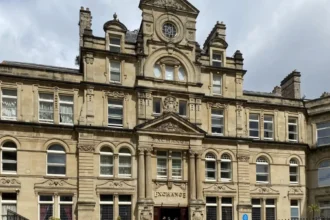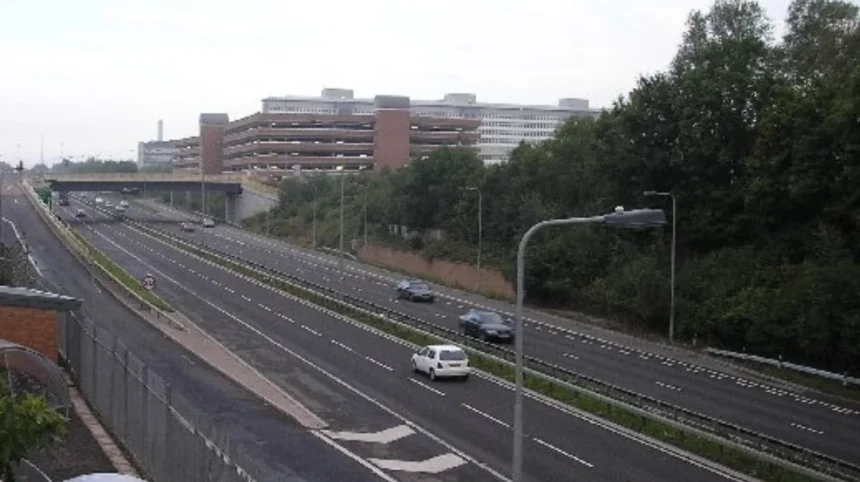
St Mellons is a district situated on the eastern edge of Cardiff, Wales, positioned approximately six miles from the city centre. It serves as a residential and business hub located between the urban environments of Cardiff and the city of Newport.
- Why Do Public Transport Gaps in St Mellons Exist?
- What is the Current Status of the Cardiff Parkway Development?
- How Does the Bus Network Address Local Connectivity?
- What Impact Do Transport Gaps Have on Local Economic Productivity?
- What Are the Environmental Implications of High Car Dependency?
- How Does Active Travel Integrate with St Mellons Public Transport?
- What Are the Future Trends for St Mellons Transport Infrastructure?
The geographical location of St Mellons places it at a critical junction within the South East Wales transport corridor. It is bordered by the A48 road, which acts as a primary arterial route for commuters traveling between major employment centers in the region. Despite its proximity to two major cities, the area remains physically separated from the South Wales Main Line railway. This separation creates a reliance on road based infrastructure for all local transit needs.
The district consists of Old St Mellons, a historic village, and the newer St Mellons housing estate developed in the late twentieth century. These two sections present different navigational challenges for public transit providers due to varying road widths and population densities. The Cardiff Local Development Plan identifies this eastern corridor as a significant growth zone. Consequently, the geographic isolation from rail services makes the district a focal point for infrastructure gap analysis.
Why Do Public Transport Gaps in St Mellons Exist?
Public transport gaps in St Mellons exist because the area lacks a dedicated railway station and relies on a bus network prone to congestion. Historical urban planning prioritized road access over integrated rail links during the major expansion of the district.
The absence of a rail connection is the primary structural gap in the local transport framework. While the South Wales Main Line passes near the district, no station has served the immediate population since the mid twentieth century. This forces residents to utilize bus services that must share road space with private vehicles on the heavily congested A48 and Cypress Drive.
Traffic volume during peak morning and evening hours reduces the reliability of bus timetables, leading to increased journey times for commuters. Furthermore, the deregulated nature of bus services means that some routes are governed by commercial viability rather than social necessity. This results in reduced frequency during evening hours and weekends for specific residential loops. The transition from a car centric planning model to a public transit oriented model requires significant capital investment that has lagged behind housing development. Planning legacy issues continue to influence how transit operators allocate resources to this specific Cardiff suburb.
What is the Current Status of the Cardiff Parkway Development?
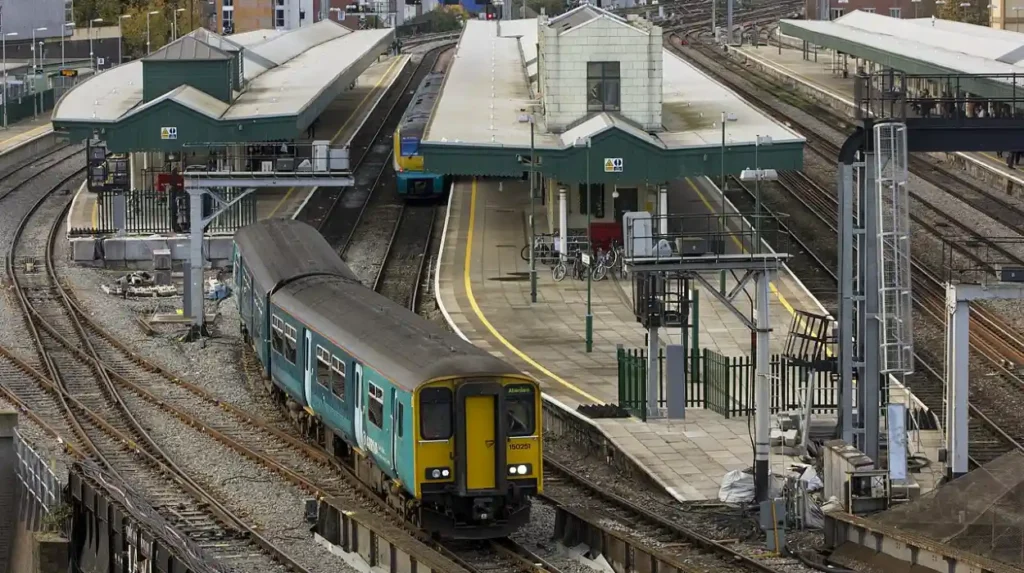
Cardiff Parkway is a proposed railway station and business park designed to bridge the transport gap in St Mellons. The project aims to provide direct rail access to London, Bristol, and Cardiff City Centre while creating a major employment hub.
The Cardiff Parkway development represents the most significant planned intervention for the eastern Cardiff transport deficit. This project is part of the wider South Wales Metro initiative, which seeks to improve connectivity across the Cardiff Capital Region. The station is planned for a site at the Cardiff Hendre Lakes development, located specifically to serve St Mellons and the surrounding business parks. In 2024, the project underwent extensive planning reviews by the Welsh Government to ensure compliance with environmental and sustainability standards.
The facility is expected to handle approximately 800,000 passengers annually upon completion. It features four platforms capable of accommodating high speed intercity trains and local metro services. By integrating a railway station into the district, the project intends to reduce private car journeys on the M4 motorway. The development includes a significant commercial element with the potential to host 6,000 jobs in the technology and service sectors.
How Does the Bus Network Address Local Connectivity?
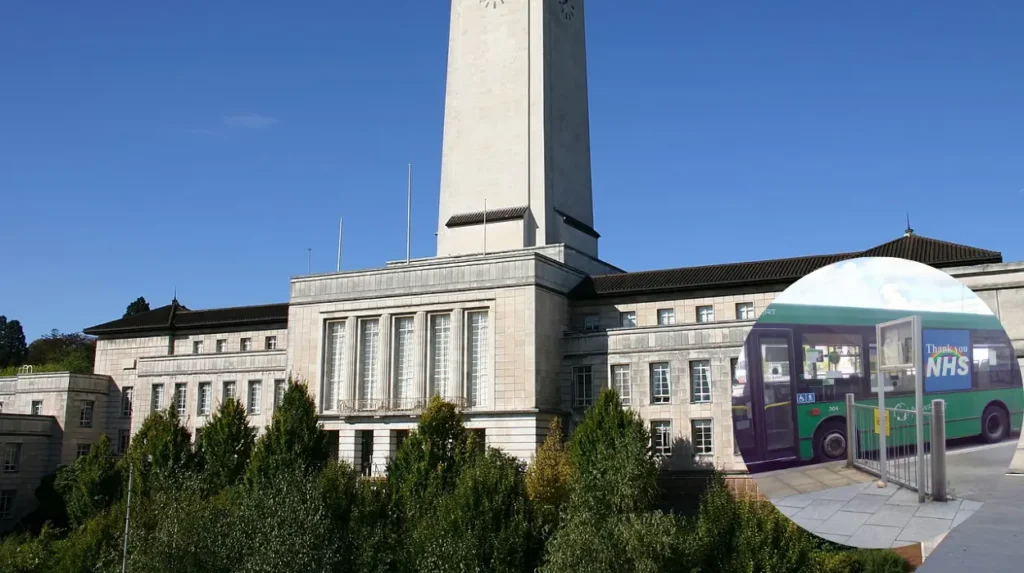
The bus network in St Mellons operates through several providers, including Cardiff Bus and Newport Bus, offering links to nearby city centers. However, service gaps remain regarding the frequency of orbital routes and direct connections to northern Cardiff.
Current bus provisions utilize a radial model that prioritizes transport to Cardiff Central and Newport. Routes such as the 44, 45, and 49 provide frequent intervals during daytime hours for those traveling to the city center. These services utilize the bus lanes on the A48 to bypass some general traffic, though they remain susceptible to bottlenecks at major junctions. A notable gap exists in orbital connectivity, making it difficult for residents to reach areas like Llanishen or Heath Hospital without changing buses.
Transit data indicates that cross city journeys can take upwards of sixty minutes, whereas a direct route would require twenty minutes. The infrastructure lacks comprehensive real time information displays at every stop, which impacts the user experience for occasional passengers. Night bus services are limited, which affects the accessibility of the night time economy for residents working late shifts. Efforts to implement a Bus Rapid Transit system are currently under discussion to improve these throughput issues.
What Impact Do Transport Gaps Have on Local Economic Productivity?
Transport gaps in St Mellons negatively impact economic productivity by limiting access to diverse employment markets and increasing the cost of commuting. High dependency on private vehicles creates financial barriers for low income households seeking work opportunities.
The correlation between transport accessibility and economic mobility is evident in the employment statistics of eastern Cardiff. Residents without access to a private vehicle are restricted to jobs reachable via the existing bus network within a reasonable timeframe. This limitation narrows the available job pool and can lead to higher local unemployment rates compared to rail connected suburbs. Businesses located in the St Mellons Business Park also face challenges in recruiting talent from the wider South Wales region due to difficult commutes.
The time lost in traffic congestion on the A48 contributes to decreased national productivity and increased operational costs for logistics companies. Research by the Cardiff Capital Region suggests that improving transit links could boost the local economy by several million pounds annually. Reducing the transport gap facilitates a more flexible labor market where skills can be matched with demand across city boundaries. Enhanced connectivity is therefore viewed as a catalyst for sustainable economic regeneration in the St Mellons area.
What Are the Environmental Implications of High Car Dependency?
High car dependency in St Mellons leads to elevated nitrogen dioxide levels and increased carbon emissions along the A48 corridor. The lack of viable public transport alternatives prevents the district from meeting regional net zero targets.
The environmental burden of transport gaps is measured through air quality monitoring and carbon footprint analysis. Because the bus and rail infrastructure is insufficient for many, the volume of single occupancy vehicle trips remains high. This contributes to the urban heat island effect and local air pollution, which has documented effects on public health. The Welsh Government has committed to reaching net zero emissions by 2050, a goal that requires a shift toward modal split. Modal split refers to the percentage of travelers using different types of transport, such as cycling, walking, or transit.
Currently, the modal split in St Mellons favors the internal combustion engine, hindering local sustainability efforts. Noise pollution from constant road traffic also affects the quality of life in residential sectors adjacent to major thoroughfares. Integrated transport solutions, such as electrified rail and zero emission bus fleets, are necessary to mitigate these environmental risks. Transitioning to green infrastructure is a priority for the Cardiff Council Annual Wellbeing Plan.
How Does Active Travel Integrate with St Mellons Public Transport?
Active travel integrates with public transport through the development of cycleways and walking paths that connect residential zones to transit hubs. Gaps in the current network include fragmented bike lanes and insufficient secure cycle storage.
Active travel refers to making journeys by physically active means, such as walking or cycling. In St Mellons, the integration of these methods with public transport is essential for solving the last mile problem. The last mile problem describes the difficulty of getting people from a transport hub to their final destination. Cardiff Council has invested in Cycleway 2, which aims to link the city center with St Mellons to provide a safe alternative to driving. However, some sections of the route remain incomplete, forcing cyclists onto busy roads.
Improving the safety of pedestrian crossings near bus stops is another critical factor in encouraging transit use. Sufficient lighting and clear signage are required to make active travel a viable option during winter months. The proposed Cardiff Parkway station includes plans for a significant cycle hub to encourage multi modal journeys. Effective integration ensures that public transport is accessible to those living beyond the immediate vicinity of a bus stop.
What Are the Future Trends for St Mellons Transport Infrastructure?
Future trends for St Mellons transport infrastructure focus on digitalization, the completion of the South Wales Metro, and demand responsive transport. These innovations aim to create a more flexible and responsive transit environment for residents.
The evolution of transport in the region is moving toward a more data driven approach to service delivery. Demand responsive transport (DRT) is a system where vehicles alter their routes based on real time passenger requests via a mobile application. This technology could potentially fill the gaps in the quieter residential loops of St Mellons where fixed bus routes are inefficient. The South Wales Metro project will eventually bring higher frequency services and better integration between different modes of travel. Smart ticketing systems are being introduced to allow seamless transfers between buses and future rail services with a single payment.
Another trend is the expansion of electric vehicle charging infrastructure within public transit interchanges to support the shift away from fossil fuels. Autonomous shuttle trials are being considered for business parks to connect offices with main transit arteries. These advancements represent a shift toward a holistic transport ecosystem rather than isolated service providers. The long term vision involves a fully connected St Mellons that functions as a primary gateway to Cardiff.
What are the burns stations in Wales?
Public Transport Gaps in St Mellons are often discussed alongside the Burns Delivery Board recommendations, which proposed six new railway stations in Southeast Wales. These include Cardiff East, Newport West, Somerton, Llanwern, Magor, and Undy to improve regional connectivity.
What is the smallest city with a subway?
While Public Transport Gaps in St Mellons highlight a lack of local rail, Lausanne, Switzerland, is the smallest city globally with a full subway system. It features two lines serving a population of approximately 140,000 residents across the city.
Which city has the oldest metro?
Addressing Public Transport Gaps in St Mellons involves looking at urban history, noting that London has the oldest metro system. The London Underground opened in 1863, originally using steam locomotives to transport passengers beneath the busy streets of the capital.
Which railway station has 44 platforms?
To solve Public Transport Gaps in St Mellons, planners look at major hubs like Grand Central Terminal in New York. This facility holds the record with 44 platforms and 67 tracks, significantly more than any modern station currently in Wales.
How do I contact the Cardiff library?
Residents noticing Public Transport Gaps in St Mellons can access library resources by contacting Cardiff Central Library at 029 2038 2116. The library offers digital archives and physical planning documents regarding the city’s future transport and infrastructure development.