Transport for Wales is easiest to use like a local when you treat it as part of Cardiff’s wider city network, not just a train company. In Cardiff, that means combining TfW rail services with bus links, walking routes, and simple ticket checks so you move through the city efficiently.
- What is Transport for Wales in Cardiff?
- How do you plan a TfW journey in Cardiff?
- Which Cardiff stations matter most?
- How do locals buy TfW tickets?
- What is the best way to move around Cardiff?
- When should you avoid rail in Cardiff?
- How do locals travel for Cardiff Bay and events?
- What makes TfW useful for daily Cardiff life?
- What local habits help you travel better?
- Why does this matter for Cardiff visitors and residents?
What is Transport for Wales in Cardiff?
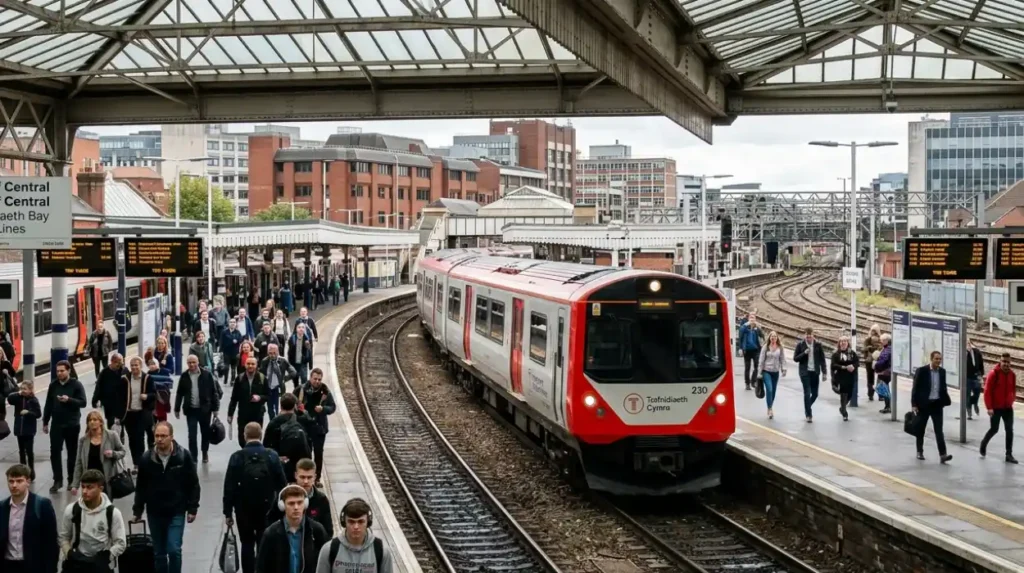
Transport for Wales is the main public transport operator for rail travel across Wales, and in Cardiff it connects the city centre, Cardiff Bay, and surrounding suburbs through a dense rail network. Cardiff has more than 20 stations in the city and surrounding area, with Cardiff Central and Cardiff Queen Street as the busiest core stations.
Transport for Wales, often shortened to TfW, is the brand used for rail services and travel information in Wales. In Cardiff, TfW matters because the city is a rail hub for commuters, students, visitors, and local day-to-day travel. The network includes city stations such as Cardiff Bay, Cardiff Central, and Cardiff Queen Street.
A local approach starts with knowing that Cardiff is compact in the centre but spread out enough to benefit from rail and bus links. That is why local travellers often use the train for medium trips, then walk the last short distance or switch to a bus for the final leg.
How do you plan a TfW journey in Cardiff?
Plan a TfW journey by checking the route, choosing the right station, and confirming service times before you travel. Cardiff’s rail network is busy and useful, but local efficiency comes from matching the station to your destination and avoiding unnecessary changes.
Start with the main destination. Cardiff Central works best for the city centre, shopping streets, and many onward connections, while Cardiff Queen Street suits the east side of the centre and nearby neighbourhoods. Cardiff Bay is the better station for the bay area, museums, and waterfront attractions.
Then check whether the rail leg is actually the quickest option. For short trips inside Cardiff, walking is often faster than waiting for a train, while rail becomes more valuable for cross-city or outer-suburb journeys. Cardiff’s visitor guidance also places rail alongside bus, walking, and cycling as core ways to move around the city.
For a local-style journey, build in a small buffer at peak times. Cardiff is a capital city, and rail services around major stations can become busy during commuting hours, event days, and rugby match days. The local habit is to plan the route first, then check live departure information before leaving.
Which Cardiff stations matter most?
The most useful Cardiff stations are Cardiff Central, Cardiff Queen Street, and Cardiff Bay because they cover the city centre, inner-city travel, and the waterfront. These stations sit at the heart of the city’s rail network and connect to the broadest mix of local destinations.
Cardiff Central is the principal station for arrivals, departures, and national rail connections. It is the default station for central Cardiff, major retail streets, and many intercity services. Cardiff Queen Street is a major inner-city station that works well for central and eastern Cardiff destinations.
Cardiff Bay station serves the bay district, which is one of the city’s main leisure and visitor areas. For locals, that station is useful for short leisure trips, meetings near the waterfront, and links into the wider city without going through the densest parts of the centre.
Cardiff’s station density is a major advantage. Visit Cardiff notes that the city and surrounding area have over 20 stations, which gives local travellers more route choice than visitors usually expect. That density is one reason TfW can be used as a practical everyday network rather than only a visitor service.
How do locals buy TfW tickets?
Locals usually buy TfW tickets on the website or app, then use the ticket that matches the exact journey and time. TfW states that its website and app are the best places to buy Cardiff tickets, and it also supports railcards for discounted fares.
The practical rule is simple. Buy the ticket after you know the station, route, and time window. That reduces mistakes such as selecting the wrong Cardiff station or paying for a longer journey than needed. TfW also promotes checking train capacity before travel, which is useful on busy services.
For regular travel, locals look for the cheapest ticket that still fits the journey rules. That includes using discounts where eligible and checking whether Advance tickets fit the planned trip. TfW says railcards can save up to half the price on Advance tickets, which matters for repeat users and longer journeys.
When traveling around Cardiff, ticket choice matters because some trips are better served by rail than bus, while others are the opposite. A local commuter often compares time, transfers, and station location before deciding which mode to use. That is the core of using TfW efficiently in the city.
What is the best way to move around Cardiff?
The best way to move around Cardiff is to combine TfW trains with buses and walking, then choose the fastest final leg. Cardiff is compact enough for many short walks, but it also has bus services and rail links that make longer cross-city travel easier.
Cardiff Bus is the main local bus operator, and Visit Cardiff says buses run on some routes 24/7 with contactless payment options available. That makes buses useful when a train station is not close enough to your destination or when you need a direct street-level route.
Rail is strongest for station-to-station travel. Bus is strongest for door-to-door flexibility. Walking is strongest for short central trips. Locals choose between them based on time, convenience, and how many changes they want to make.
This mixed approach reflects how Cardiff is actually used. The city centre, bay area, and nearby districts are linked by overlapping transport options, so the local skill is not “using one service well” but “choosing the right service for each leg.”
When should you avoid rail in Cardiff?
Avoid rail in Cardiff when your destination is already close on foot or when a bus gives a simpler direct route. TfW is useful, but rail is not always the fastest option for very short inner-city trips.
The clearest example is a trip inside the central shopping area. If your start and end points are already in the core city centre, walking is usually more efficient than going via station access, platform wait time, and exit walking. Cardiff’s visitor guidance supports foot travel as one of the city’s main movement options.
Another case is late-night travel where bus coverage matters more than rail frequency. World Travel Guide notes that Cardiff buses run from about 05:00 to 23:00 and that there are no night buses in the system described there, which means local planning matters after evening hours.
A local user also avoids rail for destinations with a straightforward bus link. If the route is direct by bus and the rail option requires a station transfer or a long walk from the station, the bus often wins on practicality. That is especially relevant for errands, casual meetings, and short social trips.
How do locals travel for Cardiff Bay and events?
Locals use Cardiff Bay station, Cardiff Central, and event planning together to reduce congestion and save time. The bay is a major destination, and Cardiff also sees heavy rail demand on event and match days.
Cardiff Bay station is the most obvious rail stop for the waterfront district. It keeps travellers close to the area’s main leisure and cultural sites and avoids extra road travel from the city centre. Cardiff Central remains the main gateway for most other visitors and locals entering the city.
On event days, local behaviour changes. Cardiff becomes much busier during rugby matches and large city events, and the transport atmosphere becomes visibly more intense. That means local users often travel earlier, use less crowded services, and leave more time for walking between the station and the venue.
The local lesson is to treat the event area as part of the transport plan. A station close to the venue matters, but so does the route from the platform to the entrance. That is why Cardiff locals often choose the station first, then the service, then the final approach on foot.
What makes TfW useful for daily Cardiff life?
TfW is useful for daily Cardiff life because it links the capital’s main stations, supports commuting, and connects the city to the rest of South Wales. That makes it practical for work, study, shopping, and leisure trips.
Daily usefulness comes from frequency and network reach. Cardiff’s station count gives users many access points, and the broader South Wales rail network makes Cardiff a hub rather than a terminus for many journeys. Visit Wales also describes Cardiff as part of a wider network of public transport routes across South East Wales.
For students and commuters, this matters because travel is not only about reaching the city centre. It is also about moving between neighbourhoods, suburbs, and nearby cities with a minimum number of changes. A network with multiple stations supports that pattern better than a single central station would.
The long-term relevance is clear. As Cardiff grows, local transport use depends on systems that serve both central and outer areas without requiring car travel. TfW’s rail role in the capital gives the city a strong base for that pattern.
What local habits help you travel better?
Local habits that help most are checking the route early, choosing the right station, using the app, and mixing rail with walking or bus travel. These habits reduce missed connections, extra fares, and unnecessary waiting.
One useful habit is to think in stations rather than in city names alone. Cardiff Central, Cardiff Queen Street, and Cardiff Bay do different jobs, so the correct station often saves more time than the “nearest” one on a map. TfW’s Cardiff page highlights several city stations because each serves a different travel pattern.
Another habit is checking whether a rail card or advance fare applies before you buy. TfW says eligible railcards can cut the price of Advance tickets by up to half, so regular users benefit from checking pricing before each trip.
A third habit is to keep journey plans flexible around congestion. Local transport in Cardiff changes sharply at peak times and during major events, so the best users do not rely on a single rigid timing assumption. They check service information, choose the least crowded option, and keep a walking fallback.

Why does this matter for Cardiff visitors and residents?
This matters because Cardiff works best when travelers use its transport as a connected system instead of relying on one mode alone. TfW rail, buses, and walking all play different roles in the city, and locals save time by matching the mode to the trip.
For visitors, this reduces confusion and makes the city easier to navigate. For residents, it supports everyday routines such as commuting, shopping, studying, and going out in the evening. Cardiff’s transport mix is one reason the city remains easy to move around without needing a car for every journey.
The broader implication is that local travel skill in Cardiff is mostly about context. Rail is best for station-based trips and regional links. Buses are best for flexible local routing. Walking is best for short central distances. TfW fits into that structure as the rail backbone of the city.
What is Transport for Wales in Cardiff?
It’s the main rail service provider in Wales, connecting Cardiff city centre, suburbs, and nearby towns through a dense train network.