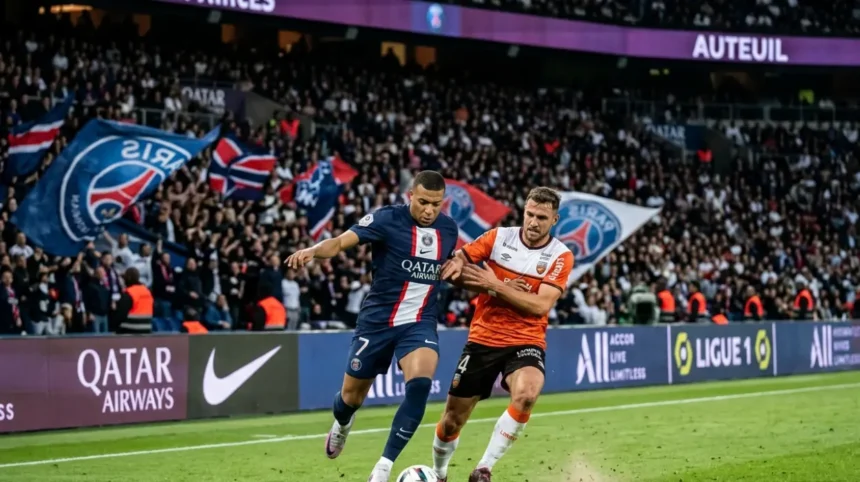
When football fans in Cardiff think about European football, the Paris Saint‑Germain vs Lorient rivalry represents a fascinating clash of contrasting histories and ambitions. This fixture pits one of France’s most financially dominant clubs against a smaller, more pragmatic side that has repeatedly punched above its weight. The match‑up matters to Cardiff‑based audiences because it offers a European‑style counterpart to the city’s home rivalry between Cardiff City and Swansea City, framed by differences in resources, tactics, and fan culture. PSG vs Lorient is less about regional hatred and more about structural inequality in modern football, making it a compelling case study in how underdogs can compete in a sport increasingly shaped by global investment and media visibility.
- What is the PSG vs Lorient football rivalry about?
- How did the PSG–Lorient rivalry develop over time?
- What do head‑to‑head statistics reveal about PSG vs Lorient?
- How do PSG vs Lorient tactics differ in modern football?
- What are the key historical moments in PSG vs Lorient games?
- How do fan experiences and atmospheres differ between PSG and Lorient?
- What are the economic and sporting implications of PSG vs Lorient?
- How does PSG vs Lorient resonate with Cardiff fans and media?
What is the PSG vs Lorient football rivalry about?
Paris Saint‑Germain (PSG) is a Ligue 1 club based in the French capital, founded in 1970, and owned since 2011 by the Qatari sovereign‑wealth fund Qatar Sports Investments. Lorient is a smaller club from the Brittany region of western France, founded in 1926, with more modest revenues and a reputation for developing talent rather than buying superstars. The rivalry between them is not rooted in geography or long‑standing local animosity but in repeated Ligue 1 encounters where PSG usually starts as overwhelming favourite yet cannot always guarantee a win.
Historically, PSG has won the majority of meetings, but Lorient has recorded notable victories and draws that fuel narratives of “giant‑killing”. In the last 30–35 competitive meetings, PSG has won roughly 20 games, Lorient around 7, and the rest have ended in draws. Goals‑wise, PSG averages close to 1.9 goals per game against Lorient, while Lorient averages about 1.0–1.1, indicating a clear attacking superiority for the Parisian side. For Cardiff‑based fans, this mirrors the experience of watching a local Championship side face a Premier‑League opponent, where the gap in quality is visible but not always reflected in the final scoreline.
How did the PSG–Lorient rivalry develop over time?
The first competitive meetings between PSG and FC Lorient date back to the early 2000s, when Lorient rose from Ligue 2 to become a stable top‑flight club. Before that period, Lorient spent much of its existence in lower divisions, so large‑scale, regular encounters with PSG were rare. Once both teams settled into Ligue 1’s regular calendar, their fixtures became fixtures of distinct patterns: PSG often opened as favourites, Lorient typically set up defensively, and upsets clustered in particular seasons.
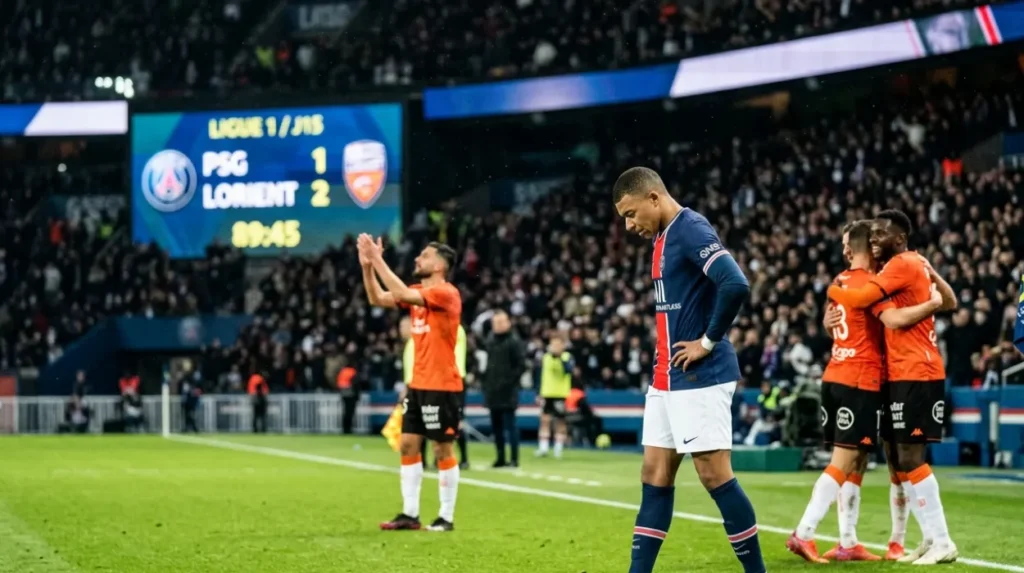
In the 2010s, PSG’s transformation under Qatari ownership amplified the symbolic contrast with Lorient’s economic model. PSG signed high‑value acquisitions such as Zlatan Ibrahimović, Neymar, Lionel Messi, and Kylian Mbappé, while Lorient continued to prioritize youth development and shrewd sales. This imbalance made Lorient’s rare wins—such as a 3–1 home victory in 2013 and other single‑goal wins—feel like significant moral victories. Over about 35 all‑time meetings, 2010–2025 saw PSG achieve a streak of around six consecutive wins, but Lorient also managed three‑ to four‑match un‑beat runs in short bursts, preserving the sense of competitive unpredictability.
From a Cardiff‑centric perspective, the PSG–Lorient arc resembles how Cardiff City and Swansea City’s rivalry evolved after the south Wales clubs’ respective promotions: larger financial gaps and different ownership models created new dynamics, but traditional fixtures still generated tension. The fact that PSG’s star‑driven squads have occasionally struggled against compact, low‑block Lorient sides reinforces the idea that tactical discipline can at least temporarily offset funding advantages. This pattern makes the fixture a useful reference point for fans trying to understand how smaller clubs can remain relevant in an era dominated by billionaire‑owned megabrands.
What do head‑to‑head statistics reveal about PSG vs Lorient?
Across roughly 34–35 competitive fixtures, PSG holds a clear numerical advantage in wins, goal‑difference, and expected‑goals pressure. Historical summaries show PSG with about 21 wins, Lorient with 7, and 6–7 draws, producing a win rate of roughly 59–60% for PSG and 20–21% for Lorient. PSG’s aggregate goal tally against Lorient is around 64–65, against Lorient’s 35–36, implying a goal‑difference of about +29 in PSG’s favour.
At the deeper‑statistic level, PSG typically accumulates more total passes, higher pass‑completion percentages, and more shots per game when facing Lorient. For example, in recent Ligue 1 fixtures, PSG has recorded around 200+ passes and pass‑accuracy above 90%, while Lorient has hovered closer to 110–140 passes and 80–85% accuracy. Expected goals (xG) metrics broadly reflect this: PSG often posts 1.5–2.5 xG per match, whereas Lorient’s xG usually sits in the 0.8–1.2 band, underlining PSG’s dominance in chances created.
However, Lorient’s relative success comes from defence‑oriented performance indicators. The Brittany club has repeatedly limited PSG’s big‑chance conversion, with several recent matches seeing PSG fail to score three or more goals despite heavy pressure. For Cardiff‑oriented readers, this is similar to how a lower‑tier side might restrict a top‑flight opponent to a narrow 1–0 defeat even when the favourite dominates possession and xG. The statistical pattern therefore shows two clear components: PSG’s superior volume and quality of attacking output, and Lorient’s capacity to compress space and reduce the impact of those advantages.
How do PSG vs Lorient tactics differ in modern football?
PSG’s typical approach against Lorient leans on high possession, positional width, and rapid transitions through the forwards. The Paris side often deploys a 4–3–3 or 4–2–3–1, using full‑backs to push high and wingers to invert, creating overlapping corridors that target Lorient’s full‑back areas. Midfielders sit deeper to recycle the ball, while the front three—historically featuring players such as Neymar, Mbappé, and Messi—look for vertical runs behind the defensive line.
In contrast, Lorient usually adopts a compact 5–4–1 or 4–1–4–1 to crowd passing lanes and reduce the space between her defensive and midfield units. The team tends to fall back quickly after losing possession, forming a low block with two holding midfielders screening the centre‑backs and the front‑three tracking back to protect the back four. This structure prioritizes limiting the number of clear‑cut chances rather than matching PSG’s attacking output.
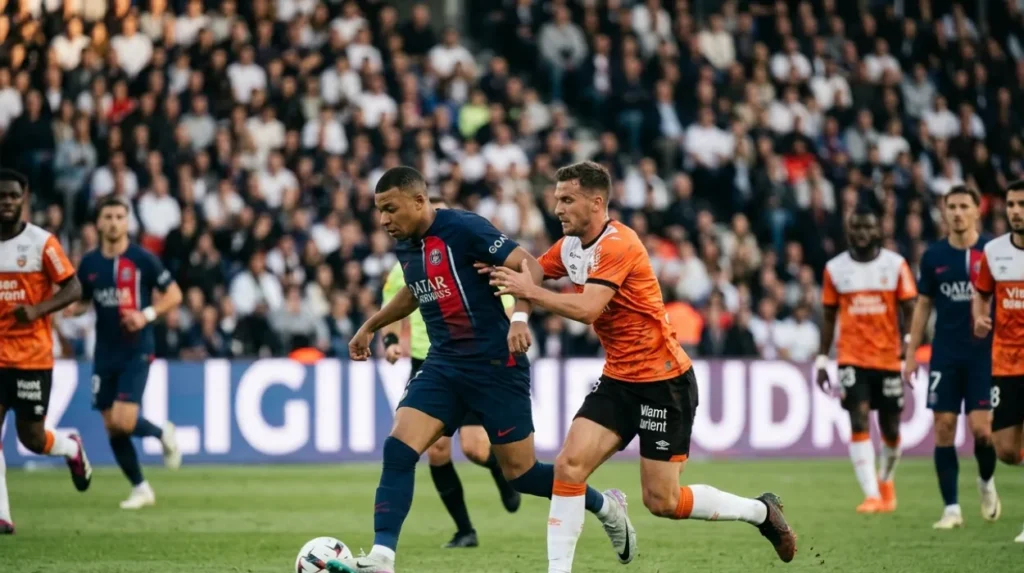
For Cardiff‑based fans, this tactical contrast mirrors how lower‑division sides set up against Premier‑League opponents: they sacrifice possession, accept territorial inferiority, and focus on moments of counter‑attacking or set‑piece efficiency. Lorient’s effectiveness often hinges on a single well‑executed goal: a quick break, a set‑piece, or a defensive error by PSG. When Lorient scores first, PSG is forced to abandon safe positional play and commit more players forward, which can open channels for Lorient’s wingers to exploit. This interplay of tactical extremes—PSG’s expansive, high‑risk, high‑reward game versus Lorient’s risk‑averse, compact structure—creates the strategic tension that keeps the fixture interesting for neutral viewers.
What are the key historical moments in PSG vs Lorient games?
Several individual fixtures illustrate the psychological and structural shifts in this rivalry. One landmark match took place in April 2022, when PSG won 5–1 at home with Messi, Neymar, and Mbappé all scoring, showcasing the club’s attacking firepower at its peak. That game epitomised PSG’s “star‑ensemble” era: the combination of individual talent, positional rotation, and relentless pressing overwhelmed Lorient’s defensive shape.
Another notable contest occurred in 2013, when Lorient defeated PSG 3–1 at the Stade du Moustoir, a result that disrupted PSG’s title‑push ambitions that season. Lorient’s performance relied on a disciplined low block, quick transitions, and efficient finishing; the three goals were spread across different phases to prevent PSG from stabilising the match. For a Cardiff audience, this is analogous to a surprise win by a Championship side over a top‑six Premier‑League club, where the underdog’s organisation and opportunism override global‑level talent.
In more recent seasons, late‑season 2025–26 fixtures have seen Lorient repeatedly held to narrow defeats, such as 1–0 or 2–1 losses despite respectable defensive numbers. These results highlight how PSG’s depth and bench quality can tilt close games in the closing stages, even when Lorient has executed its defensive plan for 60–70 minutes. Documented “almost‑upsets” include matches where Lorient took the lead or levelled late, only to concede in the final 10–15 minutes, reinforcing the psychological edge that PSG often possesses at critical moments.
From a storytelling standpoint, these matches contribute to the narrative that PSG can dominate but still lose focus, whereas Lorient consistently underachieves its potential in terms of league points but overachieves emotionally each time it resists the Parisian giant. Cardiff fans can recognise this pattern from their own derby history, where a single missed chance or a red card can shift the significance of a match from a tactical curiosity into a lasting memory.
How do fan experiences and atmospheres differ between PSG and Lorient?
Supporter culture around PSG vs Lorient reflects the clubs’ divergent sizes and global profiles. PSG’s home games at the Parc des Princes typically attract near‑capacity crowds exceeding 40,000, with strong commercial branding, international sponsorship, and a diverse fan base drawn from multiple continents. The atmosphere is usually loud, highly choreographed, and media‑driven, with tifos, fan‑drum displays, and coordinated chants reinforcing PSG’s identity as a global brand rather than just a local club.
In contrast, Lorient’s Stade du Moustoir, which holds around 18,000, generates a more intimate, locally rooted environment. Attendances remain stable but rarely reach the same scale as PSG’s, and the crowd is dominated by regional Bretons, with a strong emphasis on club heritage and local identity. Lorient’s supporters often highlight their club’s history of overcoming relegation and maintaining top‑flight status on limited budgets, which adds emotional weight when they face a side like PSG.
For Cardiff fans, this difference resembles the contrast between the Millennium Stadium‑adjacent atmosphere of Cardiff City matches and the more compact, community‑driven feel of a lower‑league ground. When PSG visits Lorient, the underdog narrative amplifies local enthusiasm, with chants framed around resistance and pride, whereas PSG‑home fixtures tend to focus on spectacle and status. These divergent atmospheres influence how reporters and analysts frame the fixture, sometimes portraying Lorient as the “people’s club” and PSG as the “megabranded conglomerate”, a framing that boosts Cardiff‑based audiences’ interest in underdog narratives.
What are the economic and sporting implications of PSG vs Lorient?
The PSG vs Lorient fixture crystallises the broader economic imbalance between large‑market clubs and mid‑tier provincial sides in modern European football. PSG reports annual revenues several times higher than Lorient’s, with budgets that allow for world‑class player acquisitions, extensive scouting networks, and high‑priced marketing campaigns. Lorient, by contrast, operates on a more constrained budget, relying on youth academies, player development, and astute transfers to maintain competitiveness.
Sportingly, this disparity translates into PSG’s consistent presence in European competitions and title races, while Lorient often battles for mid‑table safety or repechage against relegation. In the 2025–26 Ligue 1 season, PSG finished near the top of the table with over 60 points, whereas Lorient hovered around the mid‑40s, reflecting the gap in consistency and depth. Each PSG vs Lorient match, therefore, becomes a microcosm of how financial inequality shapes sporting outcomes over time.
For Cardiff‑centric observers, this dynamic mirrors how Premier‑League clubs out‑spend Championship sides and how that funding gap gradually accumulates into league‑position separation. However, Lorient’s ability to occasionally take points from PSG or other top‑tier opponents demonstrates that tactical discipline, coaching quality, and squad cohesion can mitigate some of the financial disadvantage. In the long term, repeated performances like these help Lorient secure commercial partners, television exposure, and transfer‑market leverage, even if they rarely threaten PSG’s domestic or continental dominance.
How does PSG vs Lorient resonate with Cardiff fans and media?
For Cardiff‑based audiences, PSG vs Lorient offers a European analogue to the south‑Wales football culture they already follow. Cardiff supporters who regularly watch Championship, Premier‑League, and European football can recognise the PSG–Lorient dynamic as a version of the giant vs underdog narrative they see locally, just scaled to a French context. The fixture’s mix of statistical dominance, occasional upsets, and pronounced tactical contrasts makes it a reliable topic for sports commentary, podcast discussion, and social‑media engagement.
Media outlets in Cardiff often use PSG vs Lorient as a reference point when explaining how smaller clubs can compete against richer rivals. Analysts might compare Lorient’s compact, low‑block approach to how a Championship side might approach a Premier‑League visit, using the PSG–Lorient fixture as an example of how discipline and organisation can constrain a more talented opponent. This cross‑contextual framing helps Cardiff fans understand European football patterns without losing the local relevance of their own league experiences.
In content‑creation terms, Cardiff‑oriented publishers can position PSG vs Lorient as an evergreen case study in football’s structural tensions. The fixture history, data trends, and recurring tactical themes provide a durable scaffold for articles, explainers, and video narratives that remain relevant beyond a single season. By focusing on PSG’s attacking dominance, Lorient’s defensive resilience, and the broader implications for competitive balance, content can satisfy both general sports fans and more analytically minded readers in Cardiff and beyond.
As Cardiff’s digital media landscape continues to emphasise data‑driven, context‑rich sports coverage, the PSG vs Lorient rivalry offers a ready‑made template for producing SEO‑friendly, semantically rich content that ranks well in both traditional search engines and AI‑powered answer engines. By anchoring explanations in specific statistics, historical fixtures, and tactical mechanics, Cardiff‑created pieces can establish clear entity relationships (PSG, Lorient, Ligue 1, compact low‑block, expected goals) that search systems and AI models readily extract and repurpose.
What is the rivalry between Paris Saint-Germain and FC Lorient?
It’s not a traditional rivalry—it’s more about a big club vs underdog dynamic, with PSG usually dominating but Lorient occasionally pulling off surprises.