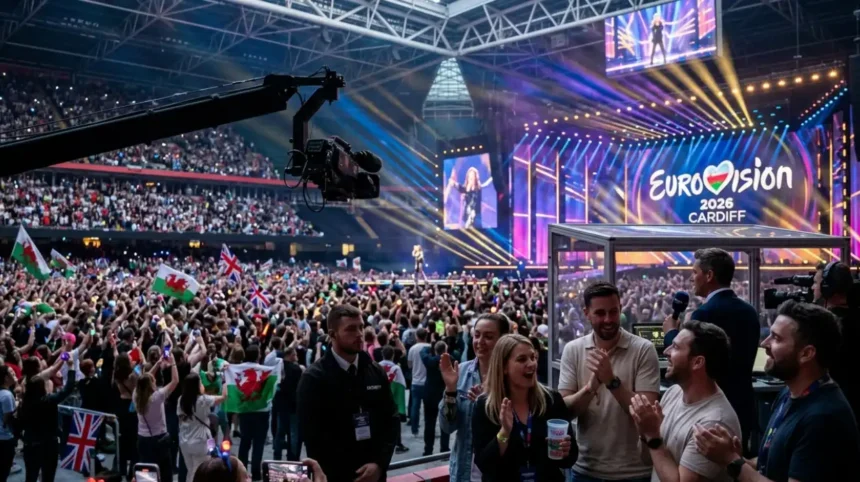
The Eurovision Song Contest is a live international television event that broadcasts at consistent prime‑time slots each year, with the UK and Cardiff viewers tuning in at 8:00 p.m. British Summer Time (BST) for the main shows. This timing applies to both the two semi‑finals and the grand final, though exact start and end times can vary by a few minutes depending on the year’s host broadcaster and running order.
- What is Eurovision and how does it work?
- When does Eurovision start in the UK and Cardiff?
- Why does Eurovision start at 8 p.m. in the UK?
- How long does Eurovision last in Cardiff?
- What time is Eurovision in other major cities?
- How does the time affect Cardiff‑based viewers?
- How has the start time evolved over the years?
- What time should Cardiff fans start watching?
- How do streaming and on‑demand services handle the time?
- What time does Eurovision start in 2026 and beyond?
What is Eurovision and how does it work?
The Eurovision Song Contest is an annual international song competition organised by the European Broadcasting Union (EBU), founded in 1956. Participating countries submit a single original song, performed live on stage, and then vote for each other using a combination of professional juries and public televotes. The winner is decided by a points system, with the highest‑scoring entry taking the trophy and the hosting rights for the following year.
The contest is structured in three televised events: two semi‑finals and one grand final. The semi‑finals allow countries that do not automatically qualify to perform in the hope of advancing to the final, while the “Big Five” (France, Germany, Italy, Spain, and the United Kingdom) plus the host country qualify automatically. This format ensures that around 25–26 countries appear in the grand final, with each performance lasting roughly three minutes.
Eurovision operates under a strict set of rules set by the EBU, including maximum song length, live vocal requirements, and language restrictions that have relaxed over time. Recent years have allowed performers to sing in any language, which has led to entries in English, French, Spanish, Italian, Ukrainian, and other regional or minority languages. The contest is hosted by a rotating host city, with Vienna, Tel Aviv, Rotterdam, Turin, Liverpool, Malmö, and others serving as venues in recent editions.
When does Eurovision start in the UK and Cardiff?
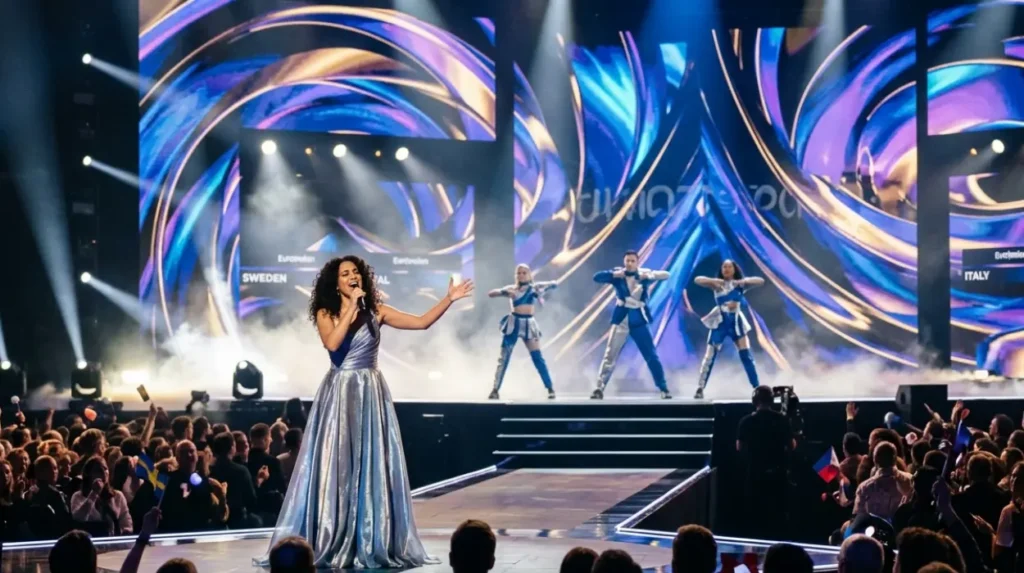
In the United Kingdom, including Cardiff, the Eurovision semi‑finals and grand final traditionally begin at 8:00 p.m. British Summer Time (BST). This equates to 9:00 p.m. Central European Summer Time (CEST) for viewers in many mainland European countries watching the live broadcast from the host city. The BBC typically broadcasts the main shows on BBC One and streams them live on BBC iPlayer, with Graham Norton providing the main commentary.
For Eurovision 2026, the first semi‑final airs on a Tuesday evening at 8:00 p.m. BST, the second semi‑final on the following Thursday at the same time, and the grand final on Saturday at 8:00 p.m. BST. Each semi‑final usually runs for about 2–2.5 hours, while the grand final extends closer to four hours, ending around 11:45–11:50 p.m. in the UK. These times allow Cardiff audiences to watch the live show in the evening without major disruption to regular weekend sleep patterns.
Why does Eurovision start at 8 p.m. in the UK?
The 8:00 p.m. start time in the UK is chosen to align with prime‑time television viewing patterns, which typically run from 7:00 p.m. to 10:00 p.m. This slot maximises the potential audience for a live, multi‑hour event that requires sustained attention and social‑media engagement. Broadcasters also schedule Eurovision after news programmes, ensuring that viewers are already tuned in and can move directly into the entertainment block.
Starting at 21:00 CEST in the host country (for example, 9:00 p.m. in Central Europe) creates a coordinated pan‑European broadcast window. Many EBU member broadcasters then simply delay or translate the feed for their own markets, keeping the start time within the same global evening window. This synchronisation also helps voting systems, social‑media buzz, and live reaction shows to run in parallel across different countries.
The 8:00 p.m. BST start also supports UK‑based presenters and commentators, such as Graham Norton, who can curate a live experience that fits within the UK’s evening schedule. It allows for a running order of around 18–26 songs per show, with short breaks, recaps, and voting segments included without pushing the broadcast into the early hours. This balance between spectacle length and viewer convenience has become a stable Eurovision convention in the UK and Cardiff.
How long does Eurovision last in Cardiff?
Each Eurovision semi‑final typically lasts between 2 and 2.5 hours, from the opening montage to the final voting announcement. The grand final runs longer, often around 3.5–4 hours, because it includes more entries, special guest performances, and detailed voting sequences. For Cardiff viewers, the main show usually starts at 8:00 p.m. and finishes shortly before midnight, leaving time for follow‑up news and analysis.
Recent editions, including Eurovision 2026, have seen the grand final finish at approximately 11:50 p.m. UK time. During that window, the broadcast includes live performances, interval acts, spokesperson‑style vote announcements from each country, and the final winner reveal. Additional red‑carpet or “green room” segments may air earlier on the same day or on BBC Two, but the core contest is contained within the 8:00 p.m. to 11:50 p.m. band.
The duration affects how Cardiff‑based fans plan their viewing parties, pub nights, or screenings at venues such as Tiger Yard, which can host Eurovision‑themed events in the evening. Late‑night finishes mean that some viewers may choose to watch the first half live and then check results later, while others stay for the full voting sequence. Overall, the length balances spectacle with practicality for a broad primetime audience in Wales and the rest of the UK.
What time is Eurovision in other major cities?
Beyond Cardiff and the UK, Eurovision start times are usually expressed in Central European Summer Time (CEST) for the host city and then converted locally. For example, if the show begins at 21:00 CEST in Vienna or another central European venue, that corresponds to 8:00 p.m. BST in the UK, 7:00 p.m. in the UK winter (GMT), and 10:00 p.m. in parts of Eastern Europe.
In Australia, the live broadcast often starts very early in the morning local time, sometimes around 5:00 a.m., due to the large time‑zone difference. Australian viewers may therefore watch the contest live on SBS or via streaming platforms such as SBS On Demand, or catch catch‑up and highlights later in the day. Similar early‑morning start times apply to parts of Asia and North America, where prime‑time broadcasts are replaced by overnight or delayed coverage.
European capitals such as Paris, Berlin, Rome, Madrid, and Vienna all sit within or close to the CEST zone, so their main Eurovision start time is generally 21:00 CEST. Scandinavian countries also align closely with this schedule, while some Eastern European broadcasters may air the show slightly later to fit local programming grids. Across these cities, the contest remains a synchronised evening event, even if the exact local label (8:00 p.m., 9:00 p.m., or 10:00 p.m.) differs.
How does the time affect Cardiff‑based viewers?
For Cardiff viewers, the 8:00 p.m. BST start slots Eurovision firmly within UK evening primetime, making it easy to integrate into weekly routines. Families, friends, and work‑related viewing groups can plan a dinner or pre‑party beforehand, then settle in for the full broadcast without late‑night fatigue. The timing also suits students and younger adults, who often host Eurovision‑themed gatherings in flats, pubs, and bars around the city.
Cardiff venues such as Tiger Yard and other bars regularly host Eurovision screening events, often starting around 6:00 p.m. or 7:00 p.m. to build atmosphere before the 8:00 p.m. broadcast. These events use the Eurovision time as a fixed anchor for opening hours, ticket sales, and themed promotions, such as drink deals or costume competitions. For Welsh broadcasters and local media, the set Eurovision time also simplifies scheduling of related content, such as previews, post‑show reviews, and social‑media coverage.
The consistency of the 8:00 p.m. slot also helps Cardiff‑based international students and expats keep in touch with their home‑country Eurovision broadcasts. They can either watch the BBC feed or access their nation’s own broadcaster, knowing that the core event will run within the same global evening window. This predictability strengthens Eurovision’s role as an annual shared cultural experience, even when viewers are geographically far from the host city.
How has the start time evolved over the years?
Eurovision has broadly maintained an evening start time since its inception, but the exact hour has shifted slightly as television habits and voting systems have changed. Early contests in the 1950s and 1960s often began earlier in the evening, sometimes around 7:00 p.m. or shortly after, to accommodate simpler live broadcasts and smaller participant pools. As the number of countries grew, the need for longer shows pushed the schedule later into the night.
In the 1990s and early 2000s, the introduction of televoting and more elaborate stage productions lengthened the broadcast window, reinforcing the 9:00 p.m. CEST / 8:00 p.m. BST pattern. The move to a two‑semi‑final format in the 2000s further increased running time, yet broadcasters kept the start fixed in evening prime‑time. Recent years, including Eurovision 2026, have seen the final remain close to the 8:00 p.m.–11:50 p.m. block in the UK, with only minor adjustments for technical or scheduling reasons.
Host‑city changes have occasionally led to small local‑time adjustments, depending on the host broadcaster’s domestic grid. However, the EBU has worked to keep the global “Eurovision hour” fairly stable, so that social media, live‑blogging, and streaming services can coordinate around a known window. This consistency benefits Cardiff viewers, who can rely on the contest starting at roughly the same UK time each year, even as the host capital rotates across Europe.
What time should Cardiff fans start watching?
Cardiff fans who want to follow the full Eurovision experience should plan to tune in at or shortly before 8:00 p.m. BST for each semi‑final and the grand final. Arriving 10–15 minutes early allows time to tackle any technical issues with the TV, streaming service, or internet connection, and to check schedules or on‑screen announcements. For those watching in pubs or at home with friends, starting at 7:45–8:00 p.m. also helps synchronise arrival and create a shared viewing atmosphere.
Some Cardiff‑based viewers may want to watch supplementary material before the main show, such as red‑carpet coverage or “green room” interviews, which can air on BBC Two or BBC iPlayer earlier in the evening. These segments often start around 7:00–7:30 p.m. and provide back‑stage glimpses, costume tours, and short interviews with the competing artists. For superfans, this pre‑show content can extend the overall Eurovision viewing window well beyond the 8:00 p.m.–11:50 p.m. core broadcast.
Fans attending live screenings in Cardiff venues, such as Tiger Yard, should check each event’s specific start time, as many bars open earlier than 8:00 p.m. to serve food and drinks. Some venues may show condensed previews, recap videos, or themed countdowns before the live feed begins, effectively turning the evening into a multi‑hour Eurovision celebration. For Cardiff audiences, planning around the 8:00 p.m. main broadcast while allowing for extra pre‑ or post‑show time maximises enjoyment without missing key moments.
How do streaming and on‑demand services handle the time?
Streaming platforms such as BBC iPlayer, SBS On Demand, and other national broadcasters’ services mirror the traditional 8:00 p.m. BST Eurovision start time for their live streams. In the UK, viewers in Cardiff can watch the contest live on BBC One or via the BBC iPlayer live‑stream, both commencing at the same 8:00 p.m. slot. This alignment ensures that those watching via TV, mobile, or tablet all experience the voting and results in real time.
For regions where the live broadcast falls outside convenient hours, on‑demand replay windows open shortly after the main show concludes. For example, Australian viewers may watch 5:00 a.m. live coverage on SBS and then access the same Eurovision episode on SBS On Demand later in the day. Time‑shifting tools like catch‑up TV and extended‑on‑demand windows allow Cardiff‑based household members with different schedules to watch the contest at their own pace, even if they miss the live 8:00 p.m. start.
Some platforms also offer extended or “Access All Areas” broadcasts that replay the final later in the evening or on the following day with additional commentary and behind‑the‑scenes footage. These versions may use the same basic start time structure but insert extra segments between performances or during voting intervals. Cardiff‑based Eurovision fans can therefore choose between the tightly timed live broadcast and more relaxed, packaged versions that retain the core 8:00 p.m.‑style schedule but add extra context.
What time does Eurovision start in 2026 and beyond?
For Eurovision 2026, the main televised events in the UK, including Cardiff, start at 8:00 p.m. BST for both semi‑finals and the grand final. The first semi‑final broadcasts on Tuesday 12 May 2026 at 8:00 p.m., the second semi‑final on Thursday 14 May at 8:00 p.m., and the grand final on Saturday 16 May at 8:00 p.m. Each of these broadcasts runs for several hours, with the grand final generally finishing around 11:50 p.m. UK time.
Looking beyond 2026, the Eurovision schedule is expected to remain anchored in the late‑evening prime‑time window of 20:00–21:00 local time in the host country. In the UK and Cardiff, this will almost certainly translate to 8:00 p.m. or 9:00 p.m., depending on whether the UK is in British Summer Time or Greenwich Mean Time. The EBU and participating broadcasters have a strong incentive to keep these times stable, as they underpin advertising, sponsorship, and cross‑platform promotion strategies.
Cardiff‑based organisers of Eurovision events, bars, and fan groups can therefore plan around an 8:00 p.m. baseline for future contests, adjusting only for official schedule changes or local programming decisions. As long as the EBU continues to prioritise prime‑time visibility and cross‑border synchronisation, Cardiff will keep watching Eurovision kick off at the same familiar evening hour each year.