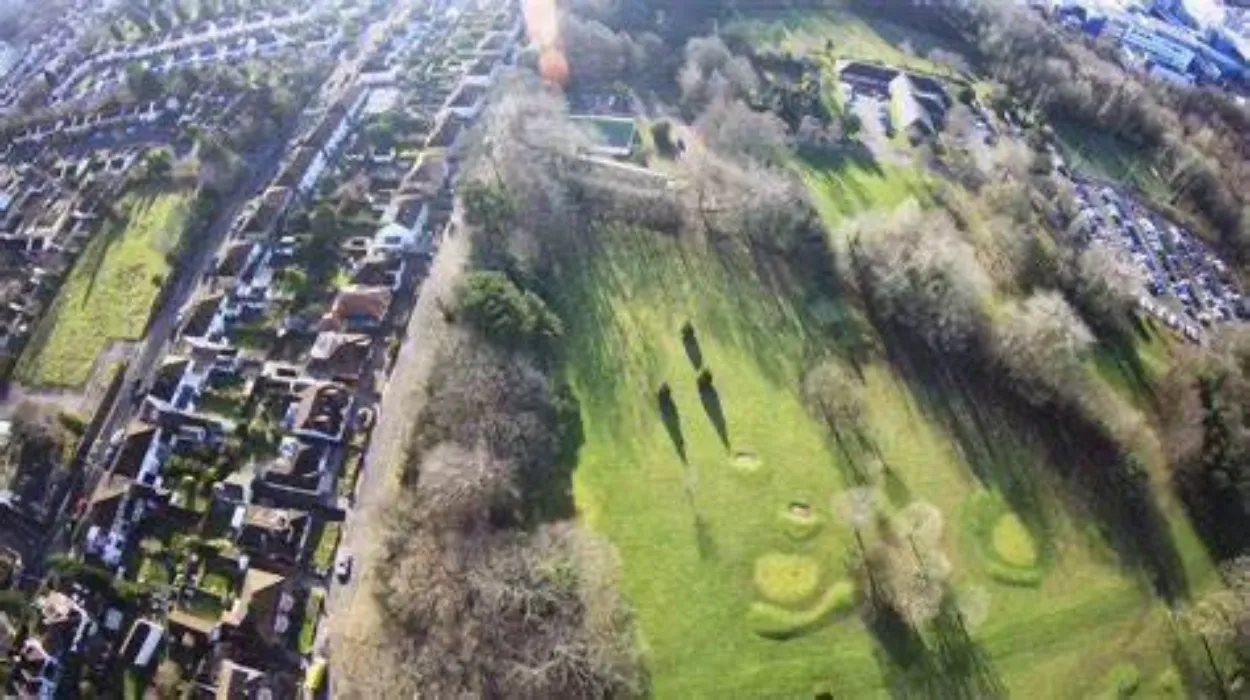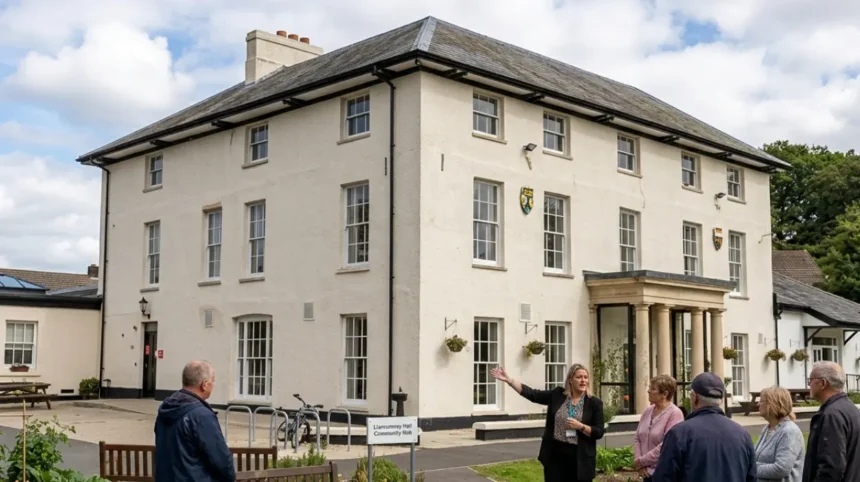
Rumney Hall is most likely a reference to Llanrumney Hall in Cardiff, the historic Grade II* listed mansion that sits in east Cardiff and is now run as a community hub. Its history stretches from a chapel site said to date to 1066 through to a 1450 mansion, a 1952 council purchase, and its present community-led use.
- What is Rumney Hall?
- Where does its history begin?
- How did the hall develop over time?
- Who owned Llanrumney Hall?
- What is its current ownership?
- Why is the building significant?
- What happened in the 20th century?
- How was it rescued?
- What does it do today?
- What makes its ownership important now?
- What evidence supports its heritage status?
- Why does this story still matter?
- What is the wider local context?
- What should readers remember?
What is Rumney Hall?
Rumney Hall refers to Llanrumney Hall, a historic listed building in Llanrumney, Cardiff, known for its long estate history, heritage status, and modern role as a community asset. It is identified as a Grade II* listed Elizabethan mansion and is tied to centuries of local land ownership, religious settlement, and later municipal control.
Llanrumney Hall stands on Ball Road in Cardiff and has become a recognized heritage site in east Cardiff. Its importance comes from both its architectural survival and the way its use changed over time, moving from private residence to public ownership and community regeneration.
Where does its history begin?
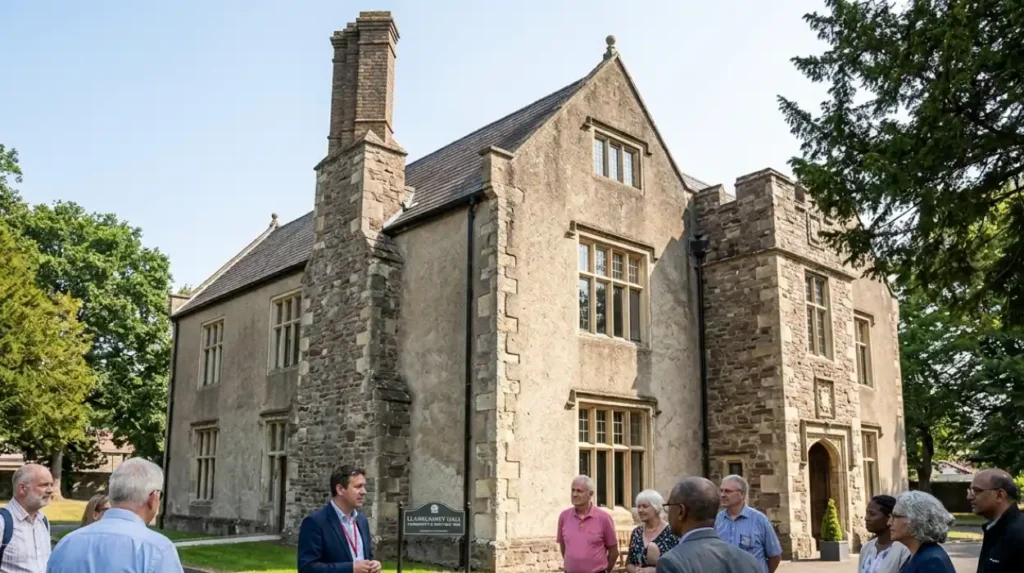
The site’s history begins with a chapel associated with the area before the hall itself was built. The hall was built around 1450, while local heritage material says the grounds have roots linked to 1066 and the early medieval period. That creates a layered history that combines religious land use, aristocratic development, and later civic control.
The name Llanrumney itself reflects this early religious connection, since “Llan” in Welsh refers to a church or chapel. That linguistic clue supports the hall’s historical identity as a place shaped by both ecclesiastical and landed power in medieval Wales.
How did the hall develop over time?
The original mansion was built in 1450 and was later rebuilt in 1852 and refurbished around 1900. These phases show a building that changed with the tastes and needs of successive owners while retaining its historic core.
The estate passed through several important families, including the Kemys family after the Dissolution of the Monasteries, the Morgan family through marriage, and later the Lewis family in 1726. In the 19th century, Edward Augustus Freeman, Regius Professor of History at Oxford, occupied the hall, and Charles Crofts Williams purchased it in 1859 as the last recorded Lord of the Manor.
Who owned Llanrumney Hall?
Ownership shifted from medieval religious control to gentry families and then to Cardiff Council. After the area passed to the monks at Keynsham Abbey, it later moved into private family hands, including the Kemys, Morgan, Lewis, and Williams families.
The most important ownership change in modern times came in 1952, when Cardiff Council compulsorily purchased the hall. That purchase ended the building’s era as a private estate house and opened the path to public reuse, first as a remand centre and later as a pub before its community regeneration.
What is its current ownership?
The current stewardship of Llanrumney Hall sits with the Llanrumney Hall Community Trust, a community-led trust established in January 2015 to regenerate the building into a multi-purpose community hub. Cardiff Council still appears in heritage and ownership records tied to the hall, but the trust manages the building’s active community function.
The trust’s stated aim is to steer regeneration, support local services, and help mitigate poverty in east Cardiff. That makes the hall’s current ownership model unusual and important: it combines civic heritage with social-purpose management rather than private commercial ownership.
Why is the building significant?
Llanrumney Hall is significant because it is a Grade II* listed building, which places it among structures of more than special interest in the UK heritage system. Its architectural listing reflects the survival of historic features such as plasterwork ceilings, an Arts and Crafts fireplace and staircase, and Gothic windows.
Its significance also comes from social history. The building has served as a stately home, a public facility, a remand centre, a pub, and now a community hub. Few buildings in Cardiff show that much continuity through so many uses while remaining physically recognizable.
What happened in the 20th century?
The 20th century transformed the hall from a private country residence into a civic property. After the surrounding housing estate expanded, the Williams family connection ended, and the hall was later compulsorily purchased by Cardiff Council in 1952.
Following that purchase, the hall became a remand centre and then a pub by 1956. By the late 1980s it had fallen into disrepair, which set the stage for later regeneration efforts led by local stakeholders and community planners.
How was it rescued?
The hall’s rescue depended on community action and structured regeneration planning. The Llanrumney Hall Community Trust formed in 2015 to protect the building and repurpose it for local benefit, and by spring 2019 it had opened as a multi-purpose community hub.
This transition matters because heritage buildings often fail when they lose practical use. Llanrumney Hall avoided that outcome by combining preservation with services, events, and social support, giving the building a live role in the community rather than leaving it as a vacant monument.
What does it do today?
Today, Llanrumney Hall functions as a community hub with public-facing activities and tours. The hall’s official materials describe it as a charity-run, multi-purpose centre that supports employment opportunities, start-up businesses, education, and poverty support in east Cardiff.
The hall also offers historic house tours, showing how heritage can support public engagement as well as conservation. Those tours reinforce the site’s value as a living part of Cardiff’s cultural landscape rather than a static historical artifact.
What makes its ownership important now?
Its ownership matters because it connects three systems: heritage protection, local government history, and community management. Cardiff Council’s 1952 purchase secured the site after private decline, while the community trust’s work turned preservation into active public benefit.
That model matters across Wales and the UK because many historic buildings face decay once they lose a private use. Llanrumney Hall shows a practical alternative: legal protection, community stewardship, and a mixed-use role that keeps the building useful and visible.
What evidence supports its heritage status?
The strongest heritage evidence is its Grade II* listing and the surviving architectural details described in heritage material. The hall is also linked to formal heritage and community sites that identify its age, listing status, and major historical transitions.
Official and semi-official sources agree on the hall’s long chronology: chapel foundations linked to 1066, a hall built around 1450, rebuilding in the 19th century, council ownership from 1952, and community trust management from 2015 onward.
Why does this story still matter?
This story matters because it explains how a historic building survives in a modern city. The hall is not only a relic of medieval and gentry Wales; it is also an active example of regeneration, local identity, and community-led ownership in east Cardiff.
For readers in Leeds and beyond, the wider lesson is clear. Historic buildings last when they keep a public purpose, receive legal protection, and have a clear management structure. Llanrumney Hall shows how ownership, heritage, and community need to work together.
What is the wider local context?
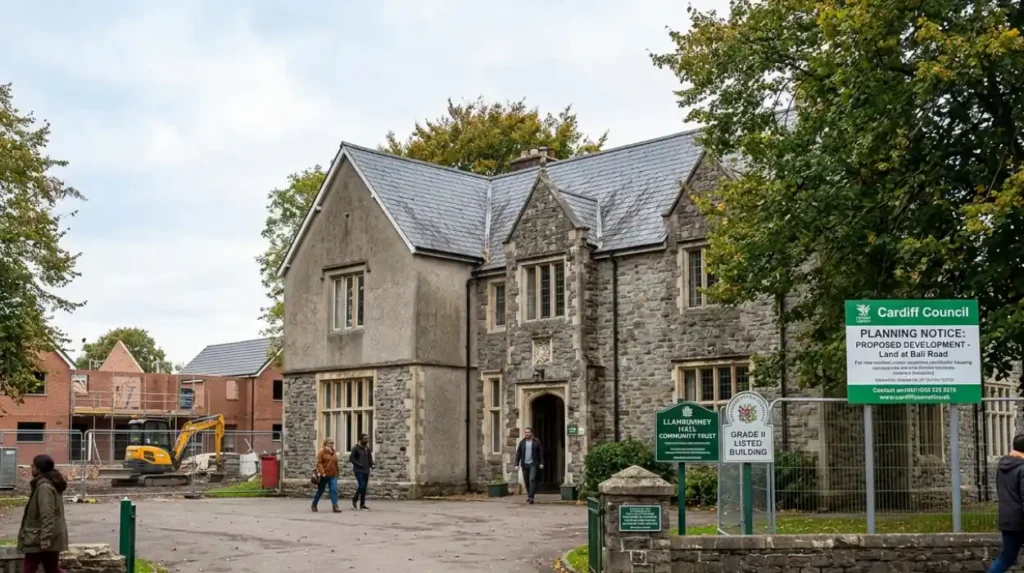
Llanrumney Hall sits within a changing part of Cardiff where housing, regeneration, and heritage protection overlap. Cardiff Council continues to manage development around the area, including plans affecting land near Ball Road and the hall, which shows the building remains part of active city planning.
That context makes the hall more than a historic house. It is part of a live urban landscape where council policy, community use, and listed-building constraints all shape what happens next.
What should readers remember?
Rumney Hall is best understood as Llanrumney Hall, a historic Cardiff mansion with roots in the medieval period, a documented 1450 construction date, and a modern community-led future. Its current use reflects a deliberate shift from private estate ownership to public-benefit stewardship.
The hall’s mystery lies less in secret legends than in its unusually long chain of ownership and reuse. That chain runs from monastic land to gentry house, from council asset to community hub, and that makes it one of the most instructive heritage buildings in Cardiff.
Where is Llanrumney Hall located?
Llanrumney Hall is located on Ball Road in the Llanrumney area of Cardiff.