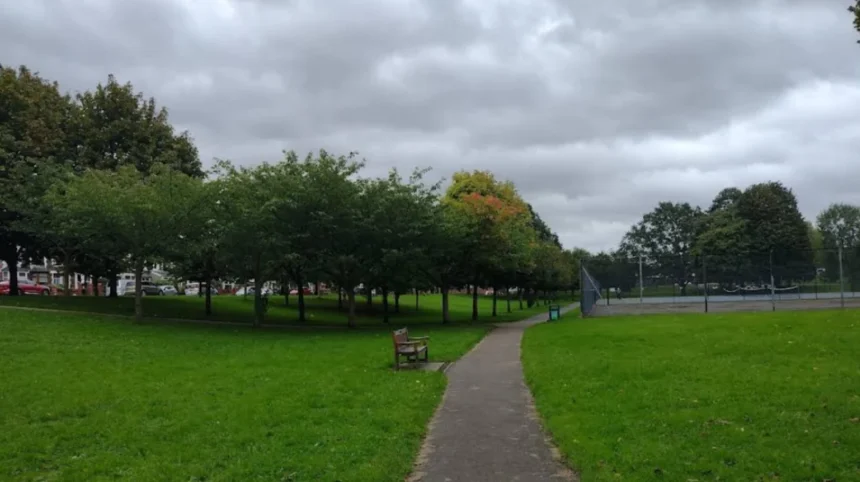
Hailey Park is a 19-hectare public park in Llandaff North, Cardiff, bordered by the River Taff, with shared-use paths, the Taff Trail, sports facilities, and heritage features, making it a compact, accessible walking destination for residents and visitors.
- How do you get to Hailey Park for a walk?
- What walking routes are available in Hailey Park?
- Where does the Hailey Park circular walk start and how is it walked?
- What historical features can you see while walking in Hailey Park?
- What facilities and amenities are available for walkers in Hailey Park?
- How does Hailey Park fit into Cardiff’s wider walking and green space network?
- What should walkers know about safety and path use in Hailey Park?
- When is the best time to walk in Hailey Park?
Hailey Park occupies a central position on the Taff Valley, just north of Llandaff, and is managed by Cardiff Council as a community park. The park covers about 19 hectares of open parkland, river corridor, and playing fields, bordered to the west by the River Taff, to the north by the Taff Vale Railway, and to the east by residential development. Its location on the Taff Trail, combined with new shared-use crossings and path links, creates a safe, flat, and scenic environment for walking, cycling, and family outings.
The park’s design supports multiple walking experiences: simple loops around open fields, riverside walks along the Taff, and heritage-focused trails that highlight industrial and local history. This variety, combined with nearby transport links (Llandaff Station, bus routes 24, 25, and 64), makes Hailey Park a practical choice for short walks, longer circular routes, and exercise routines.
How do you get to Hailey Park for a walk?
Hailey Park is reached by car via Radyr Road (main car park, CF14 2FU) or Ty Mawr Road (overspill car park, CF14 2FQ), by train from Llandaff Station (CF14 2EZ), or by bus (routes 24, 25, 64) with stops on Station Road, then a short walk via Evansfield Road and Radyr Road.
For drivers, the main car park is accessed from Radyr Road, near Llandaff North Rugby Club (postcode CF14 2FU). An overspill car park is available from Ty Mawr Road, opposite the MusicRoomz building (CF14 2FQ), and is usually open during sports training, matches, or events. Both car parks are within easy walking distance of the park’s key routes and facilities.
Train users can arrive at Llandaff Station, a short distance from the park. From the station, exit towards Station Road, turn right into Evansfield Road, walk to the end, turn left, then quickly right into Radyr Road, and continue to the park entrance. Bus travellers can use stops on Station Road, served by routes 24, 25, and 64, and follow the same Evansfield Road–Radyr Road route.
Cyclists and walkers can also reach Hailey Park via the Taff Trail and shared-use paths that connect to Radyr Road, Ty Mawr Road, Evansfield Road, and Station Road, linking Llandaff North, Gabalfa, and Whitchurch. The recently refurbished Loop Bridge from Radyr, Radyr Sidings, and Danescourt provides an additional shared-use route into the park. All paths are shared; cyclists should slow near pedestrians, and dogs should be kept under control.
What walking routes are available in Hailey Park?
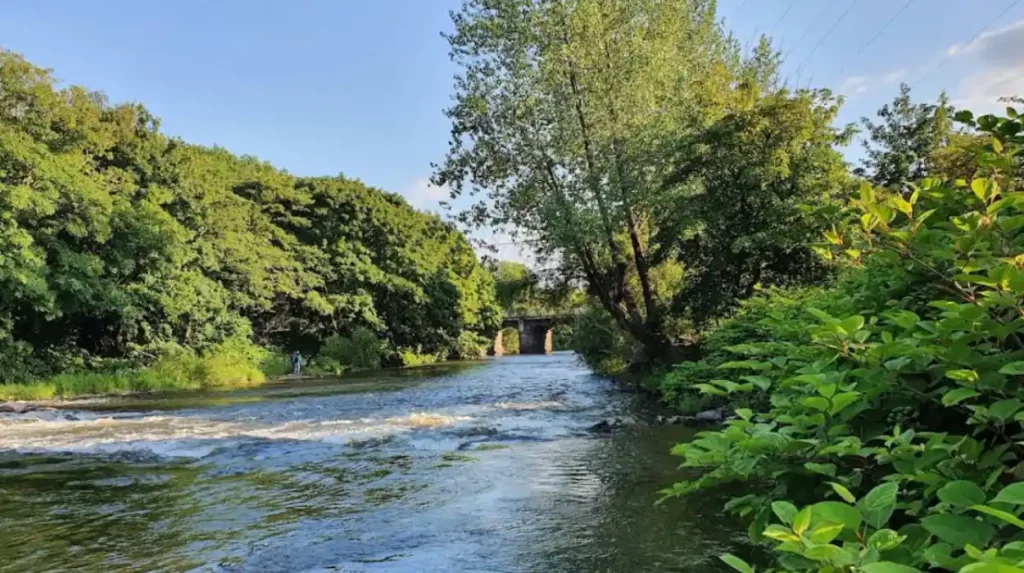
Hailey Park offers at least one main circular walking route around the park, riverside sections along the Taff Trail, and a dedicated heritage trail that follows historic features such as the old canal, bridge abutments, and viaduct, with route lengths ranging from short 0.1-mile loops to longer Taff Trail-connected walks.
The core walking experience is the Hailey Park Circular, a refreshingly simple loop around the park’s open fields and river edge. This route follows shared-use paths that hug the banks of the River Taff, pass wide playing fields, and connect with the Taff Trail. Online route data describes a 0.1-mile (0.2 km) walking route with about 297 steps, rated as medium difficulty and taking around 2 minutes to complete as a short loop. In practice, walkers can extend this by combining multiple loops, adding riverside sections, or linking out onto the Taff Trail for longer distances.
The Taff Trail runs through Hailey Park, providing a linear route that can be used for both short segments and longer rural or urban walks. With a new shared-use path link across the River Taff, the park functions as a good starting point for local circular walks that connect to adjacent green spaces and riverside routes. This means walkers can choose between a contained park loop or a longer journey that extends beyond Hailey Park into the wider Taff Valley network.
For those interested in history, the Friends of Hailey Park organisation has created a Centenary Heritage Trail, a circular walk that highlights the park’s industrial and local heritage. This trail includes points such as the former Gelli Footbridge site, the old Glamorganshire Canal route marked by lime trees, the abutments of the eighteenth-century Llandaff Bridge, Radyr Road’s historic ford, wartime allotments, rugby pitches, the Afon Taf Viaduct (a Grade II listed structure by Isambard Kingdom Brunel), and the 1807 Melin Gruffydd Water Pump. The heritage trail is designed as a self-guided circular walk, with locations marked and described, making it suitable for casual walkers and history enthusiasts.
Where does the Hailey Park circular walk start and how is it walked?
The Hailey Park circular walk typically starts at the Radyr Road entrance near the main car park (CF14 2FU), then follows shared paths around the open fields, turns onto the riverside Taff Trail, crosses back via internal paths or the Loop Bridge, and returns to the start, forming a compact loop that can be extended as desired.
Begin at the Radyr Road entrance, close to the main car park and Llandaff North Rugby Club. From here, follow the obvious shared-use paths that fan out into the park, heading towards the open playing fields. The path curves around the grass triangles and bends, leading you towards the river edge where the Taff Trail becomes visible.
Walk along the riverside section of the Taff Trail, where the River Taff runs alongside the path and views open across the water and opposite banks. Continue until you reach a point where internal park paths or the Loop Bridge offer a return route towards the Radyr Road side. Follow these paths back across the open fields, passing any sport pitches or play areas, until you arrive again at the Radyr Road entrance.
This basic loop can be walked as a short 0.1-mile circuit or extended by adding extra laps, detours to specific heritage points, or spurs onto the wider Taff Trail for longer distances. The route is largely flat, well-maintained, and suitable for all ages and abilities, with clear path junctions and signage in many sections.
What historical features can you see while walking in Hailey Park?
While walking in Hailey Park, you can see remnants of the Glamorganshire Canal line marked by lime trees, stone abutments of the old Llandaff Bridge, the Afon Taf Viaduct (a Grade II listed Brunel viaduct from 1841), the 1807 Melin Gruffydd Water Pump, and locations that once held wartime allotments, brickworks, and a municipal tip.
The Glamorganshire Canal, built from 1790 to transport coal and metals from Merthyr to Cardiff Docks, ran along the edge of what is now Hailey Park from Ty Mawr Road towards Llandaff lock no. 45. Although the canal was filled in by the 1950s, its former route within the park is still marked by a row of lime trees that remain visible along the path. This subtle feature provides a clear example of how industrial infrastructure shaped the park’s layout.
The old Llandaff Bridge, a stone bridge built in the mid-eighteenth century, had abutments that can still be seen in the park and on the opposite side of the river. These abutments mark the location of a bridge that was replaced in the 1980s by the current road bridge to reduce flooding risks in the Mary Street area. Walking past these structures gives a tangible sense of the park’s long history as a crossing point on the River Taff.
The Afon Taf Viaduct, completed by Isambard Kingdom Brunel in 1841 as part of the Taff Vale Railway, is the only Grade II listed building in Llandaff North and remains a visible feature above parts of the park. Along with the platform canopy at nearby Llandaff Station, it is one of the few original structures from the Taff Vale line still present in Cardiff. Beneath the viaduct, on a dirt track alongside the canal feeder, walkers can find the Melin Gruffydd Water Pump, built in 1807, which adds an industrial heritage dimension to the walk.
Other historical points include areas that held allotments during World War II as part of the “Dig For Victory” campaign, former brick and stone company fields (Povey’s field and the Llandaff Brick and Stone Company), and land that operated as a municipal tip until the 1970s before being capped and re-greened as part of the park. Rugby pitches set out after the war also reflect the park’s role as a community sports space linked to local clubs with origins in the 1870s and the birth of the Welsh Rugby Union.
What facilities and amenities are available for walkers in Hailey Park?
Hailey Park provides shared-use paths, open playing fields, play areas, sports facilities, nearby car parks, and access to the Taff Trail, with additional amenities such as shops, cafes, veterinary practices, and a health centre located in the Llandaff North district centre on Station Road.
The park’s core infrastructure for walkers consists of a network of shared-use paths that include the Taff Trail, linking Radyr Road, Ty Mawr Road, Evansfield Road, and Station Road, and connecting residential areas in Llandaff North, Gabalfa, and Whitchurch. These paths are maintained for foot and cycle use, with clear routes around open parkland, along the river, and through sport and play zones.
For practical needs, there is a main car park accessed from Radyr Road (CF14 2FU) and an overspill car park from Ty Mawr Road (CF14 2FQ), both within short walking distance of key routes. The park also includes sports and play facilities, making it suitable for families and active users who combine walking with other activities.
Beyond the park, the Llandaff North district centre on Station Road offers shops, cafes, veterinary practices, and a health centre, providing refreshments and services before or after a walk. Bus stops on Station Road (routes 24, 25, 64) and the nearby Llandaff train station further support access for visitors without cars.
How does Hailey Park fit into Cardiff’s wider walking and green space network?
Hailey Park is integrated into Cardiff’s walking network through its position on the Taff Trail, connections to shared-use paths, and links to nearby parks such as Bute Park, Hamadryad Park, Cardiff Bay Wetland Reserve, and Forest Farm Country Park, allowing walkers to create longer circular or linear routes beyond the park itself.
The Taff Trail passes through Hailey Park, providing a continuous route that connects multiple parks and green spaces along the River Taff. This means that a walk starting in Hailey Park can be extended into longer journeys that include Bute Park, Hamadryad Park, Cardiff Bay Wetland Reserve, and Forest Farm Country Park, all of which are part of the same waymarked trail system.
With a new shared-use path link across the River Taff, Hailey Park now serves as a practical starting point for local circular walks that move beyond the park boundaries. This design encourages walkers to treat Hailey Park not just as a standalone destination but as a node in a larger network of Cardiff walking routes, supporting both short recreational walks and longer training or exploration walks.
Explore More Area Guide
Heath Park Cardiff Visitor Guide: Facilities, Mini Railway, Wildlife, and History
Victoria Park Cardiff Complete Guide: Attractions, Splashpad, Events and History
What should walkers know about safety and path use in Hailey Park?
Walkers should use shared-use paths responsibly, with cyclists slowing near pedestrians and all users keeping dogs under control, while avoiding parking on grass and respecting sport areas and heritage features.
All paths through Hailey Park are shared between pedestrians, cyclists, and other users, and the park is not a roadway. Cyclists are asked to slow down when going around pedestrians, and dogs should be kept under control whether on or off lead. These rules help maintain a safe environment for families, casual walkers, and active users alike.
Visitors should not park on the grass in any part of the park, using only the designated car parks on Radyr Road or Ty Mawr Road. When using the Ty Mawr Road car park, drivers are asked to slow down entering the gate, as this area is also in general park use by people on foot or by bike. Sport areas, heritage points, and narrow path sections may have higher concentrations of users, so extra care and attention to surroundings are advisable.
When is the best time to walk in Hailey Park?
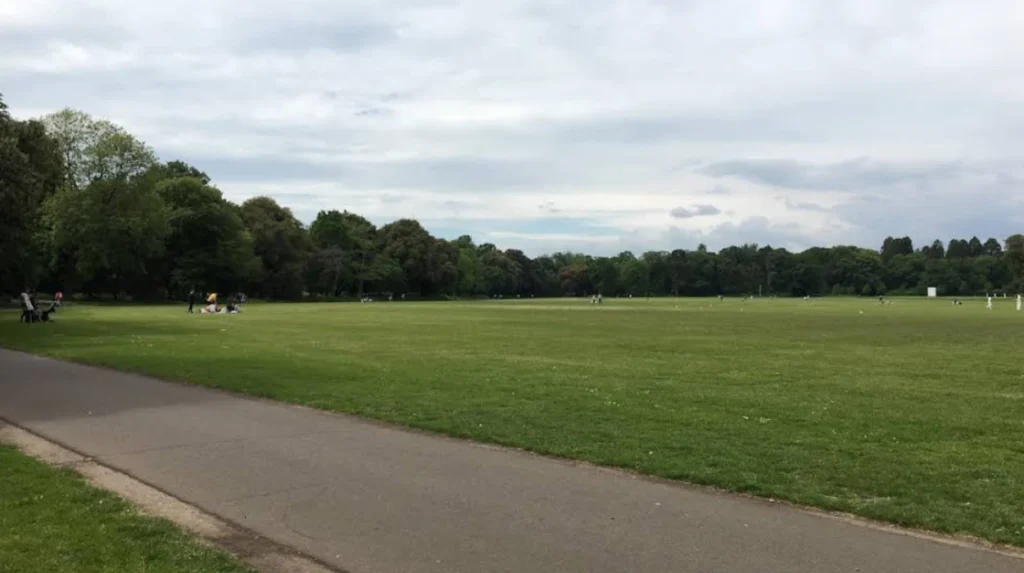
Hailey Park is suitable for walking year-round, with spring and summer offering longer daylight, greenery, and active wildlife, while autumn and winter provide quieter visits and clearer views of the river and heritage features.
Spring and summer bring fuller vegetation, blooming primroses on the river walk, and active use of play and sport areas, creating a lively atmosphere for family walks and longer Taff Trail excursions. Daylight hours are longer, allowing walks to extend into the evening, particularly useful for those combining Hailey Park with routes to adjacent parks.
Autumn and winter offer quieter conditions, with fewer users on paths and clearer sightlines across the River Taff and open fields. Heritage features such as the Afon Taf Viaduct, canal lime trees, and bridge abutments are more visible without dense foliage, making these seasons ideal for history-focused walks. Regardless of season, the park’s flat paths and sheltered riverside sections make it accessible for most weather conditions, though walkers should be prepared for rain and wind typical of Cardiff.
Hailey Park remains a practical, well-connected, and historically rich walking destination for Cardiff residents and visitors, offering short loops, heritage trails, and links to the wider Taff Trail network in a single, accessible location.