Middlesbrough is a major industrial and cultural town in North Yorkshire, England, located on the southern bank of the River Tees. The town developed rapidly during the 19th century after the expansion of the iron and steel industry. Its location near the North Sea supported manufacturing, engineering, shipping and international trade.
- What is Middlesbrough?
- How did Middlesbrough develop?
- Why is Middlesbrough important to the industrial history of England?
- What is Middlesbrough’s connection with the River Tees?
- What are the most important places to visit in Middlesbrough?
- What can visitors see at the Tees Transporter Bridge?
- Why is Middlesbrough important for culture and education?
- What is Middlesbrough’s economy based on today?
- What is Middlesbrough town centre like?
- How important is sport to Middlesbrough?
- What parks and green spaces can you visit in Middlesbrough?
- How is Middlesbrough connected to transport networks?
- What is Middlesbrough’s relationship with the wider Tees Valley?
- How is Middlesbrough being regenerated?
- What makes Middlesbrough significant for visitors from Cardiff?
- What is Middlesbrough’s long-term significance?
Today, Middlesbrough combines industrial heritage with cultural institutions, education, retail, sport, public parks and riverside regeneration. It serves as an important urban centre for the Tees Valley and provides access to the wider North East of England.
For visitors travelling from Cardiff, Middlesbrough offers a distinctly different urban environment. Its identity is closely connected with Victorian industrial development, the River Tees, modern regeneration and the wider history of northern England.
What is Middlesbrough?
Middlesbrough is a large town in North Yorkshire, England, positioned beside the River Tees and historically shaped by iron, steel, engineering, shipping and manufacturing. It is now a cultural, educational, commercial and administrative centre within the wider Tees Valley region.
Middlesbrough sits approximately 40 miles south of Newcastle upon Tyne and around 40 miles north of York. The town forms part of the Tees Valley, a combined area containing Middlesbrough, Stockton-on-Tees, Redcar and Cleveland, Hartlepool, and Darlington.
The River Tees is central to Middlesbrough’s geography and economic history. The river flows eastwards towards the North Sea and connects the town with major industrial and port facilities.
Middlesbrough became a borough in 1853 and received county borough status in 1889. Administrative boundaries changed during the 20th century, and Middlesbrough became part of the county of Cleveland in 1974. Cleveland was abolished as an administrative county in 1996, after which Middlesbrough became a unitary authority while remaining within the ceremonial county of North Yorkshire.
The town’s built environment reflects successive periods of development. Victorian streets, industrial buildings, modern shopping areas, civic architecture and regenerated waterfront spaces exist within the same urban area.
Middlesbrough is also closely associated with Teesside. Teesside describes the urban and industrial area surrounding the River Tees and includes major settlements such as Middlesbrough, Stockton-on-Tees and Redcar.
How did Middlesbrough develop?
Middlesbrough developed from a small agricultural settlement into an industrial town during the 19th century. The arrival of the railway, establishment of ironworks and expansion of the River Tees transformed Middlesbrough into a major manufacturing, shipping and engineering centre.
Before industrialisation, Middlesbrough was a small settlement surrounded by agricultural land. Its transformation began in the early 19th century when entrepreneurs identified opportunities for developing the area around the River Tees.
The Stockton and Darlington Railway played an important role in this transformation. The railway opened in 1825 and connected industrial areas with transportation routes. Middlesbrough became increasingly important because of its position beside the River Tees and its connection with emerging railway infrastructure.
Joseph Pease, a prominent Quaker industrialist and railway entrepreneur, was involved in the development of Middlesbrough. In 1829, the Middlesbrough Estate was purchased by the Tees Navigation Company. The aim was to create a new industrial settlement and improve access to the river.
The town expanded rapidly after ironstone was discovered in the Cleveland Hills. Ironstone is a rock containing iron minerals that can be processed to produce iron. The Cleveland ironstone industry became a major economic force during the Victorian period.
Iron production encouraged investment in blast furnaces, foundries, engineering works, railways and docks. Workers moved into Middlesbrough from surrounding areas and from other parts of Britain.
Population growth followed industrial expansion. Streets, houses, schools, churches, public buildings and commercial premises were constructed to support the growing workforce.
The speed of this development contributed to Middlesbrough’s historic reputation as a major Victorian industrial town. Its expansion was closely connected to the wider industrialisation of northern England.
Why is Middlesbrough important to the industrial history of England?
Middlesbrough became important to England’s industrial history because its iron, steel, engineering, railway and shipbuilding industries created a major manufacturing economy. The River Tees supported transportation, while local ironstone supplies provided essential raw materials for industrial expansion.
Iron became the foundation of Middlesbrough’s 19th-century economy. Local ironstone from the Cleveland Hills supplied nearby blast furnaces, reducing the distance between raw materials and manufacturing facilities.
The town subsequently developed a strong steel industry. Steel production requires iron to be processed and refined into a stronger material suitable for construction, engineering, transport and manufacturing.
Middlesbrough also became an important engineering centre. Engineering companies produced industrial machinery, railway equipment and other manufactured goods. Engineering skills developed alongside the iron and steel industries.
Shipbuilding expanded across the River Tees during the late 19th and early 20th centuries. The river provided access to docks and the North Sea, making the region suitable for maritime manufacturing.
The construction of ships strengthened the connection between Middlesbrough and international commerce. Teesside companies supplied vessels for commercial shipping and other maritime purposes.
Industrialisation also transformed the surrounding landscape. Factories, furnaces, railway lines, docks and workers’ housing expanded across the Tees Valley.
The industrial economy declined substantially during the later 20th century as manufacturing structures changed. However, industrial heritage remains one of Middlesbrough’s defining characteristics.
The town’s modern economy continues to retain connections with engineering, chemicals, energy and advanced manufacturing. Teesside remains an important industrial area in the United Kingdom.

What is Middlesbrough’s connection with the River Tees?
The River Tees shaped Middlesbrough’s development by providing a transportation route for raw materials, manufactured goods and ships. Its waterfront supported docks, shipbuilding, heavy industry and international trade, while modern regeneration has created new cultural, commercial and environmental uses.
The River Tees flows from the Pennines through County Durham and North Yorkshire before reaching the North Sea. Middlesbrough stands close to the lower section of the river.
River access was critical during industrialisation. Heavy raw materials such as iron ore and coal required efficient transportation. Water transport provided an important method for moving large quantities of industrial materials.
The development of Middlesbrough’s docks strengthened its commercial position. The Middlesbrough Dock opened in 1842 and supported the movement of industrial products and raw materials.
The River Tees also supported shipbuilding. Large vessels could be constructed and launched along the river, contributing to the growth of the wider Teesside economy.
Today, the river remains an important industrial and environmental feature. The lower Tees continues to support ports, manufacturing sites, energy infrastructure and logistics.
Riverside regeneration has also introduced public spaces and recreational opportunities. The contrast between industrial infrastructure and modern development illustrates the continuing economic importance of the River Tees.
What are the most important places to visit in Middlesbrough?
Middlesbrough has major cultural, historical and recreational attractions, including the Tees Transporter Bridge, MIMA, the Dorman Museum, Captain Cook Birthplace Museum, Albert Park and the Riverside Stadium, each representing a different part of the area’s heritage.
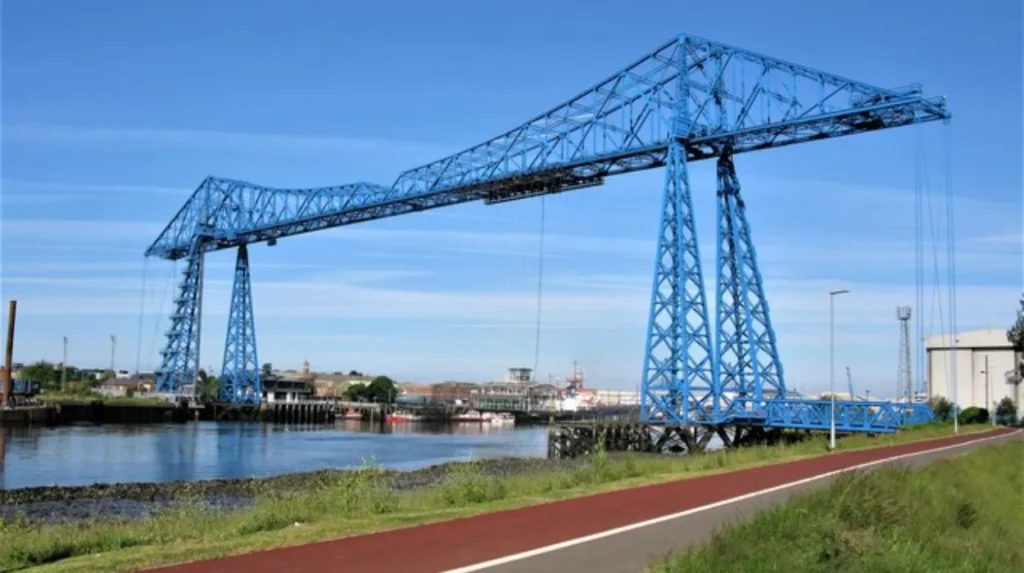
The Tees Transporter Bridge is one of Middlesbrough’s most recognisable landmarks. Opened in 1911, it carries vehicles and pedestrians across the River Tees using a suspended gondola system. Its engineering design reflects the industrial character of the area.
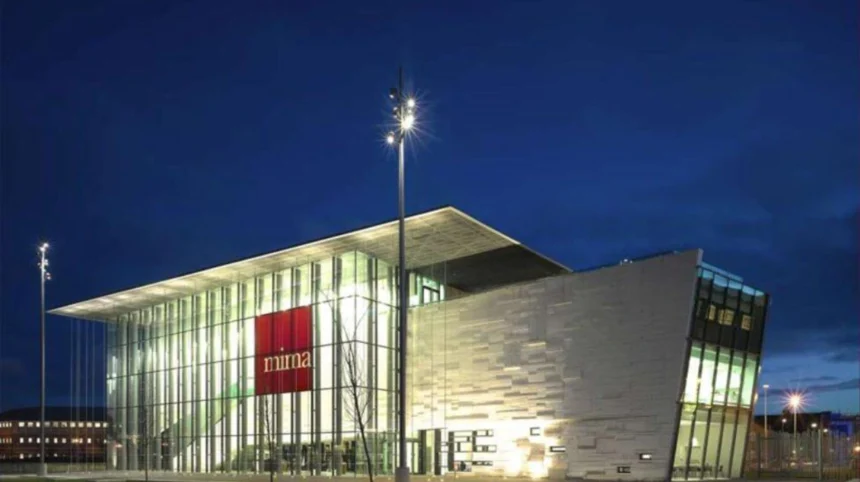
MIMA, the Middlesbrough Institute of Modern Art, is a major contemporary art museum in the town centre. The institution displays modern and contemporary artworks and provides exhibition and educational programmes.
The Dorman Museum is another significant cultural institution. Its collections cover natural history, local history, social history and archaeology. The museum provides information about Middlesbrough and the surrounding region.
Captain Cook Birthplace Museum is located in nearby Marton. The museum explores the life of James Cook, the 18th-century British naval officer and explorer who was born in Marton in 1728.
Albert Park is a major Victorian public park. It opened in 1868 and provides landscaped gardens, walking areas, sports facilities and open green space close to the town centre.
The Riverside Stadium is the home of Middlesbrough Football Club. The stadium opened in 1995 and replaced Ayresome Park as the club’s home ground.
These attractions provide different perspectives on Middlesbrough’s history. Industrial heritage, art, local history, exploration, public parks and football all contribute to the town’s cultural identity.
What can visitors see at the Tees Transporter Bridge?
The Tees Transporter Bridge is a historic steel bridge crossing the River Tees between Middlesbrough and Port Clarence. Opened in 1911, it uses a suspended gondola to transport people and vehicles across the river.
The bridge was designed by Cleveland Bridge and Engineering Company with French engineer Georges Imbault associated with its design. Its structure reflects the engineering capabilities of the early 20th century.
The bridge became necessary because the River Tees was too wide for a conventional road bridge at the location. A transporter bridge allowed vessels to continue using the river while providing a crossing for road traffic.
The structure has become a symbol of Teesside’s industrial heritage. Its distinctive steel framework is visible from surrounding areas and forms an important part of the regional landscape.
The bridge’s engineering significance extends beyond local history. Transporter bridges are relatively uncommon structures, making surviving examples important examples of industrial engineering.
The Tees Transporter Bridge also demonstrates how infrastructure responded directly to industrial geography. The design accommodated both land transportation and continued river navigation.
Why is Middlesbrough important for culture and education?
Middlesbrough is an important cultural and educational centre because it contains Teesside University, Middlesbrough Institute of Modern Art, museums, performance venues and creative organisations that support higher education, research, arts and regional cultural activity.
Teesside University is one of the town’s major institutions. It developed from Constantine Technical College and became a university in 1992. The university provides undergraduate and postgraduate education across numerous academic disciplines.
The university has a strong presence in the town centre. Its campus contributes significantly to the local student population and supports research, employment and cultural activity.
Middlesbrough also has a strong creative sector. Digital media, animation, design, music and visual arts form part of the town’s modern cultural economy.
MIMA provides an important connection between higher education and contemporary art. It operates within the wider cultural landscape of Teesside University and Middlesbrough.
The town also hosts Middlesbrough Theatre, which provides performances and entertainment throughout the year. The venue contributes to the region’s performing arts infrastructure.
Cultural institutions create educational opportunities beyond formal university study. Museums, galleries and public programmes provide access to history, science, art and local heritage.
For visitors from Cardiff, Middlesbrough offers a useful example of how a former industrial town has combined universities, creative industries and cultural institutions with its historic urban environment.
What is Middlesbrough’s economy based on today?
Middlesbrough’s modern economy includes professional services, education, healthcare, retail, engineering, digital industries, chemicals, energy and advanced manufacturing. Its economy remains connected to the wider industrial and commercial network of the Tees Valley.
The industrial economy that built Middlesbrough has changed considerably. Traditional iron and steel production no longer dominates employment in the same way as during the Victorian period.
However, manufacturing remains important across the wider Teesside area. Chemicals, energy, engineering and process industries continue to operate around the River Tees.
The wider Tees Valley has developed specialist capabilities in industrial technology and energy. Existing infrastructure, skilled workers and transport connections support these industries.
Education is another major economic sector. Teesside University employs staff, attracts students and supports businesses connected with research and innovation.
Healthcare also provides significant employment. James Cook University Hospital is located in Middlesbrough and serves patients across the Teesside region and surrounding areas.
Retail and hospitality support the town centre economy. The Cleveland Centre is a major shopping destination, while restaurants, cafés and independent businesses contribute to the urban economy.
Digital industries have become increasingly important. Middlesbrough has developed a growing reputation for digital technology, animation, games and creative media.
Economic regeneration focuses on combining these sectors with redevelopment of underused urban and industrial land.
What is Middlesbrough town centre like?
Middlesbrough town centre combines shopping streets, independent businesses, cultural venues, restaurants, public buildings, university facilities and entertainment spaces. Its compact central area provides access to major attractions and transport services within a relatively concentrated urban environment.
The Cleveland Centre is one of the principal shopping destinations in central Middlesbrough. It contains national retailers alongside food and service businesses.
The town centre also contains independent shops and hospitality businesses. These businesses contribute to the local commercial identity and provide services for residents, students and visitors.
Middlesbrough’s cultural facilities are concentrated around the central area. MIMA, Middlesbrough Town Hall, Middlesbrough Theatre and other venues contribute to the town’s cultural offer.
The university campus extends through parts of the centre and gives Middlesbrough a substantial student presence.
Public transport connections support movement between the town centre and surrounding communities. Middlesbrough railway station provides rail services connecting the town with destinations across northern England.
The town centre has undergone multiple regeneration programmes. Redevelopment has focused on public spaces, housing, education, business accommodation and cultural infrastructure.
Its compact structure makes the centre accessible for visitors exploring the main attractions on foot.
How important is sport to Middlesbrough?
Sport is an important part of Middlesbrough’s identity, with football providing the strongest professional sporting connection. Middlesbrough Football Club plays at the Riverside Stadium, while athletics, cricket, rugby and community sports contribute to the wider regional sporting culture.
Middlesbrough Football Club was founded in 1876 and became a professional club in 1899. The club competes in the English football league system.
The Riverside Stadium has been the club’s home since 1995. It replaced Ayresome Park, which had served as Middlesbrough’s stadium for much of the 20th century.
Middlesbrough has produced and developed numerous professional footballers. The club’s academy has contributed to player development and regional football.
Sport also contributes to the town’s economy. Matchday visitors generate spending in hospitality, transport, retail and entertainment businesses.
Community sport provides another important function. Local clubs, schools, leisure centres and public parks support participation in football, athletics and other activities.
The sporting identity of Middlesbrough therefore extends beyond professional football. Recreational sport contributes to health, community participation and local social activity.
What parks and green spaces can you visit in Middlesbrough?
Middlesbrough has several important green spaces, including Albert Park, Stewart Park and the Fairy Dell area. These locations provide landscaped gardens, walking routes, recreation facilities, wildlife habitats and open space within and around the urban area.
Albert Park is the most prominent historic park close to the town centre. It was created during the Victorian period and opened in 1868.
The park contains landscaped areas, mature trees, paths and recreational facilities. Its central location makes it accessible to residents and visitors.
Stewart Park is located in Marton, south of central Middlesbrough. It covers a large area of parkland and includes the Captain Cook Birthplace Museum.
The park combines historic landscaping with recreational areas and open space. It also provides a connection with the history of James Cook.
Fairy Dell is a wooded valley near Marton. The area contains streams, woodland paths and natural habitats and provides a different environment from Middlesbrough’s urban centre.
Green spaces have environmental and social functions. They provide habitats for plants and wildlife while also supporting walking, recreation and outdoor activities.
For visitors arriving from Cardiff, these parks provide opportunities to explore the town beyond its industrial and urban landmarks.
How is Middlesbrough connected to transport networks?
Middlesbrough has strong road, rail and bus connections across the Tees Valley and northern England. Middlesbrough railway station provides services to major destinations, while nearby major roads connect the town with Newcastle, York, Leeds and wider regional routes.
Middlesbrough railway station is located close to the town centre. Rail services connect Middlesbrough with destinations including York, Leeds, Manchester, Newcastle and other northern locations.
The East Coast Main Line passes through nearby York and Northallerton, providing connections to London and Edinburgh through the wider railway network.
Road connections are also important. The A19 provides a major north-south route through the Tees Valley, linking Middlesbrough with areas including Stockton, Sunderland and York.
The A66 provides an important east-west connection across northern England. It links Teesside with areas towards Darlington, Cumbria and the Lake District.
Local bus services connect Middlesbrough with surrounding settlements. Public transport is particularly important for students, commuters and residents travelling across the Tees Valley.
For Cardiff visitors, rail travel normally involves connections through major northern cities or interchange stations. Journey times depend on the selected route and connection schedule.
What is Middlesbrough’s relationship with the wider Tees Valley?
Middlesbrough is one of five local authority areas within the Tees Valley combined authority region. Its connections with Stockton-on-Tees, Redcar and Cleveland, Hartlepool and Darlington support regional transport, employment, education, housing and economic development.
The Tees Valley Combined Authority coordinates strategic development across the region. The area includes five local authority areas: Middlesbrough, Stockton-on-Tees, Redcar and Cleveland, Hartlepool and Darlington.
Middlesbrough functions as an important urban centre within this regional structure. Its universities, hospital, retail centre and cultural institutions attract people from surrounding communities.
Stockton-on-Tees lies directly north of Middlesbrough and is closely connected through the River Tees corridor.
Redcar and Cleveland contains coastal communities and major industrial facilities east of Middlesbrough.
Hartlepool lies further north along the coast and has its own maritime and industrial heritage.
Darlington lies west of Middlesbrough and provides important railway connections and commercial links.
Together, these areas form a connected regional economy rather than isolated towns. Transport, employment and education regularly cross local authority boundaries.
How is Middlesbrough being regenerated?
Middlesbrough regeneration focuses on town-centre redevelopment, housing, education, culture, transport, public spaces and economic investment. Projects aim to strengthen the urban centre while reconnecting communities with employment, services, entertainment and the River Tees.
Regeneration has become an important part of Middlesbrough’s post-industrial development. The objective is to reuse urban land and strengthen the town’s economic role.
Town-centre development includes new housing, commercial premises and public spaces. Residential development supports a larger population living closer to employment, education and entertainment facilities.
University investment has also transformed parts of the central area. New academic buildings and public spaces have strengthened the relationship between the university and town centre.
Cultural investment provides another regeneration mechanism. Museums, galleries, theatres and creative organisations attract visitors and support local businesses.
The River Tees remains a strategic focus because of its industrial infrastructure and potential for further development.
Regeneration does not remove Middlesbrough’s industrial identity. Instead, modern projects increasingly incorporate existing heritage, infrastructure and geographical connections into new economic uses.
Explore More Area Guide
Uncovering the Hidden History of Rumney Hall in Cardiff 2026
Guide to Independent Local Bookshops: Pontcanna, Cardiff 2026
What makes Middlesbrough significant for visitors from Cardiff?
Middlesbrough provides Cardiff visitors with a clear example of northern English industrial development, combining Victorian heritage, River Tees infrastructure, museums, contemporary art, football, universities, public parks and modern regeneration within one compact regional urban centre.
Cardiff and Middlesbrough share important characteristics as regional centres shaped by industrial development. Both have histories connected with transportation, manufacturing, waterfront economies and urban regeneration.
Middlesbrough’s distinctive history is rooted particularly in iron, steel, engineering and the River Tees. Cardiff’s industrial identity is strongly associated with coal, docks and the River Taff.
The contrast makes Middlesbrough particularly relevant for visitors interested in Britain’s industrial transformation.
A visit can combine historical sites with contemporary attractions. The Tees Transporter Bridge represents industrial engineering, while MIMA represents modern cultural development.
Albert Park demonstrates Victorian approaches to public recreation, while Teesside University represents the town’s modern educational economy.
Middlesbrough Football Club provides another major element of local identity, while the surrounding Tees Valley offers additional coastal, industrial and natural attractions.
The town therefore provides a concentrated view of how an industrial settlement developed into a modern regional centre.
What is Middlesbrough’s long-term significance?
Middlesbrough remains significant because its history demonstrates the transformation of British industry, transport and urban society. Its future importance rests on education, advanced industry, energy, digital businesses, cultural development, regeneration and continued connections across the Tees Valley.
Middlesbrough’s historical importance began with its transformation during the Industrial Revolution. Railways, ironstone, ironworks, docks and shipbuilding created a rapidly expanding industrial town.
The industrial economy subsequently experienced major structural change. Traditional heavy industries declined, creating challenges for employment, land use and urban development.
The town has responded through economic diversification. Education, healthcare, digital industries, professional services, culture, engineering and advanced manufacturing now contribute to its economy.
Its location beside the River Tees remains strategically important. The river continues to support industrial activity, logistics, energy infrastructure and regional development.
Middlesbrough’s cultural institutions preserve the physical and social history of the town while supporting contemporary creative activity.
Its parks and public spaces provide important environmental and recreational functions within an urban landscape.
For the wider Tees Valley, Middlesbrough continues to serve as a centre for employment, education, healthcare, shopping, culture and sport.
Its future development is therefore closely linked to the wider transformation of the Tees Valley from a traditional industrial region into a diversified economy combining manufacturing, energy, education, technology and services.
Middlesbrough’s enduring significance comes from this combination of industrial heritage and modern regional functions. The town remains an important place for understanding the economic and social development of northern England.
What is Middlesbrough famous for?
Middlesbrough is famous for its industrial heritage, particularly iron and steel production, engineering, shipbuilding and its location beside the River Tees. The town is also known for the Tees Transporter Bridge, Middlesbrough Football Club, MIMA and Teesside University.