The total population of Roath is approximately 18,000 residents based on official Office for National Statistics (ONS) local area data. This urban district in eastern Cardiff maintains a high population density driven by student housing, young professionals, and long-term families.
- How has the historical population of Roath changed over time?
- What are the main age demographics in Roath?
- What is the ethnic and cultural makeup of Roath?
- How does student housing affect the local population density?
- What are the employment and economic statistics for Roath residents?
- How do housing trends impact Roath’s population growth?
- What are the future population projections for Roath?
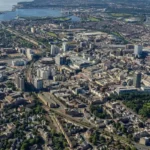
Roath is a well-defined inner-city district located in the capital city of Wales. The area operates administratively within the Cardiff local authority and comprises multiple electoral divisions, including the electoral ward of Plasnewydd and portions of the surrounding Middle Layer Super Output Areas (MSOAs) used by UK statistical bodies.
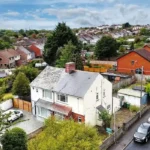
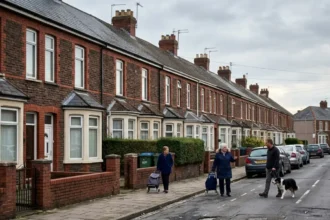
The population structure of Roath is defined by its proximity to higher education institutions, specifically Cardiff University and Cardiff Metropolitan University. This geographic location creates a distinctive age distribution dominated by young adults. The population density in Roath is among the highest in Wales, exceeding 7,000 persons per square kilometer due to the prevalence of Victorian terraced housing converted into Houses in Multiple Occupation (HMOs) and modern high-density apartment complexes.
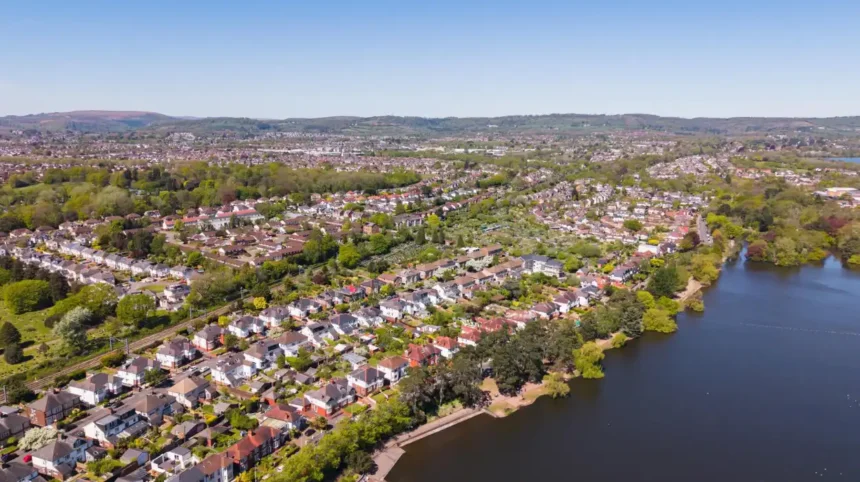
Demographic changes in Roath reflect broader urban shifts across Cardiff. While the broader capital region experienced a 4.7% population growth between official census periods, Roath maintains a stable yet fluid resident base. The high turnover of temporary residents, such as university students, coexists alongside a fixed population of long-term homeowners and families who reside in the quieter residential streets surrounding Roath Park and Roath Recreation Ground.
How has the historical population of Roath changed over time?
The population of Roath expanded rapidly from a rural hamlet of under 300 residents in the early 1800s to a densely populated urban suburb of over 20,000 by the early 1900s, driven by Cardiff coal export trade expansions.
Historically, Roath was an independent agricultural manor distinct from the walled town of Cardiff. The parish of Roath consisted of farmland, marshland, and small settlement clusters centered around the ancient Church of St Margaret.
The industrial expansion of the mid-nineteenth century fundamentally altered the demographic profile of the area. As the Bute Docks expanded in Cardiff Port, workers migrated to the area to support coal processing, railway transport, and shipping infrastructure. Estate owners, including the Marquesses of Bute and the Tredegar Estate, developed agricultural land into grid-iron residential streets containing thousands of stone-faced terraced homes.
By the late Victorian era, Roath had been formally absorbed into the expanding borough boundaries of Cardiff. The construction of civic amenities, such as Roath Park in 1894, attracted middle-class families, trade clerks, and civil servants. Throughout the mid-twentieth century, the population stabilized before transitioning into a higher-density, renter-dominated demographic during the late 1980s and 1990s as housing stock adapted to the growth of Cardiff’s university sector.
What are the main age demographics in Roath?
The age demographic of Roath is heavily skewed toward young adults aged 18 to 34, who represent over 45% of the total resident population, while elderly residents aged 65 and over make up less than 10%.
The age structure of Roath deviates significantly from national population averages in Wales. The primary driver of this demographic imbalance is the concentration of tertiary education students and early-career professionals. The 20 to 24 age bracket forms the single largest population cohort within the area, followed closely by residents aged 25 to 34 years.
The youth-dominated age profile creates specific operational requirements for local infrastructure. Public transport routes, such as Cardiff Bus services along City Road and Albany Road, cater to high pedestrian volumes and commuting students. Retail services in the area prioritize convenience shopping, dining establishments, and night-time economy venues rather than early years or senior care facilities.
Despite the dominance of young adults, distinct sub-zones within Roath contain differing age profiles. The southern and central sectors, including Plasnewydd, contain the highest density of young renters. Conversely, the northern sectors closer to Roath Park Lake and Penylan feature a higher proportion of middle-aged householders, school-aged children, and long-term retired residents, reflecting variation in housing affordability and property types across the neighborhood.
What is the ethnic and cultural makeup of Roath?
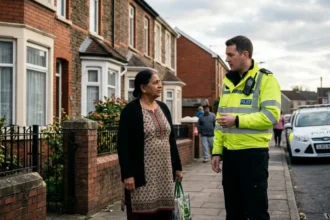
Roath is one of the most ethnically diverse areas in Wales, with over 25% of residents identifying with non-White ethnic groups, including significant British Asian, Arab, and Black communities.
The cultural structure of Roath is shaped by long-standing international migration patterns to Cardiff, historically linked to maritime trade and modern international university enrollments. The area features substantial communities of Welsh Asian, British Asian, Middle Eastern, and African residents.
Religious affiliation in Roath reflects its multicultural demographic profile. The census data indicates that a plurality of residents report having no religious affiliation, driven by the young demographic. Christianity remains the largest reported religion, followed by Islam. Places of worship within and adjacent to Roath include Anglican, Catholic, and Baptist churches, alongside several mosques and Islamic community centers located around City Road and Mackintosh Place.
Linguistic demographics show a dual presence of international languages and the Welsh language. While English is the predominant language for daily interaction, Welsh-speaking populations in Cardiff have grown, with over 12% of the broader city population capable of speaking Welsh. Furthermore, languages such as Arabic, Urdu, Bengali, and Polish are spoken regularly across local households, contributing to the district’s commercial and social environment.
How does student housing affect the local population density?
Student housing increases the local population density of Roath to over 7,000 people per square kilometer, causing seasonal population fluctuations between the academic terms and summer months.
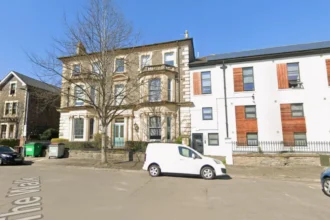
The expansion of Cardiff University, Cardiff Metropolitan University, and the University of South Wales has transformed the housing infrastructure of Roath. Private sector residential properties in streets such as Richmond Road, Arran Place, and Albany Road have been systematically converted into Houses in Multiple Occupation (HMOs). An HMO is defined by housing legislation as a property rented by three or more people who are not from one single household but share facilities like a bathroom or kitchen.
This structural shift creates a dynamic known as “studentification.” The physical result is an elevated population density per residential building. A Victorian property originally built for a single family of five individuals often houses between six and eight adult students under modern HMO conversions. This concentration increases demand on municipal services, including waste management, parking enforcement, and noise control.
The population of Roath experiences a predictable cycle of influx and outflow. During the academic term from September through May, population levels reach their peak, driving local retail sales and public transit usage. During the summer recess from June to August, the temporary student population decreases, temporarily altering the local density and commercial footfall until the start of the next academic year.
What are the employment and economic statistics for Roath residents?
The economic profile of Roath features a split between a large economically inactive student population and a highly skilled workforce, with unemployment standing at low levels below 4%.
Economic activity data for Roath reflects its dual population structure. A substantial portion of the population is classified under official statistical systems as “economically inactive – full-time students”. However, among the non-student working-age population, employment rates are elevated across professional, scientific, managerial, and healthcare sectors.
The public sector represents a primary employer for Roath residents. Proximity to the University Hospital of Wales in Heath, Cardiff University campuses, and Welsh Government offices in Cathays Park allows residents to commute easily without reliance on personal vehicles. Consequently, car ownership rates in central Roath are lower than national averages, with over 30% of households reporting no private motor vehicle access.
Commercial employment within Roath itself is concentrated along major retail corridors:
- City Road: Dominated by independent culinary businesses, service industries, and international food markets.
- Albany Road: Serves as the primary high-street retail hub containing financial institutions, pharmacy chains, and clothing retailers.
- Wellfield Road: Characterized by upscale boutiques, independent cafes, and specialty dining establishments.
Explore more Area Guide
Community Churches in Rumney Cardiff History Governance and Social Impact Guide
Complete Guide to Mosques in Grangetown History Services and Community Impact
How do housing trends impact Roath’s population growth?
High property prices and rental demand have stabilized Roath’s population growth while driving property conversions into high-density flats, raising average monthly rents above £1,100.
Housing supply in Roath is geographically constrained by pre-existing Victorian urban layouts and designated green spaces like Roath Park and Roath Recreation Ground. Because physical expansion outward is impossible, property development focuses on internal conversion, redevelopment of brownfield sites, and infill housing projects.
The private rented sector accounts for more than half of all residential tenures in central Roath. Strong rental demand from university students and healthcare workers keeps vacancy rates low and rental yields steady. However, local planning policy interventions, such as the Cardiff Council Supplementary Planning Guidance on HMOs, have introduced thresholds to limit the percentage of HMO properties within specific radiuses to preserve community balance.
Property sales values in Roath have maintained upward pressure due to its popularity among first-time buyers and professional couples. Traditional mid-terrace houses are frequently converted into self-contained apartments to maximize occupancy. This continuous high demand stabilizes the population figure, ensuring that any exit of residents is matched by new arrivals seeking inner-city residential space.
What are the future population projections for Roath?
Projections indicate that the population of Roath will experience modest, controlled growth of 2% to 4% over the next decade, constrained by housing limits but supported by urban regeneration.
The Welsh Government and Cardiff Council publish local authority population projections that inform infrastructure planning. While overall population growth for the City of Cardiff is projected to continue due to international inward migration and natural change, inner-city districts like Roath are expected to hit density caps dictated by land availability.
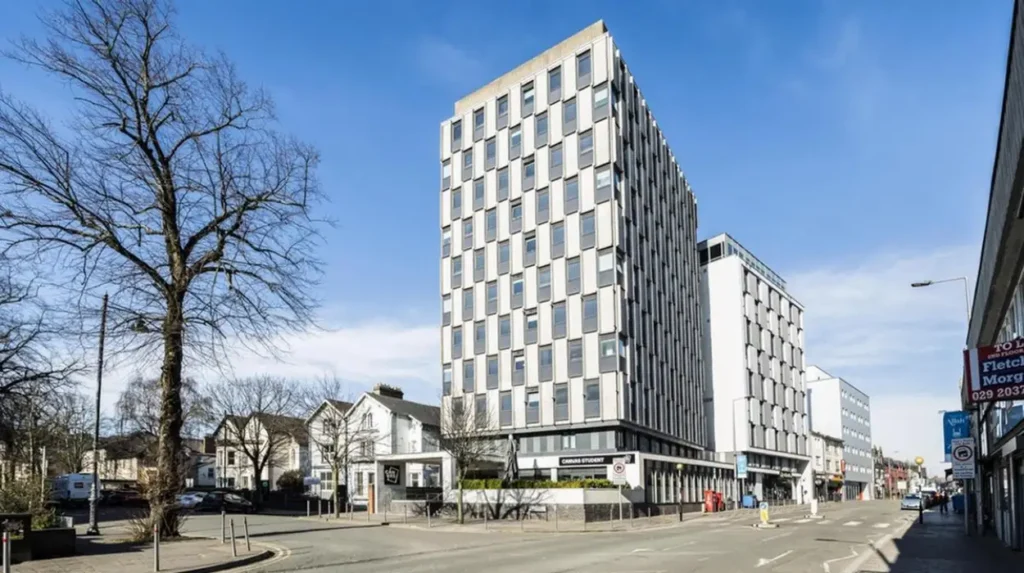
Future population dynamics in Roath will be influenced by the development of Purpose-Built Student Accommodation (PBSA) in nearby central Cardiff wards. A shift of students from traditional street-level HMOs into dedicated PBSA complexes could alter Roath’s internal demographics, potentially opening up terraced housing stock for reconversion back into single-family owner-occupied homes or professional lets.
Furthermore, active travel investments, such as the Cardiff Council’s Cycleway network connecting Roath directly to Cardiff city center and Heath Hospital, reinforce the appeal of the area for young professionals. These transport developments ensure that Roath will remain one of the most densely populated, economically vibrant, and culturally diverse suburban districts in Wales.
What is the total population of Roath?
The total population of Roath is approximately 18,000 residents, based on official Office for National Statistics (ONS) local area data. It is one of the most densely populated urban districts in Cardiff and Wales, with a density exceeding 7,000 persons per square kilometer.