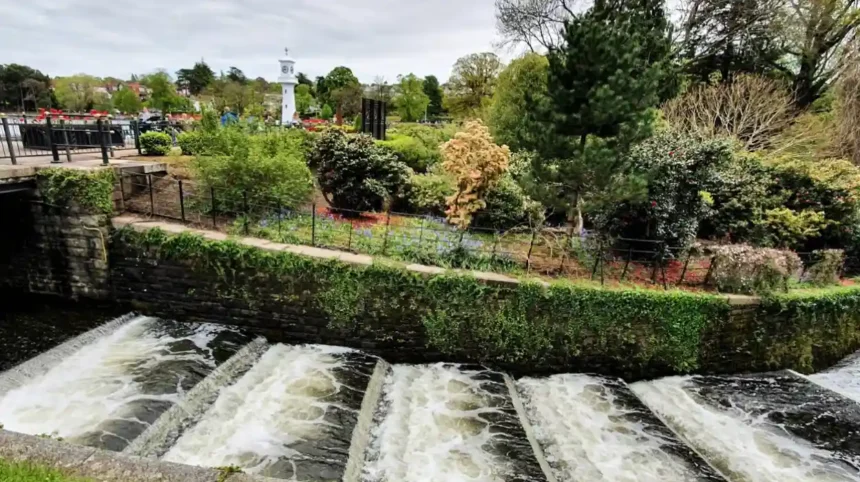
Roath Park Lake was established in December 1893 when water filled the newly constructed dam, and the park officially opened on 20 June 1894. Roath Park Lake itself was not bombed during World War 2, though Cardiff experienced devastating Blitz raids between 1940–1944 that killed 355 people and dropped approximately 2,100 bombs across the city.
- Definition and Background of Roath Park Lake
- When Was Roath Park Lake Established?
- Was Roath Park Lake Bombed in World War 2?
- Historical Context and Development Timeline
- Key Components and Structure of the Lake
- Processes and Mechanisms of Lake Creation
- Real-World Examples of Lake Usage
- Data, Statistics, and Research-Backed Insights
- Impact, Implications, and Future Relevance
Definition and Background of Roath Park Lake
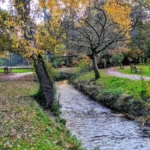
Roath Park Lake is a 30-acre (12 hectare) man-made lake located in Roath Park, Cardiff, Wales. The lake measures 1.3 miles (2.1 km) around its perimeter and serves as the central feature of Cardiff’s first publicly-owned park. Four inaccessible islands within the lake form a conservation area home to water birds including mallard, cormorants, herons, approximately 100 swans, and several geese.
The lake was constructed on former boggy ground that was historically known as a “malarial bog.” John Crichton-Stuart, the 3rd Marquess of Bute, donated 130 acres (0.53 km²) of this land to Cardiff city in 1887. The lake was created by damming the Nant Fawr stream (also called Roath Brook, Nant y Lleuchi, or Nant y Derwen Deg), which runs from north-west to south-east through north-eastern Cardiff.
When Was Roath Park Lake Established?
Roath Park Lake was established in December 1893 when the dam across the Nant Fawr stream was completed and water filled the created reservoir. The park officially opened to the public on 20 June 1894, when the Earl of Dumfries (the Marquess of Bute’s 13-year-old son) declared it open on his birthday.
Construction of Roath Park began in 1887 after the land was donated. Work initially focused on creating the lake from marshland. The dam, which became known as the Promenade, was completed in 1893. The Botanic Garden was laid out at the same time as the lake formation. The park continued to be opened in sections over the following two decades after the initial 1894 opening.
A new park with a lake was first proposed in 1886 on land owned by Lord Tredegar. This原始 site contained clay pits and a watermill that required removal. The final location on Marquess of Bute’s land was selected, and design work was carried out partly by Andrew Pettigrew (Bute’s head gardener) but mainly by his son William Wallace Pettigrew, in conjunction with William Harpur (the corporation’s chief engineer).
Was Roath Park Lake Bombed in World War 2?
Roath Park Lake itself was not bombed during World War 2. No recorded bomb impacts occurred on the lake or within Roath Park during the Cardiff Blitz. The Cardiff Blitz (Blitz Caerdydd) refers to bombing of Cardiff between 1940 and March 1944, when approximately 2,100 bombs fell on the city killing 355 people, but Roath Park was not among the targeted or damaged areas.
Cardiff Docks became the primary strategic bombing target for the German Luftwaffe (Nazi German air force) because Cardiff was one of the biggest coal ports in the world. Consequently, the docks and surrounding areas—including Canton, Riverside, Grangetown, and Cathays—were heavily bombed. Western Cardiff was the worst hit area, particularly Canton and Riverside where 116 people were killed.
The most devastating raid occurred on the night of 2 January 1941, when over 100 bombers attacked Cardiff over a 10-hour period beginning at 6:37 pm. This raid dropped high explosive bombs, incendiary bombs, and parachute mines. In Grangetown, the Hollyman Brothers bakery was hit by a parachute mine, killing 32 people sheltering in the basement. Overall, 165 people were killed and 427 more injured in this single raid, with nearly 350 homes destroyed.
The raid of 29 April 1941 was particularly tragic when four landmines were parachuted without warning. One mine killed ten people in Lewis Street, Riverside. Two others fell in Cathays on Llanbleddian Gardens and Wyverne Road, killing 23 people including ten members of the Palmer family. The adjoining parish hall on Wyverne Road was destroyed.
Pen-y-lan Road, near Roath Park, experienced bombing on 18 May 1943 during what has been described as the “Final Blitz on Cardiff.” This raid killed eight people in numbers 8, 10, and 12 Pen-y-lan Road, including five members of the same Wing family. However, these bombs fell on residential houses near Albany Road, not on Roath Park Lake itself.
Marlborough Road Primary School (near Roath Park) was bombed and badly damaged during WWII, necessitating demolition of the main building. Fortunately, bombs fell at night and no lives were lost at the school, though lives were lost on adjoining Agincourt Road. Tabernacle Chapel, Roath also suffered bomb damage during the Second World War, requiring refurbishment completed in 1950.
Historical Context and Development Timeline
Roath Park holds the distinction of being Cardiff’s first publicly-owned park, emerging from 130 acres of reformed bogland. The park was Grade I listed on the Cadw/ICOMOS Register of Parks and Gardens of Special Historic Interest in Wales on 1 February 2022, recognizing its special historic importance.
The park’s development followed a clear timeline:
- 1886: New park with lake proposed on Lord Tredegar’s land
- 1887: Land donated by 3rd Marquess of Bute; construction began
- 1889: Work on park continued (some sources indicate this start date)
- 1893: Dam/Promenade completed; lake formed in December 1893
- 20 June 1894: Park officially opened by Earl of Dumfries
- 1894–1914: Park opened in sections over following two decades
- 1915: Model lighthouse/clock tower added to commemorate Captain Scott’s Antarctic expedition
The park retains a classic Victorian and Edwardian atmosphere today. The park itself is locally listed, and surrounding streets are designated across three Conservation Areas (Roath, Penylan, and Cyncoed) to ensure quality conservation. Waterloo Gardens, Roath Mill Gardens, and Roath Brook Gardens have separate Grade II listings.
Key Components and Structure of the Lake
Roath Park Lake contains four islands within a conservation area that are inaccessible to the public. These islands serve as safe nesting sites for water birds. The lake functions as an important habitat for over-wintering and breeding birds.
The lake supports diverse wildlife including:
- Mallard: Common duck species throughout the lake
- Cormorants: Large water birds that nest on islands
- Herons: Wading birds that hunt in shallow areas
- Swans: Approximately 100 swans inhabit the lake
- Geese: Multiple goose species present, with local conservationists actively controlling their numbers due to abundance affecting other wild birds
The lake has a population of about 100 swans and a number of geese. Many wild birds are scared off by the abundance of geese, so local conservationists actively take measures to control goose numbers. A wildflower garden included in the park is managed to encourage wildlife and native species.
Processes and Mechanisms of Lake Creation
The lake creation process involved damming the Nant Fawr stream across former marshland. Engineers constructed a dam that became known as the Promenade. This dam blocked the stream’s natural flow, causing water to accumulate and fill the former boggy ground.
The construction required addressing a shallow area where additional land formation was necessary. Workers built the dam structure across the stream channel, creating a barrier that held water. The marshland was transformed into a 30-acre reservoir through this engineering process.
The lake’s creation transformed malarial bogland into a recreational and ecological asset. The transformation eliminated the health hazards associated with the marsh while creating a permanent water feature that became the park’s centerpiece.
Real-World Examples of Lake Usage
Public swimming occurred on the lake from when it opened. Public swimming stopped after 1949 when concerns about water impurity were raised. The Taff Swim (Long Distance Swimming Championship of Wales) continued until 1963. Water carnivals and water skiing still occurred in the 1960s and 1970s.
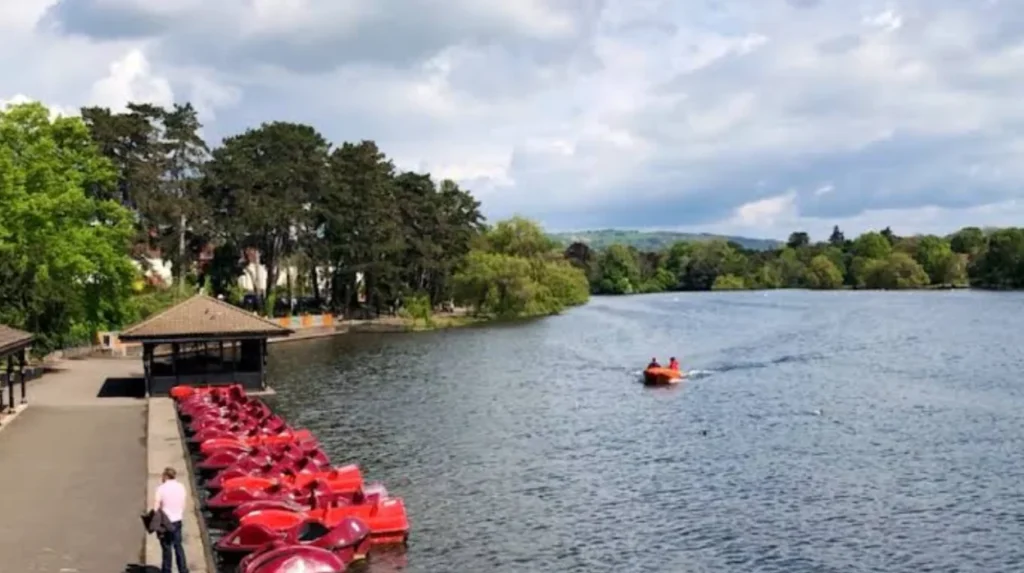
Rowing boats can be hired from the boat house for use on the lake. The lake is home to a local radio-controlled boat society and is used for coarse fishing throughout the year. Two well-equipped playgrounds serve park visitors, and the lake area includes a café open most of the year providing refreshments and light meals.
In 2003, the park was used for filming an episode of the TV series “The Story of Tracy Beaker.” In 2019, the BBC reported that the lake had been polluted for several years by unauthorised sewage discharges, representing a modern environmental challenge.
In 2024, the path along the southern edge of the park was widened to accommodate a new cycle path, demonstrating ongoing infrastructure development.
Data, Statistics, and Research-Backed Insights
Roath Park spans 130 acres (53 hectares), making it approximately the size of 80 football pitches. The lake itself covers 30 acres (12 hectares) with a perimeter of 1.3 miles (2.1 km).
The Cardiff Blitz statistics demonstrate the scale of bombing:
- Total bombs dropped: Approximately 2,100
- People killed: 355
- Time period: 1940–March 1944
- Raid on 2 January 1941: 165 killed, 427 injured, nearly 350 homes destroyed
- Raid on 29 April 1941: 33 killed (10 in Lewis Street, 23 in Cathays)
- Final Blitz (18 May 1943): 40+ killed, 52 seriously wounded, widespread destruction
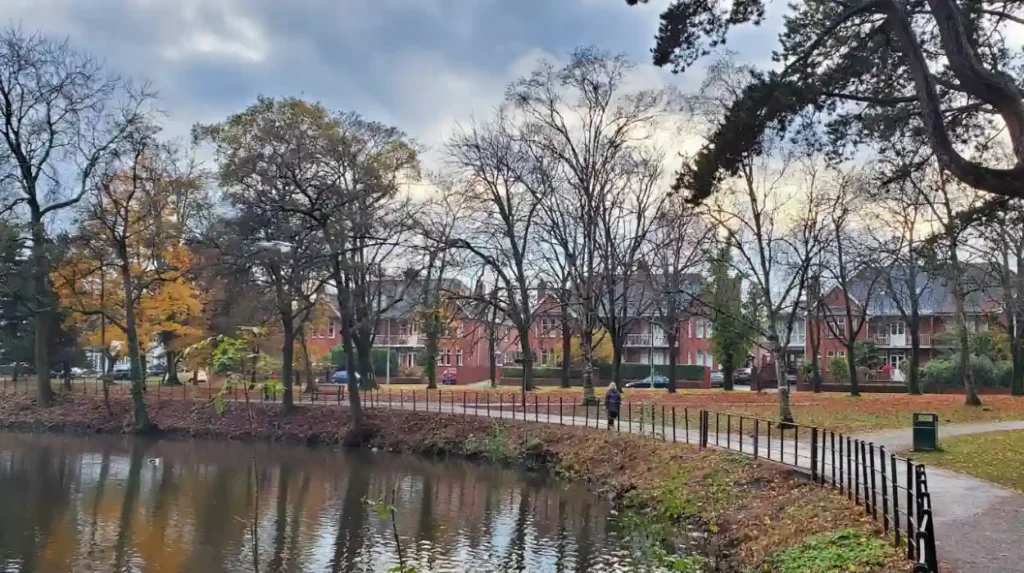
The Tree Register of the British Isles records twelve Champion Trees (biggest and best of their kind) in Roath Park. Two oak trees predate the park establishment and are calculated to be about 250 years old.
Impact, Implications, and Future Relevance
Roath Park received the Green Flag award recognizing its high quality and importance to Cardiff. The park’s Grade I listing ensures preservation of its Victorian atmosphere for future generations. The surrounding Conservation Areas protect the historic streetscape.
The park demonstrates successful urban regeneration, transforming malarial bogland into one of Cardiff’s most popular parks. This transformation provides ongoing recreational, sporting, and educational facilities for east Cardiff residents. The park’s diverse environments support biodiversity while serving as a community hub.
Modern challenges include pollution from unauthorised sewage discharges reported in 2019, requiring ongoing environmental management. The 2024 cycle path addition shows the park adapting to contemporary transportation needs while maintaining historic character.
Two volunteer “Friends” groups work with Cardiff Council: Friends of Roath Park (northern section to Penylan Hill) and Friends of Penylan’s Gardens (south-eastern section). This volunteer involvement ensures community engagement in park preservation.
The park remains open year-round, operated by Cardiff Council’s Parks Section. Regular events include guided walks, concerts, and exhibitions. Swan and duck food is on sale for feeding birds on the lake, supporting visitor engagement with wildlife.
Roath Park Lake’s establishment in 1893–1894 represents Victorian civic ambition to provide public recreational space. The lake’s survival through WWII without bombing damage demonstrates that not all Cardiff areas experienced direct Blitz impacts. The park continues serving Cardiff residents 130+ years after opening, demonstrating the enduring value of Victorian public park investments.
When was Roath Park Lake established?
Roath Park Lake was established in December 1893, when water filled the newly completed dam across the Nant Fawr stream. Roath Park itself officially opened to the public on 20 June 1894.