
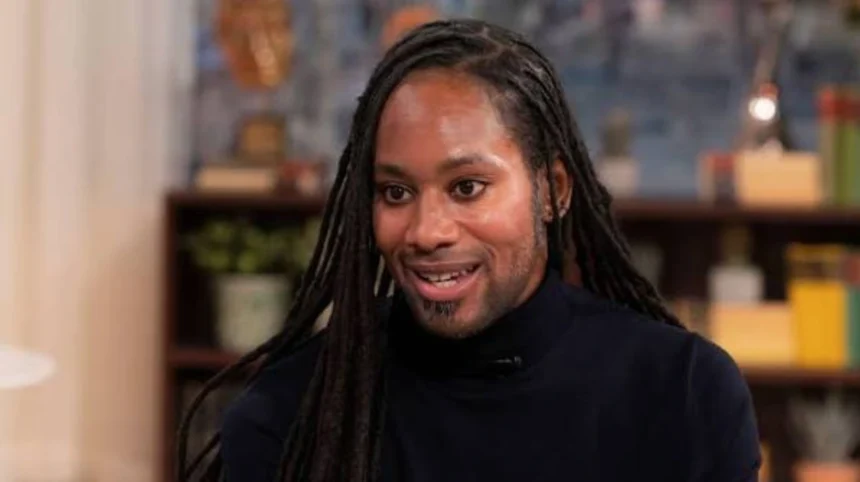
The sudden death of Cambridge academic Jason Arday should take very few of us by surprise. The Professor, who had recently been forced to resign after allegations of plagiarism, has been the focus of an unprecedented media campaign that has spanned far beyond the standard procedures following these sorts of accusations.
Plagiarism is nothing new in the academic world, even among academics of Arday’s standing, who have built successful careers and garnered considerable merit as a result of their achievements. Often, academics are required to walk the line of building upon existing research without over-referencing or parroting the findings themselves. Even instances wherein the author is found to have committed plagiarism, such circumstances are handled primarily by the overseeing university and are rarely if ever subjected to public scrutiny.
Professor Arday’s position as a campaigner and activity for both the neurodivergent and black communities undoubtedly had a hand in bringing his downfall into the public eye, but the extent to which this has garnered such robust criticism is concerning. The ongoing investigation into the accusations against Arday’s work has been treated with a contempt reserved for the likes of murderers and those charged with serious instances of assault. For many, the accusation of plagiarism seems to have stripped the former professor of his humanity rather than his title.
It is difficult at this time to separate Jason Arday from the topic of falsification, and that should be of serious concern. Disregarding the fact that Arday was part of an active and ongoing investigation that had yet to reach a decisive conclusion, he remained a vulnerable adult who had used his platform to campaign for the rights of underprivileged and underrepresented communities. It is also necessary to acknowledge that the claims against the former professor did not stretch to each of his publications, and that his work as an activist remains especially relevant in the context of current affairs.
There is much debate surrounding the accusations against Jason Arday, but the coverage afforded to the accusations against him demonstrates a concerning lack of empathy and unprofessional disregard for his wellbeing. After learning of is death, I was struck by the multitude of comments claiming that Arday’s death was justified by the accusations against him. One Facebook commentor wrote that “His life was a lie,” in response to an article detailing Arday being found deceased, whilst another wrote simply that “he isn’t autistic.”
As proven by the current coverage, there is much to scrutinise regarding the career and life of Jason Arday, but the belief that this justifies a media campaign that eventually led to his death is worrying. Arday was diagnosed as autistic at the age of three – something that has now been the subject of scrutiny after classmates recalled him being largely verbal, despite Arday’s claims of being unable to talk until he was eleven. Little regard has been given to the fact that being verbal does not prevent you from being diagnosed with autism spectrum condition. In the event that the claims of his classmates are proven true, it remains a startling assumption that this implies the former professor fabricated a complete diagnoses at a time when they remained relatively rare, especially among black and ethnic minority communities.
It should not be a controversial statement to say that I am profoundly saddened by both the news of Jason Arday’s death and by the public’s reaction to this news. As an autistic post-graduate researcher, I am deeply concerned for the lack of empathy demonstrated throughout this ordeal and am startled by the willingness of individuals to continue the post-mortem scrutiny of the professor’s identity, particularly in response to news of his death.
The views expressed in this article are the author’s own and do not necessarily reflect (Cardiff Daily) editorial policy.