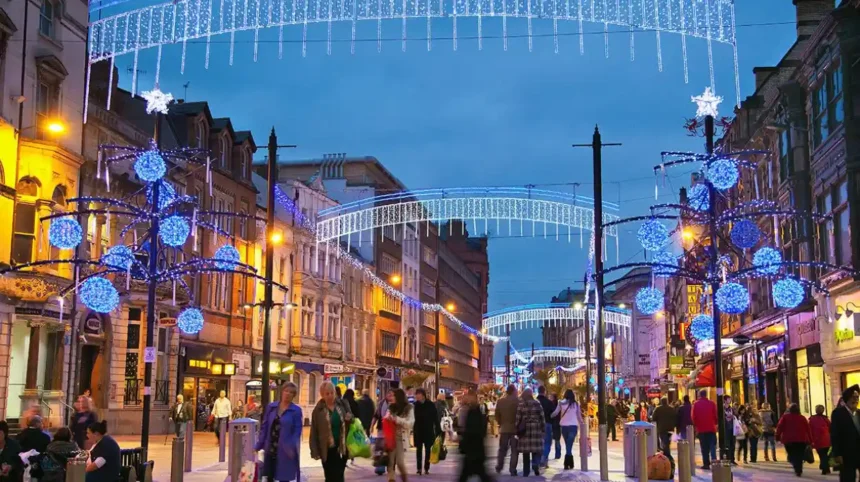
Cardiff serves as the capital city of Wales and transforms its urban landscape annually to accommodate hundreds of thousands of seasonal visitors. Municipal and commercial stakeholders coordinate to deploy complex lighting networks across distinct geographical zones within the city. The deployment strategy relies on dividing the city into high-density retail corridors, historic parks, and civic transit hubs.
- When do the Cardiff Christmas lights officially switch on and run?
- What makes the Christmas at Bute Park light trail a premier attraction?
- How do digital projections and city centre illuminations transform Cardiff?
- What community and school-led lighting projects exist in Cardiff?
- How do visitors access and navigate the Cardiff Christmas light displays?
Key zones feature distinct technological frameworks. For example, Bute Park hosts a mile-long immersive outdoor trail utilizing laser systems, architectural uplighting, and interactive soundscapes. Concurrently, the city centre utilizes structural building facades, such as Cardiff Central Station and Cardiff Market, as canvases for large-scale digital video mapping and light art installations. These structural setups rely on high-output LED fixtures designed to withstand winter weather conditions while minimizing electrical power consumption through programmable dimming schedules.
When do the Cardiff Christmas lights officially switch on and run?
The Cardiff Christmas lights officially switch on the first Thursday following Remembrance Sunday, with major installations running continuously from mid-November through the first week of January to maximize public accessibility during the darkest months of the year.
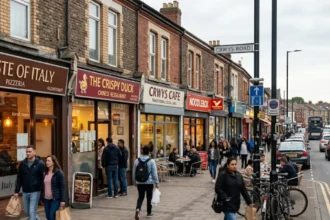
Temporal scheduling dictates the operational framework of municipal holiday lighting. The transition from standard autumn streetscaping to full festive illumination occurs on a designated date each November, aligning with the opening of Cardiff’s Winter Wonderland and the traditional German-style Christmas Market. For instance, installations activate simultaneously across pedestrianized retail arteries like Queen Street, St Mary Street, and the Hayes.
Operational hours vary by specific installation type. Municipal street lights and architectural projections operate on automated twilight sensors, generally activating at 4:00 PM and deactivating between 11:00 PM and midnight to balance public safety with energy conservation. Conversely, ticketed enclosed attractions like the Christmas at Bute Park trail operate on strict timed-entry slots between 4:15 PM and 8:30 PM, accommodating structured visitor flow across 15 distinct light zones.
What makes the Christmas at Bute Park light trail a premier attraction?
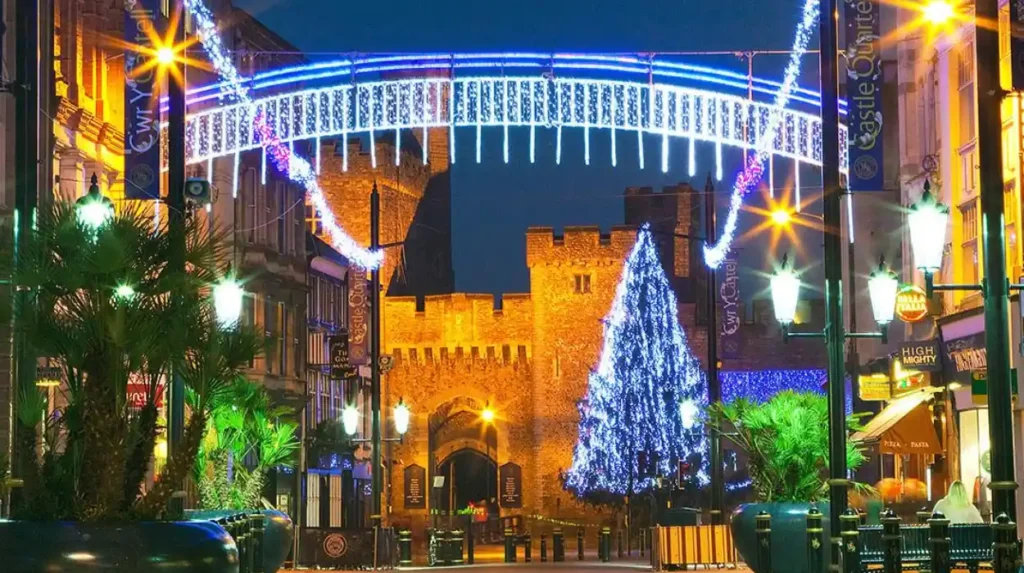
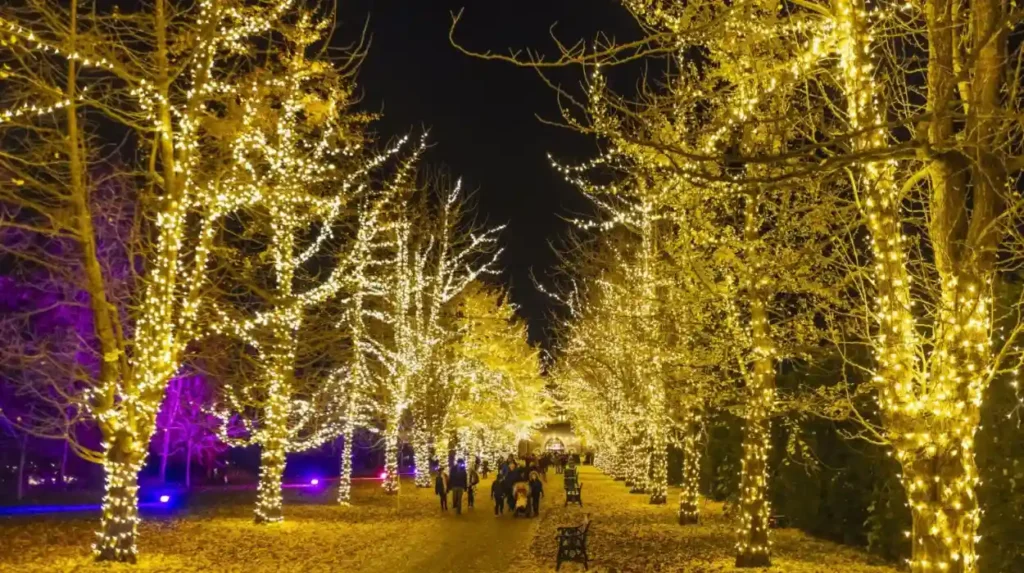
Christmas at Bute Park is Cardiff’s premier festive attraction because it features a mile-long illuminated pathway curated by world-leading lighting designers, incorporating 15 distinct interactive zones, custom soundscapes, and sustainable local food vendors.
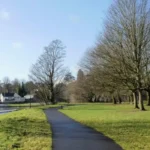
Bute Park occupies a 56-hectare historic urban park situated immediately behind Cardiff Castle. The light trail capitalizes on this unique geography by routing visitors beneath a mature tree canopy, utilizing the natural landscape to frame complex optical illusions and multi-colored laser displays. The production involves heavy logistical planning, requiring weeks of underground cable laying that avoids damage to the park’s protected root systems and local wildlife habitats.
The installation breaks down into specific creative zones, including laser-lit forest floors, mirror ball fields, and flickering fire gardens. Creators partner with regional artists and international lighting technicians to construct bespoke physical sculptures. Furthermore, the event incorporates a dedicated Christmas Village near the entrance and exit points, supplying regional Welsh produce, hot beverages, and seasonal street food managed through sustainable catering guidelines.
How do digital projections and city centre illuminations transform Cardiff?
Digital projections and city centre illuminations transform Cardiff by converting civic architecture into dynamic storytelling canvases, utilizing high-lumen laser projectors to display animated poetry and cultural heritage narratives onto major public buildings.
Urban lighting engineering has evolved beyond static string lights to incorporate sophisticated projection mapping technologies. In Cardiff, organizations such as FOR Cardiff collaborate with creative studios like Illuminos to project large-scale digital artworks onto iconic structures, including the terracotta facade of Cardiff Central Station and the Victorian architecture of Cardiff Market.
These projections incorporate deep cultural touchstones, frequently drawing inspiration from regional literary works such as Dylan Thomas’s A Child’s Christmas in Wales. Audio arrays accompany the visual displays, broadcasting synchronized spoken-word recordings and musical compositions across public plazas like Central Square. This integration of light, sound, and historical architecture creates an immersive urban environment that extends the visitor experience beyond traditional retail shopping districts.
Explore More Area Guide
Exploring Quiet Walks in Llandaff: Scenic Trails and Local Heritage in Cardiff (2026)
Best Areas for Retirees in Cardiff 2026
What community and school-led lighting projects exist in Cardiff?
Community and school-led lighting projects in Cardiff involve localized collaborative installations, such as the Canal Quarter display where primary school pupils design bespoke physical light structures based on regional heritage and civic identity.
Grassroots community engagement forms an essential component of Cardiff’s broader festive strategy. Municipal initiatives actively involve local educational institutions to decentralize holiday lighting away from commercial centers and into developing urban renewal zones like the Canal Quarter.
The execution process begins months in advance, during the autumn academic term. Students work alongside professional lighting technicians and local artists to translate raw pencil drawings into weather-resistant, illuminated street ornaments. These installations celebrate specific civic themes, including industrial history, multicultural heritage, and environmental sustainability. By integrating community-crafted pieces into the official municipal map, the city fosters civic pride and provides a platform for youth expression within the public realm.
How do visitors access and navigate the Cardiff Christmas light displays?
Visitors access and navigate the Cardiff Christmas light displays via integrated multi-modal transit networks, utilizing central railway stations, multi-storey parking facilities, and pedestrian-friendly pathways linking the city centre to Bute Park.
Navigating Cardiff during the peak winter holiday season requires an understanding of municipal transport infrastructure. Cardiff Central Station and Queen Street Station act as the primary rail conduits, handling thousands of commuters and tourists arriving from the wider South Wales valleys and English border regions. From these hubs, the entire core festive footprint remains within a 15-minute walking radius.
Pedestrian flow is managed through designated signage and temporary wayfinding boards erected by local authorities. For the Bute Park trail, organizers establish a shared access route originating near the North Gate entrance where North Road intersects Boulevard de Nantes. This layout coordinates with Cardiff Council’s Winter Wonderland at the City Hall lawns, ensuring seamless foot traffic transitions between the civic center, commercial shopping arcades, and enclosed entertainment zones. Accessible ramps and stable ground matting are deployed along major paths to guarantee universal wheelchair and pram accessibility throughout the seasonal operating window.
When do Cardiff Christmas lights switch on in 2026?
Cardiff Christmas lights traditionally switch on in mid-November, following the Remembrance Sunday period. Major displays across the city centre, Bute Park, and festive attractions operate throughout the Christmas season until early January.