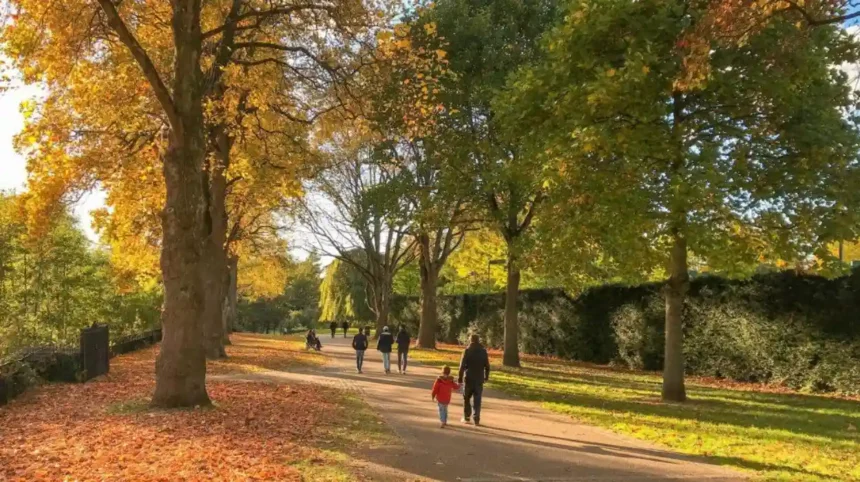
Autumn walks around Cardiff combine riverside paths, historic parks, woodland, gardens, wetlands and urban green spaces. From the tree-lined routes of Bute Park and Roath Park to the historic grounds of St Fagans and the Cardiff Bay waterfront, the city provides varied walking environments throughout the season.
- Why are autumn walks around Cardiff popular?
- Which Cardiff parks are best for autumn walking?
- What makes the River Taff and Taff Trail suitable for autumn walks?
- Where can you find historic autumn walks in Cardiff?
- Which Cardiff Bay routes work well in autumn?
- How can walkers explore woodland and nature around Cardiff?
- How should you prepare for an autumn walk around Cardiff?
- How can you combine several autumn walks into a Cardiff itinerary?
- What makes Cardiff’s autumn walking network important for the future?
Cardiff has an extensive network of parks, public rights of way and green corridors. Cardiff Council maintains a dedicated network of parks and green spaces, while its Rights of Way Improvement Plan sets out long-term priorities for walking accessibility, circular routes and public paths.
Autumn is particularly suitable for exploring these landscapes because deciduous trees produce seasonal colour, daylight remains sufficient for daytime walks, and many routes connect directly with neighbourhoods, heritage attractions and public transport corridors.
Why are autumn walks around Cardiff popular?
Autumn walks around Cardiff are popular because the city combines mature trees, rivers, lakes, woodland, historic gardens and waterfront paths within an accessible urban area, giving walkers varied landscapes without requiring long-distance travel beyond the city.
Cardiff’s walking environment is shaped by its geography. The River Taff runs through the western side of the city and connects northern communities with the city centre and Cardiff Bay. The River Ely forms another important green corridor, while the Rhymney River and Severn Estuary influence eastern and southern landscapes.
The city’s parks provide additional walking environments. Cardiff Council operates a substantial portfolio of parks, gardens, recreation grounds and open spaces. Its parks service provides information on local parks, play areas, trees and green-space management.
Autumn also changes the visual character of these locations. Trees such as maple, sweet gum, oak and other deciduous species display seasonal foliage. St Fagans National Museum of History specifically identifies its sweet gum as having outstanding autumn colour in its tree-walk material.
The combination of natural and built environments makes Cardiff suitable for short urban walks and longer connected routes. Walkers can move from historic districts into parks, follow riverside paths, visit gardens and continue towards Cardiff Bay.
Which Cardiff parks are best for autumn walking?
Bute Park, Roath Park, Llandaff Fields, Victoria Park and Thompson’s Park provide established autumn walking environments, combining mature trees, maintained paths, open lawns, water features and connections with surrounding Cardiff neighbourhoods and attractions.
Bute Park is one of Cardiff’s principal central green spaces. Its position beside Cardiff Castle and the River Taff makes it particularly accessible for visitors staying in the city centre. The park forms part of a wider riverside walking environment extending north towards Blackweir and beyond.
The central location also allows walkers to combine a park visit with Cardiff Castle, the city centre and nearby civic architecture. Cardiff Council describes Cardiff Castle as a major heritage attraction surrounded by parks, with history spanning approximately 2,000 years.
Roath Park provides a different autumn setting. The park includes Roath Park Lake, botanical gardens, recreational areas and landscaped grounds. Cardiff Council’s historic records document Roath Park Lake, Roath Park Botanic Garden, Roath Park Pleasure Garden and Roath Park Wild Gardens as distinct components of the city’s parks system.
The park’s mature vegetation gives autumn walkers opportunities to see seasonal foliage around the lake and landscaped areas. The lake also creates a clear walking landmark, making the route easier to follow than open countryside paths.
Llandaff Fields provides another riverside-adjacent walking environment. The open space sits close to Llandaff, Pontcanna and the River Taff corridor. Its location allows walkers to combine park walking with a route towards Llandaff Cathedral and the surrounding historic area.
Thompson’s Park, also known historically as Sir David’s Field, forms another green-space option. Cardiff’s 1938 parks inventory records it among the city’s established parks.
Victoria Park provides a further option in western Cardiff. Its established landscaping, paths and open recreational areas create a practical route for local autumn walking.
These parks differ in scale and character. Bute Park is strongly connected with the city centre and River Taff. Roath Park centres on a lake and gardens. Llandaff Fields provides broad open space. Thompson’s Park and Victoria Park provide neighbourhood-based walking environments.
What makes the River Taff and Taff Trail suitable for autumn walks?
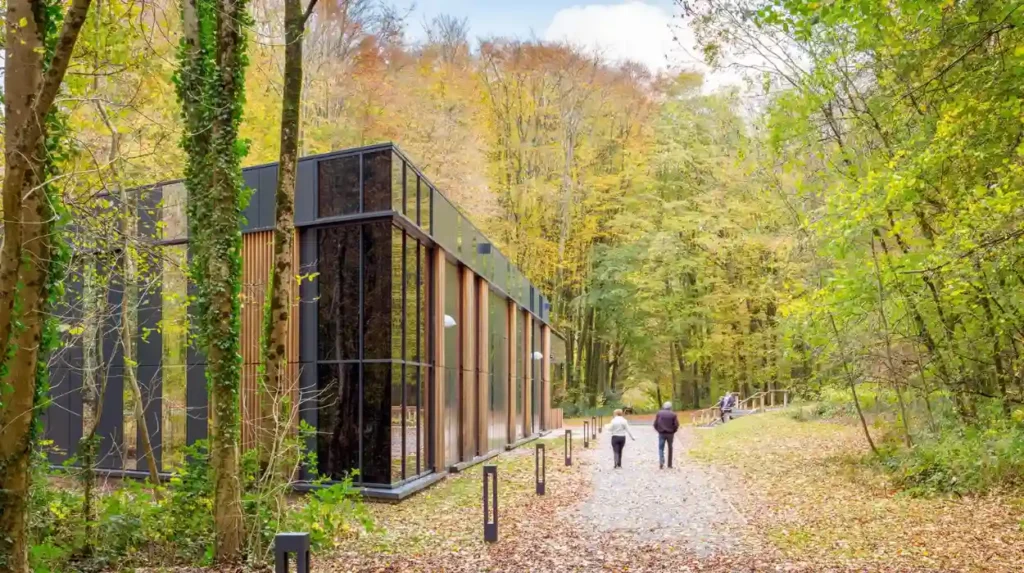
The River Taff provides one of Cardiff’s most important walking corridors, linking northern green spaces with central Cardiff and Cardiff Bay while offering riverside scenery, mature vegetation, bridges, parks and connections with established urban walking routes.
The Taff corridor is significant because it connects several different landscapes within one continuous geographical system. Walkers can encounter riverside vegetation, urban architecture, sports grounds, parks and historic sites along the route.
The Taff Trail is a long-distance walking and cycling route following the River Taff between Cardiff and the wider South Wales valleys. Within Cardiff, sections provide practical walking opportunities without requiring visitors to complete the entire trail.
Bute Park provides one of the strongest starting points for exploring the urban section. The route can also connect with Llandaff Fields and Llandaff, creating a longer riverside outing.
Autumn conditions change the appearance of the river corridor. Fallen leaves cover sections of paths, while deciduous trees along the river produce seasonal colour. River levels also respond to rainfall, making weather awareness important.
Cardiff Council’s flooding guidance identifies floodplains and other green open spaces that are designed to accommodate high river levels. The Council also advises people to follow flooding guidance during periods of heavy rainfall.
This information is relevant to autumn walking because rainfall can affect riverside conditions. Walkers should check weather and flood warnings before using low-lying sections after prolonged heavy rain.
The Taff corridor also benefits from Cardiff’s wider active-travel planning. Cardiff Council’s cycleway programme identifies routes connecting the city centre with Llandaff and other parts of the city, supporting a broader network of active travel connections.
For walkers, the importance of the Taff corridor extends beyond scenery. It provides a logical route between parks, neighbourhoods, heritage sites and central Cardiff.
Where can you find historic autumn walks in Cardiff?
St Fagans National Museum of History provides one of Cardiff’s strongest heritage walking environments, with historic buildings, formal gardens, mature trees, woodland areas and a dedicated one-kilometre tree walk highlighting species and seasonal landscape features.
St Fagans National Museum of History occupies the grounds of St Fagans Castle on the western side of Cardiff. St Fagans Castle is a Grade I listed Elizabethan manor house. The museum opened to the public on 1 July 1948 after the Earl of Plymouth donated the castle and grounds to the people of Wales.
The grounds contain several historic garden environments. These include the Italian Garden, which was laid out in 1902 and restored in 2003, alongside a thyme garden, fish ponds, fountains, a mulberry grove, vinery and Rosery.
The site also provides a dedicated Tree Walk measuring approximately one kilometre. The official guide identifies individual trees using Welsh, English and Latin names. The route includes sweet gum, hickories, Norway maple and mature pine trees.
The sweet gum is particularly relevant to autumn walking because the Museum’s guide specifically identifies its strong autumn colour. This makes the Tree Walk a useful route for visitors interested in identifying tree species rather than simply viewing seasonal foliage.
The historic gardens also demonstrate how landscape design changed over time. The Rosery was originally planned in 1898 by Hugh Pettigrew, St Fagans’ head gardener. The original design contained winding grass paths, climbing roses and a canal with water lilies and ornamental fish. The Museum restored the original design from 1998 onwards.
St Fagans also provides practical walking information. Museum Wales states that its grounds contain uneven paths, steps, slopes and potentially slippery surfaces because of the site’s historic character.
The museum’s outdoor grounds include quieter wooded areas towards Garreg Fawr and Llys Llywelyn, as well as the Castle gardens.
Entry to St Fagans is free, although charges apply to some events and activities. Standard opening hours are currently 10am to 5pm throughout the week, excluding Christmas closure arrangements.
This combination of heritage, horticulture and woodland makes St Fagans particularly useful for an autumn walking itinerary.
Which Cardiff Bay routes work well in autumn?
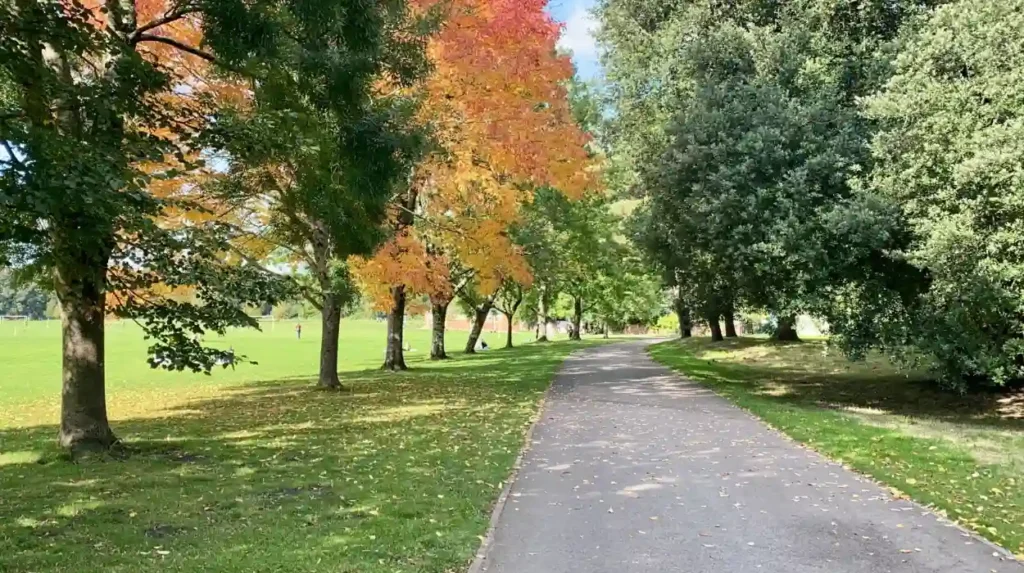
Cardiff Bay offers a contrasting autumn walking environment with waterfront paths, the Cardiff Bay Barrage, open views, modern architecture and connections between Cardiff Bay, the city centre and Penarth through established walking infrastructure.
Cardiff Bay occupies a large former dockland area south of the city centre. Its transformation from an industrial port landscape into a mixed residential, cultural, leisure and waterfront district created extensive public spaces for walking.
The Cardiff Bay Barrage is a major feature of this landscape. It separates Cardiff Bay from the Severn Estuary and provides a pedestrian connection between Cardiff and Penarth. Cardiff Council’s Rights of Way Improvement Plan records that a bridge installed on the barrage in 2008 created an important connection between Penarth and Cardiff Bay.
The Barrage therefore provides a distinctive autumn route. Instead of woodland foliage, walkers experience open water, estuary views, engineered waterfront structures and changing weather conditions.
The route is also useful for visitors who want a predominantly level urban walk. Cardiff Council lists the Bay Circular Walk at Cardiff Barrage as an established location.
Autumn walking around Cardiff Bay requires attention to wind and rainfall. The waterfront has fewer natural wind barriers than woodland routes. Weather conditions can therefore feel different from sheltered parks such as Bute Park.
Cardiff Bay also connects with major cultural landmarks. The Wales Millennium Centre, Senedd Cymru, Pierhead and Mermaid Quay form part of the wider waterfront environment.
The Bay is particularly effective for combining walking with public transport. Cardiff Council’s transport planning includes a city-centre-to-Cardiff-Bay cycleway connection, reflecting the importance of the corridor within the city’s active-travel network.
Walkers seeking autumn scenery rather than dense woodland can therefore choose Cardiff Bay for a different seasonal experience. The main attraction is the relationship between water, architecture, open space and the changing autumn sky.
How can walkers explore woodland and nature around Cardiff?
Woodland and nature walks around Cardiff include St Fagans grounds, Forest Farm, river corridors and peripheral green spaces, where mature vegetation, wildlife habitats, open meadows and seasonal foliage create varied autumn environments close to the urban area.
Cardiff’s green infrastructure extends beyond formal parks. River corridors, nature reserves, woodland areas and open countryside around the city’s edge create additional walking environments.
Forest Farm forms an important natural landscape in north-west Cardiff. The site is associated with the River Taff and Ely Valley landscape and provides a different walking environment from formally landscaped city parks.
Natural areas are particularly valuable during autumn because seasonal change affects vegetation, leaf colour and wildlife activity. Walkers can encounter deciduous woodland, grassland, hedgerows and water-associated habitats within relatively short distances.
St Fagans also provides woodland walking within a managed heritage landscape. Museum Wales identifies wooded areas around Garreg Fawr and Llys Llywelyn as quieter parts of the grounds.
The distinction between a formal park and a nature-focused route is important. Formal parks generally have maintained paths, landscaped gardens and recreational facilities. Nature areas prioritise habitat, vegetation and ecological processes.
Autumn walkers should remain on designated paths where routes pass through sensitive habitats. Dogs should remain under control, and visitors should avoid disturbing wildlife, fungi, plants and fallen timber.
Wet conditions also require additional care. Leaf litter can conceal uneven ground, roots and stones. Mud increases on unpaved routes after rainfall. Waterproof footwear provides better protection than ordinary trainers on woodland and grass routes.
Cardiff Council’s rights-of-way planning also recognises accessibility as a long-term priority. The Council’s plan includes improvements such as removing stiles where possible and addressing steps and surface conditions on public paths.
Nature walking around Cardiff therefore provides both seasonal scenery and access to urban biodiversity. The city offers a network rather than one single walking landscape.
How should you prepare for an autumn walk around Cardiff?
Successful autumn walking in Cardiff requires suitable footwear, layered clothing, weather checks, route planning, daylight awareness and attention to river or slippery conditions, particularly on woodland paths, grass, slopes and riverside sections after rainfall.
Autumn weather in Cardiff changes quickly. Rainfall can make grass, mud, steps and woodland paths slippery. River levels can also increase after heavy rainfall. Cardiff Council advises checking weather forecasts and flood warnings when heavy rain affects the city.
Footwear should match the route. Trainers suit maintained urban paths during dry conditions. Walking shoes or boots provide stronger grip on woodland, grass and uneven ground.
Clothing should use layers. A waterproof outer layer provides protection from rain and wind, while additional layers allow walkers to adjust to temperature changes.
Daylight is another important factor. Autumn days become progressively shorter from September through November. Walkers planning longer routes should begin early enough to complete unfamiliar sections during daylight.
Route selection should also account for terrain. Bute Park and many central urban paths provide relatively straightforward walking. St Fagans contains steps, slopes and uneven surfaces in some areas. Museum Wales specifically highlights slippery surfaces and trip hazards within its grounds.
Accessibility varies between routes. St Fagans provides accessible routes across much of its site, but the historic character of some areas creates uneven surfaces and access limitations.
Navigation is easier when walkers select routes with clear landmarks. Lakes, rivers, bridges, castles and major roads provide useful reference points. Mobile mapping applications provide additional assistance, but walkers should not rely exclusively on a phone in poor weather.
Autumn walking also requires responsible environmental behaviour. Visitors should use bins where available, avoid damaging vegetation and leave natural features in place.
Dogs should be kept under control, particularly near roads, livestock, wildlife habitats and busy public spaces.
The most important preparation principle is route matching. A short park circuit requires different equipment from a longer riverside or woodland walk. Cardiff’s variety of walking environments makes this route-specific approach practical.
Explore More Area Guide
Cardiff Christmas Lights Guide: Best Displays in Cardiff 2026
Exploring Quiet Walks in Llandaff: Scenic Trails and Local Heritage in Cardiff (2026)
How can you combine several autumn walks into a Cardiff itinerary?
A Cardiff autumn walking itinerary can combine central parks, riverside paths, heritage landscapes and waterfront routes, allowing visitors to experience different environments across one day while keeping individual walking sections manageable and connected by public transport.
A central itinerary can begin around Cardiff Castle and continue through Bute Park. The route provides immediate access to mature trees, the River Taff and central Cardiff.
From Bute Park, walkers can continue north along the Taff corridor or return towards the city centre. The riverside environment provides a natural transition between urban streets and green space.
A second itinerary can focus on eastern Cardiff. Roath Park provides a lake-centred walking environment with landscaped gardens and mature vegetation. The surrounding residential neighbourhoods provide additional routes for visitors who want a longer urban walk.
A western itinerary can focus on Llandaff and St Fagans. Llandaff combines historic architecture and riverside green space, while St Fagans provides a dedicated heritage landscape with gardens, woodland and the one-kilometre Tree Walk.
A southern itinerary can focus on Cardiff Bay and the Barrage. This route provides open waterfront scenery rather than dense tree cover. The Barrage also creates a connection towards Penarth.
These routes demonstrate why Cardiff works well for seasonal walking. The city does not depend on one large countryside attraction. Its walking experience is distributed across parks, rivers, heritage grounds and waterfront infrastructure.
Public transport and active-travel connections also support this approach. Cardiff Council’s network planning connects the city centre with destinations including Roath Park, Llandaff and Cardiff Bay.
Visitors should check current opening arrangements before visiting managed sites such as St Fagans. Museum Wales publishes current opening information and event details on its official website.
What makes Cardiff’s autumn walking network important for the future?
Cardiff’s autumn walking network supports recreation, active travel, access to green space, heritage appreciation and urban biodiversity, while long-term rights-of-way and transport planning continue to strengthen connections between neighbourhoods, parks, rivers and major destinations.
Walking infrastructure has significance beyond leisure. Cardiff Council’s Rights of Way Improvement Plan 2020–2030 identifies accessibility, circular walks and improvements to public rights of way as important elements of the city’s walking network.
The plan records improvements to accessibility, including removing stiles where practical and installing steps or addressing surface conditions on routes with challenging gradients. These measures support wider access to outdoor recreation.
Cardiff’s active-travel planning reinforces the same principle. The Council’s cycleway programme includes routes between the city centre and Roath Park, Llandaff, Cardiff Bay and other destinations.
Green spaces also have an environmental role. Trees provide habitat, contribute to urban biodiversity and influence the character of public spaces. Cardiff Council maintains information about trees and park management as part of its parks service.
The seasonal value of these spaces therefore extends beyond autumn colour. Parks and walking corridors remain useful throughout the year for recreation, active travel and contact with nature.
Climate and rainfall also make responsible route management important. Cardiff Council’s flood guidance recognises the role of floodplains and green spaces in managing high water levels.
For visitors, the result is a city where autumn walking can combine natural landscapes with historic and modern infrastructure. Bute Park provides a central riverside setting. Roath Park provides lake and garden scenery. St Fagans provides historic gardens and woodland. Cardiff Bay provides waterfront walking. Llandaff and the Taff corridor connect green space with historic Cardiff.
These environments create a broad and resilient walking offer. The routes remain relevant because they serve residents, tourists, families, walkers and active-travel users throughout the year.
Cardiff’s autumn walks are therefore best understood as part of the city’s wider green and walking infrastructure. Seasonal foliage provides one reason to visit, while parks, rivers, heritage landscapes, biodiversity and connected public paths provide the long-term value.
What are the best autumn walks around Cardiff?
The best autumn walks around Cardiff include Bute Park, Roath Park, the Taff Trail, St Fagans National Museum of History, Llandaff Fields and Cardiff Bay. Each offers a different combination of trees, rivers, gardens, heritage sites and waterfront scenery.