Cardiff has a substantial network of public parks, historic gardens, recreation grounds, playing fields and nature-focused green spaces. These places form an important part of the city’s landscape during summer, providing space for walking, sport, family recreation, wildlife observation, informal leisure and outdoor events.
- What makes Cardiff’s parks important during summer?
- How did Cardiff develop its historic public park network?
- Why is Bute Park one of the best summer parks in Cardiff?
- Why is Roath Park especially suitable for summer activities?
- What can families do at Victoria Park during summer?
- Which Cardiff parks are best for walking, sport and quieter recreation?
- What summer activities are available across Cardiff’s parks?
- How do Cardiff’s parks support health, wellbeing and biodiversity?
- How should visitors choose the right Cardiff park for a summer day?
- How can visitors use Cardiff parks responsibly during summer?
- Why will Cardiff’s parks remain important to the city’s future?
Cardiff Council’s Outdoor Cardiff service currently identifies 22 Green Flag-awarded sites, comprising 20 council-managed and two privately managed locations. The network includes major destinations such as Bute Park, Roath Park, Victoria Park, Llandaff Fields, Thompson’s Park, Grange Gardens, Heath Park and Parc Cefn Onn.
The city’s parks also have considerable historical value. Cardiff Council states that 18 Cardiff parks and gardens appear within the Cadw Register of Landscapes, Parks and Gardens of Special Historic Interest in Wales, including 12 public parks.
Summer is particularly suitable for exploring this network because longer daylight hours support walking, outdoor recreation, organised sport, gardening displays and nature trails. The best park depends on the visitor’s purpose. Bute Park suits central-city walking and heritage. Roath Park combines a lake with gardens and recreation. Victoria Park is strongly equipped for families. Llandaff Fields provides extensive open space and sporting facilities.
What makes Cardiff’s parks important during summer?
Cardiff’s summer parks combine historic landscapes, open lawns, lakes, gardens, sports facilities, playgrounds, wildlife habitats, and walking routes. The city has 22 Green Flag-awarded sites, including 20 council-managed and two privately managed locations, providing visitors and residents extensive summer choice.
Cardiff’s parks serve several functions at the same time. They provide recreational land, protect historic landscapes, support biodiversity and create accessible outdoor spaces within an urban environment.
The Green Flag Award recognises parks and green spaces against management and quality criteria. Cardiff’s 22 awarded sites demonstrate the scale of the city’s managed green-space network. The sites range from major historic landscapes to neighbourhood parks and nature-focused locations.
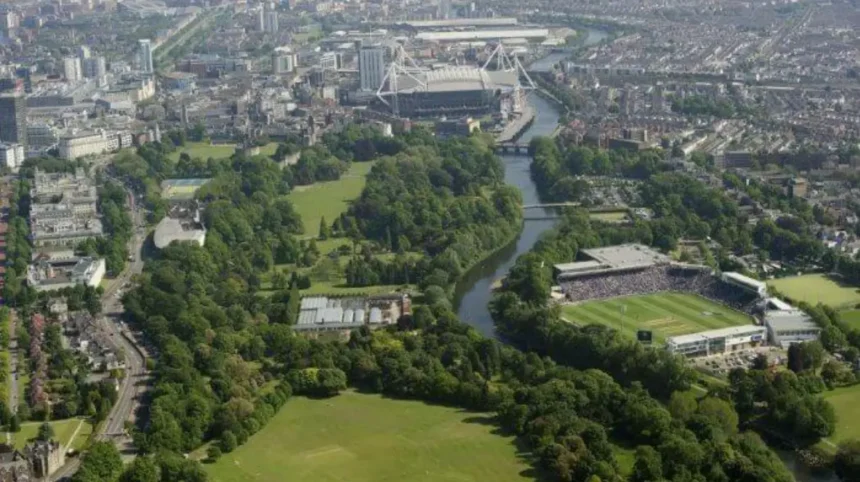
Summer visitors also benefit from Cardiff’s location. Several major parks sit close to established residential areas and the city centre. Bute Park is immediately north of Cardiff Castle. Roath Park extends through the north-eastern part of the city. Victoria Park serves Canton and surrounding neighbourhoods. Llandaff Fields forms part of a larger green corridor alongside the River Taff.
The parks also support different visitor needs. Families require playgrounds, toilets and safe recreational areas. Sports users require pitches, courts and open fields. Walkers require connected paths and mature landscapes. Nature visitors require gardens, woodland, wildlife habitats and water features.
This diversity means a summer parks guide is more useful when it considers facilities and landscape character rather than simply listing parks.
How did Cardiff develop its historic public park network?
Cardiff’s park system developed through Victorian and early twentieth-century public recreation planning. Roath Park opened in 1894, Thompson’s Park opened publicly in 1891, Victoria Park opened in 1897, and Llandaff Fields became public recreation land in 1898, expanding recreation.
The development of Cardiff’s parks reflects the growth of the city during the industrial and Victorian periods. Increasing urbanisation created demand for public recreation grounds, landscaped parks and open spaces.
Thompson’s Park is one of the earliest examples. The site began as a private garden and opened to the public in 1891 under its owner, Charles Thompson. It was originally known as Sir David’s Field and was enlarged and landscaped by garden designer Sir William Goldring around 1895. Thompson later gave the park to Cardiff Corporation in 1911.
Roath Park opened in 1894 and became one of Cardiff’s earliest public parks. Its Victorian layout remains recognisable today. The park was designed with separate areas for horticulture, recreation and landscape enjoyment.
Victoria Park opened in 1897 in Canton. Its historic character includes a cast-iron bandstand, ornamental features and a Grade II listed landscape. The original bandstand was installed in February 1897, while a recast replica was installed in 1996.
Llandaff Fields was acquired by Cardiff Corporation as playing fields in 1898. The site forms part of an extensive Grade II listed parkland network extending north from central Cardiff along both sides of the River Taff.
Cardiff’s historic parks therefore represent more than recreational land. Their layouts, structures, trees, gardens and water features preserve evidence of earlier approaches to urban planning and public recreation.
Why is Bute Park one of the best summer parks in Cardiff?
Bute Park is Cardiff’s central flagship green space, beside Cardiff Castle and the River Taff. It contains an arboretum, archaeological remains, nature-conservation areas, walking routes, and event spaces, making it suitable for summer walks, recreation, heritage visits, and relaxation.
Bute Park occupies a highly accessible position between central Cardiff and the River Taff. Its location makes it particularly useful for visitors combining outdoor recreation with city-centre attractions.
The park was formerly the Victorian pleasure ground associated with Cardiff Castle. Today it contains significant historic and archaeological features, including the remains of Blackfriars Friary, which is a scheduled ancient monument. The site was excavated during the nineteenth century and interpreted through surviving archaeological evidence and Victorian presentation.
Bute Park is also recognised as a Grade I historic park on the Cadw Register of Landscapes, Parks and Gardens of Special Historic Interest in Wales. This designation reflects its historic landscape importance.
Its arboretum adds an important botanical dimension. Mature trees create varied landscapes across the park and support wildlife. The combination of open grassland, tree cover, river scenery and formal landscape features creates different walking environments within one central location.
The park also supports wildlife exploration. Outdoor Cardiff provides a dedicated Wildlife Explorer Trail for Bute Park, allowing visitors to investigate plants and animals within the landscape.
For summer visitors, Bute Park works particularly well for walking, short recreational visits, heritage exploration and combining green space with central Cardiff attractions.
Why is Roath Park especially suitable for summer activities?
Roath Park is Cardiff’s strongest choice for combining a lake, gardens, wildlife, sport, and family recreation. Its 30-acre man-made lake supports fishing and boating, while the Botanic Garden, Wild Garden, playgrounds, sports areas, and conservatory create summer experiences for visitors.
Roath Park is one of Cardiff’s most diverse public parks. Its landscape extends along the Nant Fawr and contains several distinct areas.
The centrepiece is Roath Park Lake, a 30-acre man-made lake formed by a dam. The lake was created for amenity rather than drinking-water supply. Cardiff Council remains responsible for the publicly owned dam and undertakes statutory inspections under the Reservoirs Act 1975.
The lake supports fishing and boating. Pleasure boating has been part of Roath Park since the park opened in 1894. Historical records document boat hire, landing-stage development and later motor launches. Modern visitors can hire pedalos during the seasonal boating period.
The Scott Memorial Lighthouse provides one of the park’s most recognisable landmarks. The park also has a historical connection with Captain Robert Falcon Scott’s Antarctic expedition. The Terra Nova left Cardiff Docks on 15 June 1910, with Cardiff serving as its home port.
South of the lake, the Botanic Garden contains extensive plant collections and the Roath Park Conservatory. The conservatory includes palms, banana plants, orchids and other unusual species, alongside a waterfall and pond. During summer, the published opening hours are 10:30am to 4pm daily.
The Wild Garden provides winding paths, wildflowers and mature trees. The wider park also includes playgrounds, tennis courts, sports fields, a trim trail and other recreational facilities.
Roath Park is therefore suitable for visitors seeking several activities during one summer outing without travelling between separate locations.
What can families do at Victoria Park during summer?
Victoria Park provides a practical summer destination for families, with a playground, seasonal splashpad, tennis courts, multi-use games area, refreshment kiosk, toilets, and historic features. Its Grade II listed landscape provides a structured setting for everyday outdoor recreation throughout summer.
Victoria Park is located in Canton and has been part of Cardiff’s public park network since 1897. Its facilities make it particularly relevant to family visits during warmer months.
The park’s splashpad is one of its most distinctive summer facilities. It contains 33 water-play features, including sprays, jets, a tipping water bucket and a tunnel. The facilities are divided into zones designed for toddlers, juniors and families.
The splashpad operates seasonally, with published general sessions during term time and school holidays. Relaxed sessions are also provided for children with additional learning needs and their families. These sessions are designed to create a calmer environment and require advance booking.
The park also includes a children’s playground designed for children up to around 12 years old. Tennis courts and a multi-use games area provide additional opportunities for physical recreation.
Victoria Park has significant heritage features. It is a Grade II listed historic park on the Cadw Register. Its cast-iron bandstand dates from the park’s original period, while the current structure is a recast replica installed in 1996.
The park also contains the bronze Billy the Seal sculpture, created in 1997 by artist David Petersen. The sculpture recalls the former Victoria Park Zoo and its well-known seal.
For families, Victoria Park offers a concentrated combination of play, water recreation, sport, refreshments and heritage within one compact landscape.
Which Cardiff parks are best for walking, sport and quieter recreation?
Llandaff Fields, Thompson’s Park, and Grange Gardens provide distinct summer experiences across Cardiff. Llandaff Fields supports sport and family play, Thompson’s Park focuses on ornamental landscape and heritage, while Grange Gardens combines recreation, community facilities, and memorial features for visitors.
Llandaff Fields provides extensive open space within Cardiff’s River Taff green corridor. Its mature tree-lined pedestrian avenues cross large grassed areas. Facilities include sports pitches, tennis courts, a children’s playground and a former bowling green now used by Llandaff Croquet Club.
The site is particularly appropriate for active recreation. Visitors can combine walking with informal outdoor activity, while organised sports users can book pitches through Cardiff’s Parks Service.
Thompson’s Park has a different character. Its ornamental gardens provide seating and attractive walking routes, while the upper section contains a recreation field. The park’s Grade II listed status and historic fountain sculpture provide additional heritage interest.
The fountain sculpture, known as Joyance, was created by Sir William Goscombe John. Its presence contributes to the park’s historic landscape character.
Grange Gardens provides another neighbourhood-focused option. Its facilities include a children’s playground, a 3G pitch, community café and toilets. The site also contains a Grade II listed war memorial and has been designated as a Centenary Field associated with Fields in Trust.
These parks demonstrate that summer recreation in Cardiff is not limited to major destinations. Smaller and medium-sized parks provide accessible opportunities for walking, play, sport, social activity and relaxation.
What summer activities are available across Cardiff’s parks?
Cardiff parks support activities ranging from walking and running to tennis, boating, playground use, wildlife exploration, picnicking, and recreation. Roath Park provides pedalo hire and sports facilities, Victoria Park provides tennis and splashpad facilities, while Llandaff Fields provides sports pitches.
Walking is one of the simplest ways to use Cardiff’s parks. Bute Park, Roath Park, Llandaff Fields and other green spaces provide paths through trees, gardens, open fields and waterside landscapes.
Wildlife exploration is another established activity. Outdoor Cardiff provides Wildlife Explorer Trails at locations including Bute Park, Roath Park, Heath Park, Forest Farm, Howardian Local Nature Reserve and Parc Tredelerch. These trails introduce visitors to plants, animals and different habitats.
Sports facilities vary between parks. Roath Park includes tennis courts, sports fields and a trim trail. Victoria Park includes tennis courts and a multi-use games area. Llandaff Fields provides sports pitches and tennis courts.
Water-based recreation is concentrated at Roath Park. The lake provides seasonal boating facilities, while the surrounding landscape provides walking and wildlife observation.
Children’s recreation is available at several major parks. Playgrounds are located at Roath Park, Victoria Park, Llandaff Fields and other Cardiff sites. Victoria Park adds the seasonal splashpad as a dedicated water-play facility.
Summer visitors should check individual park information before travelling because facilities such as splashpads, boating, cafés and event spaces operate according to seasonal schedules.
How do Cardiff’s parks support health, wellbeing and biodiversity?
Cardiff’s parks provide public-value functions beyond recreation. Public Health Wales identifies green spaces as places for activity, play, nature access, and mental wellbeing, while Welsh Government research links nature projects with wellbeing, physical activity, social connection, and community engagement outcomes.
Public parks form part of the wider built and natural environment that influences health. Public Health Wales states that access to green spaces and opportunities for walking and cycling contribute to healthier places and support physical and mental wellbeing.
The evidence also relates to social connection. The Welsh Government’s evaluation of the Local Places for Nature programme, covering 2020 to 2025, found indications that community nature projects supported engagement with local green spaces, wellbeing, physical activity and social connections.
Biodiversity is another important function. Trees, flowering plants, grassland, water bodies and woodland areas provide habitats for insects, birds and other wildlife. Cardiff’s Wildlife Explorer Trails reflect this ecological dimension by directing visitors towards species and habitats across the city’s green-space network.
Urban trees also provide environmental functions. Natural Resources Wales has supported Coed Caerdydd, a Cardiff greening project involving Cardiff Council Parks and other public-sector partners. The project includes tree-planting opportunities and green walls, with objectives linked to ecosystem resilience, environmental risk and healthier places.
These functions make parks important infrastructure rather than simply leisure destinations. They contribute to physical activity, nature access, social interaction, environmental quality and urban resilience.
How should visitors choose the right Cardiff park for a summer day?
Summer visitors should choose parks according to access, facilities, activity type, opening arrangements, weather, and transport. Bute Park suits central walking and heritage visits; Roath Park suits lakeside recreation; Victoria Park suits families; Llandaff Fields suits sport and open-space activities.
Visitors seeking a central location should start with Bute Park. Its position beside Cardiff Castle and the River Taff makes it convenient for combining a park visit with central Cardiff attractions. Its historic landscape, arboretum and archaeological features add additional reasons to explore the site.
Visitors looking for a lake and gardens should choose Roath Park. The 30-acre lake, Botanic Garden, Wild Garden, conservatory, playgrounds and sports facilities provide a broad range of activities.
Families seeking water play should consider Victoria Park, particularly during splashpad operating periods. The park also provides playgrounds, tennis, games facilities, toilets and refreshments.
Visitors interested in large open areas and sport should consider Llandaff Fields. Its sports pitches, tennis courts, mature tree avenues and playground provide a combination of active and informal recreation.
Visitors seeking a quieter historic garden environment should consider Thompson’s Park. Its ornamental gardens, seating, paths and historic features provide a different experience from the larger activity-focused parks.
The best choice also depends on transport. Cardiff Council is developing a network of cycleways connecting communities with major destinations. Cycleway 6, for example, connects the city centre towards Plasnewydd, Penylan, Cyncoed and Roath Park.
Checking official opening times and facility information is essential because individual parks have different operating arrangements.
Explore More Area Guide
Best Autumn Walks Around Cardiff: Parks, Rivers & Trails | Cardiff 2026
Cardiff Christmas Lights Guide: Best Displays in Cardiff 2026
How can visitors use Cardiff parks responsibly during summer?
Responsible summer park use means protecting vegetation, respecting wildlife, following local rules, using designated facilities, keeping shared paths clear, disposing of waste properly, and checking official updates before activities such as boating, splashpad use, sports bookings, or visits during unusual weather conditions.
Summer increases pressure on popular parks because longer daylight encourages more outdoor visits. Responsible use helps protect landscapes and keeps facilities available for different groups.
Visitors should use designated paths where appropriate and avoid damaging planted areas. This is particularly important in ornamental gardens, botanical collections and wildlife habitats.
Wildlife should be observed without unnecessary disturbance. Feeding rules vary by location, and visitors should follow signs and official guidance rather than assuming that feeding birds or other animals is permitted.
Sports facilities should be used according to booking requirements. Llandaff Fields sports pitches, for example, are available through Cardiff’s Parks Service booking arrangements.
Visitors should also account for weather. Cardiff summers can include periods of rain as well as warm and sunny conditions. Waterproof clothing, drinking water, sun protection and appropriate footwear help visitors adapt to changing conditions.
Water safety is particularly important around Roath Park Lake. The lake is a managed reservoir and its dam is subject to statutory safety requirements under the Reservoirs Act 1975. Visitors should remain within designated recreational arrangements and follow local safety instructions.
Official park information should always take priority over older online listings because facilities, opening hours, seasonal services and access arrangements can change.
Why will Cardiff’s parks remain important to the city’s future?
Cardiff’s summer park network remains important to future urban planning because parks support active travel, biodiversity, climate resilience, recreation, and community wellbeing. Cardiff Council’s current priorities include safeguarding parks and delivering high-quality public spaces, while active-travel plans strengthen neighbourhood connections.
Cardiff’s parks form part of the city’s long-term environmental and social infrastructure. Their role extends beyond summer recreation because green spaces remain relevant throughout the year.
Cardiff Council’s 2026–2027 corporate priorities include safeguarding parks and green spaces so they remain accessible and welcoming. The council also identifies delivering high-quality parks and public spaces as a priority for creating stronger, fairer and greener communities.
Active travel strengthens the connection between parks and neighbourhoods. Cardiff’s cycleway programme is designed to connect communities with major destinations and provide continuous routes for walking and cycling.
Public Health Wales also places green infrastructure within the wider planning framework for healthy places. Its current evidence emphasises the relationship between green spaces, active travel, wellbeing and the design of neighbourhoods.
Climate resilience is another long-term consideration. Trees, vegetation and natural landscapes contribute to ecosystem resilience and help urban areas respond to environmental pressures. Cardiff’s greening initiatives demonstrate the connection between parks, trees, biodiversity and healthier urban environments.
The historical dimension is equally important. Cardiff’s 18 registered historic parks and gardens demonstrate that many green spaces have cultural and landscape value extending across generations.
For visitors, this means Cardiff’s summer parks are part of a much larger urban system. They combine recreation, heritage, nature, public health, active travel and environmental management. That combination makes the city’s parks relevant for both current visitors and future urban development.
What are the best summer parks in Cardiff?
Bute Park, Roath Park, Victoria Park, Llandaff Fields and Thompson’s Park are among Cardiff’s most notable summer parks. They offer different facilities, including walking routes, gardens, playgrounds, sports areas, historic landscapes and family recreation.