Local markets are an important part of Cardiff’s economic, social and cultural infrastructure. They connect independent traders with residents, provide accessible places to buy food and services, create opportunities for small businesses, and contribute to the identity of individual neighbourhoods.
- What are local markets and why are they important to Cardiff?
- How do Cardiff markets support independent businesses?
- How do local markets keep money circulating in Cardiff?
- How do markets create opportunities for new entrepreneurs in Cardiff?
- How do Cardiff markets strengthen neighbourhood communities?
- How do markets improve access to local food in Cardiff?
- How do Cardiff markets preserve local culture and heritage?
- How do markets contribute to Cardiff’s visitor economy?
- How do markets support Cardiff’s town-centre economy?
- How do community markets support affordability and inclusion in Cardiff?
- How do Cardiff markets connect local producers with consumers?
- How do markets support sustainable neighbourhood development?
- What challenges do Cardiff markets face?
- How can Cardiff communities continue to support local markets?
- What is the future role of local markets in Cardiff communities?
Cardiff has a diverse market tradition. The city centre is home to the historic Cardiff Market, while neighbourhood and specialist markets operate in areas such as Riverside and Roath. Cardiff also hosts temporary farmers’ markets, craft markets, food events and community-focused trading initiatives.
The role of markets extends beyond buying and selling. A successful market creates regular reasons for people to visit a particular area. That activity supports surrounding shops, cafés, hospitality businesses, transport services and other local enterprises.
Welsh Government policy also recognises the wider importance of town and city centres. Its Town Centres Position Statement describes successful centres as places where people meet, shop, live and work, while identifying economic, social, cultural and environmental wellbeing as interconnected outcomes.
For Cardiff communities, this makes local markets relevant to much more than retail. They contribute to entrepreneurship, food access, neighbourhood identity, local supply chains and the continued use of central and district commercial areas.
What are local markets and why are they important to Cardiff?
Local markets are organised trading spaces where independent businesses, producers and community organisations sell goods or services directly to customers. In Cardiff, they support local spending, entrepreneurship, food access, social interaction and neighbourhood identity.
A local market normally brings multiple traders into one accessible location. Traders can sell food, clothing, household goods, crafts, books, specialist products and prepared meals. Some markets operate permanently, while others run weekly, seasonally or as part of larger events.
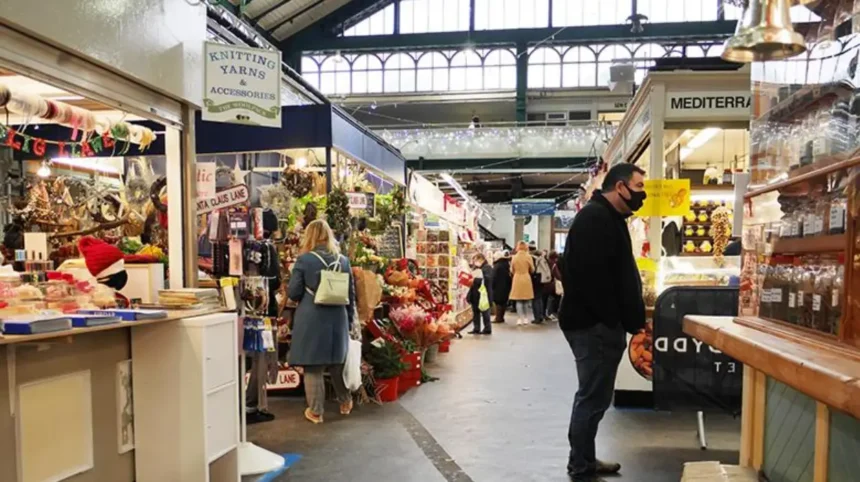
Cardiff Market is the city’s best-known permanent indoor market. Visit Cardiff states that the market has traded in some form since the 1700s and occupies a site in the city centre that has been associated with market activity for more than 100 years. The Victorian building contains independent businesses selling food, drinks, clothing, records, specialist products and services.
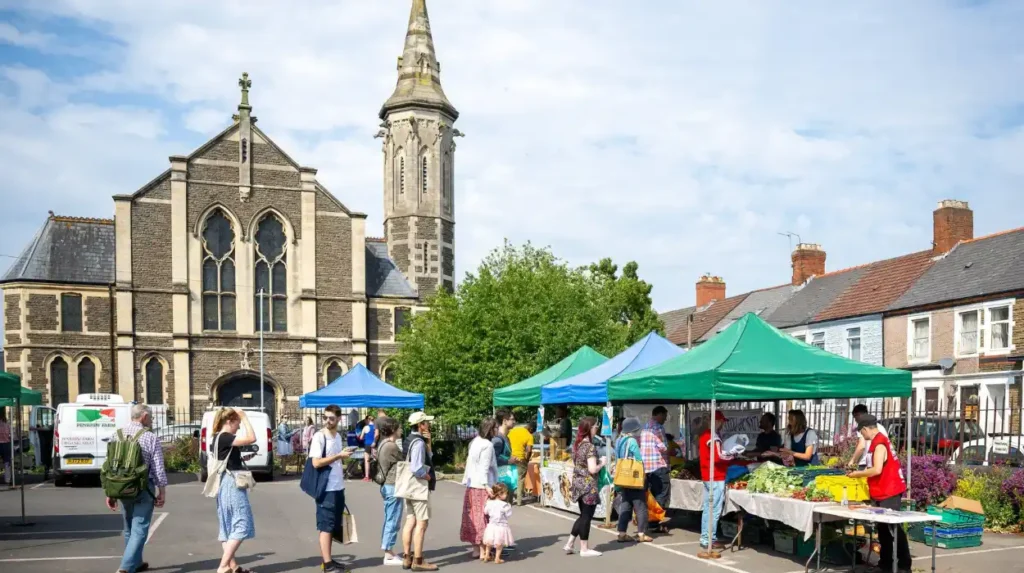
Markets also operate at neighbourhood level. Riverside Food Market takes place every Sunday beside the River Taff opposite the Principality Stadium. It was launched in 1998 and focuses on produce sold by local vendors.
Roath Market operates on Saturdays at Mackintosh Sports Club on Keppoch Street. Visit Cardiff describes it as a venue that also provides a testing ground for new products, giving traders a physical setting to introduce products to customers.
This variety gives Cardiff a market network rather than a single market destination. City-centre, neighbourhood, farmers’ and specialist markets serve different customer groups and commercial purposes.
How do Cardiff markets support independent businesses?
Cardiff markets give independent businesses accessible trading locations, direct customer contact and opportunities to test products without requiring a conventional permanent shop. This lowers some entry barriers and creates commercial visibility for entrepreneurs operating at smaller scales.
Independent trading is central to the character of Cardiff’s markets. Cardiff Market contains numerous individually operated businesses across food, retail and services. The current trader directory includes fishmongers, greengrocers, butchers, cafés, food stalls, booksellers, clothing businesses and specialist retailers.
The market environment provides direct interaction between traders and customers. A conventional online transaction separates producer and customer through a digital platform. Market trading creates immediate communication about products, prices, quality and customer preferences.
Markets also provide useful commercial testing environments. Roath Market specifically promotes its role as a testing ground for new products. This structure gives emerging food businesses and independent producers an opportunity to measure demand before committing to larger premises.
Welsh Government research published in 2025 demonstrates the wider importance of suitable commercial premises for small businesses. A survey of 196 small businesses found that 98% of recently relocated businesses and 71% of businesses still searching for premises preferred high-street locations. Accessibility, cost and tenancy conditions were among the important considerations.
Market stalls provide a different commercial model from long-term high-street leases. Traders can operate within an established destination while sharing the benefits of collective footfall.
This is particularly relevant to start-up businesses, specialist producers and entrepreneurs developing a new retail concept. A market can function as an early-stage route into physical commerce.
How do local markets keep money circulating in Cardiff?
Markets keep part of consumer spending within Cardiff by connecting customers with local traders and producers. Spending at independent stalls supports trader income and contributes to surrounding businesses, employment, services and commercial activity across market districts.
Local economic circulation occurs when customers purchase goods from businesses based within the local economy. The trader receives revenue, pays operating costs and purchases supplies or services. Some of that expenditure then reaches other businesses.
The effect is strongest when markets contain businesses that source from local or regional suppliers. Farmers’ markets provide a direct connection between producers and customers. Riverside Food Market, for example, promotes produce from local vendors and Welsh food producers.
Markets also generate secondary spending. A visitor attending a market can purchase food from a stall and then use a nearby café, shop, transport service or other local facility. The market therefore functions as part of a wider commercial destination.
Welsh Government research identifies retail as a major part of the Welsh economy. In 2023, retail employed approximately 118,000 people in Wales and contributed 5.6% of Welsh gross value added, according to research published by the Welsh Government.
Gross value added, or GVA, measures the value generated by economic activity after intermediate inputs are accounted for. Retail therefore represents a significant component of the wider Welsh economy.
The same research reported that one in six Welsh shops was empty at the time of the cited data. This demonstrates why active commercial destinations remain important to town and city-centre policy.
Markets do not solve commercial vacancy on their own. They provide one mechanism for maintaining activity, attracting visitors and supporting independent enterprise.
How do markets create opportunities for new entrepreneurs in Cardiff?
Markets provide entrepreneurs with physical selling space, customer feedback and product-testing opportunities. Cardiff’s market network supports food producers, makers, retailers and service providers by giving smaller businesses direct access to customers without requiring a conventional shop from the beginning.
Starting a conventional retail business requires premises, rent, utilities, fit-out costs, insurance and other operating expenses. A market stall operates under a different cost structure.
The model is especially relevant to businesses selling food, handmade goods, specialist products and small-batch items. Traders can assess customer response and refine pricing, packaging, product selection and presentation.
Roath Market’s stated role as a testing ground for new products illustrates this process directly.
The wider Welsh Government research into small-business premises also identifies short-term tenancy models, including pop-ups, as effective tools for demonstrating business viability and building landlord confidence.
A market provides a comparable stepping stone. A business that establishes a customer base through regular market trading can build evidence of demand before expanding into permanent premises.
This process strengthens Cardiff’s entrepreneurial ecosystem. An entrepreneurial ecosystem consists of the businesses, institutions, networks, customers, finance, skills and physical spaces that support business creation and growth.
Markets contribute one physical component of that ecosystem. They provide a place where entrepreneurs meet customers and observe other traders.
The resulting knowledge is commercially valuable. Traders receive immediate information about which products attract attention, which prices work, which locations generate demand and which customer groups respond to particular offers.
How do Cardiff markets strengthen neighbourhood communities?
Markets strengthen neighbourhood communities by creating regular meeting places where residents shop, interact and participate in local activity. Neighbourhood markets connect commercial activity with community life and reinforce the identity of areas such as Riverside, Roath and Cardiff city centre.
A market creates repeated physical contact between residents and businesses. This differs from isolated online transactions because customers and traders share the same public or community space.
Riverside Food Market demonstrates this neighbourhood role. The market operates beside the River Taff and near the Principality Stadium, while the wider Riverside and Grangetown area is described by Visit Cardiff as having a strong community character.
Roath Market provides a similar neighbourhood function. Its location at Mackintosh Sports Club places weekly market activity within an established community setting rather than relying solely on the central retail district.
Neighbourhood markets also create opportunities for residents to access products without travelling into the city centre. This supports local shopping and reduces the need for every purchase to involve a trip to a major shopping destination.
Cardiff Council recognises the importance of district centres more broadly. Its Community Shopping Centre Regeneration strategy describes community shopping centres as locations providing shops, businesses, services and community facilities within accessible distances of where people live.
Markets fit naturally into this district-centre model. They add activity to areas that already serve local residents and can strengthen the commercial function of neighbourhoods.
How do markets improve access to local food in Cardiff?
Local markets improve food access by bringing fresh produce, prepared food and specialist food businesses closer to consumers. Cardiff’s market network includes traditional greengrocers, fishmongers, butchers, bakeries, farmers’ stalls and prepared-food traders serving different household needs.
Food is one of the strongest components of Cardiff’s market economy. Cardiff Market includes businesses selling fruit and vegetables, fish, meat, bakery products, prepared meals and other food products.
Riverside Food Market focuses strongly on local and regional food production. Visit Cardiff identifies Welsh producers and businesses such as Penrhiw Farm, Pettigrew Bakeries, Ty Caws and the Welsh Picnic Pantry among market-related food businesses.
Food markets also contribute to product diversity. Customers can compare products from different traders within a single visit. This creates direct competition based on price, quality, provenance and service.
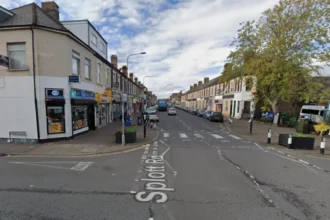
Food access also has a community dimension. Cardiff Council lists local food pantries, community fridges, food clubs and a community food market among low-cost food support services available across Cardiff. Its current information includes Splo-Down in Splott, which operates as a pay-what-you-can-afford community food market.
These initiatives demonstrate that the market model operates at different levels. Commercial farmers’ markets focus on trading and local producers. Community food markets focus on affordability and access.
Both contribute to the broader food infrastructure of Cardiff.
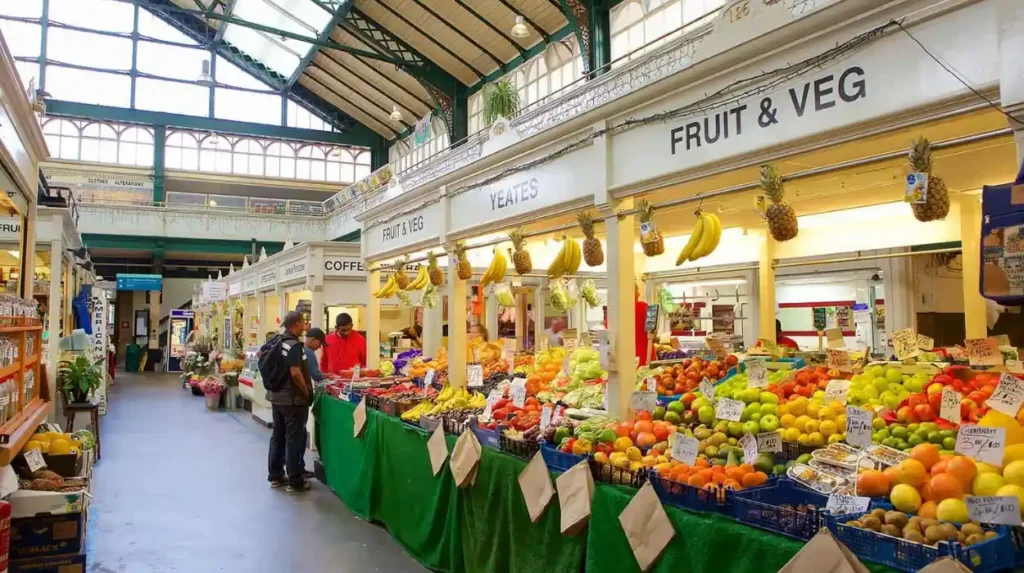
How do Cardiff markets preserve local culture and heritage?
Cardiff markets preserve local culture by maintaining historic trading traditions, supporting Welsh food producers and providing spaces for independent businesses. Cardiff Market has market roots dating to the 1700s, while contemporary markets continue to showcase Welsh food, crafts, products and cultural activity.
Cardiff’s market heritage is closely connected to the city’s commercial development. Visit Cardiff records market activity in Cardiff dating to the 1700s, with the present Victorian indoor market continuing that tradition in the city centre.
The building itself forms part of Cardiff’s architectural and commercial heritage. Its covered market structure creates a permanent environment for independent trading.
The wider city also has a strong tradition of independent retail through its Victorian and Edwardian arcades. Visit Cardiff identifies the Royal Arcade, dating from 1858, as Cardiff’s oldest arcade and the city’s first shopping centre.
Markets and arcades therefore sit within a wider historical retail landscape.
Modern market activity also supports Welsh cultural products. Cardiff Market contains traders offering traditional Welsh cuisine and locally associated products, while Cardiff’s farmers’ markets provide opportunities for Welsh producers to reach customers directly.
Events further connect markets with cultural activity. St David’s Market Nights at Cardiff Market have combined independent traders, street food and Welsh music as part of St David’s Day celebrations.
This shows how market spaces can support cultural participation alongside commercial activity.
How do markets contribute to Cardiff’s visitor economy?
Markets contribute to Cardiff’s visitor economy by giving tourists and domestic visitors distinctive places to experience local food, independent retail and Welsh products. They increase the range of activities available beyond major attractions, shopping centres and entertainment venues.
Tourism depends on a combination of attractions, accommodation, food, retail, culture and public spaces. Markets contribute to this wider visitor offer.
Cardiff Market is promoted as a major shopping destination with independent traders, Welsh cuisine, artisan coffee, street food, vintage clothing and specialist products.
Its central location places it close to major Cardiff attractions and transport connections. Visit Cardiff identifies Cardiff Market as within a five-minute walk of The Hayes area, alongside destinations such as Central Library and St David’s Dewi Sant.
Riverside Market provides a different visitor experience. It operates beside the River Taff and opposite the Principality Stadium, connecting food-market activity with Cardiff’s riverside environment and central attractions.
Markets also support food tourism. Visitors seeking Welsh produce can find specialist food traders, bakeries, cheeses, meats and other products through Cardiff’s market network. Visit Cardiff specifically promotes Cardiff Market and weekly farmers’ markets as places to find Welsh produce.
This makes markets relevant to both residents and visitors. A market can serve daily shopping needs while also functioning as a destination for people exploring Cardiff.
How do markets support Cardiff’s town-centre economy?
Markets support Cardiff’s town-centre economy by generating footfall, filling commercial space with active businesses and connecting retail with food, culture and services. Their role supports wider regeneration objectives focused on resilient, accessible and economically active city and district centres.
Town centres have faced structural changes caused by online shopping, out-of-town development, changing consumer behaviour and the withdrawal of some services. Welsh Government policy identifies these factors as major challenges for town centres across Wales.
Markets provide a form of concentrated activity. Multiple businesses operate in one location, creating a reason for people to visit regularly.
The Welsh Government’s Town Centre First policy places town centres first when considering significant new commercial, retail, education, health, leisure and public-service facilities. The policy reflects the importance of accessible, connected centres to local communities.
Cardiff’s markets complement this principle by keeping commercial activity in established central and neighbourhood locations.
Welsh Government research also found that high-street premises remain attractive to small businesses. Accessibility and cost are important factors in choosing premises, reinforcing the value of locations that already have established customer movement.
The wider policy direction remains significant. In February 2026, the Welsh Government announced an additional £30.9 million for town-centre regeneration across Wales and reported that the Transforming Towns programme had awarded more than £484 million in grant and loan funding since its launch in 2020.
Markets form one part of this wider regeneration environment. Their strongest contribution comes when they operate alongside transport, public spaces, independent shops, services, cultural venues and other town-centre uses.
How do community markets support affordability and inclusion in Cardiff?
Community markets support inclusion by creating trading environments with different price points and, in some cases, affordability-focused models. Cardiff also operates community food initiatives that use market, pantry and community-fridge structures to improve access to food for households facing financial pressure.
Market affordability depends on the individual trader and product. Markets do not automatically provide cheaper goods than supermarkets or online retailers.
Their value comes from choice and accessibility. Customers can compare different products and quantities, while specialist traders provide products that are not always available through large retailers.
Community food markets use a different model. Cardiff Council currently lists Splo-Down in Splott as a pay-what-you-can-afford community food market operating at the Oasis Centre.
Cardiff Council also lists community fridges and food pantries in areas including Cathays, Rumney, Llanedeyrn, Pentwyn, Ely and Riverside. These services demonstrate how community-based food distribution can operate alongside the conventional retail market.
Accessibility also involves location. Cardiff contains neighbourhoods spread across the north, south, east and west of the city. Community markets situated closer to residential areas reduce dependence on a single central shopping destination.
Cardiff Council’s district-centre strategy specifically identifies accessibility to shops, businesses, services and community facilities as part of sustainable neighbourhood development.
This makes local market activity relevant to social infrastructure as well as commercial infrastructure.
How do Cardiff markets connect local producers with consumers?
Markets create direct channels between producers and consumers by allowing businesses to present products, explain provenance and receive customer feedback in person. Farmers’ and food markets strengthen connections between Cardiff shoppers and producers across Wales.
Direct selling reduces the distance between production and consumption. A producer can explain where a product comes from, how it was made and how it should be used.
Riverside Food Market was established specifically as a farmers’ market and continues to feature produce from local vendors.
Visit Cardiff also highlights Welsh producers and food businesses associated with Riverside Market, including farms, bakeries, cheesemakers and specialist food producers.
This creates a visible local supply chain. A supply chain is the sequence through which goods move from producers and suppliers to customers. Markets shorten that chain for some products by bringing producers directly into the retail environment.
The benefits include product transparency and customer education. Producers can explain ingredients, production methods and provenance. Customers can ask questions that are not always possible through standard retail channels.
The model also creates commercial relationships. Regular market trading helps producers develop repeat customers and understand Cardiff demand.
How do markets support sustainable neighbourhood development?
Markets support sustainable neighbourhood development by concentrating shopping activity in accessible locations, strengthening local businesses and reducing the need for every purchase to depend on large out-of-town retail destinations. They complement walking, cycling, public transport and mixed-use neighbourhood planning.
Sustainable neighbourhood development combines economic activity, accessibility, community facilities and environmental considerations.
Cardiff Council’s district-centre strategy identifies community shopping centres as important locations for shops, businesses, services and community facilities close to residents. It also links district centres with sustainable neighbourhood development.
Markets fit this mixed-use structure because they combine multiple functions within one destination.
Transport accessibility is particularly important. Riverside Market is close to Cardiff city centre, while Visit Cardiff identifies Cardiff Central station as around a ten-minute walk from Grangetown and describes walking and cycling connections through the surrounding neighbourhoods.
Cardiff is also developing its active-travel network. Cardiff Council’s current Active Travel Network Maps cover wards across the city, including Riverside, Roath, Cathays, Canton, Grangetown, Splott and many other areas.
When markets are located within established neighbourhoods and connected to walking, cycling and public transport networks, customers can combine shopping with other daily activities.
This creates a more integrated urban economy. Market activity becomes part of everyday neighbourhood movement rather than a standalone destination requiring a dedicated car journey.
What challenges do Cardiff markets face?
Cardiff markets face challenges from changing consumer behaviour, online shopping, commercial costs, competition from larger retailers and wider town-centre pressures. Maintaining strong markets requires viable trading conditions, accessible locations, diverse businesses and continued customer demand.
Markets operate within the same economic environment as other retailers.
Online shopping has changed consumer purchasing habits. Large retail chains provide standardised products and extensive opening hours. Out-of-town retail locations compete through parking, scale and concentrated retail space.
Welsh Government policy identifies online shopping and out-of-town development among the factors contributing to town-centre decline.
Property costs also affect independent businesses. Welsh Government research published in 2025 identified high rental prices, conveyancing costs and business rates as barriers for small businesses seeking premises.
Market traders face their own operating costs, including stall fees, stock, staffing, insurance, transport, equipment and compliance requirements.
Food businesses also face regulatory responsibilities. Cardiff Council states that food street-trading applicants are subject to food-safety and waste-management checks, demonstrating the regulatory framework surrounding food trading in Cardiff.
Markets therefore require a viable commercial environment. Historic significance alone does not guarantee long-term sustainability.
The future strength of Cardiff markets depends on maintaining a balance between affordability for traders, quality for customers, accessibility for communities and appropriate regulation.
Explore More Area Guide
Cardiff High Streets Making a Comeback Across the City 2026
Cardiff Areas Supporting Local Entrepreneurs 2026
How can Cardiff communities continue to support local markets?
Cardiff communities support local markets by purchasing from independent traders, visiting neighbourhood markets regularly, recommending local businesses and participating in market events. Consistent customer demand gives traders revenue while helping maintain active commercial and community spaces.
Consumer behaviour directly influences market viability.
Buying from an independent trader transfers spending directly to that business. Regular purchases are particularly important because markets depend on repeat customers rather than occasional visitor numbers alone.
Residents can also support markets by attending weekly events. Riverside Market operates on Sundays, while Roath Market operates on Saturdays. Cardiff Market provides a permanent city-centre market environment during its regular trading days.
Community support extends beyond purchasing. Sharing information about traders increases visibility. Recommending a local producer introduces potential customers to the business.
Market events also help maintain cultural relevance. Cardiff Food and Drink Festival includes a farmers’ market, producers’ fair, crafters’ market, street-food area and community organisations, demonstrating how markets can combine commerce, food, culture and entertainment.
Supporting local markets therefore involves regular participation rather than one-off spending.
What is the future role of local markets in Cardiff communities?
Local markets will remain relevant to Cardiff because they combine independent retail, food access, entrepreneurship, cultural heritage and community activity. Their future role is strongest when markets connect with regeneration, accessible transport, local supply chains and changing consumer expectations.
The future of Cardiff’s markets sits within the wider transformation of Welsh town and city centres.
Welsh Government established a new Town Centre Taskforce in August 2026 to provide practical recommendations for the future of Welsh town centres. The taskforce brings together representatives from business, local government, regeneration, planning, academia and communities.
The policy focus includes supporting Welsh businesses, attracting investment, increasing footfall and strengthening long-term town-centre vitality.
Markets align with these objectives because they combine several town-centre functions in one setting.
Cardiff already has a strong foundation. The historic Cardiff Market provides a permanent city-centre trading environment. Riverside provides a weekly farmers’ market near the River Taff. Roath provides a neighbourhood market and testing environment for new products. Community food initiatives extend the market concept into affordability and food-access programmes.
The future relevance of these markets depends on their ability to remain commercially viable and socially useful.
Markets are not simply places where transactions happen. They are part of Cardiff’s local economic infrastructure. They give independent businesses physical space, provide consumers with product choice, support local and regional producers, contribute to neighbourhood activity and reinforce the city’s distinctive retail heritage.
For Cardiff communities, their strongest value comes from this combination of functions. A thriving market supports traders, customers, producers, surrounding businesses and the wider places in which they operate.
As Cardiff continues to develop its neighbourhoods and city centre, local markets provide an established mechanism for connecting economic activity with community life.
What are the main benefits of local markets in Cardiff?
Local markets support Cardiff communities by creating opportunities for independent traders, keeping spending within the local economy, improving access to food, attracting visitors and strengthening neighbourhood identity. They also provide spaces for entrepreneurs to test products and build customer relationships.