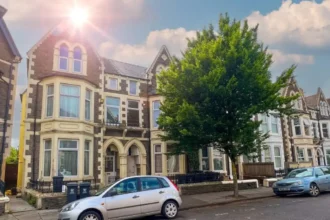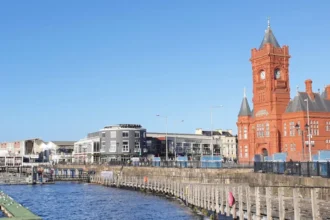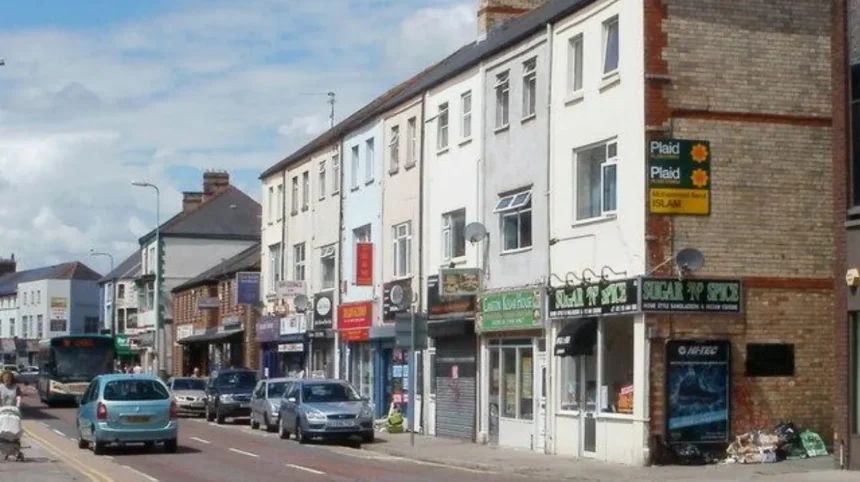
Cardiff’s high streets are changing. Traditional retail remains important, but successful local centres increasingly combine shops, cafés, restaurants, professional services, community facilities, public spaces and independent businesses. This shift reflects changing consumer behaviour, regeneration investment, active travel programmes and stronger demand for convenient neighbourhood services.
- What is happening to Cardiff’s high streets?
- Why are Cardiff’s smaller shopping streets becoming more important?
- How is regeneration helping Cardiff high streets recover?
- Which Cardiff high streets show the strongest signs of change?
- How are transport and public spaces changing Cardiff high streets?
- What role do independent businesses play in Cardiff’s high-street comeback?
- How does Cardiff’s changing high-street model affect local communities?
- What will determine whether Cardiff’s high streets continue making a comeback?
- A diverse business mix
- Good public spaces
- Residential catchments
- Flexible commercial spaces
- Integrated transport
- Local participation
- Why are Cardiff high streets important to the city’s future?
Cardiff Council’s regeneration policy treats district and local centres as important parts of sustainable communities. Its strategy focuses investment on individual centres according to local needs, while supporting businesses, safer streets, public spaces and access to opportunity.
Recent evidence also shows an important distinction between Cardiff’s central shopping streets and smaller neighbourhood high streets. Reporting based on British Retail Consortium and Cardiff Council data found that some smaller shopping streets were holding up better than major city-centre locations, supported by nearby residents and independent businesses.
The comeback of Cardiff’s high streets is therefore not simply about reopening empty shops. It involves changing what high streets do, how people reach them, how public space is designed and how local economies operate.
What is happening to Cardiff’s high streets?
Cardiff’s high streets are shifting from retail-only destinations into mixed-use local centres combining shops, food, services, leisure, community facilities, housing, public spaces and transport connections. This diversification strengthens everyday footfall and reduces dependence on traditional comparison shopping alone.
The traditional high street model depended heavily on retail. Customers travelled to a central shopping street to purchase clothing, household goods, food and other products. Online shopping has changed that behaviour, increasing pressure on physical retailers across the UK.
Cardiff has a particularly diverse high-street network. The city centre contains major shopping destinations such as Queen Street, St Mary Street, The Hayes and the historic arcades. Beyond the centre, established local shopping areas serve residential communities across Cardiff.
Examples include Wellfield Road and Albany Road in Roath, Whitchurch Road in Heath, Cowbridge Road East in Canton and Llandaff High Street. These centres have different commercial identities and serve different catchment areas.
A local high street benefits from proximity to residents. Customers can walk, cycle or make short journeys for groceries, meals, personal services and everyday purchases. This creates a different economic model from a city-centre destination that depends more heavily on visitors travelling into Cardiff.
Cardiff Council explicitly identifies community shopping centres as places providing shops, businesses, services and community facilities within accessible distances of residents. Its District Centres Strategy is designed to raise the profile of these centres and support coordinated investment.
The result is a broader definition of high-street success. A centre with fewer traditional retailers can remain economically important when cafés, restaurants, hairdressers, professional services, convenience stores and community facilities generate regular activity.
Why are Cardiff’s smaller shopping streets becoming more important?
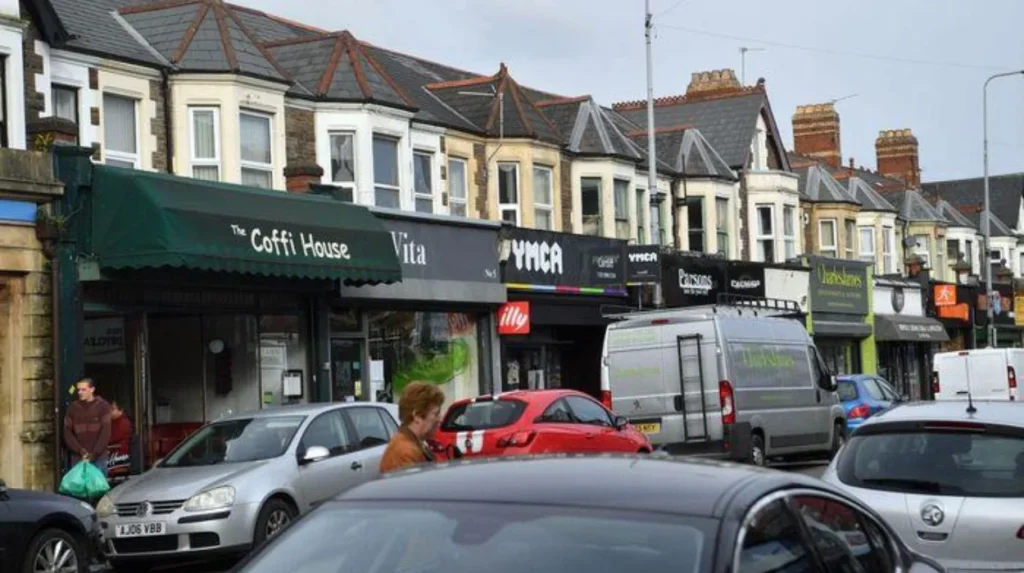
Smaller Cardiff shopping streets benefit from nearby residential populations, independent businesses and everyday services that encourage repeat visits. Areas such as Canton, Roath, Heath and Llandaff demonstrate how neighbourhood-based spending supports local centres beyond the main city-centre retail core.
The location of customers is central to high-street resilience. A neighbourhood centre has a built-in catchment because homes surround its commercial streets.
This creates frequent, shorter visits. Residents can purchase groceries, visit a pharmacy, meet friends for coffee, use a barber or access professional services without travelling into central Cardiff.
The Cardiffian reported in March 2026 that smaller Cardiff shopping streets were performing better than major city-centre streets according to footfall, profits and shop-unit data drawn from the British Retail Consortium and Cardiff Council. The report noted particularly significant recent footfall reductions on Queen Street and St Mary Street, while smaller areas experienced smaller declines.
The finding does not mean neighbourhood high streets are unaffected by retail pressures. The same reporting stated that most local high streets remained below pre-lockdown shopping levels.
The distinction is the nature of demand.
City-centre retail relies substantially on people travelling into Cardiff for shopping, employment, entertainment and tourism. Local centres rely more heavily on residents who live nearby.
This creates a different economic structure.
Canton and Cowbridge Road East
Cowbridge Road East is a major commercial corridor through western Cardiff. Cardiff Council has developed improvement proposals for the shopping area, involving consultation with residents, traders and visitors. The regeneration process includes public-realm improvements and further design work.
A completed section of Cowbridge Road East also demonstrates how physical improvements support high-street activity. Cardiff Council introduced wider and resurfaced footways, planting, rain gardens, street furniture and continuous pedestrian crossings. The completed scheme was delivered in October 2021.
These interventions improve the environment around businesses rather than concentrating solely on individual shop units.
Roath and surrounding neighbourhood centres
Roath has several commercially active streets serving dense residential areas. Wellfield Road and Albany Road combine independent food businesses, cafés, services and retail.
Their importance comes from the relationship between commercial premises and surrounding housing. Residents generate regular demand throughout the week rather than only during major shopping periods.
Heath and Whitchurch Road
Whitchurch Road provides another example of a neighbourhood commercial corridor. Its businesses serve residents, students, workers and visitors moving through the Heath area.
Food, hospitality and personal services form important components of its commercial mix. This illustrates how high streets can adapt when conventional retail is no longer the sole source of activity.
How is regeneration helping Cardiff high streets recover?
Cardiff’s regeneration programme supports high streets through public-realm improvements, investment frameworks, pedestrian facilities, environmental upgrades, community engagement and coordinated planning. These measures improve accessibility, safety, appearance and functionality while supporting businesses and creating stronger neighbourhood destinations.
Regeneration is broader than construction. Cardiff Council defines neighbourhood regeneration as updating areas so they meet current needs, including changes to housing, streets, public spaces and local services.
Cardiff’s approved Regeneration Strategy 2025–2030 provides a city-wide framework for directing investment towards communities that need it most. The strategy identifies district and local centres as important locations for improving vitality and viability.
This approach matters because high streets operate as connected systems.
A shopfront does not function independently from its pavement. A café depends on passing customers. A local restaurant depends on nearby residents and visitors. A public space affects how long people stay. Transport determines how easily customers reach businesses.
Regeneration therefore addresses several connected elements.
Public-realm improvements
Public-realm improvements include pavements, crossings, planting, seating, lighting, street furniture and traffic arrangements.
Cowbridge Road East provides a practical Cardiff example. The completed scheme introduced footway improvements, rain gardens and pedestrian-priority junction treatments. The road section was also placed within a 20mph limit.
These changes improve the physical environment around commercial premises.
District-centre investment
Cardiff Council’s District Centres Strategy creates a framework for individual action plans and investment. It is intended to attract inward investment, coordinate service providers and contribute to sustainable neighbourhoods.
This is important because each high street has different needs.
A busy multicultural shopping corridor requires a different approach from a village-style centre such as Llandaff. A city-centre shopping street also has different transport and public-space requirements from a residential district centre.
Neighbourhood Renewal Schemes
Cardiff’s Neighbourhood Renewal Schemes programme supports projects identified through local priorities. Completed projects across the city include new parks, street improvements and community-safety measures. Cardiff Council reports that 57 projects had been completed through the programme since 2000/01.
High-street regeneration therefore forms part of a wider neighbourhood improvement programme.
Which Cardiff high streets show the strongest signs of change?
Several Cardiff centres show clear regeneration activity or commercial resilience, including Cowbridge Road East, Roath’s Wellfield Road and Albany Road, Whitchurch Road, Llandaff High Street and central routes around Castle Street, High Street and Kingsway.
The phrase “comeback” does not describe one uniform Cardiff project. It describes different forms of recovery across multiple commercial centres.
Cowbridge Road East
Cowbridge Road East has received completed environmental improvements and remains part of Cardiff Council’s regeneration planning. The corridor demonstrates the connection between pedestrian infrastructure and commercial-centre investment.
The completed works included wider footways, resurfacing, planting and rain gardens. Continuous footways were introduced across side roads to reinforce pedestrian priority.
Wellfield Road and Albany Road
These Roath streets illustrate the strength of neighbourhood-based commercial activity.
Their surrounding residential areas provide a large local customer base. Independent food businesses, cafés and service providers contribute to a high-street economy based on repeat local visits.
The commercial model is particularly relevant to the post-pandemic high street because businesses do not depend entirely on large destination shopping trips.
Whitchurch Road
Whitchurch Road serves the Heath area and surrounding neighbourhoods. Its commercial mix includes hospitality, food businesses, professional services and everyday retail.
Its proximity to housing and Cardiff’s university and healthcare-related activity contributes to a varied customer base.
Llandaff High Street
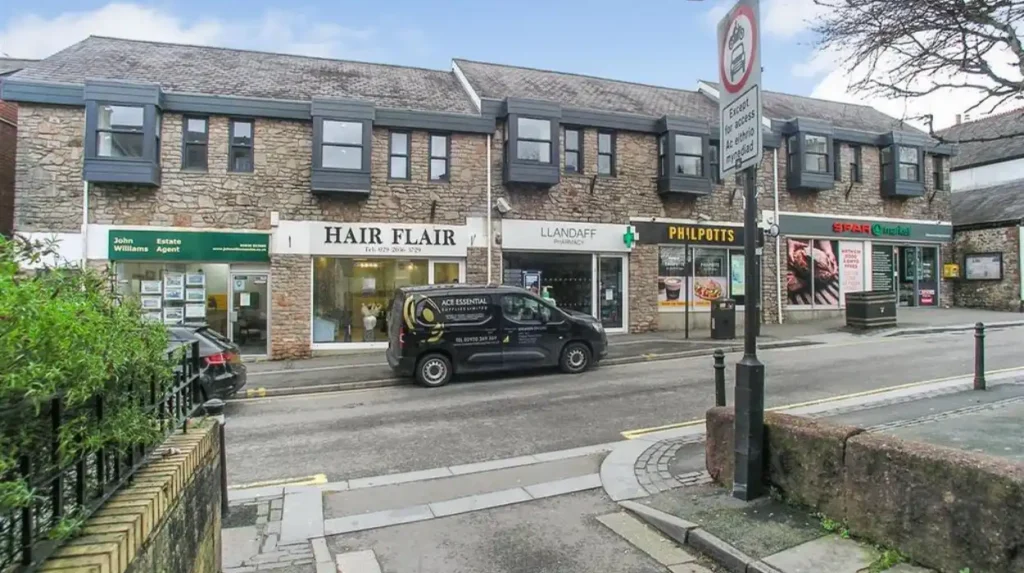
Llandaff High Street has a different character. It forms part of the historic Llandaff village area and operates alongside heritage buildings, local services and community destinations.
Cardiff Council has considered parking arrangements for the high street, including loading controls, disabled parking provision and short-stay parking arrangements. The proposals demonstrate how parking management forms part of maintaining accessible local centres.
Central Cardiff
Central Cardiff remains the city’s major shopping and visitor destination. Streets around High Street, Castle Street, Queen Street and St Mary Street connect retail, hospitality, entertainment, transport and heritage attractions.
Cardiff Council is also delivering public-realm changes around Castle Street, including paving improvements, pedestrian-crossing changes, segregated cycling infrastructure, landscaping and bus facilities.
These projects show that city-centre regeneration is increasingly focused on movement and public space alongside retail.
How are transport and public spaces changing Cardiff high streets?
Transport and public-space improvements are making Cardiff high streets more accessible through better pedestrian routes, cycling infrastructure, crossings, buses, planting, seating and traffic management. These changes support longer visits, safer movement and stronger connections between commercial centres and surrounding neighbourhoods.
High-street performance depends heavily on accessibility.
Customers need practical ways to reach shops and services. Employees need reliable transport. Businesses require servicing access. Residents need safe walking routes.
Cardiff’s transport planning increasingly integrates these requirements.
Cardiff Council’s Kingsway Public Realm Improvements form part of Phase 1A of the Cardiff-to-Newport sustainable transport corridor. The scheme focuses on improving the connection between central Cardiff and the civic centre. Proposed changes include a new street-level pedestrian and cycle crossing, improved public space, planting, seating, sustainable drainage features and cycle parking.
The wider Cardiff transport programme also places emphasis on rapid bus services, active travel and improved cycling connections.
Why pedestrian priority matters
Pedestrian-friendly streets increase the practical accessibility of local businesses.
Continuous crossings are one example. On Cowbridge Road East, Cardiff introduced continuous footways across side roads. This creates a more level pedestrian route and reinforces pedestrian priority at junctions.
High-street design therefore affects more than traffic.
It influences how easily customers move between businesses.
Why green infrastructure matters
Green infrastructure includes trees, planting, rain gardens and sustainable drainage.
Cardiff has incorporated rain gardens into Cowbridge Road East improvements. These features manage drainage while adding vegetation and biodiversity to the street environment.
The regeneration strategy also identifies greener public spaces and street-end improvements as part of placemaking across Cardiff. Examples include Canada Road in Heath and street-end projects in Riverside and Cathays.
What role do independent businesses play in Cardiff’s high-street comeback?
Independent businesses strengthen Cardiff’s neighbourhood high streets by providing specialised products, food, hospitality, personal services and locally focused experiences. Their presence diversifies commercial centres and supports frequent visits from residents living within walking distance.
Independent businesses are important because they often occupy different commercial niches from national chains.
A local café can serve a neighbourhood breakfast market. A specialist food shop can serve a specific cultural community. A barber can generate repeat monthly visits. A local restaurant can become a regular destination for nearby residents.
This creates multiple reasons for visiting a high street.
The effect is especially important in Cardiff’s district centres.
A neighbourhood with restaurants, cafés, convenience stores, pharmacies, salons, professional services and specialist retailers can remain active beyond traditional retail hours.
This also supports employment.
Businesses require staff, suppliers, maintenance services, accountants, delivery operators and other commercial relationships. High-street activity therefore generates economic effects beyond the individual shopfront.
Cardiff’s smaller shopping streets have also demonstrated stronger resilience relative to major city-centre locations in recent reported data. The Cardiffian identified nearby housing and higher concentrations of independent shops and hospitality businesses as important characteristics of these local centres.
Food and hospitality
Food businesses extend high-street activity into evenings and weekends.
Restaurants, cafés, bakeries and takeaway businesses operate on different trading patterns from many traditional retailers. Their customers visit for consumption rather than simply purchasing goods.
Hospitality also increases the diversity of reasons people visit a commercial street.
Professional and personal services
Professional services include accountants, estate agents, solicitors and financial advisers. Personal services include hairdressers, beauty businesses and repair services.
These businesses depend on local customers and repeat appointments.
Their presence reduces the impact of online shopping because many services require physical premises and direct customer interaction.
Community businesses
Community-oriented businesses and facilities strengthen local identity.
Libraries, community centres, arts organisations and local services contribute to the wider function of a high street. Cardiff Council’s regeneration framework specifically connects local centres with access to opportunity, safety and sustainable communities.
How does Cardiff’s changing high-street model affect local communities?
The changing high-street model gives Cardiff communities greater access to everyday services, local employment, independent businesses, food, leisure and social infrastructure. Stronger centres also support walkable neighbourhoods and connect regeneration with wider goals for sustainable and inclusive communities.
A successful high street affects daily life.
Residents need convenient access to food, healthcare-related services, banking alternatives, childcare-related services, hospitality and professional businesses.
When these facilities exist close to homes, residents can complete more everyday activities locally.
This has transport implications.
Shorter journeys reduce dependence on private cars for routine activities. Walking and cycling become more practical when shops and services are concentrated within neighbourhood centres.
Cardiff’s regeneration strategy links high-street investment with sustainable communities. Its approach considers individual centres, neighbourhoods and the wider network across Cardiff, with decisions based on local needs and investment priorities.
Social infrastructure
High streets provide places where people interact outside homes and workplaces.
Cafés, restaurants, community facilities and public spaces create opportunities for regular social contact.
This function becomes particularly important in residential neighbourhoods where commercial streets operate as local gathering points.
Local economic circulation
Spending at local businesses supports local employment and commercial supply chains.
A resident purchasing lunch from a neighbourhood café contributes to that business’s revenue. The café then pays staff, suppliers, rent, utilities and professional service providers.
This creates a connected local economic system.
Accessibility
Regeneration also addresses physical accessibility.
Wider pavements, improved crossings, better lighting, seating and clearer public spaces help more people use commercial areas.
Llandaff’s parking consultation illustrates the detailed nature of accessibility planning. Cardiff Council has considered loading controls, disabled parking spaces and short-stay parking on the high street.
Explore More Area Guide
Cardiff Areas Supporting Local Entrepreneurs 2026
Family-Owned Businesses That Shaped Cardiff’s Heritage
What will determine whether Cardiff’s high streets continue making a comeback?
Cardiff’s high-street recovery depends on sustained investment, strong independent businesses, suitable public spaces, accessible transport, effective planning, diverse commercial uses, local spending and continued adaptation to changing consumer behaviour across neighbourhood and city-centre locations.
The future of Cardiff’s high streets depends on more than retail sales.
The strongest centres need a combination of economic, social and physical functions.
Cardiff Council’s Regeneration Strategy 2025–2030 provides an important framework because it brings regeneration policies, programmes and ambitions into a coordinated approach. The strategy specifically seeks to enhance the vitality and viability of district and local centres.
Several factors will determine long-term performance.
A diverse business mix
A centre dominated by one commercial category faces greater exposure to changes in consumer behaviour.
A diversified centre has more sources of activity. Examples include food, retail, professional services, leisure and community facilities.
Good public spaces
People need comfortable and accessible streets.
Pavement quality, crossings, greenery, seating, lighting and traffic management all influence the usability of high streets.
Cardiff’s regeneration programme already incorporates these elements into local projects.
Residential catchments
High streets with strong residential catchments have a reliable base of potential customers.
This is one reason Cardiff’s smaller centres have attracted attention in recent performance comparisons. Their surrounding populations provide regular demand even when city-centre footfall changes.
Flexible commercial spaces
Retail premises need to accommodate changing business models.
Some units operate as shops. Others work as cafés, restaurants, salons, offices or service businesses. Planning policy and property markets therefore influence the future composition of high streets.
Integrated transport
High streets need reliable connections.
Walking, cycling, buses and appropriate car access all form part of the wider system. Cardiff’s transport and public-realm programmes increasingly integrate these modes.
Local participation
Regeneration works more effectively when residents, traders and visitors contribute to planning.
Cowbridge Road East provides a direct example. Cardiff Council held public engagement sessions with residents, shoppers and traders before progressing proposed improvements.
Why are Cardiff high streets important to the city’s future?
Cardiff’s high streets remain essential economic and community assets because they connect residents with businesses, services, employment, public spaces and transport. Their future depends on creating active mixed-use centres rather than returning to a retail-only high-street model.
Cardiff’s high-street comeback is therefore a structural transformation rather than a simple return to previous retail conditions.
The city has a network of commercial centres with different functions. Central Cardiff serves major retail, employment, tourism and entertainment demand. Neighbourhood centres serve residents with everyday goods, services, hospitality and community facilities.
The evidence increasingly supports a local-centre approach.
Smaller Cardiff shopping streets have demonstrated greater resilience than some major city-centre streets in recent reported data, although most centres continue to face challenges compared with pre-lockdown activity.
Regeneration is addressing these challenges through public-realm investment, pedestrian improvements, greener streets, transport connections and community-focused planning.
Cowbridge Road East demonstrates how physical improvements can combine drainage, planting, pedestrian priority and accessibility.
Castle Street and Kingsway demonstrate how central Cardiff is also changing through better pedestrian routes, cycling facilities, public spaces, landscaping and transport infrastructure.
The result is a more diverse understanding of what a successful Cardiff high street represents.
A strong high street is not defined only by the number of shops.
It is defined by accessibility, business diversity, local demand, public-space quality, community use, transport connections and economic activity.
Cardiff’s current regeneration direction reflects that wider definition. The city’s approved 2025–2030 regeneration strategy places district and local centres within a broader programme designed to create sustainable and inclusive communities while directing investment according to local needs.
For residents, this means stronger neighbourhood centres can provide more everyday services closer to home. For businesses, active local centres provide established customer catchments. For Cardiff as a whole, successful high streets support economic activity while contributing to more connected and sustainable neighbourhoods.
The comeback of Cardiff’s high streets is therefore already visible in the combination of independent businesses, regeneration projects, public-space improvements, neighbourhood demand and changing transport infrastructure. Its long-term success will depend on maintaining that combination rather than relying on traditional retail alone.
Are Cardiff high streets making a comeback?
Yes. Cardiff’s high streets are changing through regeneration, independent businesses, hospitality, improved public spaces, active travel infrastructure and stronger neighbourhood services. Local centres such as Roath, Canton, Heath and Llandaff remain important parts of Cardiff’s commercial network.