Cardiff has a long food and hospitality history shaped by its medieval market, nineteenth-century industrial expansion, Cardiff Docks, Victorian city centre and modern international population. The city’s oldest surviving food venues are often pubs, hotels and inns rather than restaurants in the modern sense.
- What counts as a longest-running restaurant in Cardiff?
- Which is the oldest food-serving venue in Cardiff?
- How did Cardiff’s historic pubs become important places to eat?
- What role did the Royal Hotel play in Cardiff’s dining history?
- Which long-running Cardiff restaurants have operated since the early 2000s?
- How has Cardiff’s restaurant industry changed from historic pubs to modern restaurants?
- Why are historic Cardiff dining venues important today?
- What are the most important historic food venues to visit in Cardiff?
- How should Cardiff’s longest-running restaurants be described accurately?
The distinction matters when researching the longest-running restaurants in Cardiff. A restaurant is generally a business primarily providing prepared meals for customers. Historic Cardiff venues such as the Blue Bell and Rummer Tavern are public houses, but both have long food-service traditions and remain important parts of Cardiff’s dining heritage. Dedicated restaurants with continuous histories are generally much newer.
This guide separates historic food venues from established modern restaurants and explains how Cardiff’s dining history developed.
What counts as a longest-running restaurant in Cardiff?
The longest-running food venues in Cardiff include historic pubs, hotels and established restaurants, because purpose-built restaurants were less common before the twentieth century. The Blue Bell dates from 1813, the Royal Hotel opened in 1866, and dedicated restaurants followed later.
Cardiff’s hospitality history does not fit neatly into a list of restaurants ranked only by opening year. The city’s earliest surviving places serving prepared food developed from inns, taverns, hotels and public houses.
A public house, commonly called a pub, traditionally combined alcoholic drinks with social, commercial and sometimes accommodation services. Food became an increasingly important part of the business model over time.
A restaurant has a more specific function. It primarily provides prepared food for customers, usually through a dedicated dining service.
This distinction explains why claims about the “oldest restaurant in Cardiff” require careful qualification.
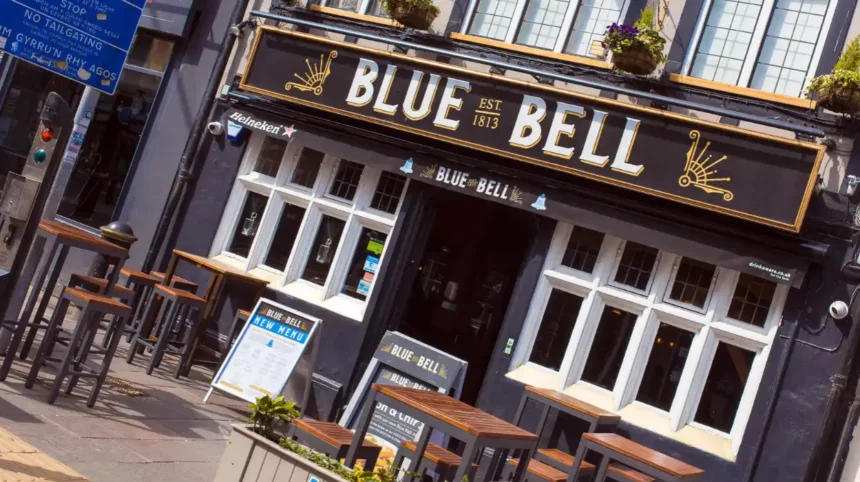
The Blue Bell on High Street is one of Cardiff’s oldest surviving hospitality venues. Visit Cardiff identifies it as one of the city’s oldest pubs and states that it has served Cardiff for more than 200 years. CAMRA dates the Blue Bell to 1813 and records that traditional Welsh food is served there.
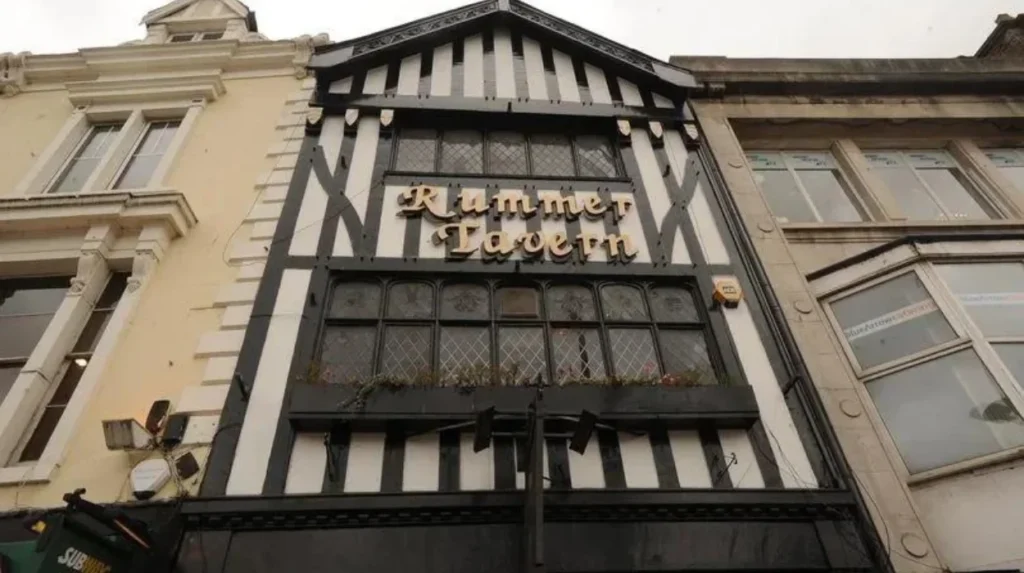
The Rummer Tavern is another important historic food venue. CAMRA identifies it as Cardiff’s oldest public house and records all-day food service from a traditional menu.
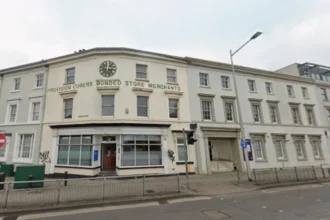
The Royal Hotel provides a different example. Built between 1864 and 1866, it held its opening dinner on 3 July 1866 for approximately 60–70 local residents. Its history demonstrates how hotel dining formed part of Cardiff’s nineteenth-century hospitality economy.
These venues provide the strongest historical foundation for understanding Cardiff’s longest-running dining traditions.
Which is the oldest food-serving venue in Cardiff?
The Blue Bell dates to 1813 and is one of Cardiff’s oldest continuously recognised hospitality venues. The Rummer Tavern is also identified by CAMRA as Cardiff’s oldest public house. Both demonstrate the city’s early tradition of combining drinks, food and social activity.
The Blue Bell, at 33 High Street opposite Cardiff Castle, has a documented history beginning in 1813. Its location placed it directly within the historic commercial centre of Cardiff.
The building operated as the Blue Bell during the nineteenth century. It was renamed the Goat Major in 1995, reflecting the mascot of the Royal Welsh Regiment. The original Blue Bell name returned when the venue reopened under new ownership in 2021.
The present venue continues to serve food. Its menu has included traditional Welsh dishes, Welsh breakfasts and locally sourced ingredients. Visit Cardiff describes its food as traditional, hearty pub food, with ingredients sourced from Cardiff Market and Welsh suppliers.
The Rummer Tavern has an even older claimed pub history. CAMRA records it as Cardiff’s oldest public house and confirms that food is served throughout the day. Its current format is a modern pub, while its historic identity comes from its long-standing presence in central Cardiff.
The Rummer Tavern is therefore highly relevant to the history of long-running Cardiff dining, although it should be described as a pub rather than a restaurant.
This distinction is important for accurate SEO content. Calling every historic food-serving venue a restaurant creates an inaccurate historical record.
A better description is “longest-running restaurants and historic food venues in Cardiff.” That wording covers the city’s genuine restaurant businesses while including historic pubs and hotels that contributed to Cardiff’s dining culture.
How did Cardiff’s historic pubs become important places to eat?
Cardiff’s historic pubs became food destinations because they combined drinking, accommodation, meetings and social activity in central locations. Venues such as the Blue Bell and Rummer Tavern served commercial communities before modern restaurant culture developed across Cardiff’s expanding nineteenth-century urban centre.
Cardiff’s growth transformed its hospitality industry.
The city expanded rapidly during the nineteenth century as the coal-export economy developed. Cardiff Docks became a major industrial and trading centre, attracting workers, merchants, sailors, visitors and businesses.
Hospitality businesses developed alongside this population growth.
Pubs provided convenient places for workers and traders to meet. Inns offered accommodation. Hotels served visitors and business travellers. Eating was integrated into these environments rather than separated into the modern restaurant category.
The Blue Bell illustrates this wider role. Historical records associate the venue with sports organisations, including local rugby groups and football clubs. It also hosted meetings involving Cardiff workers and associations.
The Royal Hotel demonstrates the hotel side of this development. Its opening dinner in 1866 established the building as a major hospitality venue from its earliest days. The hotel later contained a large banqueting room capable of seating up to 400 diners.
The Royal Hotel also became associated with major events. On 13 June 1910, a farewell dinner was held there for Captain Robert Falcon Scott and members of his Antarctic expedition before their departure from Cardiff.
These examples show that formal dining existed in Cardiff long before the contemporary restaurant industry.
The difference was mainly organisational. Victorian hospitality frequently combined food, drink, accommodation and entertainment under one business.
Modern restaurants increasingly separated those functions.
That change created the restaurant sector that Cardiff residents recognise today.
What role did the Royal Hotel play in Cardiff’s dining history?
The Royal Hotel opened in 1866 and became one of Cardiff’s major nineteenth-century hospitality venues. Its opening dinner, large banqueting facilities and association with Captain Scott’s 1910 expedition demonstrate the importance of formal hotel dining in historic Cardiff.
The Royal Hotel stands on St Mary Street at the junction with Wood Street in central Cardiff.
The building was constructed between 1864 and 1866 and was designed by C. E. Bernard. It is a Grade II listed building, meaning it has special architectural or historic interest recognised through the Welsh listed-building system.
The hotel originally contained 70 bedrooms.
An extension in 1890 increased its accommodation to approximately 120 bedrooms. The development also included a modern lift and additional service facilities. The hotel’s banqueting room could accommodate up to 400 diners.
This capacity reflects the changing scale of Cardiff.
By the late nineteenth century, Cardiff was no longer a small market settlement. Its docks and coal trade had created substantial commercial activity, while the railway connected the city to wider Britain.
Large hotels therefore became important locations for formal meals, meetings and civic occasions.
The Royal Hotel’s connection with Captain Robert Falcon Scott provides one of its best-documented dining events.
Scott’s expedition ship, Terra Nova, departed Cardiff in June 1910 for the British Antarctic Expedition. A farewell dinner for Scott and his expedition team was held at the Royal Hotel on 13 June 1910. A plaque at the hotel commemorates the event.
The Royal Hotel therefore belongs in any discussion of Cardiff’s historic dining heritage.
It is not, however, accurate to describe it simply as Cardiff’s oldest restaurant. Its primary identity is a hotel, with formal dining forming an important part of its history.
Which long-running Cardiff restaurants have operated since the early 2000s?
Several established Cardiff restaurants have operated since the early 2000s, including Casanova, which opened in 2005. These businesses represent the modern restaurant era rather than Cardiff’s nineteenth-century pub and hotel tradition.
The strongest documented example among current dedicated restaurants is Casanova, an Italian restaurant on Quay Street.
Casanova states that it opened in 2005 with a focus on traditional Italian food combined with modern techniques. The family-run restaurant sources ingredients locally and imports selected products directly from Italian producers.
Its location at 13 Quay Street places it in Cardiff city centre, close to the historic core.
Casanova is particularly relevant to the development of Cardiff’s modern independent restaurant sector because it represents a long-running specialist cuisine business rather than a historic pub or hotel.
Its cuisine is regional Italian. The restaurant’s chef patron, Antonio Cersosimo, has roots in Calabria and brings northern and southern Italian influences to the menu.
The restaurant has also developed a long-term position within Cardiff’s specialist dining market. Its own history states that it has appeared in both the Good Food Guide and the Michelin Guide.
Casanova therefore provides a useful benchmark for the modern definition of a long-running Cardiff restaurant.
The history also demonstrates why restaurant longevity in Cardiff should not be measured only against centuries-old pubs.
A business operating continuously since 2005 has already accumulated more than two decades of local dining history by 2026.
That is significant within the modern restaurant sector, where ownership changes, relocations and closures frequently affect continuity.
How has Cardiff’s restaurant industry changed from historic pubs to modern restaurants?
Cardiff’s restaurant industry evolved from inns, taverns, hotels and pubs into a diverse modern sector containing independent restaurants, international cuisines and specialist dining concepts. The transition accelerated as Cardiff expanded commercially, developed its waterfront and attracted residents, students and visitors.
The historic hospitality model centred on multifunctional venues.
Places such as the Blue Bell combined drinks, food and social activity. Hotels such as the Royal Hotel offered accommodation alongside formal meals and banqueting.
Modern Cardiff developed a different structure.
Restaurants became dedicated food businesses. Cuisine became a major part of the identity of individual venues. Italian, French, Japanese, Indian, Middle Eastern and other international cuisines established dedicated restaurant concepts across the city.
The development of Cardiff Bay also changed the geography of dining.
Mermaid Quay became a major restaurant and leisure destination. In 2010, restaurant operator Côte announced its first Welsh restaurant at Mermaid Quay, with the site scheduled to open in November of that year.
The first Welsh Côte opened in late 2010. The Guardian reviewed the restaurant in January 2011 and described it as the chain’s first Welsh venue.
This development illustrates another stage in Cardiff’s restaurant history: the growth of branded restaurant groups alongside independent operators.
Cardiff’s food economy subsequently became more geographically diverse.
Restaurants developed in areas including Grangetown, Pontcanna, Canton, Roath, Cathays and Cardiff Bay, rather than remaining concentrated around the traditional city centre.
This geographical spread also reflects demographic change.
Cardiff is home to a large student population, international communities, business visitors and tourists. These groups support demand for varied cuisines and dining formats.
The result is a restaurant market where longevity has several meanings.
A historic pub can have more than 200 years of institutional history. An established independent restaurant can have 20 years of continuous trading. A newer specialist restaurant can build significant recognition within only a few years.
Each represents a different phase of Cardiff’s hospitality development.
Why are historic Cardiff dining venues important today?
Historic dining venues preserve evidence of Cardiff’s commercial, social and architectural development. Their locations, buildings, menus and traditions connect modern visitors with the city’s growth from a market town into a major Welsh capital and commercial centre.
Historic restaurants and food-serving venues are important because hospitality forms part of urban history.
The Blue Bell demonstrates continuity from the early nineteenth century. Its position opposite Cardiff Castle places it within one of Cardiff’s most historically significant areas. Its food service connects present-day visitors with a hospitality site that predates the modern city.
The Rummer Tavern provides another example of long-term continuity. CAMRA recognises its historic importance as Cardiff’s oldest public house and records contemporary food service.
The Golden Cross demonstrates the importance of architectural preservation.
The current Golden Cross building dates from around 1903. It is Grade II listed and contains extensive decorative ceramic work by Craven Dunnill of Jackfield, including tiled representations of Cardiff Castle and the former Cardiff Town Hall.
The site itself has an older history. A public house operated there from 1849, first as the Shields and Newcastle Tavern. The premises became the Castle Inn and adopted the Golden Cross name in 1863.
Although the Golden Cross is primarily a pub rather than a restaurant, it demonstrates how hospitality buildings can preserve social history alongside architectural history.
Cardiff Council and Welsh heritage organisations also recognise the value of historic buildings through conservation and listing systems.
A listed building receives legal protection because of its special architectural or historic interest. Grade II is used for buildings of special interest that warrant preservation.
This protection matters because restaurants and pubs frequently occupy buildings that predate the businesses themselves.
The history of a dining venue therefore involves two separate timelines:
The first is the building’s history.
The second is the restaurant or hospitality business’s history.
These timelines do not always begin in the same year.
Explore More Area Guide
Best Breakfast Spots Outside Cardiff City Centre
Family Restaurants Across Cardiff Neighbourhoods
What are the most important historic food venues to visit in Cardiff?
Visitors researching Cardiff’s oldest dining traditions should consider the Blue Bell, Rummer Tavern and Royal Hotel alongside established restaurants such as Casanova. These venues represent different periods, from early nineteenth-century pubs to modern independent restaurants established in the twenty-first century.
The Blue Bell is the clearest starting point for early Cardiff hospitality. Its 1813 origins give it more than two centuries of history, while its present food service maintains the connection between historic hospitality and modern dining.
The Rummer Tavern provides another historic option. Its status as Cardiff’s oldest public house gives it a particularly strong place in the city’s hospitality heritage, while its current menu allows visitors to experience the venue as a functioning food-serving pub.
The Royal Hotel is important for formal dining history. Its 1866 opening, large banqueting facilities and connection with Captain Scott provide documented links to Cardiff’s Victorian and Edwardian hospitality culture.
The Golden Cross is valuable for architectural heritage. Its current building dates from 1903 and retains distinctive ceramic decoration. Cadw also identifies its importance within the history of LGBTQ+ Cardiff.
For a dedicated modern restaurant, Casanova provides a documented 2005 opening date and more than two decades of operation. Its Italian regional cuisine represents Cardiff’s modern independent dining culture.
A newer example is Matsudai Ramen in Grangetown. The business began as a pop-up in September 2019 and opened its permanent Cardiff restaurant in August 2022. Its history shows how contemporary Cardiff restaurants can develop from temporary events into permanent specialist venues.
Matsudai is therefore not one of Cardiff’s longest-running restaurants, but it is relevant to the future of the city’s food culture.
The contrast between these venues demonstrates the evolution of Cardiff dining.
The Blue Bell represents nineteenth-century continuity.
The Royal Hotel represents Victorian formal hospitality.
The Golden Cross represents historic pub architecture and social history.
Casanova represents long-running modern independent dining.
Matsudai represents the newer specialist restaurant generation.
Together, these venues provide a more accurate picture of Cardiff’s restaurant history than a simple ranking by opening date.
How should Cardiff’s longest-running restaurants be described accurately?
Cardiff’s oldest dining businesses should be described according to their documented opening dates, business type and continuity. Historic pubs and hotels should not automatically be labelled restaurants, while established independent restaurants should be separated from older hospitality venues.
Accuracy is particularly important for articles about historic restaurants.
The phrase “oldest restaurant” suggests a dedicated restaurant business with a continuous operating history. Cardiff’s oldest surviving hospitality venues do not all meet that definition.
The Blue Bell dates from 1813 but is a pub.
The Rummer Tavern is identified by CAMRA as Cardiff’s oldest public house.
The Royal Hotel opened in 1866 as a hotel with substantial dining and banqueting facilities.
The Golden Cross has a hospitality history dating to 1849, while its present building dates from 1903.
Casanova opened as a dedicated Italian restaurant in 2005.
These distinctions create a more reliable historical hierarchy.
They also make the article more useful for search engines because each entity has a defined relationship with Cardiff’s hospitality history.
For readers, the distinction prevents confusion between building age, site history, business age and restaurant age.
A building can be 150 years old while the restaurant operating inside it is only 10 years old.
A pub can have served food for two centuries without ever being a restaurant in the modern sense.
A hotel can have provided formal dining since the nineteenth century without being classified as a restaurant.
These differences are essential when researching the longest-running restaurants in Cardiff.
Cardiff’s dining heritage is therefore best understood as a continuous hospitality story rather than a single restaurant ranking.
From the Blue Bell’s 1813 origins to the Royal Hotel’s 1866 opening, the Golden Cross’s nineteenth-century site history, Casanova’s 2005 restaurant opening and Matsudai’s 2022 permanent restaurant, the city shows a clear progression from traditional hospitality to a diverse modern restaurant economy.
That progression makes Cardiff’s oldest food venues important not only for dining but also for understanding the city’s wider social, commercial and architectural history.
What is the oldest restaurant in Cardiff?
The Blue Bell dates to 1813 and is one of Cardiff’s oldest surviving food-serving hospitality venues. It is historically a pub rather than a restaurant in the modern sense.