Cardiff Bay Heritage Route connects the historic docklands, maritime buildings, industrial landmarks, religious sites, cultural venues and modern civic architecture around Cardiff Bay. The route explains how Cardiff developed from a river port into one of the world’s major coal-exporting ports and later into a regenerated waterfront district.
- What is the Cardiff Bay Heritage Route?
- Why did Cardiff Bay become important during the Industrial Revolution?
- Which historic docklands should visitors understand first?
- What can visitors see around Mount Stuart Square?
- Why is the Pierhead important to Cardiff Bay heritage?
- How did Cardiff become one of the world’s major coal ports?
- What role did Tiger Bay and Butetown play in the heritage of Cardiff Bay?
- What is the Norwegian Church’s connection with Cardiff Bay?
- How does the Senedd fit into the Cardiff Bay Heritage Route?
- What does the Wales Millennium Centre contribute to the route?
- How does Cardiff Bay’s regeneration affect its heritage?
- How should visitors follow the Cardiff Bay Heritage Route?
- Which heritage themes should visitors look for along the route?
- Why is Cardiff Bay’s industrial heritage still relevant today?
- How is Cardiff Bay heritage likely to remain important in the future?
- What makes the Cardiff Bay Heritage Route significant for visitors?
Cardiff Bay sits around the former dock system at the mouths of the River Taff and River Ely. Its heritage is closely connected with the South Wales coalfield, railways, international shipping and the industrial expansion of Cardiff during the nineteenth century. The modern waterfront preserves important evidence of that transformation alongside newer buildings and public spaces.
The route is particularly useful for visitors who want to understand Cardiff Bay beyond its restaurants, entertainment venues and waterfront views. Its buildings reveal the economic, social, architectural and political changes that shaped Cardiff.
What is the Cardiff Bay Heritage Route?
The Cardiff Bay Heritage Route is a heritage-focused walk through Cardiff’s historic docklands, linking industrial, maritime, religious, civic and cultural landmarks around the waterfront. It connects places such as Mount Stuart Square, the Pierhead, the Senedd, Norwegian Church and former dock areas.
The route is not a single officially defined walking trail with one fixed start and finish. Instead, it describes a connected heritage journey through the historic Cardiff Bay area. This approach allows visitors to combine preserved buildings, former dock infrastructure and modern regeneration sites.
Cardiff Harbour Authority records the development of the dock system from the nineteenth century. Bute West Dock opened in 1839, followed by Bute East Dock, Roath Basin, Roath Dock and Queen Alexandra Dock. These facilities transformed Cardiff into a major international port.
The heritage route therefore has several connected themes. These include industrialisation, coal exports, maritime migration, Victorian architecture, religious diversity, transport, urban regeneration and modern Welsh civic identity.
The route also demonstrates how historic places can remain relevant after their original industrial functions disappear. Former dockland spaces now accommodate cultural institutions, public buildings, offices, housing, restaurants and leisure facilities.
Why did Cardiff Bay become important during the Industrial Revolution?
Cardiff Bay became important because South Wales developed major iron and coal industries, creating demand for efficient export facilities. Canals, railways and docks connected the valleys with Cardiff, allowing large quantities of industrial materials to reach ships and international markets.
Cardiff’s industrial expansion accelerated during the nineteenth century. Coal from the South Wales valleys became the principal driver of the port economy, while iron production also contributed to the growth of transport infrastructure.
The Glamorganshire Canal opened in 1794 and connected Cardiff with industrial areas around Merthyr Tydfil. A basin connecting the canal to the sea followed in 1798. The development created an important transport connection between the industrial valleys and Cardiff.
The growth of railway infrastructure further strengthened the connection. The Taff Vale Railway opened in 1841, providing another route for transporting coal and other industrial products towards Cardiff Docks.
The Bute family played an important role in developing Cardiff’s dock facilities. The 2nd Marquess of Bute opened Bute West Dock in 1839. Bute East Dock followed in the nineteenth century, while further expansion created Roath Dock and Queen Alexandra Dock.
These developments changed Cardiff’s physical geography. Dock basins, warehouses, railway lines, coal-handling equipment and industrial buildings occupied areas that are now associated with Cardiff Bay’s modern waterfront.
Which historic docklands should visitors understand first?
The historic docklands form the foundation of Cardiff Bay’s heritage. Bute West Dock, Bute East Dock, Roath Basin, Roath Dock and Queen Alexandra Dock illustrate the expansion of Cardiff’s maritime infrastructure as coal exports increased during the nineteenth and early twentieth centuries.
Bute West Dock is particularly important because it opened in 1839 and became a major component of Cardiff’s developing port. Its seaward entrance was known as the Oval Basin.
Bute East Dock expanded the port’s capacity. Roath Basin opened in 1874, followed by Roath Dock in 1887 and Queen Alexandra Dock in 1907. The sequence demonstrates how the port expanded over several generations rather than being created through one single development.
The docks handled coal transported from mining communities in the South Wales valleys. Railway infrastructure brought coal towards Cardiff, while dock facilities enabled it to be loaded onto ships.
The scale of this system explains why Cardiff Bay contains such a mixture of historic industrial spaces and later urban development. The waterfront is the result of repeated expansion, decline and redevelopment.
Today, several original dock areas have changed substantially. Roath Dock and Queen Alexandra Dock remain associated with commercial port activity, while much of the former central dockland has become a mixed-use waterfront.
What can visitors see around Mount Stuart Square?
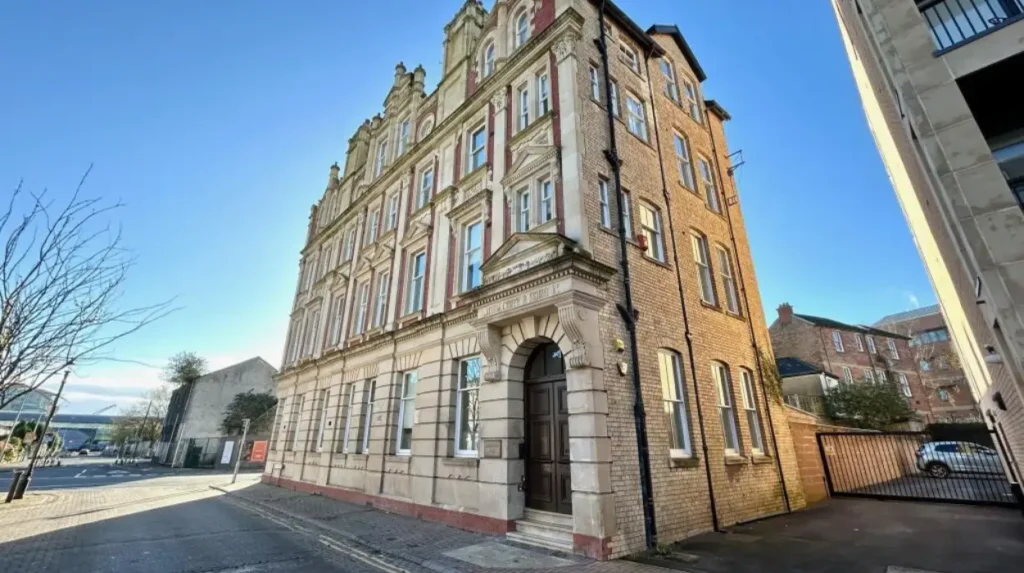
Mount Stuart Square preserves one of Cardiff Bay’s most important historic commercial environments. The square developed alongside the nineteenth-century dock economy and remains associated with the Coal Exchange, historic commercial buildings and the business networks that supported Cardiff’s international coal trade.
Mount Stuart Square was closely connected with Cardiff’s maritime economy. Merchants, shipowners, coal exporters, insurers and other businesses operated within the wider dockland commercial system.
The Coal Exchange became a significant centre for Cardiff’s coal trade. It provided a location where coal merchants and shipping interests conducted business and negotiated contracts.
Museum Wales records the importance of the Coal Exchange to Cardiff’s international coal economy. During the early twentieth century, the building formed part of a commercial environment in which coal cargoes and ships were arranged for international markets.
The wider square demonstrates how industrial wealth affected architecture. Commercial buildings were constructed close to the docks because proximity to ships, railways, merchants and cargoes was commercially important.
Mount Stuart Square is therefore an important early stop on a Cardiff Bay heritage walk. It establishes the relationship between physical dock infrastructure and the commercial institutions that controlled the movement of coal.
Cardiff Council identifies Mount Stuart Square as a conservation area within its built-environment conservation work. The designation reflects the area’s architectural and historical significance.
Why is the Pierhead important to Cardiff Bay heritage?
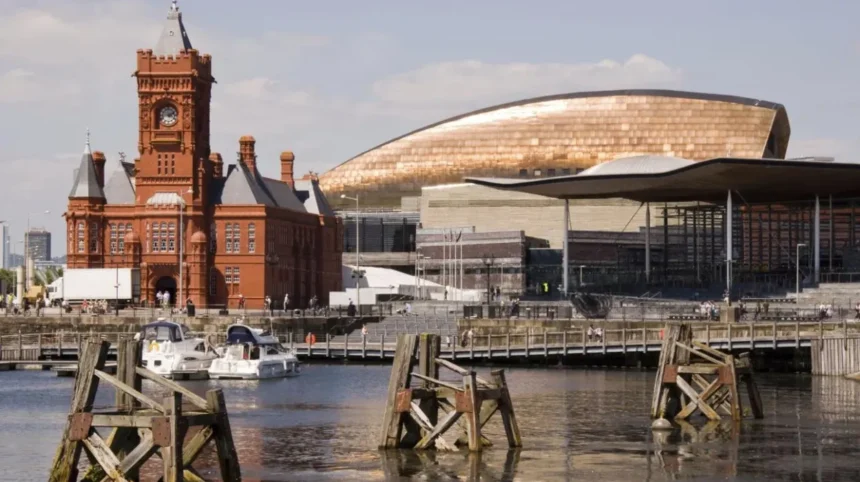
The Pierhead is an important late Victorian landmark that represents Cardiff’s dock administration and maritime power. Completed in 1897, the building was designed by William Frame and constructed from glazed terracotta, becoming a prominent architectural gateway to the docks.
The Pierhead was built as the headquarters and offices of the Bute Dock Company. Its construction followed the destruction by fire of the company’s earlier offices in 1892. The building was designed by William Frame and completed in 1897.
The building was commissioned during a period when Cardiff’s dock system was handling enormous volumes of coal. Its architecture reflected the financial and commercial importance of the port.
Glazed terracotta gives the Pierhead its distinctive exterior. The material was manufactured by JC Edwards & Co of Acrefair near Ruabon, linking the building to industrial manufacturing within Wales.
The Pierhead’s clock became an important visual feature of the waterfront. The building’s position beside the water also made it one of the first major structures encountered by ships approaching Cardiff’s docks.
Today, the Pierhead forms part of the Welsh civic and cultural landscape alongside the Senedd. Its importance therefore extends beyond industrial history into the modern political identity of Wales.
How did Cardiff become one of the world’s major coal ports?
Cardiff became a leading global coal port because railway and dock infrastructure connected the South Wales coalfield with international shipping. Coal exports increased from about 2 million tonnes in 1862 to more than 10 million tonnes in 1913, creating a major maritime economy.
The figures demonstrate the scale of Cardiff’s transformation. Museum Wales records approximately 2 million tonnes of coal exported from Cardiff Docks in 1862. By 1913, exports had reached approximately 10.7 million tonnes.
Cardiff’s coal was particularly valuable for steamships and industrial machinery because South Wales produced high-quality steam coal. The fuel became an important commodity for international shipping and industrial economies.
By 1910, approximately 250 tramp steamers were owned at Cardiff. Tramp steamers operated without fixed schedules and transported cargoes according to commercial demand.
The port’s importance extended beyond coal loading. Cardiff developed a network of shipowners, brokers, merchants, railway operators, dock workers and supporting businesses.
The Coal Exchange represented this commercial system. Shipping companies required coal cargoes, while mine owners required transport routes to international markets. Cardiff’s docks connected these interests.
The 1913 peak demonstrates the maturity of this system. Cardiff’s port had developed from a regional facility into a major international coal-export centre.
What role did Tiger Bay and Butetown play in the heritage of Cardiff Bay?
Tiger Bay was the historic multicultural dockland community around Butetown and Cardiff Docks. Its population included seafarers and workers from many parts of the world. Cardiff Harbour Authority estimates that people from at least 50 nationalities settled in the area.
Butetown developed alongside Cardiff’s docks. The growth of international shipping brought sailors, dock workers, merchants and families from different countries and cultural backgrounds.
Cardiff Harbour Authority estimates that at least 50 nationalities settled in the dockland community. This international population became strongly associated with the area known as Tiger Bay.
The community’s history is an essential part of the Cardiff Bay Heritage Route because the docks were not only economic infrastructure. They also created a distinctive urban population shaped by international maritime connections.
People worked aboard ships, loaded cargoes, serviced vessels, operated businesses and provided services to a constantly changing population of sailors.
Butetown therefore provides an important social dimension to Cardiff Bay’s industrial history. A heritage walk that focuses only on large buildings misses the communities that lived and worked around them.
The surviving streets and community institutions help visitors understand the relationship between global trade and local urban life.
What is the Norwegian Church’s connection with Cardiff Bay?
The Norwegian Church reflects Cardiff’s international maritime connections and the presence of Scandinavian sailors in the docklands. The church became a familiar landmark for Norwegian seafarers visiting Cardiff and later gained cultural significance through its association with the city’s waterfront heritage.
The Norwegian Church stands within the wider Cardiff Bay heritage landscape and represents the international character created by the port.
Norwegian sailors regularly visited Cardiff because the city’s docks were connected to international shipping networks. A church provided religious and social support for the Norwegian maritime community.
The building later became culturally significant for another reason. The writer Roald Dahl was born in Cardiff to Norwegian parents, and the Norwegian Church is associated with his family’s connection to the city.
The church is now known as the Norwegian Church Arts Centre. Museum Wales identifies it among Cardiff Bay’s major attractions alongside the Pierhead, Senedd, Wales Millennium Centre and Butetown History and Arts Centre.
Its significance therefore combines maritime, migration, religious and cultural history.
For visitors following the heritage route, the church demonstrates how Cardiff’s global trading connections influenced the everyday cultural institutions of the docklands.

How does the Senedd fit into the Cardiff Bay Heritage Route?
The Senedd represents the modern civic transformation of Cardiff Bay. Opened on 1 March 2006, it became the home of the Welsh Parliament and introduced a major contemporary architectural landmark to an area historically dominated by docks, coal trading and maritime commerce.
The Senedd was designed by the Richard Rogers Partnership, now Rogers Stirk Harbour + Partners, following an international architectural competition. It officially opened on St David’s Day, 1 March 2006.
Its architecture contrasts deliberately with the Victorian industrial buildings around the waterfront. Large glazed surfaces create visual connections between the building and its surroundings.
The building includes the Siambr, the debating chamber of the Welsh Parliament, together with public spaces and visitor facilities.
Sustainability formed part of the original design. The building uses natural ventilation, natural light and renewable technologies, including a ground-source heat pump.
The Senedd also demonstrates how Cardiff Bay’s identity changed after the decline of the coal port. The waterfront became a location for national government, cultural institutions and public architecture.
In 2026, the Senedd reached its twentieth anniversary. A redevelopment of the Siambr was completed in February 2026 to accommodate the expanded Welsh Parliament following constitutional changes.
What does the Wales Millennium Centre contribute to the route?
The Wales Millennium Centre represents Cardiff Bay’s transition from an industrial dockland into a major cultural district. Opened in 2004, the centre became one of the waterfront’s principal arts venues and forms an important modern landmark beside Roald Dahl Plass.
The Wales Millennium Centre stands within the former dockland environment and demonstrates the scale of regeneration that transformed Cardiff Bay.
Its cultural role differs fundamentally from the historic purposes of the docks. Instead of moving coal and supporting maritime commerce, the centre supports theatre, performance, music and cultural activity.
Its location is significant because it forms part of a wider concentration of modern cultural buildings. Museum Wales identifies the Wales Millennium Centre, Senedd, Pierhead, Norwegian Church and Butetown History and Arts Centre among Cardiff Bay’s major attractions.
Roald Dahl Plass provides an open public space in front of the centre. The name recognises Roald Dahl, the Cardiff-born author whose family had Norwegian connections.
The area shows how the physical landscape of the former docks was reused. Large-scale public architecture now occupies land previously associated with industrial transport and maritime trade.
How does Cardiff Bay’s regeneration affect its heritage?
Cardiff Bay’s regeneration changed a large former dockland area into a mixed-use waterfront containing cultural, residential, commercial and public spaces. The Cardiff Bay Development Corporation was established in 1987 to regenerate approximately 1,100 hectares of derelict Cardiff and Penarth docklands.
By the early 1980s, Cardiff Bay had experienced major economic decline. Coal exports had virtually ceased by the 1960s, while changing shipping technology and international markets reduced the importance of traditional dock operations.
The closure of East Moors Steelworks in 1978 further affected employment and the wider industrial economy of South Cardiff. The steelworks closure resulted in approximately 3,200 job losses.
The Cardiff Bay Development Corporation was established in April 1987. Its regeneration programme covered approximately 1,100 hectares of former dockland in Cardiff and Penarth.
The transformation introduced new roads, public spaces, housing, cultural venues and commercial developments.
The heritage challenge is to understand this regeneration without separating it from the industrial landscape that preceded it. Modern Cardiff Bay exists because the former port changed economically and physically.
A heritage route provides a practical way to read these different phases together.
How should visitors follow the Cardiff Bay Heritage Route?
Visitors can follow the route as a connected waterfront walk beginning around Mount Stuart Square and the former commercial docklands before continuing towards the Pierhead, Senedd, Norwegian Church, Roald Dahl Plass and Wales Millennium Centre, with additional heritage sites extending towards Butetown.
A practical walking sequence starts around Mount Stuart Square. This allows visitors to begin with the commercial infrastructure associated with Cardiff’s coal-export economy.
The route can then continue towards the Pierhead. The building provides a clear architectural connection to the Bute Dock Company and nineteenth-century dock administration.
From the Pierhead, the route continues towards the Senedd. This section demonstrates the architectural transition from Victorian maritime administration to twenty-first-century Welsh civic architecture.
The Norwegian Church provides another historical layer, connecting the waterfront with international seafarers and Cardiff’s multicultural dockland population.
Roald Dahl Plass and the Wales Millennium Centre then demonstrate the cultural redevelopment of the former industrial waterfront.
Visitors interested in community history can extend the route into Butetown and explore the streets associated with the historic dockland population.
The precise distance depends on the starting point and the number of additional stops included. The route works best as a flexible heritage walk rather than a rigid timed itinerary.
Which heritage themes should visitors look for along the route?
The principal heritage themes are industrialisation, coal exports, maritime trade, migration, architecture, community life, regeneration and modern Welsh civic identity. Together, these themes explain why Cardiff Bay developed from an industrial port into a nationally significant cultural and public waterfront.
Industrialisation is visible through the former dock layout and surviving buildings connected with nineteenth-century trade.
Coal exports explain the economic foundation of Cardiff’s dock expansion. The port’s 1913 peak of approximately 10.7 million tonnes demonstrates the international scale of the coal economy.
Maritime trade is represented by the Pierhead and the surviving dock infrastructure.
Migration is represented by Butetown, Tiger Bay and institutions such as the Norwegian Church. Cardiff’s docks attracted residents and workers from numerous countries, creating a highly international community.
Architecture provides another layer. Victorian buildings such as the Pierhead contrast with contemporary structures such as the Senedd and Wales Millennium Centre.
Regeneration explains the physical landscape visible today. Modern Cardiff Bay is not a separate place from the historic docks. It occupies the same broad waterfront transformed by economic decline and redevelopment.
Modern civic identity is represented by the Senedd, which places Welsh democratic institutions directly within the former dockland landscape.
Why is Cardiff Bay’s industrial heritage still relevant today?
Cardiff Bay’s industrial heritage remains relevant because the modern waterfront developed directly from the economic rise, decline and redevelopment of the historic port. Understanding coal, docks, railways, migration and regeneration explains the architecture, communities and public spaces visible around Cardiff Bay today.
The heritage of Cardiff Bay explains why the waterfront has such a distinctive mixture of buildings and spaces.
The docks were created to serve industrial markets. Their expansion depended on coal production, railway transport and international shipping.
The decline of coal changed the economic purpose of the waterfront. Cardiff then faced the challenge of reusing extensive dockland affected by industrial decline.
The regeneration programme produced a new urban landscape while retaining important historic structures. The Pierhead, historic dock areas, Mount Stuart Square and community heritage remain important reference points.
Cardiff Bay also demonstrates the relationship between local and international history. Coal extracted from Welsh valleys was exported around the world, while international maritime workers settled around the docks.
The result was an area where industrial infrastructure and multicultural community life developed together.
Today, the same waterfront contains national government, arts organisations, public spaces, businesses, housing and tourism. The historic route connects these different uses through a single geographical story.
Explore More Area Guide
Walking Through Old Butetown: Cardiff’s Tiger Bay History
Hidden Heritage Around Splott: Cardiff’s Industrial History
How is Cardiff Bay heritage likely to remain important in the future?
Cardiff Bay heritage will remain important as regeneration, transport investment and cultural activity continue to change the waterfront. New infrastructure must operate alongside protected buildings, historic communities and surviving dock features that preserve Cardiff’s industrial and maritime identity.
Future development is already connected with transport improvements. Cardiff Council is progressing the first phase of Cardiff Crossrail, a proposed tramway connection between Cardiff Central and Cardiff Bay. Construction of the main phase is scheduled to begin in 2026.
The first phase includes a new tramway connection, a new stop near Cardiff Central, an additional platform at Cardiff Bay railway station and public-space improvements along the route.
Improved connectivity will change how visitors and residents reach Cardiff Bay. Heritage buildings will therefore sit within an increasingly connected urban district.
Preserving the historical character of the area requires understanding both individual buildings and the wider relationships between streets, docks, railway infrastructure and waterfront spaces.
Cardiff Council’s conservation work includes Mount Stuart Square and the Pierhead among designated areas requiring attention to the historic built environment.
The Cardiff Bay Heritage Route therefore remains useful as an interpretive framework. It links the port’s industrial origins with the waterfront’s present civic, cultural and transport functions.
What makes the Cardiff Bay Heritage Route significant for visitors?
The Cardiff Bay Heritage Route is significant because it connects Cardiff’s industrial, maritime, multicultural and modern civic histories within one waterfront landscape. The route shows how coal exports created the docks, how communities developed around them and how regeneration reshaped the area.
Cardiff Bay is more than a modern leisure destination. Its buildings and public spaces occupy a landscape created by centuries of economic and urban change.
The nineteenth-century dock system established Cardiff as a major international coal port. By 1913, Cardiff’s coal exports had reached approximately 10.7 million tonnes.
The docks also created an international community. At least 50 nationalities settled in the wider dockland area according to Cardiff Harbour Authority.
The twentieth century brought industrial decline, reducing the role of coal and leaving extensive dockland in need of regeneration.
The late twentieth and early twenty-first centuries introduced a new identity based on culture, public architecture, residential development, tourism and Welsh civic institutions.
The route brings these periods together. Mount Stuart Square explains commercial history. The Pierhead represents dock administration. Butetown represents community and migration. The Norwegian Church represents maritime links. The Senedd represents modern Welsh democracy. The Wales Millennium Centre represents cultural regeneration.
Taken together, these places provide a factual route through the development of Cardiff Bay from nineteenth-century industrial port to modern Welsh waterfront.
What is the Cardiff Bay Heritage Route?
The Cardiff Bay Heritage Route is a heritage-focused journey through Cardiff’s historic docklands, connecting industrial, maritime, religious, cultural and civic landmarks around the waterfront.