Roath Park is a historic public park in Cardiff, Wales, known for its ornamental lake, Victorian gardens, conservatory and recreational facilities. It occupies a substantial green space in northeast Cardiff and provides outdoor activities for residents, families, visitors and nature enthusiasts.
- What Is the History of Roath Park?
- Why Is Roath Park Lake the Main Attraction?
- What Is the Scott Memorial Lighthouse at Roath Park?
- What Can Visitors See in the Roath Park Gardens?
- What Can Visitors Discover Inside Roath Park Conservatory?
- What Wildlife Can Visitors See at Roath Park?
- What Walking Routes Can Visitors Follow Around Roath Park?
- What Family Activities Are Available at Roath Park?
- How Can Visitors Reach Roath Park in Cardiff?
- What Are Roath Park’s Opening Times and Visitor Facilities?
- What Is the Best Time of Year to Visit Roath Park?
- Why Is Roath Park Important to Cardiff’s Heritage?
- How Can Visitors Plan a Responsible Visit to Roath Park?
- Why Should You Visit Roath Park in Cardiff?
Roath Park is situated in the Roath and Lakeside area of Cardiff, the capital city of Wales. The park forms part of Cardiff’s extensive network of public green spaces and combines formal landscaping with open recreational areas and natural habitats.
The park is recognised for its Victorian landscape design and its contribution to Cardiff’s urban heritage. Cadw, the Welsh government’s historic environment service, registered Roath Park as a Grade I historic park and garden on 1 February 2022. This designation recognises its historical importance, surviving landscape framework and architectural features.
Roath Park includes a large lake, botanical gardens, a pleasure garden, a wild garden and a recreation ground. Each area provides a different experience, from walking beside the water to exploring planted landscapes and participating in outdoor sports.
The park also contributes to the environmental character of Cardiff. Trees, planted borders, water habitats and open lawns provide spaces for wildlife and outdoor recreation within a developed urban area.
What Is the History of Roath Park?
Roath Park was established during the late Victorian period and officially opened on 20 June 1894. Land donated by the Marquess of Bute and other landowners enabled Cardiff to develop a public park with a lake, botanical gardens and recreational facilities.
The park’s history began in 1887, when landowners made land available for the creation of a public park in the Roath Valley. Much of the original site consisted of boggy ground, which required extensive landscape engineering before it became suitable for public recreation.
Development work began in 1889. William Harpur, Cardiff’s borough engineer, helped lay out the park, while William Wallace Pettigrew played an important role in planting and landscape development. The resulting design incorporated formal gardens, a large artificial lake and spaces for recreation.
Roath Park officially opened on 20 June 1894. The opening marked an important stage in the development of publicly accessible green space in Cardiff. The park was conceived to provide recreation, outdoor exercise and educational opportunities for the city’s growing population.
Historical records describe the original development as an ambitious municipal project. The initial site covered approximately 120–121 acres, although figures vary between historical accounts. Its lake became a defining feature, while planted gardens and recreation grounds provided different uses across the wider landscape.
The park’s development continued after the opening ceremony. Additional facilities and commemorative structures appeared during the early twentieth century, strengthening its role as a major public destination.
In 2022, Cadw designated Roath Park a Grade I historic park and garden. This status reflects the importance of its surviving Victorian framework, historic structures and association with the development of public parks in Wales.
Why Is Roath Park Lake the Main Attraction?
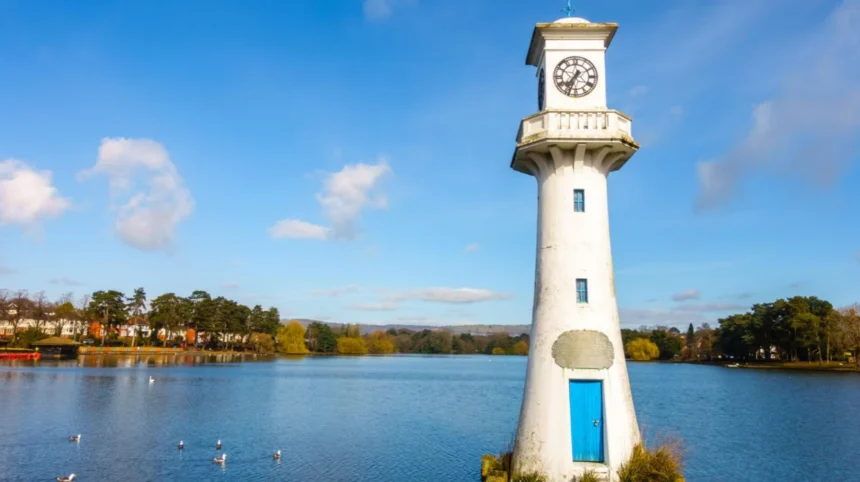
Roath Park Lake is the park’s central landmark, featuring a large artificial body of water, a waterside promenade and views of the distinctive Scott Memorial Lighthouse. Visitors use the surrounding paths for walking, wildlife observation, photography and seasonal boating activities.
The lake was created by damming the Nant Fawr stream as part of the Victorian park development. Engineers transformed previously boggy land into a landscaped water feature that became central to the park’s design.
Historical landscape records place the lake at approximately 11.7 hectares, or 29 acres. The surrounding promenade provides an accessible route for enjoying views across the water and observing the park’s changing scenery.
The lake supports a variety of waterbirds, including ducks and swans. Visitors regularly observe birds near the water’s edge, although wildlife numbers and activity vary according to the season.
The lake also has an important recreational history. Boating and aquatic sports featured in the park’s early public use, and boating remains associated with the visitor experience. Anyone planning to hire a boat should check current operating arrangements and seasonal availability before travelling.
Walking beside the lake provides a straightforward way to explore Roath Park. Visitors can stop at viewing points, photograph the water and lighthouse, or continue towards the botanical gardens and other sections of the park.
The lake is also a significant part of the area’s historic landscape. Its presence influenced surrounding residential development and helped establish Roath Park as one of Cardiff’s recognisable green spaces.
Visitors should remain on designated paths and avoid entering the water. Feeding wildlife responsibly and following notices around the lake help protect birds and maintain the park for everyone.
What Is the Scott Memorial Lighthouse at Roath Park?
The Scott Memorial Lighthouse is a distinctive white clock-tower structure beside Roath Park Lake. Completed in 1915, it commemorates Captain Robert Falcon Scott and his Antarctic expedition, which departed from Cardiff aboard the Terra Nova in June 1910.
The lighthouse is one of Roath Park’s most recognisable historic features. Its design resembles a maritime lighthouse, although it serves as a memorial rather than a navigational aid.
Captain Robert Falcon Scott was a British Antarctic explorer whose expedition aimed to reach the South Pole. Scott and four companions reached the pole in January 1912, after Norwegian explorer Roald Amundsen had arrived first. The British party died during its return journey.
The expedition’s connection with Cardiff is central to the memorial’s significance. Scott’s ship, the Terra Nova, departed from the Port of Cardiff on 15 June 1910. A memorial commemorating Scott and his companions was unveiled in the park in December 1913, followed by the construction of the lighthouse-shaped clock tower.
The structure was completed in 1915. Its architectural details include a white exterior, a rock-like base, clocks and a ship-shaped weather vane. The memorial contributes to the park’s historic character and connects Cardiff’s maritime history with the wider story of Antarctic exploration.
The lighthouse is an important stop for visitors exploring Roath Park’s heritage. It provides a focal point for photographs and helps explain why the lake is more than a recreational feature.
Visitors should check on-site information before expecting access to the structure’s interior. The memorial’s principal public value lies in its external architecture, commemorative purpose and prominent position beside the water.

What Can Visitors See in the Roath Park Gardens?
Roath Park’s gardens combine formal planting, botanical displays, mature trees and quieter landscaped areas. Visitors can explore the pleasure gardens, rose beds, botanical gardens and wild garden to experience different planting styles, seasonal flowers and historic landscape features.
The gardens form an important part of Roath Park’s Victorian design. Rather than functioning as a single uniform landscape, the park contains distinct sections developed for horticulture, relaxation and outdoor recreation.
The formal gardens feature ornamental planting and landscaped paths. Their appearance changes through the year as seasonal flowers bloom and established shrubs and trees provide structure.
The rose garden is a notable feature during the flowering season. Roses and other planted displays attract visitors interested in horticulture, garden photography and quiet outdoor walks. The exact timing and intensity of flowering depend on weather, maintenance and the varieties planted.
The botanical gardens provide further horticultural interest. The wider garden area includes the conservatory, where visitors can explore plants that require a warmer growing environment than the outdoor Welsh climate provides.
The wild garden offers a different atmosphere from the more formal planting areas. Its naturalistic character supports a more informal experience of the park’s vegetation and provides opportunities to observe how planting and habitat features differ across the site.
Roath Park’s historic landscape retains much of its original framework, although planting and some structures have changed over time. Cadw’s Grade I registration recognises the park’s importance as a surviving example of a late Victorian public park.
Visitors interested in gardening should allow time to explore beyond the lake promenade. The gardens reveal another dimension of Roath Park, particularly during spring and summer, when foliage and flowering plants add seasonal variety.
What Can Visitors Discover Inside Roath Park Conservatory?
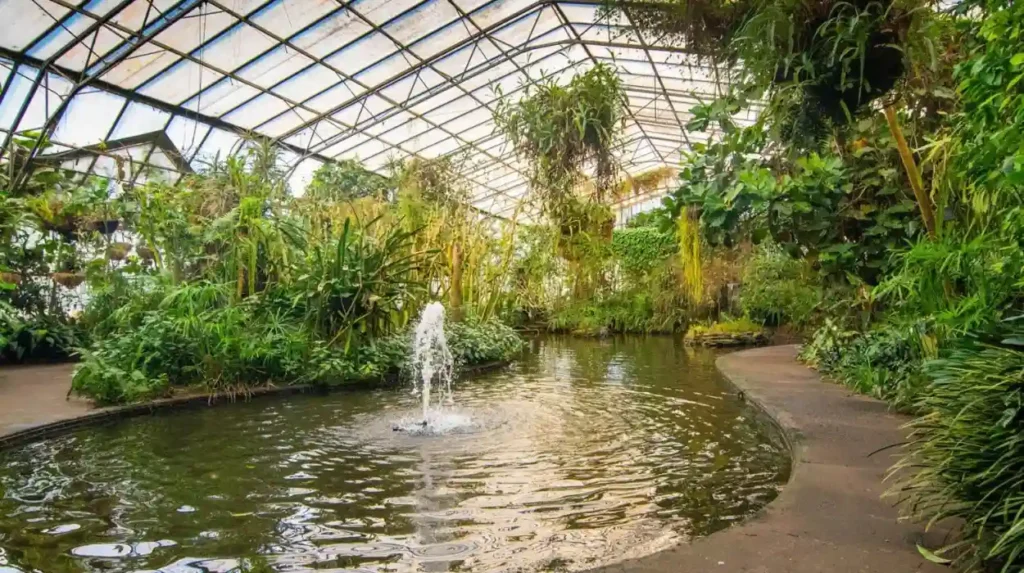
Roath Park Conservatory is a heated glasshouse in the botanical gardens, featuring tropical and subtropical plants, including palms, banana trees and orchids. Its indoor environment offers visitors a horticultural attraction throughout the year, subject to current opening times and admission arrangements.
The conservatory provides an indoor contrast to the park’s outdoor landscape. Its warm growing conditions support plants that are not suited to Cardiff’s cooler, wetter climate.
According to Outdoor Cardiff, the conservatory contains palms, banana trees, orchids and the distinctive bat flower. An indoor pond and waterfall add to the setting, with aquatic animals and birds also reported among its features.
The current conservatory building dates from the 1970s. Cardiff’s parks service allocated funding for its development in 1973–1974, and it opened around the summer of 1975. It replaced two earlier glasshouses known as the Chrysanthemum House and Cactus House.
The conservatory supports the park’s educational role by allowing visitors to see a range of plant forms and growing environments in one location. It is also relevant to families and anyone interested in horticulture.
Opening hours and admission charges are separate from access to the wider park. Outdoor Cardiff publishes seasonal opening information, but visitors should confirm current prices, hours and any temporary closures before visiting.
The conservatory is particularly useful during colder or rainy weather, when an indoor attraction provides an alternative to outdoor walking. Combining a visit to the glasshouse with the botanical gardens and lake creates a varied Roath Park itinerary.
What Wildlife Can Visitors See at Roath Park?
Roath Park provides opportunities to observe urban wildlife around its lake, trees, gardens and planted areas. Common sightings include ducks, swans and other waterbirds, while mature vegetation offers habitat for birds and invertebrates throughout the changing seasons.
The lake is the most obvious place to look for wildlife. Waterbirds gather along the edges and on the water, making the promenade useful for casual observation and nature photography.
The park’s trees and planted borders provide additional habitats. Birds use trees for shelter and nesting, while flowering plants support insects when suitable flowers are available. The range of habitats reflects the park’s combination of managed gardens and more naturalistic planting.
Wildlife activity changes throughout the year. Spring brings increased bird activity and fresh plant growth. Summer offers longer daylight hours for observation, while autumn introduces changing foliage and seasonal movements among some bird species. Winter provides opportunities to watch waterbirds against the park’s quieter landscape.
Visitors can help protect wildlife by observing animals from suitable distances and keeping dogs under control where required. Feeding birds should follow local guidance, as unsuitable food can harm wildlife and contribute to water pollution.
Roath Park’s value for wildlife also depends on maintaining its water, trees and planted habitats. Respecting these features helps preserve the park as a shared recreational and ecological space.
What Walking Routes Can Visitors Follow Around Roath Park?
Visitors can explore Roath Park through paths beside the lake, routes through formal gardens and quieter walks in the park’s northern sections. The interconnected landscape supports short visits, relaxed strolls and longer outings combining several areas of the park.
The lake promenade is a natural starting point for a walk. It provides open views across the water and access to the lighthouse memorial, making it suitable for visitors who want to focus on the park’s best-known landmarks.
Garden paths offer a different route through the landscape. Visitors can move between planted beds, botanical areas and quieter sections without concentrating exclusively on the lake.
The wider park extends beyond the main water feature. Exploring additional sections reveals the relationship between the gardens, recreation ground and more naturalistic areas. Visitors planning a longer walk should check a current park map to identify entrances, paths and any temporary restrictions.
Roath Park also suits visitors who prefer flexible walking rather than a fixed itinerary. A short visit can focus on the lake and lighthouse, while a longer outing can include the conservatory, gardens and surrounding green spaces.
Walking conditions depend on weather and path maintenance. Rain can leave some surfaces wet or slippery, so suitable footwear is useful. Visitors requiring step-free access should check the current access information for individual paths and facilities before setting out.
What Family Activities Are Available at Roath Park?
Roath Park offers families open spaces, lakeside walks, gardens, wildlife observation and opportunities to explore its historic landmarks. The variety of outdoor and indoor attractions makes it suitable for family outings, provided visitors check facilities, seasonal activities and access arrangements before travelling.
The lake gives children opportunities to observe ducks and swans while learning about waterbirds and their habitats. Adults can combine wildlife observation with a walk along the promenade.
The gardens offer room to explore planted landscapes and notice seasonal changes. Families interested in plants can also visit the conservatory when it is open, where tropical species introduce a different environment from the outdoor gardens.
The recreation ground provides space for outdoor activity and informal exercise. Families should use designated play and recreational areas where available and follow signs relating to permitted activities.
A visit can also include a simple heritage walk. The lighthouse memorial introduces the history of Captain Scott’s Antarctic expedition, while the wider park illustrates how Victorian public spaces were designed for recreation and education.
Families with young children should plan around toilet facilities, refreshments, walking distances and weather conditions. Facility availability can change, so checking current information before arrival helps avoid unnecessary inconvenience.
Roath Park’s different sections make it possible to tailor a visit to a family’s interests. A shorter outing can concentrate on the lake, while a longer visit can incorporate gardens, the conservatory and recreation areas.
How Can Visitors Reach Roath Park in Cardiff?
Roath Park is located in northeast Cardiff and can be reached using local buses, walking routes, cycling connections and nearby roads. Visitors should select the entrance closest to their intended attraction and check current public transport, parking and accessibility information before travelling.
The park sits within Cardiff’s urban area, making it accessible to residents and visitors staying in different parts of the city. The best route depends on whether the main destination is the lake, conservatory, gardens or recreation ground.
By bus: Cardiff’s local bus network serves the wider Roath Park area. Visitors should check current routes, stop locations and service times through the local transport operator before travelling.
By car: On-street parking is available in the surrounding residential streets, according to Outdoor Cardiff. Availability varies with demand, and visitors should follow local parking restrictions and avoid blocking residential access.
By bicycle: Cycling can provide a practical way to reach the park from nearby Cardiff neighbourhoods. Visitors should check local cycling routes and follow signs indicating where riding is permitted within the park.
On foot: Walking from nearby residential areas allows visitors to enter through a convenient access point and explore the park at their own pace. Those arriving from further away can combine walking with public transport.
Visitors should identify the appropriate entrance before departure, particularly when visiting the conservatory or recreation ground rather than the lake. Checking a current map also helps visitors plan a route that suits their walking distance and accessibility requirements.
What Are Roath Park’s Opening Times and Visitor Facilities?
Roath Park’s main parkland and pleasure gardens generally open from 7:30 am until 30 minutes before sunset. The recreation ground has separate access arrangements, while the conservatory operates seasonal hours and charges admission. Visitors should verify current details before arrival.
Outdoor Cardiff publishes the park’s general opening arrangements and explains that the recreation ground is open 24 hours a day. The conservatory has separate opening hours, which vary between summer and winter.
Visitors should distinguish between access to the public park and access to individual attractions. A park entrance being open does not guarantee that the conservatory or other facilities are operating.
The following information helps visitors plan their visit:
- Park access: General park opening hours follow the published daytime schedule.
- Conservatory: Check seasonal hours and admission prices before travelling.
- Parking: Nearby on-street parking is subject to local restrictions and availability.
- Refreshments: Check which cafés, kiosks or other facilities are operating on the day.
- Accessibility: Review access information for individual paths, entrances and buildings if step-free access is important.
The park’s facilities and activities can change because of maintenance, weather, seasonal schedules or improvement works. Checking the latest official information helps visitors plan around temporary closures and avoid relying on outdated opening times.
What Is the Best Time of Year to Visit Roath Park?
Roath Park is accessible throughout the year, but spring and summer provide longer daylight hours, active garden displays and favourable conditions for outdoor exploration. Autumn brings changing foliage, while winter offers quieter walks and opportunities to observe waterbirds.
Spring is a suitable time to explore the gardens as flowering plants and fresh foliage develop. Visitors interested in horticulture can combine the formal garden areas with a visit to the conservatory.
Summer provides longer days for lakeside walks, photography and family outings. Seasonal boating activities and other facilities depend on their operating schedules, so checking availability remains important.
Autumn introduces changing colours among the park’s trees and planted areas. The lake and surrounding paths provide opportunities for photography, while cooler weather can make longer walks more comfortable.
Winter offers a different experience, with reduced daylight and seasonal changes in planting. The conservatory provides an indoor attraction when it is open, although visitors should confirm its winter schedule before making a dedicated trip.
Weather conditions influence the practical experience in every season. Cardiff’s rain can affect path surfaces, and strong winds can make exposed areas around the lake less comfortable. Checking the forecast and choosing appropriate clothing helps visitors prepare.
Why Is Roath Park Important to Cardiff’s Heritage?
Roath Park is important to Cardiff’s heritage because it preserves a substantial example of Victorian public park design. Its lake, gardens, historic structures and recreational spaces demonstrate how nineteenth-century urban planning incorporated public recreation, horticulture and access to green space.
Roath Park was Cardiff’s first publicly owned public park, according to the historical record maintained by Coflein, the National Monuments Record of Wales. Its development formed part of the city’s wider growth and investment in public amenities.
Its historical importance extends beyond the opening date. The surviving landscape retains the broad structure of the original design, although some planting and built features have changed.
The association with the Pettigrew family is another important part of the park’s history. William Wallace Pettigrew contributed to the planting and development of the landscape, connecting Roath Park with the wider history of horticulture and municipal parks in Cardiff.
The Scott Memorial Lighthouse adds an international historical connection. It commemorates an Antarctic expedition that departed from Cardiff and links the park to maritime exploration during the early twentieth century.
In May 2026, a new ten-step heritage trail was reported at Roath Park. The trail uses signs and QR codes to introduce visitors to the park’s history, including its gardens, historic trees, musical events and links to the Pettigrew family.
This heritage trail gives visitors a structured way to understand the park while walking through it. It also reinforces Roath Park’s continuing role as both a recreational destination and an important part of Cardiff’s historic landscape.
Explore More Area Guide
Bute Park Walking Guide: Routes, History and Attractions in Cardiff
Cardiff Bay Walking Route Guide: Landmarks, Distance and Barrage
How Can Visitors Plan a Responsible Visit to Roath Park?
Visitors can help protect Roath Park by respecting wildlife, following park signs, disposing of rubbish properly and staying on designated paths. Checking access arrangements, seasonal facilities and local notices also supports a safer, more enjoyable visit for other park users.
Responsible visiting helps preserve the park’s historic landscape and natural habitats. The lake, gardens and mature trees require ongoing care, while public paths and recreational areas serve people with different needs.
Visitors should observe wildlife without disturbing nesting birds or approaching animals too closely. Feeding waterbirds should follow local guidance, and rubbish should always be placed in appropriate bins or taken away when bins are unavailable.
Dogs should be kept under control, with owners following local rules and cleaning up after their animals. Visitors should also respect areas where particular activities are restricted.
The park’s historic features deserve similar care. Avoid damaging plants, climbing on structures where prohibited or leaving marks on memorials. The Scott Memorial Lighthouse and the wider Grade I registered landscape are important elements of Cardiff’s heritage.
Before travelling, visitors should check current information about access, maintenance work and facility opening times. This is particularly useful for people planning a longer walk or visiting with children or mobility requirements.
Roath Park remains valuable because it combines public recreation, horticultural interest, wildlife habitats and historical significance in one urban landscape. Responsible use helps maintain those benefits for Cardiff residents and future visitors.
Why Should You Visit Roath Park in Cardiff?
Roath Park is a significant Cardiff landmark that combines Victorian history, a large ornamental lake, the Scott Memorial Lighthouse, formal gardens, a conservatory and recreational spaces. Its historical importance is recognised by Cadw’s Grade I registration, while its different landscapes support walking, wildlife observation and family outings.
Visitors can explore the lake promenade, discover the gardens, learn about Captain Scott’s Antarctic expedition and follow the heritage trail introduced in 2026. Seasonal changes provide different reasons to return throughout the year.
For residents and visitors seeking outdoor activities in Cardiff, Roath Park offers a combination of accessible recreation and historical interest. Checking current opening times, transport arrangements and facility information before travelling helps make the most of a visit.
Where is Roath Park located?
Roath Park is located in northeast Cardiff, Wales. Its main attractions include Roath Park Lake, the Scott Memorial Lighthouse, botanical gardens, the conservatory and recreational spaces.