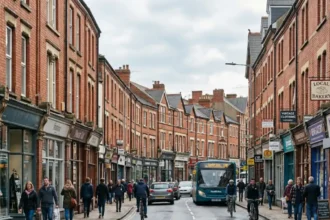
The South Wales Metro is an integrated public transport programme centred on Cardiff and the surrounding Cardiff Capital Region. It combines rail, tram-trains, buses, walking and cycling connections to create a more frequent, accessible and connected transport network across Cardiff and the South Wales Valleys.
- What is the South Wales Metro?
- Why was the Cardiff Metro planned?
- Which railway lines form the Core Valley Lines?
- How does Metro electrification work?
- What trains will operate on the Cardiff Metro?
- What improvements are planned for Cardiff stations?
- How frequent will Cardiff Metro services be?
- How will Metro connect Cardiff with Cardiff Bay?
- How will Metro improve walking, cycling and bus connections?
- What are the future Metro plans beyond the current Cardiff projects?
- What does the Cardiff Metro mean for passengers?
- Why is Cardiff central to the South Wales Metro?
- What is the long-term significance of Cardiff Metro plans?
Transport for Wales (TfW) is responsible for delivering major elements of the Metro programme. The Welsh Government owns the Core Valley Lines, while TfW manages the railway assets through its infrastructure arrangements. The Core Valley Lines were transferred from Network Rail to TfW on 28 March 2020.
The Metro is not a single railway line. It is a regional transport programme involving railway infrastructure, stations, rolling stock, electrification, interchange facilities, bus connections and active-travel improvements. Its principal urban focus is Cardiff, with routes extending into communities across the Valleys and wider Cardiff Capital Region.
The programme addresses several long-term transport requirements. These include increasing rail capacity, improving journey frequency, reducing dependence on private cars, improving accessibility and supporting connections between residential communities, employment centres, education facilities and Cardiff city centre.
What is the South Wales Metro?
The South Wales Metro is an integrated transport network connecting Cardiff with the Valleys and wider South East Wales through rail, tram-trains, buses, walking and cycling infrastructure. Its central objective is faster, more frequent, accessible and better-connected public transport.
The Metro connects Cardiff with important communities including Pontypridd, Caerphilly, Merthyr Tydfil, Aberdare, Treherbert, Rhymney and Coryton. Cardiff functions as the principal interchange and employment centre within the network.
The programme is designed around integration rather than railway infrastructure alone. Rail services form the backbone of the Core Valley Lines, while bus services, walking routes and cycling infrastructure connect passengers with stations and final destinations.
Transport for Wales describes the South Wales Metro as a network intended to improve access to employment, healthcare and education. The programme also supports more sustainable travel across South Wales.
The Metro therefore has several connected components. Examples include electrified railway infrastructure, new tram-trains, upgraded stations, improved signalling, additional platforms, accessible footbridges, cycle facilities and improved passenger information.
This integrated approach is important for Cardiff because transport demand extends beyond the city centre. Many people travel between Cardiff and surrounding communities every day for employment, education, healthcare, shopping and leisure.
Why was the Cardiff Metro planned?
Cardiff Metro was planned to address congestion, increase public transport capacity, improve connections between Cardiff and the Valleys, and support sustainable regional growth. The programme responds to long-term transport pressures involving rail capacity, road congestion, accessibility and regional connectivity.
The South Wales Metro developed from wider efforts to modernise public transport in South East Wales. The South East Wales Transport Commission published its final recommendations in November 2020 after examining sustainable alternatives to road congestion.
The Welsh Government subsequently endorsed the Commission’s recommendations in principle in January 2021. The response included measures focused on increasing rail capacity, reducing journey times and improving network resilience.
Cardiff has a particularly important role because it is the largest employment and service centre in the region. Transport links between the city and surrounding communities influence access to jobs, education, healthcare and commercial activity.
Road congestion also forms part of the wider transport challenge. The South East Wales Transport Commission examined alternatives to travel on the M4 corridor, including improved rail and public transport connections.
The Metro provides a framework for addressing these requirements through investment in rail infrastructure and improved interchange. The programme also supports the wider objective of integrating transport modes rather than treating rail, buses and active travel as separate systems.
The Welsh Government’s response also included work towards integrated ticketing and a unified zonal approach for South East Wales. The objective is a simpler transport system covering rail and bus journeys.
Which railway lines form the Core Valley Lines?
The Core Valley Lines form the principal rail infrastructure of the South Wales Metro. They include the Treherbert, Aberdare, Merthyr, Coryton, Rhymney, Cardiff City and Cardiff Bay lines, linking Cardiff with communities across the Valleys.
The Core Valley Lines are central to Metro delivery because they provide the rail corridors connecting Cardiff with the northern Valleys.
The network includes the Treherbert Line, serving communities in Rhondda Cynon Taf; the Aberdare Line, connecting Cardiff with Aberdare; and the Merthyr Line, linking Cardiff with Merthyr Tydfil.
The Coryton Line serves northern Cardiff communities, while the Rhymney Line connects Cardiff with communities in Caerphilly County and the eastern Valleys.
The Cardiff City Line and Cardiff Bay Line provide important urban connections within Cardiff.
Transport for Wales has identified approximately 170 kilometres of track across the Core Valley Lines for electrification and associated infrastructure improvements.
The transfer of the Core Valley Lines from Network Rail to TfW in 2020 was an important structural change. It enabled the Welsh transport organisation to coordinate infrastructure, trains and service planning more directly across the network.
The railway transformation includes more than electrification. Station improvements, signalling upgrades, platform extensions, bridges and accessibility improvements form part of the wider programme.
How does Metro electrification work?
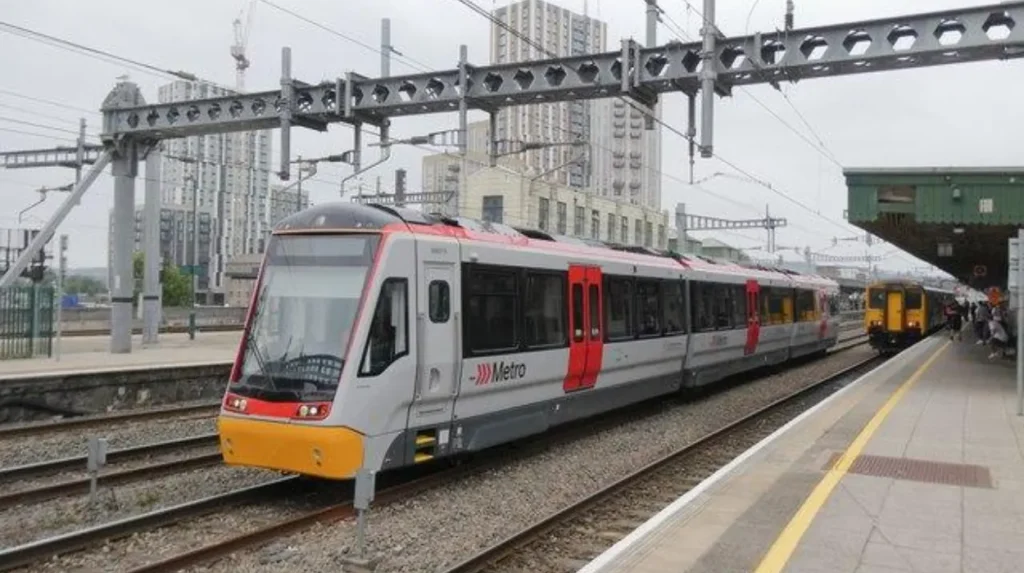
Metro electrification uses overhead electrical equipment to power new trains across the Core Valley Lines. The system covers approximately 170 kilometres of railway, with 25,000-volt overhead equipment supplying electric trains and supporting faster, cleaner services.
Railway electrification replaces reliance on conventional diesel traction on electrified sections. The Metro uses Overhead Line Equipment, commonly called OLE, consisting of supporting structures and electrical wires positioned above the railway.
The electrification system operates at 25,000 volts. Transport for Wales states that the equipment extends across approximately 170 kilometres of the Core Valley Lines.
Full electrification of the Core Valley Lines was completed in March 2026. The final section involved approximately 800 metres between Cardiff Queen Street and Cardiff Bay. This completed a six-year transformation programme that began in 2020.
The programme timeline shows the gradual development of the network. Initial electrification reached routes through Aberdare, Merthyr and Pontypridd to Cardiff in 2023. The Treherbert Line followed in early 2024. The Coryton and Rhymney lines were electrified in 2025, while the Cardiff Bay section completed the network in 2026.
Electrification supports the introduction of modern rolling stock and improved service patterns. Electric trains provide stronger acceleration characteristics than older diesel units, supporting the operational requirements of frequent urban and regional services.
The infrastructure also includes signalling improvements. Signalling controls train movements and contributes to network capacity, safety and reliability. TfW is continuing associated signalling and infrastructure work as part of the wider Metro transformation.
What trains will operate on the Cardiff Metro?
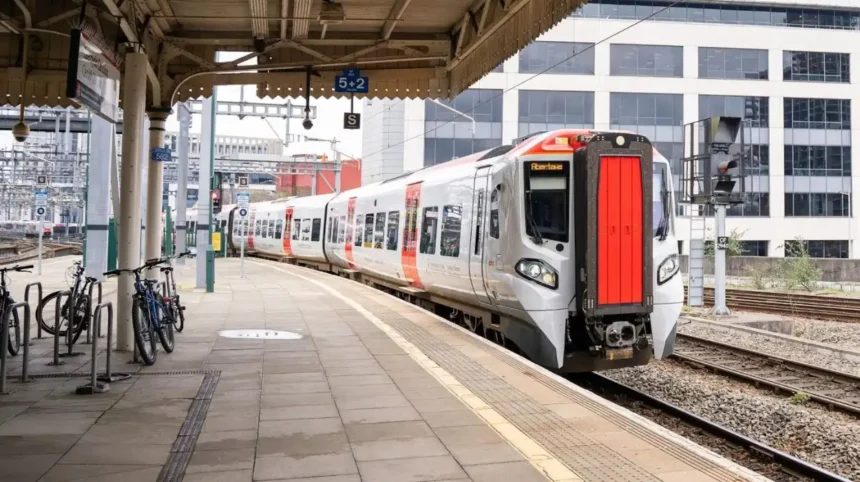
Cardiff Metro uses modern rolling stock designed for frequent regional services. The fleet includes Class 756 tri-mode trains and Class 398 tram-trains, with accessible boarding, passenger information systems, air conditioning and dedicated space for bicycles.
The Class 756 FLIRT trains are tri-mode units built by Stadler. They use overhead electricity on electrified sections and diesel-electric capability where electrification is unavailable. TfW plans a total fleet of 17 Class 756 trains.
These trains include automatic level boarding, passenger information screens, air conditioning, power sockets, accessible toilets and space for up to six bicycles.
The Class 398 Citylink tram-trains are another major part of the Metro fleet. Stadler manufactures these vehicles for operation as both conventional railway vehicles and tram-trains. They use overhead electrification and battery capability.
TfW is introducing 36 three-car Class 398 tram-trains. They are designed for operation on the Merthyr, Aberdare and Treherbert routes, continuing through Cardiff towards Cardiff Bay.
Tram-train technology provides operational flexibility. A tram-train can operate on conventional railway infrastructure and, where infrastructure permits, continue onto street-running tramway sections.
The Class 398 trains also provide level boarding, bicycle and wheelchair areas, air conditioning and modern passenger information systems. TfW states that these vehicles do not have toilets onboard, with station facilities forming part of the accessibility provision.
The new rolling stock is designed around higher-capacity and higher-frequency Metro operations rather than traditional long-distance railway services.
What improvements are planned for Cardiff stations?
Cardiff Metro station improvements focus on capacity, accessibility, passenger information and interchange. Key projects include Cardiff Central enhancements, Cardiff Bay improvements, Butetown Station, Crwys Road Station and accessibility upgrades at stations such as Cathays.
Cardiff Central is the principal railway station in Cardiff and an important component of Metro Central. Transport for Wales plans improvements to address overcrowding, congestion, event-day demand and long-term passenger growth.
Metro Central is designed as a major transport interchange connecting rail, buses, walking and cycling. The objective is to create a central location where different forms of public transport connect efficiently.
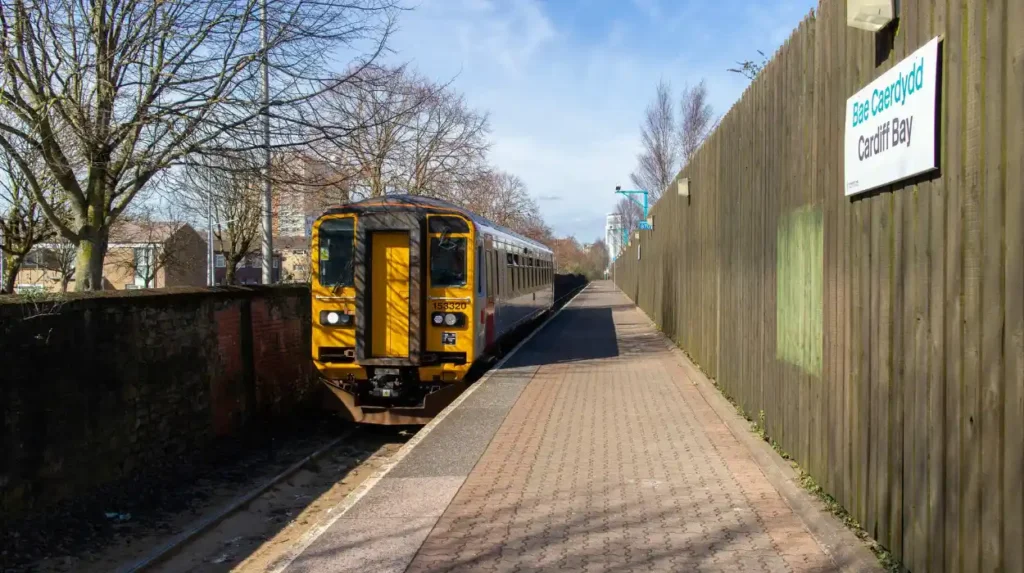
The Cardiff Bay corridor is also receiving substantial investment. Cardiff Bay Station is being upgraded with a second platform, new signage and passenger information facilities.
A new Butetown Station is being constructed on the Cardiff Bay Line. The project strengthens the rail connection between central Cardiff, Butetown and Cardiff Bay.
TfW has also delivered several accessibility improvements across the wider Metro network. These include 28 level-boarding enhancements, 11 new railway bridges, four Access for All bridges with lifts and step access, and platform extensions at multiple stations.
The planned Crwys Road Station forms another Cardiff Metro development on the Rhymney Line. TfW also identifies an additional Access for All bridge at Cathays Station within its future station improvement programme.
These projects improve more than station appearance. They directly affect passenger access, interchange, platform capacity, cycle access and the ability of the railway to support modern rolling stock.
How frequent will Cardiff Metro services be?
Metro service plans increase frequency across key Cardiff corridors, including four trains per hour from Cardiff towards Aberdare, Merthyr Tydfil and Treherbert, six trains per hour from Caerphilly, and higher frequencies between Pontypridd and Cardiff.
Transport for Wales has outlined a service structure based on more frequent and regular trains. The programme includes four trains per hour between Cardiff and each of the Heads of the Valleys at Aberdare, Merthyr Tydfil and Treherbert.
Two services from each of these three Valley corridors are planned to continue from Cardiff towards Cardiff Bay, strengthening the relationship between the Valleys and Cardiff’s waterfront district.
The Pontypridd-to-Cardiff corridor is planned for up to 12 trains per hour. This provides a high-frequency connection along one of the busiest sections of the Metro network.
The Caerphilly-to-Cardiff corridor is planned for six trains per hour, equivalent to a train approximately every ten minutes. Cardiff Bay services are also planned to increase to six trains per hour.
Evening service frequency forms part of the wider Metro improvement programme. Higher frequency creates a more useful public transport network for commuters, students, visitors and people travelling outside traditional weekday working hours.
Actual passenger timetables remain subject to operational rollout, infrastructure readiness and service implementation. The strategic objective is a frequent, predictable Metro network rather than isolated improvements to individual railway routes.
How will Metro connect Cardiff with Cardiff Bay?
The Cardiff Metro programme strengthens the rail connection between Cardiff city centre and Cardiff Bay through station upgrades, electrification and a planned tramway connection from Cardiff Central. Butetown Station forms an important new stop within this corridor.
Cardiff Bay is one of the city’s major destinations for employment, leisure, tourism, cultural activity and waterfront development. Improved public transport access therefore forms an important part of Cardiff’s Metro strategy.
The Cardiff Bay Line connects Cardiff Queen Street with Cardiff Bay. Its transformation includes track improvements, station changes, electrification and infrastructure work supporting modern tram-trains.
The final 800-metre electrification section between Cardiff Queen Street and Cardiff Bay was completed and tested in 2026.
The Cardiff Bay project also includes Butetown Station, creating an additional rail stop between the city centre and Cardiff Bay.
Transport for Wales is working with Cardiff Council on a proposed tramway from Cardiff Central to Cardiff Bay. TfW describes this as a project intended to connect the two locations directly by rail and improve interchange between transport modes.
The wider Cardiff Bay transformation therefore combines railway engineering with urban transport planning. Station locations, pedestrian access, cycling infrastructure and connections to other public transport services all influence the usefulness of the corridor.
How will Metro improve walking, cycling and bus connections?
Cardiff Metro is designed as an integrated transport network rather than a rail-only project. Station improvements include cycling facilities, walking connections, bus integration and accessible infrastructure that connect passengers beyond the railway platform.
A railway station is only effective when passengers can reach it easily. Metro planning therefore includes active travel and bus connections alongside railway investment.
Active travel refers primarily to walking and cycling for everyday journeys. Transport for Wales is developing Active Travel Station Network Plans with local authorities to improve connections around stations. Initial work includes stations such as Pontypridd and Bridgend.
Station improvements include bicycle storage and better walking connections. TfW also states that station programmes include CCTV, ticket machines, passenger information and accessibility improvements.
Bus integration is another major part of the Metro model. TfW is working with Welsh local authorities and private bus operators to create more cohesive routes and improve reliability, journey times and connections.
The result is a transport system based on multiple stages of a journey. A passenger can walk or cycle to a station, take a Metro train into Cardiff, change to a bus or continue on foot to the final destination.
This integration is particularly important for Cardiff communities located away from railway stations. Bus links extend the effective reach of the Metro beyond the railway network.
What are the future Metro plans beyond the current Cardiff projects?
Future South Wales Metro planning extends beyond the Core Valley Lines, with proposed new stations, improved Cardiff-Newport-Bristol connectivity, better stopping services, further electrification and strategic development across South East Wales.
The Metro is a continuing regional programme rather than a project that ends with Core Valley Lines electrification.
Transport for Wales identifies further development priorities through the period leading to 2029. These include new direct long-distance services between West Wales, Cardiff and Bristol and five new stations with frequent stopping services between Cardiff, Newport and Bristol.
These proposals relate closely to the recommendations of the South East Wales Transport Commission and its alternative transport network for the M4 corridor.
Further development also includes improvements to the Swanline service between Cardiff and Swansea, additional stations, line-speed improvements and measures addressing rail capacity constraints.
TfW’s longer-term Metro planning also includes improvements in areas such as the Vale of Glamorgan, eastern Valleys and Monmouthshire. The objective is to extend the frequency and connectivity principles established through the Core Valley Lines.
Another strategic priority is further electrification. TfW’s rail vision identifies an initial extension from Cardiff towards Swansea to support the decarbonisation of passenger and freight rail services.
The South Wales Metro therefore has two distinct dimensions. The first is the current transformation of the Core Valley Lines and Cardiff’s urban connections. The second is longer-term regional transport development linking Cardiff with Newport, Bristol, Swansea and communities across South East Wales.
What does the Cardiff Metro mean for passengers?
For passengers, Cardiff Metro represents a shift towards more frequent trains, modern vehicles, accessible stations, improved interchanges and stronger links between Cardiff and surrounding communities. The programme also supports simpler, more integrated public transport across the region.
The most immediate passenger benefit is improved railway infrastructure. Full Core Valley Lines electrification was completed in 2026, providing the infrastructure required for the next stage of Metro operations.
Modern trains provide features that were not available across the older fleet. These include air conditioning, improved passenger information, power sockets, level boarding and dedicated bicycle space.
Accessibility is another central outcome. Level boarding and Access for All bridges reduce physical barriers for wheelchair users, passengers with reduced mobility, families with pushchairs and travellers carrying luggage.
Frequency also changes the role of public transport. More regular services reduce dependence on individual timetable checks and provide greater flexibility for journeys between Cardiff and the Valleys.
The wider impact extends beyond individual passengers. Better transport connections support access to employment, education, healthcare and commercial centres. TfW identifies these connections as core objectives of the South Wales Metro programme.
The programme also supports environmental objectives. Electrification and modern rolling stock reduce reliance on diesel traction on electrified routes, while better public transport integration provides a stronger alternative to private-car travel.
Transport planning remains an ongoing process. Infrastructure completion, fleet introduction, signalling upgrades, station works and timetable changes occur at different stages. Passengers therefore need to check current Transport for Wales service information when planning individual journeys.
Explore More Area Guide
Railway Stations Near Rumney: Cardiff Travel Guide 2026
Cardiff Bus Routes by Area: Complete Guide 2026
Why is Cardiff central to the South Wales Metro?
Cardiff is the central interchange of the South Wales Metro because major Valley railway corridors converge on the city, while Cardiff Central, Cardiff Queen Street and Cardiff Bay connect regional rail services with employment, education, tourism and urban transport destinations.
Cardiff’s position within the Metro reflects its role as the principal urban centre of South Wales.
Railway corridors from the Valleys converge on Cardiff, making the city a natural interchange between regional and urban journeys. Cardiff Central provides connections with national and regional railway services, while Cardiff Queen Street serves important local Metro corridors.
Metro Central is intended to strengthen this interchange by connecting railway services with buses, walking and cycling facilities. TfW identifies Cardiff Central as the principal transport hub for the Cardiff Capital Region.
Cardiff Bay adds another strategic destination. The waterfront contains major cultural, commercial, governmental and leisure destinations, making reliable connections between the city centre and Bay important for both residents and visitors.
The Metro also links Cardiff with communities where many passengers live. The transport relationship therefore operates in both directions. Valleys residents travel towards Cardiff for employment and services, while Cardiff residents travel towards Valleys communities for work, education, leisure and family connections.
The programme’s regional structure explains why Cardiff Metro plans extend beyond the city boundary. The effectiveness of Cardiff’s transport system depends on the reliability and capacity of the wider network.
What is the long-term significance of Cardiff Metro plans?
Cardiff Metro is a long-term regional transport transformation linking railway infrastructure, modern trains, stations, buses and active travel. Its significance extends beyond journey times by supporting accessibility, regional connectivity, sustainable transport and economic development.
The completion of Core Valley Lines electrification in 2026 represents a major infrastructure milestone. It establishes the electrical railway infrastructure required for the next stage of Metro train deployment and service development.
The next phase focuses on completing rolling-stock introduction, signalling upgrades, station improvements and higher-frequency services. TfW’s 2026 rail vision states that the current South Wales Metro phase is well advanced and is scheduled to complete by 2027, with accessibility improvements and more frequent and later-running services forming part of the programme.
The long-term value of Metro lies in integration. Rail improvements alone do not create a complete regional transport system. Bus connections, cycling routes, walking infrastructure, accessible stations, interchange facilities and integrated ticketing all contribute to the passenger experience.
The programme also forms part of a broader Welsh transport strategy. The South East Wales Transport Commission recommended measures addressing congestion and sustainable travel, while Welsh Government accepted its recommendations in principle.
For Cardiff, the Metro represents an evolving transport network connecting the capital with surrounding communities. The programme’s infrastructure is already changing the railway through electrification, new stations, modern rolling stock and accessibility improvements.
The continuing development of the South Wales Metro means Cardiff’s transport network is being planned as part of a wider regional system. The combination of rail, tram-train, bus, walking and cycling infrastructure provides the framework for more connected public transport across Cardiff and South East Wales.
What is the Cardiff Metro?
The Cardiff Metro is part of the wider South Wales Metro, an integrated public transport programme connecting Cardiff with the Valleys and surrounding areas. It combines rail, tram-trains, buses, walking and cycling infrastructure.