Cardiff Park and Ride is a transport system that lets drivers leave their cars at designated parking locations and complete journeys by public transport. In Cardiff, the term covers several arrangements, including Transport for Wales rail-based Park and Ride, hospital services and temporary event services.
- What is Cardiff Park and Ride?
- How does Cardiff Park and Ride work?
- Choose a suitable Park and Ride station
- Park at the station
- Buy the appropriate travel ticket
- Continue by train
- How many Cardiff Park and Ride stations are there?
- Which areas does Cardiff Park and Ride serve?
- Is Cardiff Park and Ride available for hospital visitors?
- Is Cardiff Park and Ride used during major events?
- How much does Cardiff Park and Ride cost?
- What are the advantages of using Cardiff Park and Ride?
- What should drivers check before using Cardiff Park and Ride?
- How does Cardiff Park and Ride compare with city-centre parking?
- What is the future of Park and Ride in Cardiff?
- Where can drivers find official Cardiff Park and Ride information?
- What should visitors remember about Cardiff Park and Ride?
The system supports journeys into Cardiff without requiring drivers to find a city-centre parking space. It is particularly relevant for commuters, shoppers, visitors, football and rugby supporters, concert audiences, hospital users and people travelling during major city events.
Transport for Wales currently lists 24 railway stations with Park and Ride facilities serving Cardiff Central, providing more than 2,000 parking spaces and more than 100 accessible spaces. The stations are divided into Cardiff North, Cardiff East, Cardiff South and Cardiff West. Each listed rail Park and Ride location is within 30 minutes of Cardiff Central by train.
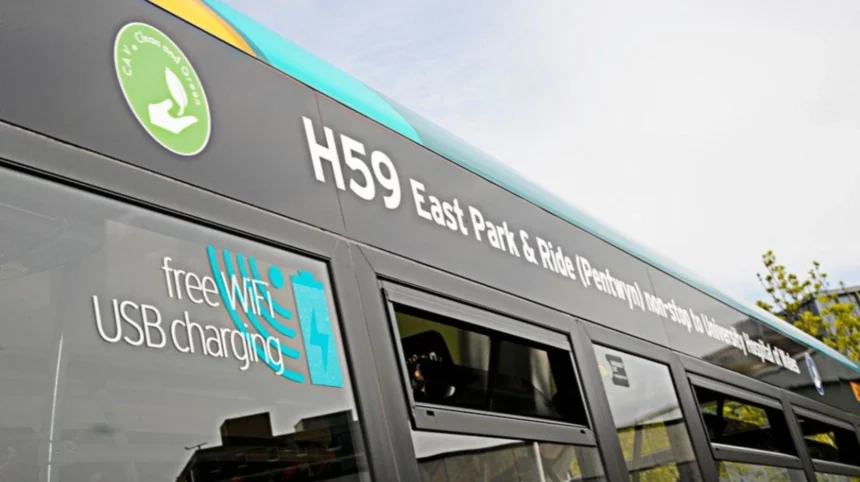
Cardiff Council also operates or supports specific Park and Ride arrangements. These include a free Cardiff East Park and Ride service for University Hospital of Wales at Heath and supervised Park and Ride facilities for selected major events.
Understanding which Park and Ride service applies to a journey is important because the parking arrangements, payment requirements, operating times and onward transport differ.
What is Cardiff Park and Ride?
Cardiff Park and Ride is a transport arrangement where drivers park outside the busiest parts of Cardiff and continue their journey by train or dedicated bus. It reduces the need to drive into central Cardiff and provides an alternative to city-centre parking.
The basic Park and Ride principle is simple. A driver travels to a designated parking location, leaves the vehicle there and continues towards the destination using public transport.
Transport for Wales uses the term Park and Ride for railway stations where passengers can park before boarding a train. Its Cardiff network contains 24 stations with Park and Ride facilities within 30 minutes of Cardiff Central.
Cardiff Council uses the term in a wider operational context. Its Park and Ride information includes the Cardiff East service for University Hospital Wales and Park and Ride arrangements connected with major events.
The distinction matters because a railway Park and Ride journey is normally based on buying a train ticket and using the station car park. A dedicated event or hospital service follows its own timetable and operating conditions.
Park and Ride therefore forms part of Cardiff’s wider transport network rather than representing one single car park or one single bus route.

How does Cardiff Park and Ride work?
Cardiff Park and Ride works by combining car parking with public transport. Drivers leave their vehicles at an approved location, purchase the required travel ticket or follow the service instructions, and continue towards Cardiff Central or another designated destination.
For rail-based Park and Ride, drivers select a station with Park and Ride facilities. They park at the station, buy their train ticket and board a service towards Cardiff Central. Transport for Wales states that its Cardiff Park and Ride routes provide return journeys throughout the day.
The process has several practical stages.
Choose a suitable Park and Ride station
The starting point determines which station is most convenient. Transport for Wales divides its Cardiff Park and Ride locations into four geographical groups: North, East, South and West. The Cardiff Central connection provides access to the city centre.
Park at the station
The vehicle is left at the designated station car park. Drivers should check signs, restrictions and payment conditions before leaving the vehicle.
Buy the appropriate travel ticket
Rail Park and Ride uses the normal train travel process. Transport for Wales advises passengers to buy their ticket as usual before travelling.
Continue by train
The final part of the journey is completed by rail. Cardiff Central provides the principal central-city rail destination for the Park and Ride network.
This arrangement separates the driving part of the journey from the city-centre part. It also avoids searching for a parking space after reaching central Cardiff.
How many Cardiff Park and Ride stations are there?
Transport for Wales currently lists 24 stations with Park and Ride facilities serving Cardiff Central, with more than 2,000 parking spaces and more than 100 accessible spaces across Cardiff North, East, South and West.
The network is divided into four areas.
Cardiff North contains 10 stations with Park and Ride facilities within 30 minutes of Cardiff Central.
Cardiff East contains five stations with Park and Ride facilities within 30 minutes of Cardiff Central.
Cardiff South contains five stations with Park and Ride facilities within 30 minutes of Cardiff Central.
Cardiff West contains four stations with Park and Ride facilities within 30 minutes of Cardiff Central.
These figures demonstrate that Cardiff Park and Ride is a network rather than a single facility.
The stations provide different geographical access points into the city. A driver approaching Cardiff from the north therefore has a different set of options from a driver approaching from the east, south or west.
Transport for Wales provides journey-planning and timetable information through its website and app. Checking the current service before travelling is important because train times, engineering works and operational arrangements change over time.
Which areas does Cardiff Park and Ride serve?
Cardiff Park and Ride serves four main approaches to the city: north, east, south and west. The Transport for Wales network connects Park and Ride railway stations with Cardiff Central, giving drivers several entry points for journeys into central Cardiff.
The Cardiff North group is designed for journeys approaching the capital from northern areas.
The Cardiff East group serves locations approaching Cardiff from the eastern side.
The Cardiff South group covers Park and Ride facilities south of Cardiff and supports rail journeys towards the central area.
The Cardiff West group serves locations west of the city.
This geographical structure allows drivers to select a Park and Ride station based on their starting point rather than driving all the way into Cardiff.
Cardiff Central is particularly important because it is the main city-centre rail hub used by the Transport for Wales Park and Ride network. The operator states that all of its Cardiff Park and Ride routes get passengers to Cardiff Central by train.
For visitors, this provides a direct connection between a station parking facility and the central Cardiff area.
For commuters, it provides a repeatable journey pattern that separates the car journey from the city-centre rail journey.
Is Cardiff Park and Ride available for hospital visitors?
Yes. Cardiff East has a free Park and Ride service for University Hospital of Wales at Heath. The service is provided for hospital staff, patients and visitors, operates Monday to Friday from 6:25am to 9pm, and does not permit overnight vehicle parking.
The hospital Park and Ride service is separate from the general Transport for Wales rail-based Park and Ride network.
Cardiff Council states that Cardiff East provides a free service to University Hospital Wales at Heath. The service is intended for staff, patients and visitors attending the hospital.
The designated car park postcode is CF23 8HH.
Access information differs according to the direction of travel. Drivers approaching from the east are directed from Junction 29 of the M4. Drivers approaching from the west use Junction 30 and follow the signed route towards the hospital and Park and Ride facility.
The service operates from 6:25am to 9pm, Monday to Friday. The car park closes soon after the final bus arrives.
Vehicles cannot be left overnight.
The car park has CCTV, but Cardiff Council states that vehicles are left at the owner’s risk. There are no vehicle height restrictions at the site.
Patients and visitors should therefore check the service timetable before travelling, particularly when an appointment falls close to the end of the operating period.
Is Cardiff Park and Ride used during major events?
Yes. Cardiff Council provides supervised Park and Ride arrangements for selected major events, particularly events that create heavy traffic and increased parking demand around central Cardiff and the Principality Stadium. Event arrangements differ from normal daily Park and Ride services.
Cardiff hosts major sporting and performing arts events throughout the year. These events create additional traffic and demand for parking.
Cardiff Council provides special parking arrangements for selected major events, including supervised Park and Ride facilities.
The Principality Stadium is a major destination for rugby, football, concerts and other large events. Its central location means event traffic affects surrounding roads and parking facilities.
Event Park and Ride services are not necessarily identical from one event to another. The operating location, price, timetable and restrictions depend on the specific event.
Cardiff Council publishes travel advice for major events. For example, its current travel information includes arrangements associated with the Cardiff Half Marathon on 4 October 2026.
Visitors attending an event should therefore use the event-specific travel information rather than relying on the ordinary weekday Park and Ride arrangements.
Event-day parking conditions can also differ from normal city parking conditions.

How much does Cardiff Park and Ride cost?
There is no single Cardiff Park and Ride price covering every service. Rail-based Park and Ride uses train travel and station parking arrangements, while hospital Park and Ride is free and event services have event-specific conditions and charges.
Cost is one of the most important differences between Cardiff’s Park and Ride services.
The Cardiff East hospital Park and Ride service is free for staff, patients and visitors using University Hospital Wales.
Transport for Wales rail-based Park and Ride requires passengers to buy a train ticket. The operator’s guidance states that passengers park at the station and buy a ticket as usual.
This means the total cost depends on the particular station, rail ticket and applicable parking arrangements.
Drivers should not assume that a railway Park and Ride facility operates like a free bus Park and Ride.
Cardiff Council’s ordinary city parking charges also demonstrate why Park and Ride can be a separate transport option. For example, current council information lists city-centre charges and long-stay parking prices that differ by location and duration.
Event parking follows another set of arrangements. Cardiff Council states that event-day parking tariffs can vary and that special arrangements apply during major events.
The correct price should therefore always be checked against the specific service and date.
What are the advantages of using Cardiff Park and Ride?
Cardiff Park and Ride reduces the need to drive into the city centre, provides access from multiple directions and connects drivers with rail or dedicated buses. It also provides more than 2,000 rail Park and Ride spaces across 24 stations serving Cardiff Central.
The first advantage is reduced city-centre driving. Drivers stop the car before reaching the busiest central streets.
The second advantage is network coverage. Transport for Wales provides Park and Ride facilities across four geographical areas, giving drivers options based on their direction of travel.
The third advantage is accessibility. The network contains more than 100 accessible spaces across the listed Park and Ride stations.
The fourth advantage is predictable city-centre access. Rail passengers travel to Cardiff Central rather than searching for a central parking space.
The fifth advantage is relevance during major events. Event Park and Ride arrangements provide an alternative to attempting to drive directly into areas affected by increased traffic and parking demand.
These benefits apply differently to different users. Commuters need reliable weekday services. Visitors need clear journey planning. Event attendees need event-specific information. Hospital users need the correct hospital timetable.
What should drivers check before using Cardiff Park and Ride?
Drivers should check the exact Park and Ride location, operating hours, parking conditions, public transport timetable, ticket requirements, event restrictions and return journey before leaving home. Different Cardiff Park and Ride services operate under different rules.
The first check is the service type. Confirm whether the journey uses a railway station, hospital shuttle or event service.
The second check is the operating time. The Cardiff East hospital service operates Monday to Friday from 6:25am to 9pm, while other Park and Ride arrangements have different schedules.
The third check is the return journey. A Park and Ride journey is only practical when the return service operates after the planned activity.
The fourth check is parking availability and restrictions. Drivers should follow signs at the relevant site and avoid assuming that a normal city parking rule applies.
The fifth check is event information. Major Cardiff events can introduce temporary traffic and parking arrangements.
The sixth check is accessibility. Transport for Wales lists more than 100 accessible spaces across its Cardiff Park and Ride network. Passengers requiring accessible facilities should check the specific station before travelling.
Transport for Wales provides journey-planning information through its website and app. Cardiff Council provides separate information for council-operated Park and Ride services and major events.
How does Cardiff Park and Ride compare with city-centre parking?
Park and Ride separates the car journey from the city-centre journey, while city-centre parking requires drivers to take the vehicle directly into central Cardiff. The two options have different costs, journey times, availability, restrictions and operational requirements.
City-centre parking gives drivers direct access to their vehicle throughout the visit. It is useful when the destination requires equipment, multiple stops or travel beyond the public transport network.
Park and Ride changes the journey structure. The driver parks outside the busiest central area and continues by train or dedicated bus.
Cardiff Council operates both short-stay and long-stay car parks. Its published information shows different charges according to location and duration.
For example, current council information lists North Road car park in central Cardiff with 106 spaces and charges ranging from free parking for 30 minutes to £6.50 for more than four hours on Monday to Friday. Sophia Gardens car park has 294 spaces and charges £3.50 for one hour and £24 for 24 hours.
These are conventional parking options rather than Park and Ride services.
Park and Ride is therefore most relevant when the driver wants to avoid taking the car into the central area. Conventional parking is more direct when the vehicle needs to remain available in the city.
The appropriate option depends on the destination, length of stay, timing, vehicle requirements and available public transport.
What is the future of Park and Ride in Cardiff?
Cardiff’s transport strategy places Park and Ride within a wider programme of public transport, interchange and sustainable travel investment. Cardiff Council planning documents identify Park and Ride infrastructure alongside wider transport projects and development around major motorway corridors.
Cardiff’s transport planning has included Park and Ride as part of wider efforts to improve connections between surrounding areas and the city.
Cardiff Council’s transport planning documentation has identified Park and Ride improvements around locations including the M4 Junction 32, Junction 33 and Cardiff East.
Council development monitoring also identifies a strategic development area north of M4 Junction 33 that includes employment, community uses and Park and Ride provision.
The wider transport programme includes improvements to rail, bus, cycling and interchange infrastructure.
This context is important because Park and Ride does not operate in isolation. Its effectiveness depends on connections between roads, railway stations, bus services, walking routes and the city-centre transport network.
Transport for Wales currently provides a large rail-based Park and Ride network around Cardiff, while Cardiff Council continues to provide dedicated information for hospital and event services.
Future changes should therefore be assessed through the latest Cardiff Council and Transport for Wales information rather than older Park and Ride maps or timetables.
Explore More Area Guide
Cardiff Parking Fines: PCNs, Costs and Appeals Guide
Cardiff Parking Permits Explained: Cardiff Council Guide
Where can drivers find official Cardiff Park and Ride information?
The main official sources are Cardiff Council and Transport for Wales. Cardiff Council provides information about hospital and event Park and Ride services, while Transport for Wales provides the rail-based Cardiff Park and Ride network, station information and journey-planning guidance.
Transport for Wales is the principal source for the rail-based Park and Ride network. Its Cardiff page currently identifies 24 stations, more than 2,000 parking spaces and four geographical Park and Ride areas.
Cardiff Council provides information about its Park and Ride services, including the Cardiff East hospital service and major-event arrangements.
For major events, Cardiff Council publishes event-specific travel advice. This is particularly important when temporary Park and Ride sites, special bus services or changed parking arrangements apply.
Official information is the most reliable source for current timetables, operating dates, charges, restrictions and temporary arrangements.
What should visitors remember about Cardiff Park and Ride?
Visitors should treat Cardiff Park and Ride as a network of different services rather than one single facility. Transport for Wales provides rail-based options, while Cardiff Council supports dedicated hospital and major-event services with separate operating rules.
Cardiff Park and Ride provides an important alternative to direct city-centre driving.
The Transport for Wales network contains 24 Park and Ride stations serving Cardiff Central. It has more than 2,000 parking spaces and more than 100 accessible spaces.
Cardiff Council’s hospital Park and Ride service provides free transport between Cardiff East and University Hospital Wales at Heath for staff, patients and visitors. It operates Monday to Friday and does not allow overnight parking.
Major events introduce another layer of Park and Ride planning. Cardiff Council provides supervised arrangements for selected events where additional traffic and parking demand require special measures.
The central rule is simple: identify the correct Park and Ride service before travelling.
Check the location.
Check the timetable.
Check the parking conditions.
Check the ticket or payment requirements.
Check the return journey.
For event travel, check the specific event advice.
For hospital travel, check the Cardiff East service information.
For rail journeys, use the current Transport for Wales Park and Ride and journey-planning information.
With those checks completed, Cardiff Park and Ride provides a structured way to combine driving with public transport and reach Cardiff without taking the car through the entire city-centre journey.
What is Cardiff Park and Ride?
Cardiff Park and Ride allows drivers to leave their cars at designated parking facilities and continue their journey by train or dedicated bus. It provides an alternative to driving directly into central Cardiff.