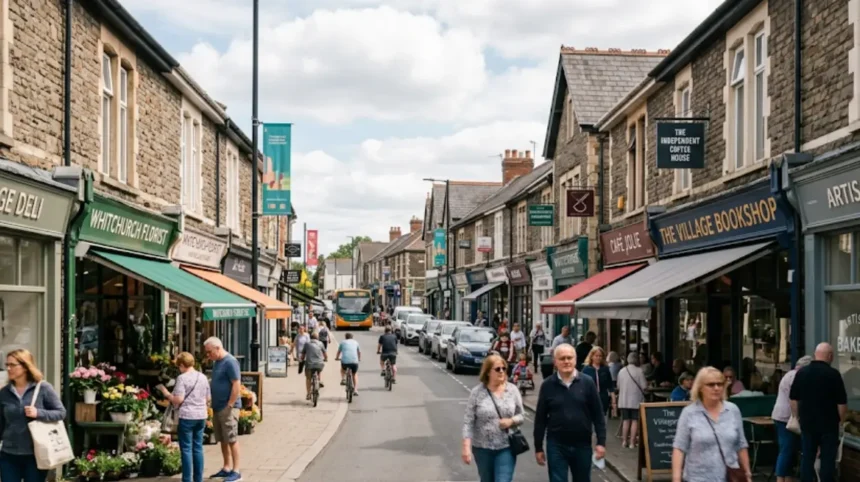
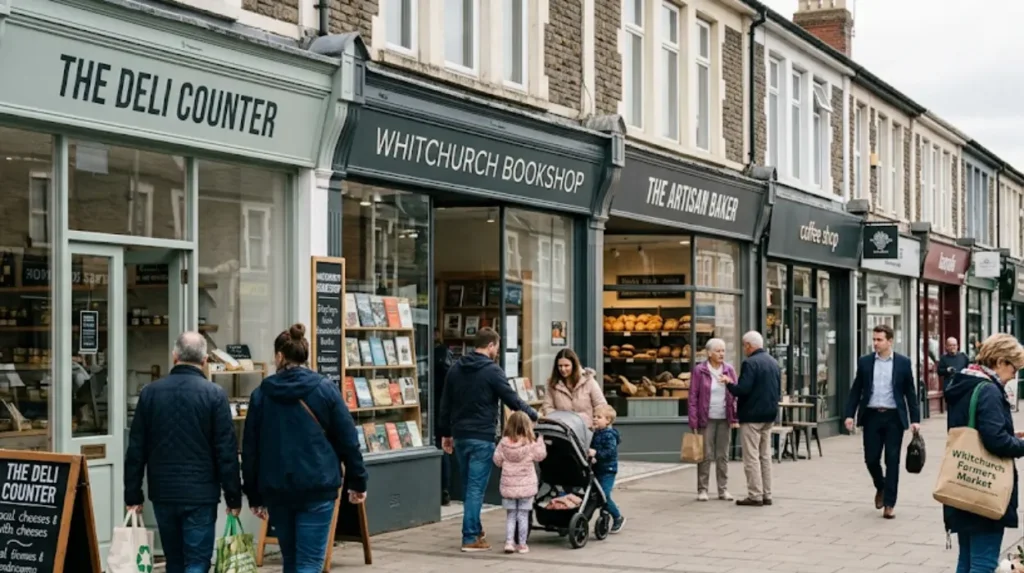
Whitchurch is a prominent northern suburb of Cardiff, located approximately three miles north of the city centre. The neighbourhood features a highly active high street, primarily centered around Merthyr Road. This commercial corridor serves as a dedicated hub for micro-businesses, retail entrepreneurs, and independent service providers who support the regional economy of South Wales.
- What Defines the Independent Retail Landscape in Whitchurch Cardiff?
- How Has the History of Whitchurch Shaped Its Modern High Street?
- What Are the Top Independent Fashion and Lifestyle Boutiques in Whitchurch?
- Which Independent Food and Drink Retailers Anchor the Community?
- How Do Independent Service Providers Contribute to the Local Economy?
- What Role Do Charity and Pre-Loved Shops Play in the Whitchurch Ecosystem?
- How Do Whitchurch Independent Shops Compete Against Digital Commerce?
- What Are the Future Implications for the Whitchurch Commercial District?
What Defines the Independent Retail Landscape in Whitchurch Cardiff?
Independent retail in Whitchurch Cardiff constitutes a localized ecosystem of owner-operated businesses, specialty boutiques, artisan coffee houses, and family-run service providers. These businesses function without corporate parent companies, offering curated consumer goods and personalized regional services directly to the suburban population.
The independent retail infrastructure of Whitchurch focuses heavily on consumer choice and localized wealth retention. Unlike uniform city-centre shopping developments that rely on multinational anchor tenants, the commercial district of Whitchurch relies on specialized retail properties. This ecosystem includes boutique fashion retailers, artisan bakers, independent delicatessens, and community-focused service hubs.
Data from regional economic assessments indicates that localized consumer spending within suburban high streets retains capital within the municipal economy. Every unit of currency spent at an independent retailer generates higher local economic multipliers compared to national chains. This pattern occurs because owner-operated firms source professional services, maintenance, and supply logistics from regional suppliers within South Wales.
The demographic profile of Whitchurch supports this economic model. The area contains a high proportion of established households, professionals, and long-term residents with stable disposable incomes. This consumer base maintains a measurable demand for high-quality goods, specialized knowledge, and localized consumer experiences. Consequently, the high street maintains high commercial occupancy rates, contrasting with macro retail contractions across the United Kingdom.
How Has the History of Whitchurch Shaped Its Modern High Street?
The transformation of Whitchurch from an agrarian hamlet into a highly developed suburb of Cardiff directly established its modern commercial footprint. Historical infrastructure investments and population expansions shifted the local economy from primary agriculture to modern independent retail commerce.
Whitchurch developed originally around an early church site and agrarian infrastructure, existing for centuries as an isolated village north of the Cardiff urban core. The construction of the Glamorgan Canal in 1794 and the subsequent expansion of the multi-modal transport network connected the village to industrial shipping routes. These infrastructure developments accelerated local industrial activity, including the growth of the Melingriffith Tinplate Works, which employed hundreds of local residents.
The residential expansion of the late 19th and early 20th centuries structurally integrated Whitchurch into the wider Cardiff urban area. As urban commuters sought suburban housing, Merthyr Road developed as a dedicated commercial spine. The physical layout of modern retail storefronts reflects Edwardian and Victorian architectural envelopes, which were built to serve a rapidly growing suburban population.
Throughout the late 20th century, structural decentralization caused many UK high streets to lose market share to out-of-town retail parks. Whitchurch countered this trend by maintaining a distinct architectural identity and deep ties to the community. The historical preservation of small-scale commercial units prevented large-format corporate supermarkets from completely dominating the high street. This architectural reality forced the local economy to cultivate specialized, small-footprint independent retail operations.
What Are the Top Independent Fashion and Lifestyle Boutiques in Whitchurch?
Independent fashion and lifestyle boutiques in Whitchurch consist of curated apparel retailers, jewelry designers, and premium gift shops. These operations specialize in direct consumer consultations, exclusive international brand procurement, and high-end lifestyle products tailored to the regional market.
The boutique sector in Whitchurch is anchored by specialized apparel firms that focus on high-quality garments and premium customer service. A primary example is Kiti, an award-winning independent womenswear boutique located on Merthyr Road. Kiti focuses on contemporary designer labels, minimalist structures, and premium textiles, drawing fashion-conscious consumers from across the capital region.
These lifestyle retailers operate on a curated inventory model. Unlike fast-fashion systems that rely on mass production and rapid stock turnover, independent boutiques purchase limited quantities of specific designs. This method ensures product exclusivity for consumers and protects the business against excessive terminal markdown liabilities.
The lifestyle sector also includes specialized jewelry makers, home decor providers, and artisan florists. These merchants survive by offering distinct products that cannot be replicated by automated digital commerce platforms. The operational focus centers on experiential retail, where physical space design, sensory marketing, and specialized product knowledge drive conversion rates and brand loyalty.
Which Independent Food and Drink Retailers Anchor the Community?
Independent food and drink retailers in Whitchurch comprise artisan bakeries, specialty delicatessens, organic grocers, and craft beverage merchants. These businesses manage complex supply chains to deliver traceable local produce, premium imported foodstuffs, and specialty culinary goods.
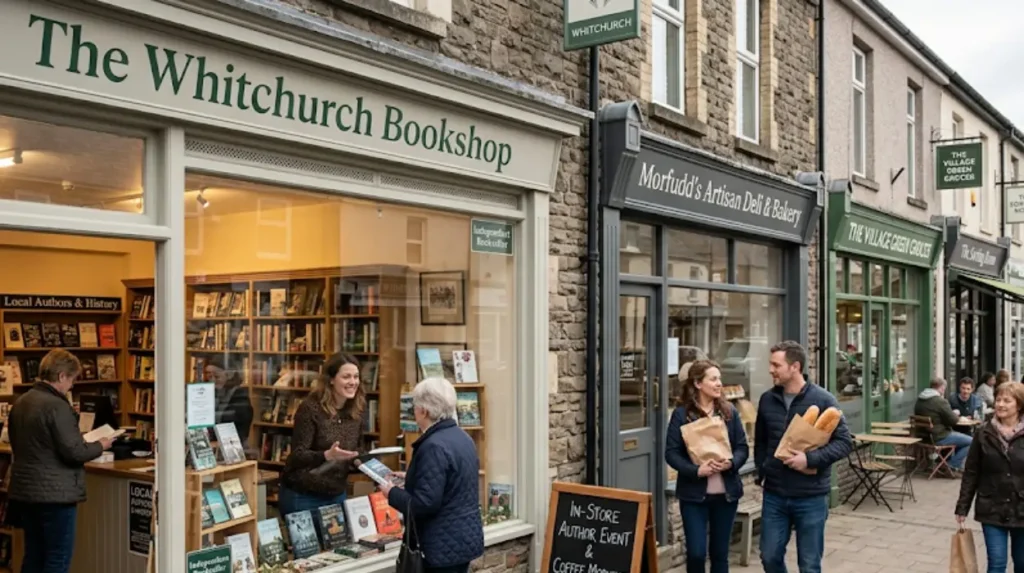
Food and beverage operations form the foundation of daily foot traffic along the Whitchurch commercial corridor. Establishments such as Glass of Bandol provide specialty cheeses, charcuterie, and curated wines to a dedicated local clientele. These businesses function as both retail shops and experiential tasting spaces, altering traditional food service models.
Artisan coffee houses and sustainable cafés further strengthen this retail sector. Venues like Coffi Lab and Against the Grain provide specialized food and beverage options, such as gluten-free baked goods and single-origin coffees. These spaces convert commercial foot traffic into sustained community interactions, which benefits adjacent non-food retail stores.
The operational strategy of these food purveyors relies on radical supply chain transparency. Retailers document the specific origins of meats, cheeses, and produce, responding directly to modern consumer demands for sustainable practices. By bypassing industrial distribution networks, these shops secure fresher products and direct financial support to agricultural producers across Wales.
How Do Independent Service Providers Contribute to the Local Economy?
Independent service providers in Whitchurch encompass local salons, wellness centers, veterinary clinics, and professional administrative firms. These service-driven enterprises convert specialized human capital into high-margin local commerce, ensuring consistent mid-week foot traffic for the high street.
While product-based retail deals with inventory management, the service sector drives consistent consumer visits to Whitchurch. Establishments such as The Mindful Monkey offer specialized wellness services, including saunas, ice baths, and massage therapies. These businesses attract health-conscious consumers who view wellness as a vital component of daily life.
The economic impact of independent service providers relates directly to their low reliance on global physical supply chains. The primary input cost for a salon, fitness studio, or clinical practice is skilled labor rather than imported physical commodities. Consequently, a significant portion of gross revenue remains within the local economy as wages, business rates, and local supplier payments.
Furthermore, service businesses are highly resilient against digital commerce disruption. Physical treatments, personal wellness programs, and localized care require in-person attendance. This structural reality makes service providers excellent anchors for modern high streets, shielding the commercial ecosystem from changes in e-commerce purchasing behavior.
What Role Do Charity and Pre-Loved Shops Play in the Whitchurch Ecosystem?
Charity and pre-loved shops in Whitchurch operate as institutional circular economy vendors that collect, process, and resell donated goods. These storefronts generate vital funding for medical research and social welfare while simultaneously providing affordable retail options for the community.
The presence of established charitable retailers, including the Cancer Research UK shop and the Cancer Research Wales outlet on Ty’n-y-Pwll Road, forms a vital element of the local retail mix. These venues process hundreds of kilograms of consumer goods monthly, including clothing, homeware, books, and small electronics.
From an urban planning perspective, secondary retail spaces prevent prolonged commercial vacancies on secondary roads. They attract distinct demographics, including budget-conscious shoppers and vintage collectors, which diversifies the consumer base of the high street. This cross-shopping pattern benefits nearby independent cafes and convenience retailers.
Additionally, pre-loved shops advance environmental sustainability goals within Cardiff. By extending the lifecycle of consumer electronics, textiles, and furniture, these businesses divert significant waste volumes from regional landfills. This local recycling loop aligns with the statutory sustainability goals outlined in the Well-being of Future Generations (Wales) Act 2015.
How Do Whitchurch Independent Shops Compete Against Digital Commerce?
Whitchurch independent shops counter digital commerce platforms by deploying experiential retail strategies, building community relationships, and focusing on hyper-localized product curation. These methods create distinct value that cannot be replicated by algorithmic online fulfillment systems.
Independent retailers in Whitchurch survive online competition by abandoning pure price-point marketing. Because small firms lack the purchasing power of global e-commerce companies, they focus instead on specialized customer service. In-store experts provide immediate product feedback, tailored recommendations, and hands-on demonstrations that digital interfaces cannot match.
Independent shops also leverage multi-channel retail strategies to expand their reach. Many Whitchurch boutiques maintain active digital storefronts alongside their physical properties, using social media platforms to display new inventory to the wider Cardiff region. This hybrid approach combines the security of a brick-and-mortar location with the scalability of digital sales channels.
Finally, the physical village environment of Whitchurch functions as a natural defensive asset. High street shopping serves as a leisure and social activity for many residents. By grouping boutiques, cafes, and service providers within a walkable urban space, Whitchurch provides a comprehensive community experience that single-purpose e-commerce platforms cannot replicate.
What Are the Future Implications for the Whitchurch Commercial District?
The future of the Whitchurch commercial district depends on adapting to changing consumer habits, managing rising commercial overhead costs, and utilizing municipal infrastructure support. Sustained economic viability requires a careful balance between digital integration and traditional community service models.
Urban planning strategies within the City and County of Cardiff increasingly prioritize the development of self-sufficient suburban centers. This model reduces commuter traffic into the central business district by providing employment, retail, and leisure opportunities within walking distance of residential areas. Whitchurch is well-positioned to thrive under these decentralized frameworks.
However, independent businesses face ongoing macroeconomic headwinds. Inflationary pressures, fluctuating business rates, and rising energy costs require disciplined financial management and agile inventory controls. Successful operators must continuously audit their supply chains, optimize utility usage, and renegotiate commercial leases to maintain healthy operating margins.
The long-term value of the Whitchurch high street relies on its ability to evolve alongside its resident population. As younger, digitally native demographics buy homes in the area, independent shops must upgrade their payment infrastructures, loyalty systems, and digital communication methods. Embracing modern technology while preserving personal service standards will secure Whitchurch’s status as a top independent retail destination in South Wales.
What is Whitchurch in Cardiff?
Whitchurch is a popular suburb located about three miles north of Cardiff city centre. It is known for its vibrant high street along Merthyr Road, independent shops, cafés, restaurants, local services, historic character, and strong community atmosphere.