Cardiff parking permits are council-issued permissions that allow eligible residents, visitors, businesses, carers and other approved users to park under specific controlled parking rules. Cardiff Council operates resident parking schemes and controlled parking zones (CPZs) to manage demand for on-street spaces.
- What is a Cardiff parking permit?
- Why does Cardiff use parking permit schemes?
- How do Cardiff controlled parking zones work?
- Who can apply for a Cardiff resident parking permit?
- How many resident parking permits can one Cardiff property have?
- How much does a Cardiff parking permit cost?
- How do you apply for a Cardiff parking permit?
- Can Cardiff parking permits be used for visitors?
- Which other types of Cardiff parking permits are available?
- What properties are not eligible for Cardiff resident parking permits?
- Where can a Cardiff parking permit holder park?
- Does a Cardiff parking permit guarantee a space outside your home?
- How do you renew or change a Cardiff parking permit?
- What happens if you park incorrectly with a Cardiff permit?
- How do Cardiff parking permits relate to Blue Badge parking?
- Are Cardiff parking permits likely to remain important as the city changes?
- What should Cardiff drivers check before applying for a parking permit?
A parking permit does not create a guaranteed parking space outside a property. It provides permission to use eligible permit-holder bays or other approved parking areas within the relevant zone. Drivers must still follow road signs, bay markings, waiting restrictions and other parking controls.
Cardiff uses digital parking permits extensively through the MiPermit system. Residents apply, manage and renew permits online. Some permit arrangements also cover visitors, carers, contractors, businesses, community premises and other specific users.
The most important point is eligibility. Living in Cardiff does not automatically qualify a driver for a parking permit. The property must be within an eligible residents parking scheme or controlled parking zone, and additional restrictions apply to certain properties, vehicles and developments.
What is a Cardiff parking permit?
A Cardiff parking permit is council authorisation that allows an eligible vehicle or user to park under specified restrictions within a designated parking zone. The permit applies to particular streets, zones, vehicles, users and operating periods.
Cardiff Council uses parking permits as part of its on-street parking management system. A permit gives priority access to designated parking locations rather than ownership of an individual parking space.
Resident permits are linked to the eligible property and the person applying for the permit. The applicant must use the property as their primary address. A resident cannot hold a resident permit for more than one property or zone.
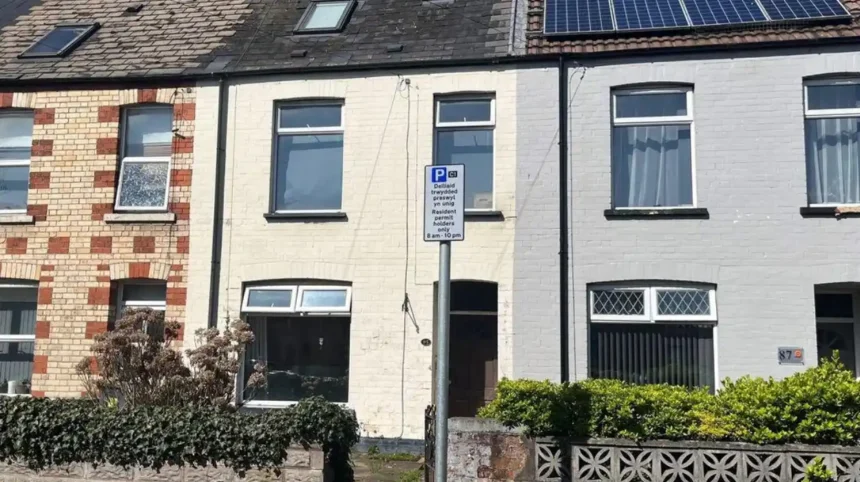
Controlled parking zones are areas where parking restrictions operate according to local signs and regulations. A CPZ can contain resident permit bays, shared-use bays, limited-waiting spaces, pay-and-stay spaces and restrictions such as yellow lines.
The exact rights attached to a permit depend on the zone. Cardiff Council states that permit holders can use resident permit-holder-only bays and, in some zones, shared-use limited-waiting or pay-and-stay bays. Drivers must check signs whenever they park.
The permit system therefore has two important elements. The first is eligibility, which determines whether an applicant can receive a permit. The second is parking control, which determines where and when the permit can be used.
Why does Cardiff use parking permit schemes?
Cardiff uses parking permit schemes to manage limited on-street parking, prioritise eligible local users and control parking demand in busy residential and commercial areas. Controlled parking zones also regulate visitor, business and other authorised parking activity.
On-street parking space is limited in densely developed parts of Cardiff. Residential streets also experience demand from residents, visitors, commuters, shoppers, students, businesses and service vehicles.
Controlled parking zones provide a regulatory framework for managing this demand. Cardiff Council describes its CPZ system as a way to control where and when vehicles can park. Different zones have different operational hours and permit arrangements.
The wider Cardiff City Parking Plan divides the city into a city and civic centre, inner area and outer area. The plan sets out parking management through controlled parking zones, with restrictions designed around local needs. It identifies residents, Blue Badge holders, essential services and local businesses among the groups considered in parking management.
Parking controls also help address commuter parking. A residential street near a university, employment centre or shopping area can experience substantial demand from people who do not live there.
Permit schemes distinguish eligible local parking from general public parking. They also establish different arrangements for residents, visitors, businesses, carers, contractors and community premises.
The system does not guarantee that every resident will find a space immediately. Cardiff Council specifically states that permits do not guarantee a space outside the permit holder’s property.
How do Cardiff controlled parking zones work?
A Cardiff controlled parking zone uses signs, road markings and parking restrictions to regulate vehicles within a defined area. Each zone has specific operating hours, permit rules and parking locations that drivers must follow.
A CPZ covers a defined collection of streets. The council publishes information for individual zones, including controlled hours, permit enforcement periods and available permit categories.
Zone rules differ. For example, Cardiff Council lists B5A Plasnewydd South as controlled from 8am to 10pm Monday to Sunday, with permit parking enforceable throughout the same period.
Other zones have different arrangements. C1, C2 and C3 in the Cathays area have parking controls from 8am to 6pm, while permit parking is enforceable from 8am to 10pm. C4 Gabalfa also has controlled parking from 8am to 6pm and permit enforcement from 8am to 10pm.
This distinction matters because the general controlled hours and permit enforcement hours are not necessarily identical.
A driver must therefore read the signs at the exact parking location. The presence of a parking permit does not override a restriction that applies to a particular bay.
Double yellow lines, dropped footway restrictions and kerb crossing restrictions can apply continuously in controlled zones. These restrictions operate separately from resident permit rights.
Who can apply for a Cardiff resident parking permit?
Residents can apply for a Cardiff resident parking permit when their primary address is within an eligible residents parking scheme. The applicant must satisfy Cardiff Council’s residence, vehicle and property requirements before receiving a permit.
Cardiff Council limits resident permits to properties included in residential parking permit schemes. The applicant must use the address as their primary residence.
The council requires a MiPermit account, a valid council tax number, the vehicle registration number and evidence that the vehicle is kept at the address and connected to the applicant.
A maximum of two resident permits is allowed per property at one time. The two permits do not have identical pricing. The first resident permit costs less than the second resident permit.
Vehicle requirements also apply. The vehicle must be taxed and insured for use on the highway. Additional restrictions apply to vehicle dimensions and vehicle type. Cardiff’s terms state that passenger vehicles must not carry more than 12 passengers, while certain goods vehicles are subject to height and length limits. Caravans and vehicles carrying trailers are excluded.
A vehicle must also be registered or kept at the address for which the application is made.
A permit is not transferable between people or properties. A resident moving home must cancel the existing permit and apply under the eligibility rules for the new property.
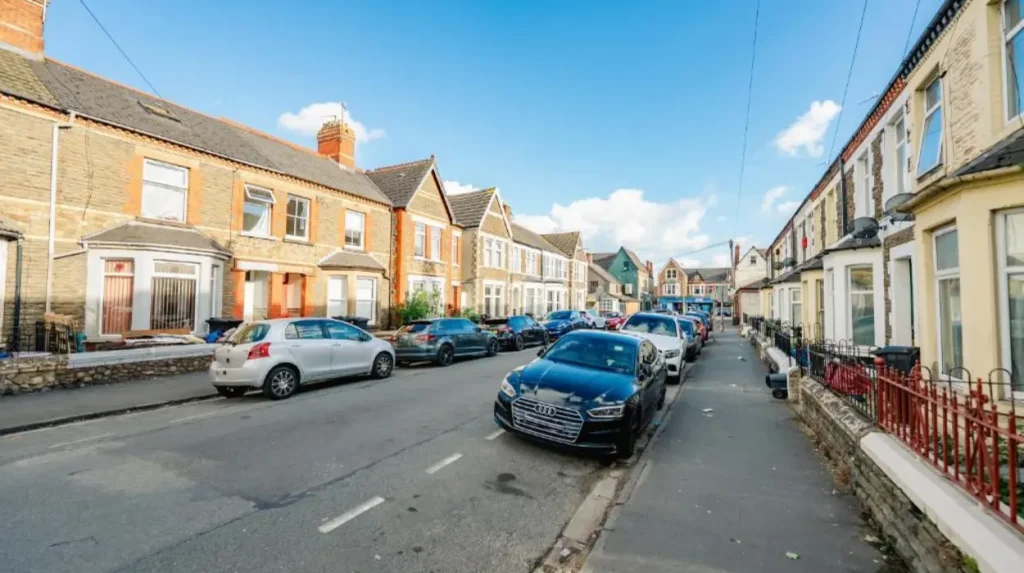
How many resident parking permits can one Cardiff property have?
A Cardiff property can have a maximum of two resident parking permits at one time. The first and second permits have different charges, and both permits must satisfy the council’s eligibility and vehicle requirements.
Cardiff Council’s current resident permit structure allows two permits per household. The first permit is priced lower than the second.
The current published 12-month prices are £35 for the first resident permit and £90 for the second. Shorter permit periods are also available for three, six and nine months.
For the first resident permit, the published prices are £8.75 for three months, £17.50 for six months, £26.25 for nine months and £35 for 12 months.
For the second resident permit, the published prices are £22.50 for three months, £45 for six months, £67.50 for nine months and £90 for 12 months.
The pricing structure means that households with two cars pay more for the second permit.
The permit limit also applies when paper and digital permits are involved. Cardiff Council’s terms state that only the first two permits issued remain valid if both paper and digital permits are obtained.
Residents should therefore check their current permit status before purchasing another permit.
How much does a Cardiff parking permit cost?
Cardiff resident parking permits currently cost £35 for the first 12-month permit and £90 for the second. Three, six and nine-month options are also available, while some zones have different charges.
Cardiff Council publishes permit charges according to permit type and duration. Standard resident permit prices currently cover four periods: three months, six months, nine months and 12 months.
The standard first permit costs £8.75 for three months and £35 for 12 months. The second permit costs £22.50 for three months and £90 for 12 months.
The council also operates different pricing for Zone R2 in Llandaff North. The zone operates from 9am to 5pm Monday to Friday, which results in lower resident permit prices.
The R2 first resident permit costs £5 for three months, £10 for six months, £15 for nine months and £20 for 12 months. The second costs £15, £30, £45 and £60 respectively.
Permit charges are therefore zone-sensitive. Residents should check the council’s current price information before paying.
How do you apply for a Cardiff parking permit?
Cardiff residents apply for eligible parking permits through MiPermit. Applicants provide residence and vehicle information, submit required evidence and complete payment after the council confirms eligibility.
MiPermit is Cardiff Council’s digital parking permit system. Applicants create or use a MiPermit account and provide the required information.
For standard resident applications, the council requests a valid council tax number, vehicle registration details and proof that the vehicle is kept at the applicant’s address.
Vehicle evidence can include a V5C vehicle log book, hire or lease agreement or insurance documentation showing the relevant address.
Applicants without access to a council tax account number can still apply under the council’s registration process. They must provide acceptable proof of address. Examples include a tenancy agreement, council tax document, utility bill or bank statement.
Students have specific application arrangements. A student taking a vehicle to university must provide appropriate evidence, and the vehicle insurance address must correspond with the university address where applicable.
Once an application is approved, the applicant receives instructions for purchasing the permit.
Cardiff Council also provides a telephone option through MiPermit support for applicants who cannot establish an account online.
Can Cardiff parking permits be used for visitors?
Residents in eligible parking areas can purchase visitor parking hours through MiPermit and register a visitor’s vehicle when it parks. Visitors do not need to display a physical permit because the visitor arrangement is digital.
Visitor parking is separate from the resident’s own permit. Residents purchase visitor hours and activate them for the vehicle being used by the visitor.
Cardiff Council currently allows residents to purchase up to six batches of 850 visitor hours. Each batch costs £35, giving a maximum annual purchase of 5,100 hours under the standard visitor arrangement.
The visitor’s vehicle registration must be registered when the visitor parks.
The visitor does not need to display anything inside the vehicle because the parking permission is recorded digitally.
Unused visitor hours expire one year after purchase. Residents who reach the annual maximum cannot purchase additional hours until the relevant period has passed.
Visitor parking rules vary by zone. Some controlled parking zones have specific visitor arrangements, while individual schemes can introduce different conditions.
Residents should therefore check the visitor rules applying to their own parking zone before registering a visitor.
Which other types of Cardiff parking permits are available?
Cardiff Council provides several permit categories beyond resident permits, including visitor, business, carer, contractor, community, doctor and professional carer permits. Eligibility and parking rights differ between categories and zones.
Cardiff Council’s parking permit system covers multiple user groups. The council lists residents, businesses, essential school staff, contractors, carers and religious or community premises among groups that can receive permits in controlled zones.
Business permits support eligible operational parking activity. They are not designed as general commuter parking permissions.
Carer permits support qualifying care activity. Contractor permits support authorised work taking place in controlled parking areas.
Community permits support eligible community premises such as places of worship, community halls and properties providing welfare services for disabled people.
Doctor permits provide parking rights for authorised medical professionals in designated doctor bays.
Professional carer permits are distinct from personal carer arrangements.
The exact categories available depend on the controlled parking zone. A permit issued for one purpose does not automatically provide access to every permit-holder bay.
What properties are not eligible for Cardiff resident parking permits?
Cardiff Council excludes several property categories from parking permit eligibility, including certain post-September 2011 developments, properties with off-street parking, private-road properties, some student accommodation and car-free developments.
Eligibility depends on the property’s status as well as the resident’s circumstances.
Cardiff Council states that properties developed after 1 September 2011 are among those that are not eligible for permits. Properties with off-street car parks can also be excluded.
Private-road properties are another excluded category.
Student accommodation and car-free developments are also listed as ineligible in Cardiff’s controlled parking information.
The council applies these restrictions to manage parking demand and account for development-related parking arrangements.
This creates an important consideration for renters and homebuyers. A person should confirm parking permit eligibility before signing a tenancy agreement or purchasing a property.
Cardiff Council specifically advises prospective residents to check whether a property is eligible before making a commitment. The council also states that it is not responsible for incorrect permit information provided by landlords, letting agents or estate agents.
A property’s postcode alone does not establish eligibility. The property’s parking scheme and development characteristics also matter.
Where can a Cardiff parking permit holder park?
A Cardiff permit holder can park only in locations authorised by the relevant permit and zone. These locations include resident-only bays and, in some areas, shared-use limited-waiting or pay-and-stay bays.
Permit rights are determined by the zone and the signs at the parking location.
Resident permits generally allow parking in resident permit-holder-only bays within the permitted area. Some zones also allow permit holders to use shared-use bays.
Shared-use bays combine different parking functions. A bay can permit residents with the correct permit while also operating as a limited-waiting or pay-and-stay space for other drivers.
The rules differ between zones. Cardiff Council’s C1, C2 and C3 Cathays zones, for example, allow relevant permit holders to use resident permit-holder-only bays, limited-waiting bays and pay-and-stay bays.
Specific-use bays remain restricted. A resident permit does not automatically authorise parking in a doctor’s bay or another bay reserved for a different permit category.
Yellow lines also remain enforceable. A permit does not override restrictions that prohibit parking or stopping.
Drivers must therefore read signs and road markings at every parking location.
Does a Cardiff parking permit guarantee a space outside your home?
A Cardiff parking permit does not guarantee a parking space outside your home. It provides eligibility to park under the relevant permit restrictions, but available spaces remain subject to demand and enforcement conditions.
Permit schemes regulate access to parking rather than reserve individual spaces.
A resident with a valid permit can still find all eligible spaces occupied. Another permit holder can legally use a nearby bay within the same authorised zone.
Cardiff Council explicitly states that permits do not guarantee a space outside the property. The purpose is to improve parking management and prioritise eligible users rather than allocate individual kerbside spaces.
This distinction is important for residents who depend on street parking.
A permit also does not permit a driver to park wherever they choose within a zone. Signs, road markings, restricted bays, yellow lines and other controls continue to apply.
The permit provides a defined parking entitlement. It does not remove general parking regulations.
How do you renew or change a Cardiff parking permit?
Cardiff parking permits are managed through MiPermit, where eligible users can renew permits and update relevant details. Residents remain responsible for renewing permits before expiry even when reminder emails are provided.
Cardiff Council’s MiPermit system displays permits that are due for renewal. Users can select the relevant permit and complete the renewal process online.
Residents can also select an auto-renewal option when applying. Under this arrangement, payment is taken seven days before the permit expires and the permit renews using the stored details until the option is removed.
Residents changing vehicle details must ensure that the vehicle registration recorded against the permit is correct.
This is important because Cardiff Council’s terms state that an incorrect vehicle registration mark can invalidate the permit.
Moving home also requires action. A resident permit is linked to the property and cannot simply be transferred to a new address.
Cardiff Council states that residents must cancel the permit through their MiPermit account when moving property.
Renewal reminders are a convenience rather than the council’s legal responsibility. The permit holder remains responsible for maintaining valid parking permission.
What happens if you park incorrectly with a Cardiff permit?
A parking permit does not protect a driver from enforcement when parking rules are breached. Vehicles must follow bay restrictions, signs, road markings, permit conditions and time limits, or the driver can receive a parking penalty.
A valid permit is only effective when it is used correctly.
A driver can receive enforcement action for parking in a location that the permit does not cover. Incorrect vehicle registration details can also invalidate the permit.
Parking in a restricted bay reserved for another category of user is another violation.
Cardiff Council states that community permits, for example, cannot be used in certain resident-only bays, Blue Badge bays, doctor bays, yellow-line restrictions, zig-zag markings, suspended areas or locations where the vehicle causes an obstruction.
The same principle applies across permit categories. Drivers must understand the conditions attached to their particular permit.
The safest approach is to check the sign at the exact location before leaving the vehicle.
How do Cardiff parking permits relate to Blue Badge parking?
Blue Badge parking operates under separate disability parking rules. Cardiff Council allows Blue Badge holders specific parking rights in resident permit areas, limited-waiting bays and pay-and-stay bays, subject to the applicable conditions.
A Blue Badge is not the same as a resident parking permit.
Cardiff Council states that Blue Badge holders can park in resident permit-holder bays or areas for up to three hours when the badge and parking clock are correctly displayed.
Blue Badge holders can also use limited-waiting and pay-and-stay bays without payment and without time limits when the required badge is displayed correctly.
These rights operate under the Blue Badge parking framework and do not depend on holding a resident permit.
Other restrictions continue to apply. Drivers must observe restrictions where Blue Badge parking is not permitted.
The distinction matters because residents sometimes confuse permit schemes with disability parking rights. They are separate systems with different eligibility requirements and conditions.
Explore More Area Guide
Free Parking in Cardiff: Cardiff Council Driver Guide
Cheap Parking in Cardiff: Car Parks and Alternatives
Are Cardiff parking permits likely to remain important as the city changes?
Parking permits remain an important part of Cardiff’s transport and parking management because residential demand, development, commuting and changing traffic patterns continue to place pressure on limited on-street parking space.
Cardiff’s parking strategy increasingly uses controlled parking zones to manage local demand.
The council’s City Parking Plan identifies different areas of Cardiff for tailored parking restrictions. Its stated objective is to make parking management responsive to local needs while prioritising groups such as residents, Blue Badge holders, essential services and local businesses.
New controlled parking schemes also demonstrate the continuing development of Cardiff’s permit system.
The council has introduced and consulted on zones covering areas including Plasnewydd, Pontcanna and Riverside. Individual schemes establish their own permit categories, operating periods and parking arrangements.
Digital administration is another significant development. MiPermit allows applications, payments, renewals and visitor vehicle registration to be handled electronically.
This means Cardiff parking permits are increasingly linked to vehicle registration records rather than physical paper displayed in a windscreen.
For residents, the key long-term requirement is accurate information. A valid address, correct vehicle registration and active permit remain essential.
What should Cardiff drivers check before applying for a parking permit?
Cardiff drivers should check property eligibility, parking-zone boundaries, permit type, vehicle requirements, operating hours, current charges and application evidence before applying. These checks prevent invalid applications and reduce parking problems after moving into a property.
The first check is the property. Confirm that the address belongs to an eligible residents parking scheme or controlled parking zone.
The second check is the permit category. A resident, visitor, business, carer, contractor and community permit does not provide identical parking rights.
The third check is the vehicle. Ensure the registration details and supporting documents are accurate.
The fourth check is the operating period. Parking restrictions vary between Cardiff zones.
The fifth check is the cost. Standard resident permit prices currently range from £8.75 for a three-month first permit to £90 for a 12-month second permit, while some zones have different prices.
The sixth check is visitor parking. Residents who regularly receive visitors should understand how visitor hours work and how visitor vehicle registrations are activated.
Finally, drivers should check signs every time they park. A permit is an authorisation within a defined regulatory system, not a general exemption from Cardiff’s parking restrictions.
Cardiff Council’s official parking pages provide the most reliable information for checking current eligibility, prices, zones, application requirements and permit conditions.
Understanding these rules makes Cardiff parking permits easier to manage. The essential principles are straightforward: confirm eligibility, apply through the correct system, keep vehicle and address information accurate, renew on time and follow the signs and restrictions in the relevant parking zone.
What is a Cardiff parking permit?
A Cardiff parking permit is permission issued by Cardiff Council that allows eligible residents, visitors, businesses or other authorised users to park under specific restrictions within a designated parking zone.