Cardiff’s street names preserve layers of political, industrial, royal, aristocratic and local history. Names such as Queen Street, Charles Street and Lloyd George Avenue connect modern Cardiff with figures who influenced the city, Wales or the wider United Kingdom. Other names, including Sophia Street and streets associated with the Bute estate, reflect the families and individuals who shaped Cardiff’s nineteenth-century expansion.
- What do Cardiff street names reveal about the city’s history?
- Which Cardiff street is named after Queen Victoria?
- Who was Charles Vachell and why is Charles Street named after him?
- How is the Bute family represented in Cardiff street names?
- Who was Sophia and why does Cardiff have Sophia Street?
- What does Mount Stuart Square commemorate?
- Why is Lloyd George Avenue named after David Lloyd George?
- Which Cardiff streets reflect the history of the temperance movement?
- Which Cardiff street names are linked to medieval or aristocratic Cardiff?
- How did industrialisation change the way Cardiff streets were named?
- Why are Cardiff’s historic street names important today?
- How should visitors explore Cardiff’s streets named after historic figures?
- What is the future of historic street naming in Cardiff?
Street naming became particularly significant as Cardiff expanded from a medieval town into a major industrial port. The nineteenth-century growth of the docks, railways, coal trade and suburban housing created hundreds of new streets. Landowners, developers, politicians, royalty, military figures and prominent local residents became part of the city’s geographical vocabulary.
The result is a street network that functions as a historical record. A name can indicate who controlled land, which political figure was celebrated, which family financed development or which national event influenced local identity.
What do Cardiff street names reveal about the city’s history?
Cardiff street names reveal the city’s transformation from a medieval settlement into an industrial capital, recording royal associations, major landowners, local politicians, national leaders and influential families through names still used today.
Cardiff’s modern street pattern developed through several major phases. The medieval town centred on Cardiff Castle, the River Taff and a compact network of streets. Industrialisation then transformed the settlement during the nineteenth century.
The expansion of Cardiff’s docks created demand for housing, commercial premises and transport routes. The Bute estate controlled extensive land around the developing docks and played a major role in the physical expansion of the city.
The influence of landowners is particularly visible in areas such as Butetown and the streets surrounding the docks. Names connected with the Bute family, their estates and their titles remain part of Cardiff’s urban landscape.
Other names commemorate people outside the aristocracy. Charles Street, for example, is associated with Charles Vachell, a Cardiff businessman and politician who served twice as mayor.
Later street names reflect national political history. Lloyd George Avenue commemorates David Lloyd George, the Welsh Liberal politician who became British prime minister.
Cardiff Council remains responsible for officially naming and numbering streets and properties. Modern naming policy places emphasis on local heritage and historical connections, demonstrating that street names remain an important part of civic identity rather than simply serving as addresses.
Which Cardiff street is named after Queen Victoria?
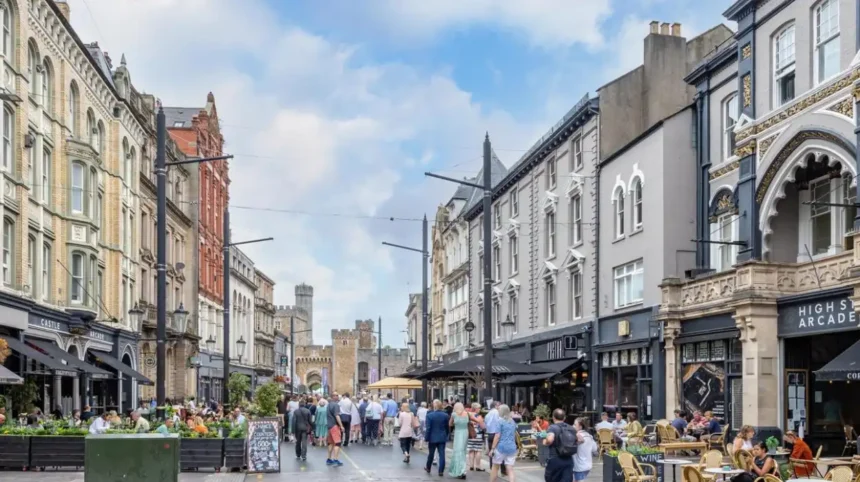
Queen Street was renamed in honour of Queen Victoria in 1886, replacing the older name Crockherbtown for much of the route and creating one of Cardiff’s clearest surviving links with nineteenth-century British royal history.
Queen Victoria reigned from 1837 until 1901 and became one of the most prominent figures associated with nineteenth-century Britain. Her reign coincided with Cardiff’s rapid transformation into an industrial and commercial centre.
The name Queen Street replaced the historic name Crockherbtown for the main section of the route in 1886. The change took place during the period leading towards Victoria’s Golden Jubilee in 1887.
Crockherbtown had considerably older origins. Historical research records the name from the medieval period, with earlier forms including Crokarton and Crockerton. The name became associated with the interpretation of the area as a place connected with crockery and herbs.
The surviving Crockherbtown Lane preserves part of this older place-name history.
Queen Street therefore represents two different historical periods. The older name reflects medieval Cardiff and the commercial activities of the town. The later name reflects Victorian civic identity and royal commemoration.
The street subsequently became one of Cardiff’s major commercial routes. Its modern pedestrianised character contrasts with its nineteenth-century role as an important east-west thoroughfare.
The Queen Victoria association also illustrates how street names can replace earlier local names. Renaming was not simply a geographic change. It altered the historical vocabulary through which residents and visitors understood the city.
Who was Charles Vachell and why is Charles Street named after him?
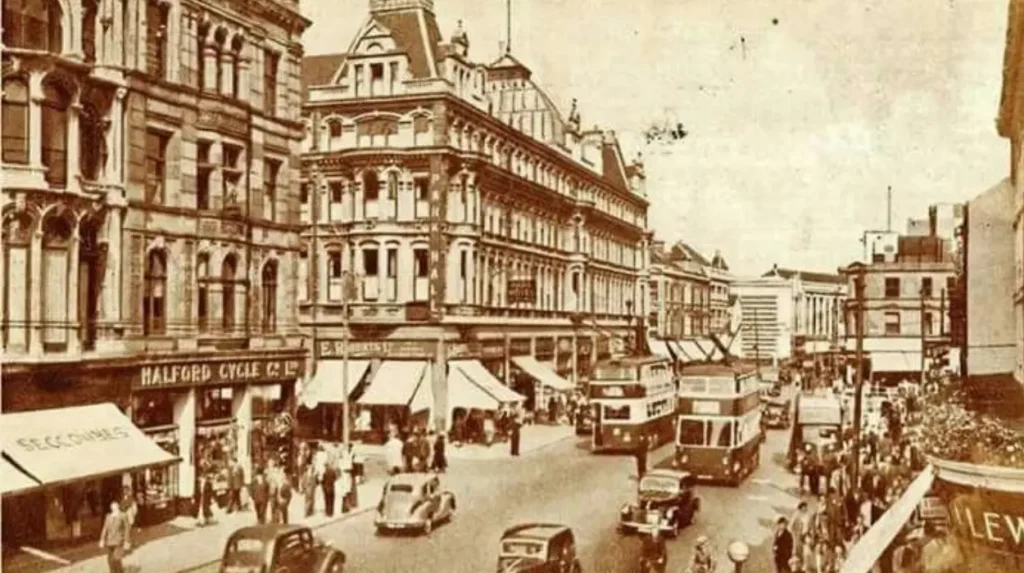
Charles Street is associated with Charles Vachell, a Cardiff businessman, councillor and two-time mayor who owned land used for the street’s development during the nineteenth-century expansion of the city centre.
Charles Vachell was a prominent Cardiff businessman and local politician. He was born around 1783 and died in 1859.
His family had commercial connections in Cardiff. Vachell became successful in business before investing in property and land as Cardiff expanded.
His political career included service on Cardiff Town Council following its creation in 1835. He served as mayor in 1848 and again in 1855 and also held the position of chief magistrate.
Charles Street emerged during the nineteenth-century development of Cardiff’s central area. The street was originally associated with higher-status residential development before becoming increasingly commercial.
The street’s connection with Vachell demonstrates that Cardiff’s historic street names are not exclusively associated with royalty or national politicians. Local civic leaders also received lasting recognition through the urban landscape.
The name is particularly significant because Vachell participated directly in Cardiff’s civic administration during a period when the town was developing new infrastructure.
In 1849, Charles Street was described in contemporary reporting as the town’s principal street during discussions about Cardiff’s drainage system. Its development therefore coincided with wider attempts to modernise the growing town.
Today, Charles Street connects Cardiff’s historic civic and commercial development with its modern city-centre environment.
How is the Bute family represented in Cardiff street names?
The Bute family is represented across Cardiff through street and place names linked to John Crichton-Stuart, the Marquesses of Bute, their estates and family titles, reflecting their extensive influence over Cardiff’s nineteenth-century urban development.
The Bute family occupies a central position in the history of Cardiff’s nineteenth-century expansion.
John Crichton-Stuart, 2nd Marquess of Bute, became one of the most important landowners associated with Cardiff. His estate controlled large areas of land around the town and docks.
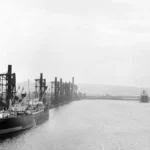
The development of Cardiff Docks transformed the city’s economy. Bute Street became an important route between the dock area and the town centre. Its construction formed part of the wider development associated with the Bute estate.
The family’s influence extended beyond one street. Names associated with Bute, Stuart, Mount Stuart, Dumfries and related titles appear throughout Cardiff.
Mount Stuart Square provides a particularly clear example. Coflein, the National Monuments Record of Wales, records that the square was named after the heir to the Bute estate and formed part of the estate’s plans for Butetown.
The Bute influence was also expressed through public parks. Bute Park takes its name from the family, while Sophia Gardens commemorates Sophia Rawdon-Hastings, wife of the 2nd Marquess of Bute.
These names demonstrate that aristocratic influence operated through land ownership and urban development rather than only through political office.
Cardiff’s nineteenth-century landscape was therefore shaped partly through private estate development. Streets, squares, parks and residential areas became physical expressions of the estate system.
Who was Sophia and why does Cardiff have Sophia Street?
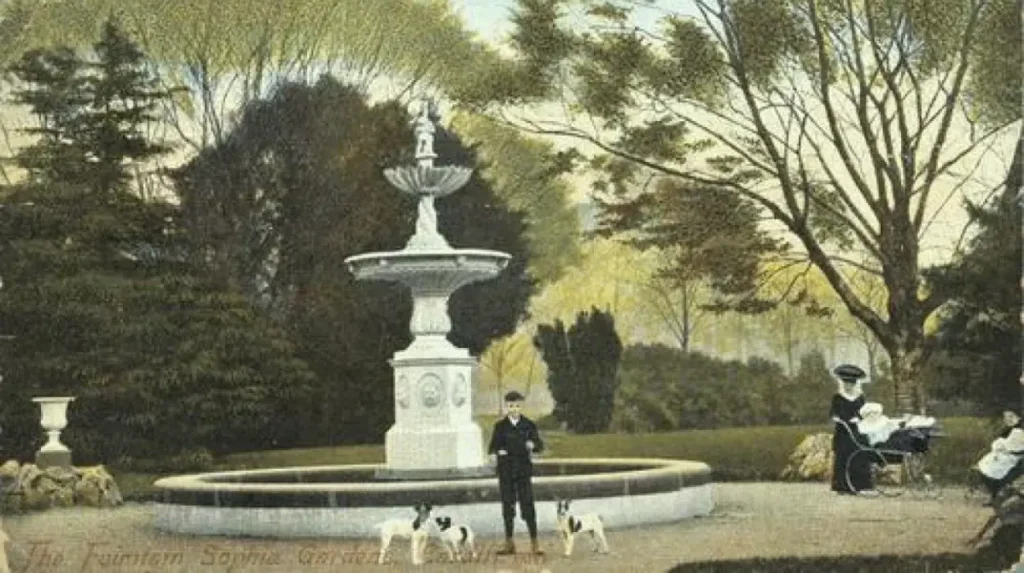
Sophia Street in Butetown forms part of the historic street network associated with the Bute estate, while Sophia Gardens is directly named after Sophia Rawdon-Hastings, Marchioness of Bute, whose public-space legacy remains strongly connected with Cardiff.
Sophia Rawdon-Hastings was the wife of John Crichton-Stuart, 2nd Marquess of Bute. She became closely associated with Cardiff during the period when the city was undergoing rapid nineteenth-century growth.
Her strongest documented place-name association is Sophia Gardens.
Sophia Gardens was created as a public park in the nineteenth century. The park opened to the public in 1858 after being developed partly in response to the closure of public access to parts of Cardiff Castle grounds.
The creation of Sophia Gardens demonstrates the relationship between aristocratic estates and emerging ideas about public recreation.
The park was laid out on the west bank of the River Taff. It later became an important sporting and recreational site and remains one of Cardiff’s most significant historic green spaces.
Sophia Street existed in historic Butetown and appears in nineteenth-century records. It was part of the dense residential street network that developed around Cardiff’s docks.
The wider pattern of Sophia-related names demonstrates the lasting geographical presence of the Bute family and its associates.
The distinction between a documented naming origin and an association is important. Cardiff contains many streets connected with the Bute estate, but the exact origin of every individual street name is not equally documented in surviving sources.
What does Mount Stuart Square commemorate?
Mount Stuart Square commemorates the Bute family’s Stuart connection and was developed as part of the estate’s nineteenth-century plans for Butetown, linking Cardiff’s dockland expansion with the family that controlled extensive land in the area.
Mount Stuart Square was developed during the 1850s as part of the planned expansion of Butetown.
Coflein records that the square was initially built between 1855 and 1859 and was likely designed by Alexander Roos, an architect associated with the Bute estate.
The name refers to the Stuart family connection of the Bute dynasty. John Crichton-Stuart, 2nd Marquess of Bute, was the key landowner behind much of the development.
The square was originally designed as a residential environment. Its architecture reflected nineteenth-century aspirations for planned urban development.
The location is historically important because Butetown developed alongside Cardiff’s expanding docks. The docks attracted workers, merchants, sailors and businesses from Britain and overseas.
This created a highly diverse urban community. The street network around Mount Stuart Square, Bute Street, James Street and Sophia Street became part of the physical structure of historic Tiger Bay.
The survival of the Mount Stuart name therefore records both aristocratic landownership and the development of Cardiff as an international port.
Why is Lloyd George Avenue named after David Lloyd George?
Lloyd George Avenue commemorates David Lloyd George, the Welsh Liberal politician who became British prime minister, and the road was renamed from Bute Avenue after its redevelopment and landscaping as a major Cardiff Bay connection.
David Lloyd George was born in Manchester in 1863 and grew up in Wales. He became one of the most important Welsh politicians in British political history.
He served as Liberal prime minister from 1916 to 1922 and was closely associated with major political and social changes during the early twentieth century.
Lloyd George Avenue provides a much more recent example of commemorative street naming than Queen Street or the Bute-related names.
The road formed part of the Cardiff Bay regeneration programme. It connects Cardiff city centre with Cardiff Bay and replaced an industrial landscape with a modern urban boulevard.
The road was originally associated with the name Bute Avenue. It was renamed Lloyd George Avenue following the completion of the development in 2000.
A National Audit Office Wales document records that the Bute Avenue scheme was completed in December 2000 and that the route was renamed Lloyd George Avenue.
The name therefore combines two periods of Cardiff history. The earlier Bute name reflected the nineteenth-century estate and dock development. The later Lloyd George name reflects twentieth-century Welsh political history and the regeneration of Cardiff Bay.
This makes the avenue particularly useful for understanding how Cardiff’s commemorative landscape changes over time.
Which Cardiff streets reflect the history of the temperance movement?
Gough Street and Havelock Street in historic Cardiff are associated with figures connected with the temperance movement, linking the former Temperance Town area with nineteenth-century campaigns against alcohol consumption and wider Victorian social reform.
Temperance Town developed near Cardiff’s railway station during the nineteenth century. The area was planned as a working-class community influenced by temperance principles.
Edward Wood, who owned the land, was a strong supporter of temperance. The district was developed without public houses as part of its original social vision.
Gough Street is associated with John Bartholomew Gough, a prominent nineteenth-century temperance speaker. Gough was born in Kent and became internationally known for his lectures after overcoming alcoholism and joining the temperance movement.
Havelock Street is associated with Sir Henry Havelock, a British army officer and supporter of temperance.
Havelock died in 1857, and the Havelock Cross became associated with military temperance activity after his death.
The names demonstrate that Victorian Cardiff street naming was influenced by social reform as well as landowners and political leaders.
Temperance Town has largely disappeared as a physical neighbourhood because of later redevelopment. The street names nevertheless preserve evidence of its original social purpose.
This is an important feature of Cardiff’s historic geography. A street name can survive after the buildings, communities and original land uses around it have changed.
Which Cardiff street names are linked to medieval or aristocratic Cardiff?
Several Cardiff names preserve connections with medieval and aristocratic history, including Fitzhamon, Clare, Despenser and Tudor, reflecting families and figures associated with Cardiff Castle, Glamorgan and the medieval development of the region.
Cardiff’s aristocratic history extends well beyond the nineteenth-century Bute estate.
The medieval development of Cardiff centred on Cardiff Castle and the Norman lordship of Glamorgan. Successive ruling families controlled the castle and surrounding territory.
Robert Fitzhamon was a Norman lord who conquered Glamorgan in the late eleventh century. His name survives in Cardiff through Fitzhamon Embankment.
The de Clare family also became closely associated with Cardiff and Glamorgan. Gilbert de Clare, 8th Earl of Gloucester and 7th Earl of Hertford, held the lordship of Glamorgan in the thirteenth century.
Despenser is another historic aristocratic name associated with Cardiff’s medieval ruling families. The Despenser family became lords of Glamorgan through inheritance and marriage.
Tudor references connect Cardiff with the wider Tudor royal period. The Tudor dynasty ruled England and Wales from the late fifteenth century until the early seventeenth century.
These names demonstrate that Cardiff’s street vocabulary reaches back several centuries before industrialisation.
The survival of these names is particularly important because medieval Cardiff was substantially smaller than the modern city. Modern streets therefore provide geographical reminders of political structures that disappeared long ago.
How did industrialisation change the way Cardiff streets were named?
Industrialisation expanded Cardiff rapidly during the nineteenth century, creating new residential districts, dockside communities, commercial routes and planned estates where street names reflected landowners, public figures, political movements and the social values of the expanding city.
Cardiff’s population and physical footprint expanded rapidly during the nineteenth century.
The development of the coal-export trade transformed the town into an international port. Cardiff Docks became central to the export economy of South Wales.
New roads were required to connect the docks with the town centre and railway infrastructure. Bute Street became one of the principal routes through this expanding landscape.
Housing development followed the expansion of employment. Butetown, Newtown, Temperance Town and other districts contained dense residential streets.
Some street names reflected families or landowners. Others reflected political or cultural figures. Some reflected military events, religious traditions or local geography.
This created a layered naming system rather than a single naming tradition.
The historical record also demonstrates that street names changed. Queen Street replaced much of Crockherbtown in the 1880s. Lloyd George Avenue replaced an earlier modern development name in the early twenty-first century.
Street renaming therefore forms part of Cardiff’s broader urban history.
Why are Cardiff’s historic street names important today?
Historic Cardiff street names preserve evidence of political power, landownership, industrial expansion, social reform and Welsh identity, allowing modern residents and visitors to connect present-day streets with earlier periods of the city’s development.
Street names are part of Cardiff’s cultural heritage.
They provide clues about former landowners and development schemes. They also preserve associations with people whose influence extended beyond the physical buildings that survive.
The importance of these names is recognised in modern Cardiff planning policy. Cardiff Council’s street-naming approach requires historical or local context when individuals are proposed as names for new streets.
The Council’s policy states that an individual’s name should only be used where an appropriate historic or legacy link exists.
This approach gives street naming a heritage function.
Modern bilingual naming also reflects Cardiff’s Welsh-language identity. Cardiff University research into Welsh and English place names demonstrates that the city’s linguistic landscape has changed over time.
Historic names can therefore reveal changes in language as well as political and economic development.
The result is a street network that contains several layers of Cardiff history at once.
A single journey through the city can pass names connected with medieval lords, Victorian landowners, British royalty, social reformers and twentieth-century Welsh politicians.
Explore More Area Guide
Local Bakeries with Generations of History in Cardiff
Longest-Running Restaurants in Cardiff: Historic Dining Guide
How should visitors explore Cardiff’s streets named after historic figures?
Visitors can explore Cardiff’s historic street names by combining central streets, the old docklands, Butetown, Cardiff Bay and the areas around Cardiff Castle, where commemorative names connect medieval, Victorian and modern phases of the city’s development.
A practical historical route begins in the city centre.
Queen Street provides a clear starting point because its name directly commemorates Queen Victoria and replaced the older Crockherbtown name.
Charles Street offers a local perspective through its connection with Charles Vachell. The street also sits within an area that developed rapidly during Cardiff’s nineteenth-century expansion.
From the city centre, the route can continue towards Cardiff Bay through the wider network associated with the Bute estate.
Bute Street is particularly significant because it was planned as a major connection between the town and the docks.
Mount Stuart Square provides another important stop. Its architecture and layout demonstrate the scale of planned nineteenth-century development in Butetown.
Sophia Street provides an additional historic reference point, while Sophia Gardens offers a documented connection with Sophia Rawdon-Hastings and the Bute family.
Lloyd George Avenue provides the modern conclusion to the route. Its name represents twentieth-century Welsh political history and the transformation of Cardiff Bay through regeneration.
The route demonstrates why Cardiff’s street names are valuable historical sources. They connect names, people, land ownership, architecture, transport and urban development within a single geographical area.
What is the future of historic street naming in Cardiff?
Cardiff’s future street naming policy continues to place importance on local heritage, Welsh language, historical context and meaningful connections between new developments and their surroundings, ensuring that street names remain part of the city’s evolving cultural identity.
Cardiff continues to expand through new housing, commercial development, transport infrastructure and regeneration.
New streets require official names and addresses. Cardiff Council is responsible for the formal naming and numbering process.
Modern policy places emphasis on local historical context. Developers proposing street names are expected to consider connections with the development site or surrounding area.
The policy also gives significant consideration to Welsh-language naming.
This approach differs from simply selecting famous national figures. A meaningful street name should relate to the history or identity of its location.
The policy therefore provides a mechanism for future Cardiff streets to record local heritage in the same way that older streets preserve earlier periods.
The historical record demonstrates why this matters. Names such as Queen Street, Charles Street and Lloyd George Avenue identify specific people or historical associations. Bute-related names preserve the influence of an estate that transformed Cardiff’s physical development. Medieval names preserve connections with Cardiff Castle and the lordship of Glamorgan.
Cardiff’s street network is consequently both functional infrastructure and historical evidence.
Understanding these names gives residents and visitors a more precise view of how Cardiff developed from a medieval settlement into the capital city of Wales.
Which Cardiff street is named after Queen Victoria?
Queen Street is named after Queen Victoria. The street was renamed from Crockherbtown in 1886 during the Victorian period and became one of Cardiff’s principal commercial streets.