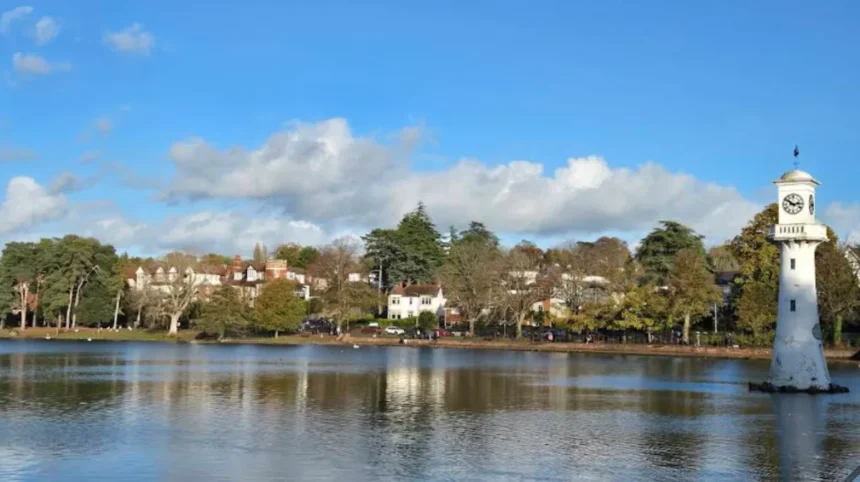
Roath Park Botanic Gardens houses one of the most significant municipal tree collections in the United Kingdom. Located in Cardiff, Wales, this Grade I listed historic park spans 130 acres of land, with the dedicated botanical section situated directly south of the main Roath Park Lake dam. The site serves as a vital ex-situ conservation hub, preserving exceptional specimens of rare and champion flora within a managed urban environment.
- What Is the Botanical History of Roath Park?
- The Vision of Harpur and Pettigrew
- Evolution of the Glasshouse Infrastructure
- Modern Conservation and Recognition
- Which Rare Flowering Trees Define the Outdoor Collection?
- The Wales Champion Pink Silk Tree
- Phenology and Reproductive Structures of the Silk Tree
- Other Notable Outdoor Flowering Entities
- What Rare Flora Exists Inside the Roath Park Conservatory?
- Arborescent and Monocotyledonous Species
- Specialized Epiphytic and Terrestrial Collections
- The Aquatic Ecosystem Hub
- How Does Climate Change Impact These Rare Botanical Assets?
What Is the Botanical History of Roath Park?
Roath Park opened on June 20, 1894, transforming 130 acres of malarial bogland into a structured public parkland. Local landowners, led by the 3rd Marquis of Bute, donated the land to the Cardiff Corporation in 1887 to facilitate public recreation.
The Vision of Harpur and Pettigrew
The transformation of the marshy Nant Fawr stream valley required extensive engineering and horticultural design. William Harpur, the Borough Engineer, oversaw the drainage of the wetlands and the construction of the 30-acre man-made lake. Concurrently, William Wallace Pettigrew, the first Head Gardener and subsequent Chief Parks Officer for Cardiff, curated the living collections. Pettigrew established a rigorous planting regime focused on introducing exotic and uncommon tree species capable of thriving in the South Wales maritime climate.
Evolution of the Glasshouse Infrastructure
The botanical collection expanded beyond outdoor borders with the introduction of early glasshouses. In 1905, Mrs. Watson of Whitchurch donated a collection of 500 cactus plants, establishing the historic Cactus House. Adjacent to this structure, the Chrysanthemum House attracted over 12,000 visitors during winter exhibitions. In 1975, the Parks Committee replaced these deteriorating Victorian structures with a modern, heated temperate conservatory, often designated as the Tropical House. This conservatory maintains a minimum overnight winter temperature of 12°C to support non-hardy specimens.
Modern Conservation and Recognition
Today, the park is registered on the Cadw Register of Landscapes, Parks and Gardens of Special Historic Interest in Wales. The botanical database confirms that Roath Park possesses the second largest collection of rare and champion trees in a British municipal park, surpassed only by Bute Park. The living collection serves an active educational and scientific role, monitored by groups such as the Tree Register of the British Isles.
Which Rare Flowering Trees Define the Outdoor Collection?
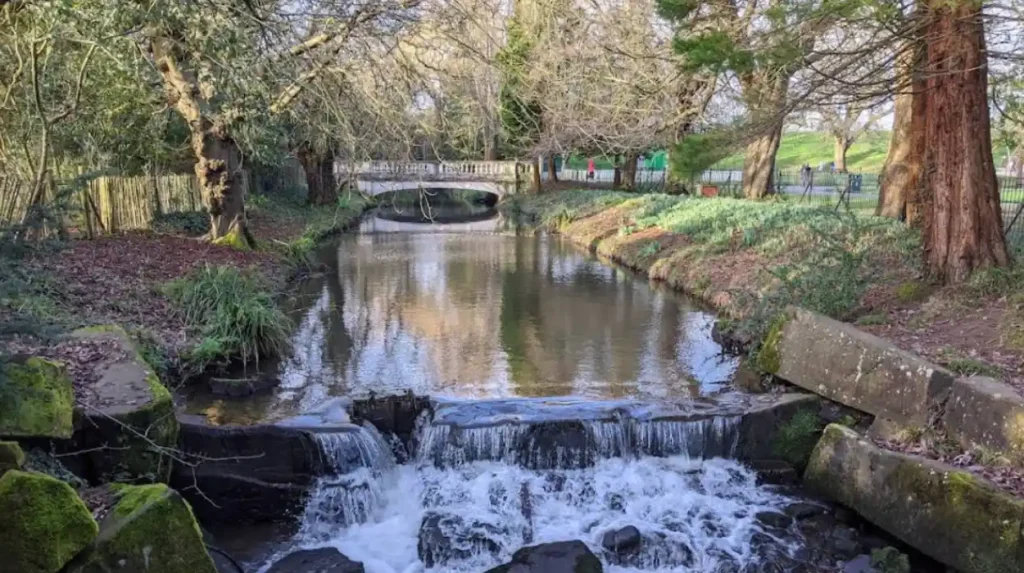
The outdoor arboretum features exceptional flowering specimens, including the national champion Silk Tree (Albizia julibrissin ‘Rosea’). These trees survive across distinct microclimates within the west species borders and formal areas, representing diverse geographic origins from Asia to North America.
The Wales Champion Pink Silk Tree
The standout specimen within the outdoor borders is the Albizia julibrissin ‘Rosea’, commonly known as the Pink Silk Tree, Pink Siris, or Mimosa Tree. Planted approximately in 2007, this tree is located on the west species border, directly north of the Rose Arbour. The specimen achieved a recorded height of 7 meters and a trunk girth of 85 centimeters measured at 1.5 meters above ground level.
This specific ‘Rosea’ form originates from South Asia to Korea and exhibits superior frost hardiness compared to the standard species type. The tree features smooth grey bark and large, light green bipinnate leaves up to 45 centimeters in length. The foliage comprises 6 to 12 pairs of pinnae, with each pinna containing 20 to 30 pairs of oblong leaflets.
Phenology and Reproductive Structures of the Silk Tree
The reproductive cycle of Albizia julibrissin ‘Rosea’ begins in late summer and extends into autumn. The inflorescences consist of dense clusters of bright pink, fluffy flowers where the showy elements are the elongated stamens rather than the petals. Following pollination by insects, the tree develops 15-centimeter-long brown seed pods. These pods contain light green seeds that emit a distinct leguminous odor when opened, chemically similar to shelled garden peas.
Other Notable Outdoor Flowering Entities
The outdoor borders contain additional rare woody plants selected by the Pettigrew family and subsequent curators. These include ancient specimens of Magnolia, Davidia involucrata (commonly known as the Handkerchief Tree), and various unique members of the Rosaceae family. The strategic placement of these trees along the western perimeter shields them from destructive easterly winds, ensuring high floral retention during spring and summer.
What Rare Flora Exists Inside the Roath Park Conservatory?
The Roath Park Conservatory protects an indoor collection of fragile exotic trees, specialized tropical palms, and unique herbaceous perennials. The structure operates as a controlled environment allowing tender species from equatorial regions to mature and flower reliably.
Arborescent and Monocotyledonous Species
Inside the conservatory, the vertical space is dominated by large woody and arborescent monocotyledonous plants. These include multiple varieties of banana trees (Musa species) and a diverse collection of architectural palms (Arecaceae family). The environment simulates tropical conditions, allowing these specimens to produce heavy foliage and structural flowering spikes that could not survive a standard Welsh winter.
Specialized Epiphytic and Terrestrial Collections
The lower strata of the conservatory house delicate flowering plants arranged around a central aquatic ecosystem. Key botanical components include:
- Orchids (Orchidaceae): Specialized epiphytic specimens that utilize the structural bark of indoor trees for support while extracting moisture from the humid air.
- The Bat Flower (Tacca chantrieri): A rare herbaceous plant famous for its dark purple-to-black flowers, long filiform bracteoles, and specialized pollination mechanisms.
- Pineapple Plants (Ananas comosus): Terrestrial bromeliads displaying distinct fruiting and flowering structures at the ground layer.
The Aquatic Ecosystem Hub
A large, heated freshwater pond forms the geographic center of the conservatory. This aquatic asset supports complex biological interactions, housing a permanent population of Koi carp, terrapins, and a breeding pair of Whistling Ducks. The evaporating water from this reservoir helps sustain the high relative humidity levels required by the surrounding canopy trees.
How Does Climate Change Impact These Rare Botanical Assets?
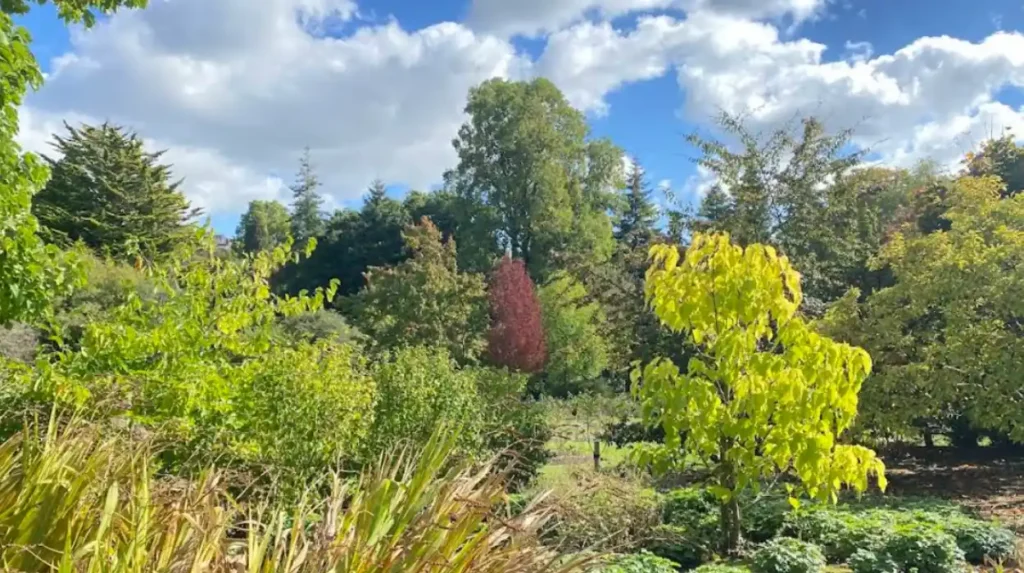
Climate change impacts these rare trees by altering seasonal temperature baselines, disrupting historic flowering timelines, and increasing the frequency of severe windstorms. These environmental shifts require adaptive arboricultural management to protect both outdoor champion trees and indoor glasshouse specimens.
Temperature Shift and Phenological Disruption
Analysis of meteorological data in South Wales indicates a consistent upward trend in average annual temperatures. For outdoor specimens like the Albizia julibrissin ‘Rosea’, elevated summer heat accumulation accelerates vegetative growth and increases floral density. However, mild winters threaten species that require specific chilling periods, known as vernalization, to break bud dormancy uniformly in spring. Early budburst increases the vulnerability of delicate spring-blooming trees to late-season ground frosts.
Hydrological Stress and Pathogen Pressure
Altered precipitation patterns introduce dual stressors of winter waterlogging and summer drought. The reclaimed bog soil of Roath Park retains significant moisture, which can cause root asphyxiation during prolonged winter rainfall events. Conversely, summer droughts induce cavitation—the formation of vapor bubbles in the xylem vessels—which restricts water transport in high-canopy trees. Furthermore, warmer ambient conditions facilitate the northward migration of novel pathogens, including Phytophthora species and destructive wood-boring insects.
Windstorms and Structural Mitigation Strategies
The structural integrity of Roath Park’s 12 designated national champion trees faces an escalating threat from high-velocity Atlantic gale systems. Because many of these rare trees are mature or senescent, they possess rigid frameworks prone to limb failure under extreme wind loads. The Cardiff Parks Department utilizes modern arboricultural techniques to mitigate these risks. These management tasks include ultrasonic decay tomography to evaluate internal trunk stability, strategic crown reduction to lower wind resistance, and the installation of flexible dynamic cable bracing systems within vulnerable branch junctions.
What is Roath Park Botanic Garden?
Roath Park Botanic Garden is the botanical section of Roath Park in Cardiff, Wales, located just south of the lake dam within the wider historic park. It forms part of Roath Park’s Grade I listed landscape and is known for its rare trees, champion specimens, formal planting, and conservatory collection.