Grange Gardens is a public green space in Grangetown, Cardiff, Wales. It provides an outdoor setting for local recreation, walking and access to green space within a densely developed urban neighbourhood. Its location near Cardiff city centre makes it relevant to residents and visitors exploring the capital’s parks, historic neighbourhoods and public spaces.
- Where is Grange Gardens in Cardiff?
- Why is Grange Gardens historically important?
- How did Grange Gardens develop during the Victorian period?
- What can visitors see at Grange Gardens?
- What recreational facilities are available at Grange Gardens?
- Is Grange Gardens a protected historic park?
- How was Grange Gardens restored?
- What wildlife and natural features can visitors discover?
- How can visitors travel to Grange Gardens?
- Is Grange Gardens suitable for families and children?
- What is the best time to visit Grange Gardens?
- How does Grange Gardens benefit the Grangetown community?
- What should visitors know before exploring Grange Gardens?
- Why does Grange Gardens remain important to Cardiff?
Where is Grange Gardens in Cardiff?
Grange Gardens is located on Holmesdale Street in Grangetown, south-west Cardiff, with the postcode CF11 7HH commonly listed by Visit Cardiff. The park occupies a residential neighbourhood close to Cardiff city centre and Cardiff Bay, making it accessible for local walks and recreation.
Grangetown is an established residential district in the southern part of Cardiff. Its development reflects the expansion of the city during the nineteenth century, when industrial employment, transport links and population growth increased demand for housing and public amenities.
Grange Gardens occupies a triangular-shaped site covering approximately 1.25 hectares, equivalent to 12,500 square metres. Residential streets surround the park, creating a defined public green space within the built-up neighbourhood.
The park’s entrances connect it with nearby streets, including Holmesdale Street, Corporation Road, Pentrebane Street and St Fagans Street. These surrounding roads help visitors identify the park when approaching on foot.
Its location also connects local residents with the wider Cardiff urban area. Visitors exploring Grangetown can combine a walk through the gardens with nearby community facilities and routes towards Cardiff Bay.
Why is Grange Gardens historically important?
Grange Gardens is a Victorian public park established between 1891 and 1895 to provide recreation for Grangetown’s growing population. Its historical importance comes from its surviving original layout, reconstructed bandstand, commemorative fountain canopy and Grade II listed war memorial.
The park emerged during a period of rapid urban growth. Grangetown’s residential development increased the need for accessible outdoor space where people could exercise, meet neighbours and participate in recreation.
Local landowners, including the Marquis of Bute and Lord Windsor, contributed land for the public park. The project addressed concerns about the lack of recreational facilities in an increasingly populated neighbourhood.
The park opened on 19 June 1895. The opening ceremony involved local civic representatives and a brass band, reflecting the importance of public parks as places for community gatherings and outdoor entertainment.
The original park included a bandstand and a park attendant’s shelter. Recreational facilities subsequently expanded to include a bowling green, tennis courts and children’s play areas.
Grange Gardens is now recognised on the Register of Historic Parks and Gardens in Wales maintained by Cadw, the Welsh Government’s historic environment service. It received Grade II designation on 1 February 2022 under reference PGW(Gm)72(CDF).
This designation recognises the park’s historic landscape and its surviving character. It does not mean every feature is a separately listed structure. Individual historic structures, including the war memorial, have their own heritage status.
How did Grange Gardens develop during the Victorian period?
Grange Gardens developed during the late Victorian period as Cardiff expanded beyond its older urban core. Land donated by Lord Bute and Lord Windsor enabled the creation of a public recreation ground, which opened in 1895 with landscaped paths and a bandstand.
Before the park was established, the site formed part of a low-lying landscape associated with former salt marshes between the rivers Taff and Ely. The ground required preparation before it could support a public recreation space.
Historical records describe the use of imported or reclaimed material to raise the ground level and fill drainage channels. This work helped create a firmer surface suitable for paths, lawns and recreational facilities.
The original design included a central circular area for the bandstand, with straight paths radiating towards the entrances. This layout gave the park a recognisable Victorian design while allowing visitors to move between different parts of the grounds.
The park also reflected a wider movement towards municipal recreation. During the nineteenth century, growing industrial towns increasingly recognised the value of public parks for exercise, social activity and access to open space.
Grange Gardens provided a neighbourhood-level response to these needs. Its location meant that residents could reach a public recreation area without travelling to larger parks elsewhere in Cardiff.
What can visitors see at Grange Gardens?
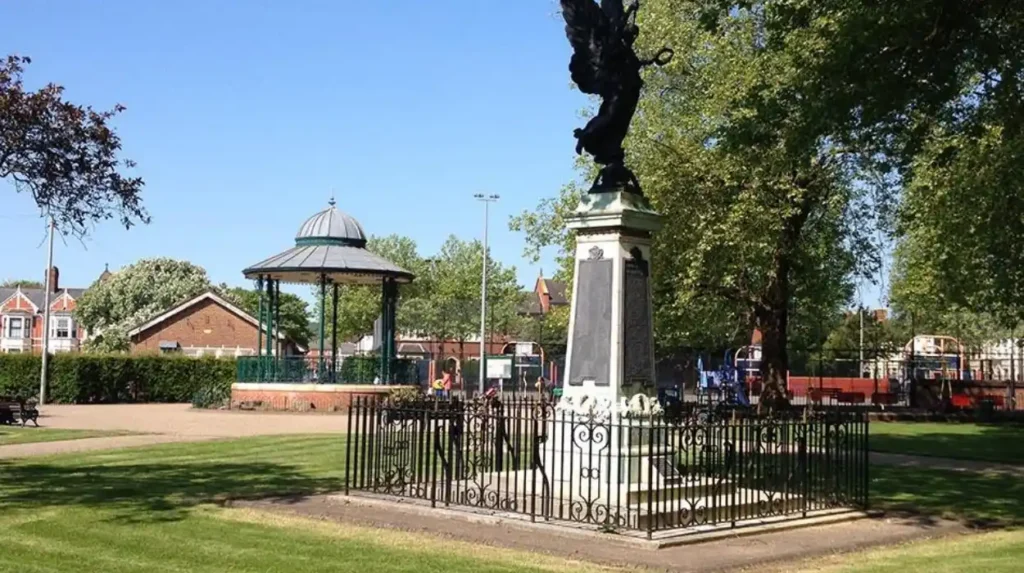
Visitors to Grange Gardens can explore a historic bandstand, the Grangetown War Memorial, a reconstructed fountain canopy, mature greenery and landscaped paths. The park also contains recreational facilities and provides access to Grange Pavilion, a community venue serving local residents.
The site’s heritage features distinguish it from a green space designed solely for modern recreation. Its historic structures, open lawns and established layout preserve evidence of the park’s original purpose.
The Victorian bandstand
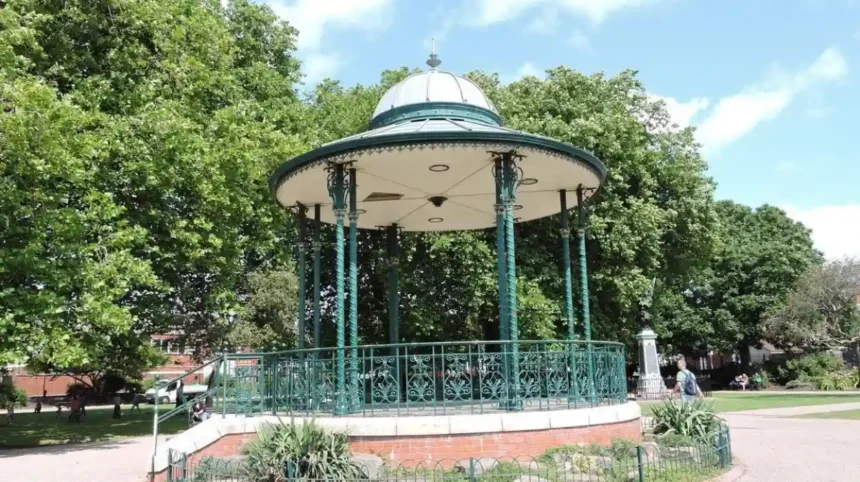
The bandstand is one of Grange Gardens’ defining features. The original structure was installed in 1895 and was among Cardiff’s earliest public park bandstands.
Bandstands provided a platform for live musical performances before recorded music became widely available. Local brass bands played in public parks, creating opportunities for neighbourhood entertainment and collective gatherings.
The present bandstand is a replica based on the original design. It was installed as part of the park’s restoration, completed in 2000. Its position in the central circular area preserves the historic relationship between the structure and the surrounding paths.
The Grangetown War Memorial
The Grangetown War Memorial commemorates people from the local community who died in military service. The monument was dedicated on 7 July 1921 and is attributed to sculptor Henry Charles Fehr.
Its design features a winged figure of Victory carrying a laurel wreath and sword. The monument stands within the park as a place of remembrance and reflection.
The memorial is a Grade II listed structure. Its historic significance extends beyond its architectural form because it records the impact of war on Grangetown’s residents and families.
Visitors should treat the memorial respectfully, particularly during commemorative gatherings. The monument also provides an important point of reference for understanding the park’s development after the First World War.
The fountain canopy
The ornamental fountain canopy commemorates a donation made by I. Samuel in memory of family members, including Louis Samuel, a Member of Parliament. The original fountain feature dates from 1909.
The original structure disappeared during or after the Second World War. A replica was installed during the restoration completed in 2000, returning an important historic design element to the park.
The canopy illustrates how historic parks often developed through donations from individuals and families. Such contributions provided public amenities while creating permanent memorials within shared community spaces.
Historic paths and greenery
Grange Gardens retains much of its original Victorian layout. Straight paths connect the entrances to the central area, allowing visitors to explore the park on a short walk.
The surrounding lawns, trees and planted areas provide greenery within the residential streets of Grangetown. These elements contribute to the park’s appearance and offer places for informal outdoor recreation.
What recreational facilities are available at Grange Gardens?
Grange Gardens combines historic parkland with facilities for play, exercise and community activities. Visitors can find a children’s playground, sports provision and access to Grange Pavilion, although individual facilities and organised activities operate under their own arrangements.
The park serves people with different recreational needs. Children use the play area, while older visitors can walk along the paths, spend time outdoors or attend activities organised by local groups.
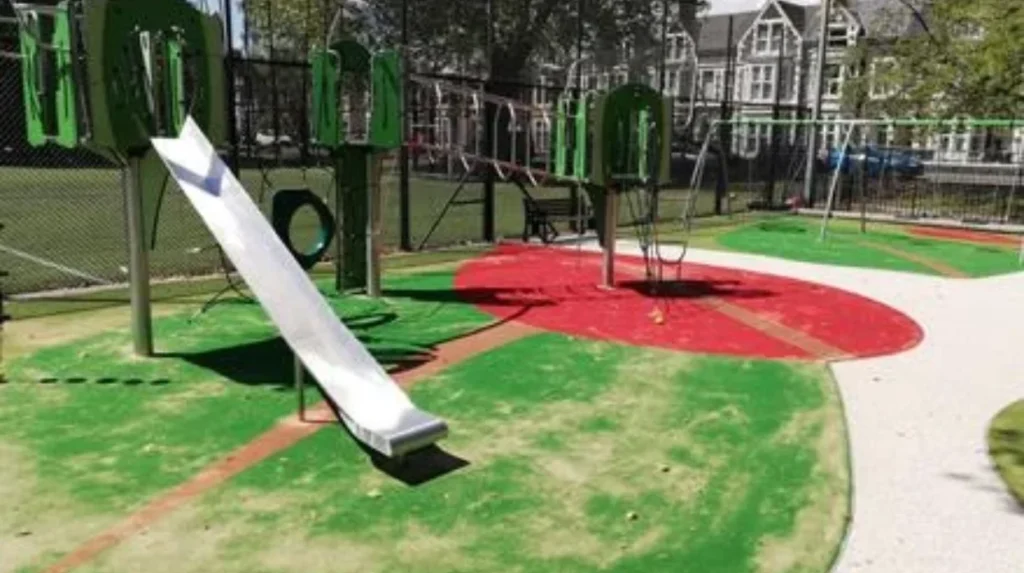
Children’s playground
The children’s playground provides a designated space for outdoor play. Outdoor play supports physical activity, balance, coordination and social interaction.
Parents and carers should supervise children and check equipment before use. The playground is part of a public park, so visitors should follow any posted safety instructions and respect other users.
Sports and outdoor activity
The park has a history of organised sport, including bowls and tennis. Its recreational facilities have changed over time as community needs and investment priorities have evolved.
A modern sports area provides additional opportunities for informal football and other ball games. Visitors should check current access arrangements before planning a particular sporting activity.
In 2026, Grange Gardens became the location of the first Cymru Court, an initiative of the Cymru Football Foundation. The new facility features a 4G playing surface, updated rebound fencing and kickboards, improved lighting and security, and a design intended to support recreational football.
A 4G playing surface is a type of synthetic sports turf designed for regular use. The new court expands the park’s role as a local recreation destination beyond its Victorian origins.
Access to sports facilities can depend on maintenance, booking arrangements and scheduled activities. Visitors should confirm the latest conditions before travelling specifically to use the court.
Grange Pavilion and community activities
Grange Pavilion is a community building within the park’s wider recreational setting. It opened in 2020, replacing an older bowling pavilion, and was developed as a multipurpose venue for local activities.
Community venues help public parks support more than outdoor exercise. They provide space for meetings, cultural activities, learning opportunities and social events, depending on the programme offered.
Visitors looking for a café, toilets or an organised event should check the pavilion’s current opening times and facilities before setting out. Not every service is necessarily available throughout the park’s full public opening period.
Is Grange Gardens a protected historic park?
Grange Gardens is a Grade II registered historic park and garden on Cadw’s Register of Historic Parks and Gardens in Wales. Its designation recognises its Victorian layout and historic features, while separate listed-building protections apply to specific structures within the site.
Cadw records Grange Gardens under reference PGW(Gm)72(CDF), with its registration dated 1 February 2022. The park is recognised as a well-preserved example of a Victorian urban public park.
Historic registration helps identify landscapes that contribute to Wales’s cultural heritage. It also provides important information for authorities considering changes that affect a registered site’s historic character.
The park’s heritage interest comes from the relationship between its layout, bandstand, memorial and other historic features. These elements collectively demonstrate how Victorian public parks combined recreation, landscape design and civic identity.
The Grangetown War Memorial has its own Grade II listing. This separate designation recognises the memorial’s architectural and historical significance.
Visitors can help preserve the site by avoiding damage to historic structures, keeping the grounds clean and following local guidance during events or maintenance work.
How was Grange Gardens restored?
Grange Gardens underwent a major restoration around 2000 following investment supported by the Heritage Lottery Fund. The project reinstated important historic features, including a replica bandstand and fountain canopy, while supporting the park’s continued use as a public recreation space.
By the late twentieth century, the park had experienced a period of decline. Restoration funding enabled improvements to its historic character and recreational environment.
The project included replicas based on historic designs rather than simply introducing unrelated modern structures. This approach helped retain the park’s connection with its nineteenth- and early twentieth-century development.
Restoration also demonstrated how heritage conservation can support everyday public use. A historic park needs to remain accessible and functional while retaining the features that justify its protection.
Grange Gardens continues to combine heritage and recreation. Its modern sports provision and community facilities demonstrate how public spaces evolve while preserving elements of their original design.
What wildlife and natural features can visitors discover?
Grange Gardens offers an urban green space with trees, planted areas and lawns that contribute to local biodiversity. Visitors can observe seasonal changes in vegetation and look for common urban birds and insects, although wildlife sightings depend on weather, season and habitat conditions.
Trees and shrubs provide shelter, nesting opportunities and food sources for some urban wildlife. Flowering plants supply nectar and pollen for insects, while grassed areas support smaller organisms within the park’s ecosystem.
Birds commonly associated with urban parks across Cardiff include woodpigeons, blackbirds, robins and house sparrows. These are examples of species visitors can look for, not a verified inventory of birds recorded at Grange Gardens.
Seasonal changes influence the park’s natural appearance. Spring brings fresh growth and flowering plants, summer provides fuller foliage, autumn changes leaf colours, and winter reveals more of the structure of deciduous trees.
Visitors interested in wildlife should stay on paths where appropriate, avoid disturbing nesting birds and leave plants undamaged. Taking litter home also helps protect wildlife and maintain the park’s condition.
Grange Gardens is a relatively small urban park rather than a designated nature reserve. Its natural value comes from providing green cover and habitat within a residential district, alongside its historic and recreational functions.
How can visitors travel to Grange Gardens?
Visitors can reach Grange Gardens in Grangetown by walking, cycling, using local public transport or driving to the surrounding streets. The park’s listed address is Holmesdale Street, Cardiff, CF11 7HH, and street parking is available nearby.
Walking is practical for people staying in Grangetown or visiting nearby neighbourhoods. Several streets border the park, so visitors can approach from different directions.
Public transport provides another option for reaching the area. Historical visitor information identifies bus services connecting Cardiff city centre and Cardiff Bay with Grangetown. Routes and timetables change, so check current information with Cardiff Bus or Transport for Wales before travelling.
Cyclists can plan a route through Cardiff’s local street network. Check current cycle routes and conditions before setting out, and use appropriate cycle parking where available.
Drivers should look for lawful street parking in the surrounding area. Parking restrictions, availability and charges depend on the specific street and current local rules.
For navigation, use the postcode CF11 7HH or search for Grange Gardens, Grangetown, Cardiff in a mapping application. Confirm the precise entrance before travelling if you need step-free access or a particular facility.
Is Grange Gardens suitable for families and children?
Grange Gardens is a neighbourhood park suitable for family outings, with a children’s playground, open green space and opportunities for walking. Families can combine outdoor play with a visit to nearby community facilities, while supervising children and checking current access arrangements.
The playground gives children a dedicated place for active recreation. Open areas also provide space for informal games, subject to any restrictions and the needs of other park users.
Families can use the paths for a short walk and explore the park’s historic features together. The bandstand and war memorial provide opportunities to introduce children to local history and the role of public parks in Welsh communities.
A visit does not require a full-day itinerary. The park’s compact layout makes it suitable for a shorter outdoor break, although the time needed depends on children’s ages and planned activities.
Carers should bring drinking water, weather-appropriate clothing and any supplies needed for young children. Before visiting, check whether the playground and other facilities are open and whether any maintenance work affects access.
What is the best time to visit Grange Gardens?
Grange Gardens is listed by Outdoor Cardiff as open to the public 24 hours a day, seven days a week. Daylight visits are generally more suitable for sightseeing, family recreation and viewing historic features, while facility opening times differ from park access.
Spring and summer provide longer daylight hours and more visible plant growth. These seasons are suitable for walking, playground visits and spending time outdoors.
Autumn offers changing foliage and opportunities to observe seasonal changes among the trees. Wet leaves can make paths slippery, so visitors should take care after rain.
Winter visits are also possible, but daylight is shorter and exposed areas can feel cold or windy. Appropriate footwear and warm clothing help make outdoor visits more comfortable.
Visitors planning to use Grange Pavilion, a café or sports facilities should check the relevant opening hours separately. A park’s general access hours do not guarantee that every building or activity is available.
The best time also depends on the purpose of the visit. People interested in photography can choose daylight hours, while families with young children often benefit from planning around weather and playground conditions.
How does Grange Gardens benefit the Grangetown community?
Grange Gardens supports Grangetown by providing accessible green space, outdoor recreation, historic landmarks and a setting for community activity. Its combination of public parkland and modern facilities helps serve residents seeking exercise, informal social contact and opportunities to participate in local events.
Public parks contribute to urban life by providing places to walk, exercise and spend time outdoors without requiring a visit to a commercial venue. Grange Gardens performs this role within a residential area of Cardiff.
Its sports facilities support active recreation. The children’s playground provides a place for play, while the surrounding paths accommodate walking and informal movement through the park.
The historic features contribute to community identity. The bandstand reflects Cardiff’s Victorian public park tradition, and the war memorial preserves a connection with the experiences of local residents during wartime.
Grange Pavilion adds a community-focused dimension. Its multipurpose setting allows activities to take place alongside the park’s outdoor facilities, subject to the venue’s programme and availability.
The park’s continuing development illustrates the importance of maintaining urban green spaces as neighbourhoods change. Historic conservation, sports investment and community use can work together when the site is managed with its heritage and public purpose in mind.
Explore More Area Guide
Cefn Onn Park Cardiff: History, Walks and Visitor Guide
Forest Farm Cardiff Guide: Wildlife, Walks and Canal History
What should visitors know before exploring Grange Gardens?
Visitors should identify the correct entrance, check access to individual facilities and respect the park’s historic features. Grange Gardens is a public urban park with playground and sports provision, but specific activities, pavilion services and organised events have separate operating arrangements.
A little preparation helps visitors make the most of the site:
- Address: Holmesdale Street, Grangetown, Cardiff, CF11 7HH.
- Park size: Approximately 1.25 hectares.
- Historic opening: 19 June 1895.
- Heritage status: Grade II registered historic park and garden.
- Key features: Victorian-style bandstand, war memorial, fountain canopy and landscaped paths.
- Recreation: Children’s playground, sports provision and access to Grange Pavilion.
- Parking: Street parking in the surrounding area, subject to restrictions and availability.
These details are supported by Cadw, Visit Cardiff and Outdoor Cardiff.
Visitors should check current transport information, facility schedules and any temporary closures before travelling. They should also follow posted rules and avoid damaging plants, structures or memorials.
Grange Gardens is particularly relevant to people exploring Cardiff’s historic parks, discovering Grangetown or looking for a local outdoor recreation space. Its compact size, historic layout and modern community facilities make it an established part of the neighbourhood’s public landscape.
Why does Grange Gardens remain important to Cardiff?
Grange Gardens remains important because it preserves a Victorian public park while continuing to provide recreation for a modern urban community. Its historic designation, war memorial, bandstand, sports facilities and community connections link Cardiff’s nineteenth-century development with present-day neighbourhood life.
Established during a period of rapid urban growth, the park addressed the need for accessible outdoor space in Grangetown. Its opening in 1895 marked an important stage in the development of public recreation in this part of Cardiff.
The restoration completed in 2000 helped preserve its historic character, while later improvements introduced new opportunities for sport and community activity. The park’s registered status recognises the value of retaining its historic layout and associated structures.
For residents, Grange Gardens functions as a neighbourhood green space. For visitors, it offers an accessible introduction to Grangetown’s history and Cardiff’s wider tradition of public parks.
Its continuing relevance rests on this combination of heritage, recreation and community use. Grange Gardens is not simply a surviving Victorian landscape; it remains a public place shaped by the changing needs of the people who use it.
Where is Grange Gardens in Cardiff?
Grange Gardens is located on Holmesdale Street in Grangetown, Cardiff, Wales. Its postcode is CF11 7HH, and the park is situated within a residential neighbourhood south of Cardiff city centre.