Cardiff has several schools with 19th-century foundations, while Llandaff has an even older educational tradition linked to its cathedral. Howell’s School dates to 1860, The Cathedral School was refounded in 1880, and Cardiff High traces its origins to 1895.
- Which are the oldest schools still operating in Cardiff?
- When was Howell’s School founded?
- Does Llandaff Cathedral School have medieval or older roots?
- Why is 1860 important in Cardiff’s school history?
- When was The Cathedral School refounded?
- What is the history behind Cardiff High School?
- How did Victorian education change Cardiff?
- Which historic Cardiff schools are still operating today?
- What makes Llandaff especially important in Cardiff’s educational history?
- How has Cardiff’s school system changed since these historic schools opened?
- Why do the oldest Cardiff schools still matter today?
Which are the oldest schools still operating in Cardiff?
The oldest surviving Cardiff school depends on whether historical continuity or the foundation date of the present institution is used. Howell’s School, founded in 1860, is among Cardiff’s oldest continuously operating schools, while Llandaff’s cathedral school has roots reaching back to the ninth century.
The phrase “oldest school still operating” requires a clear definition. A school can have an ancient educational tradition but operate today under a later institutional foundation. This distinction is particularly important in Llandaff, where education has been connected with Llandaff Cathedral for centuries.
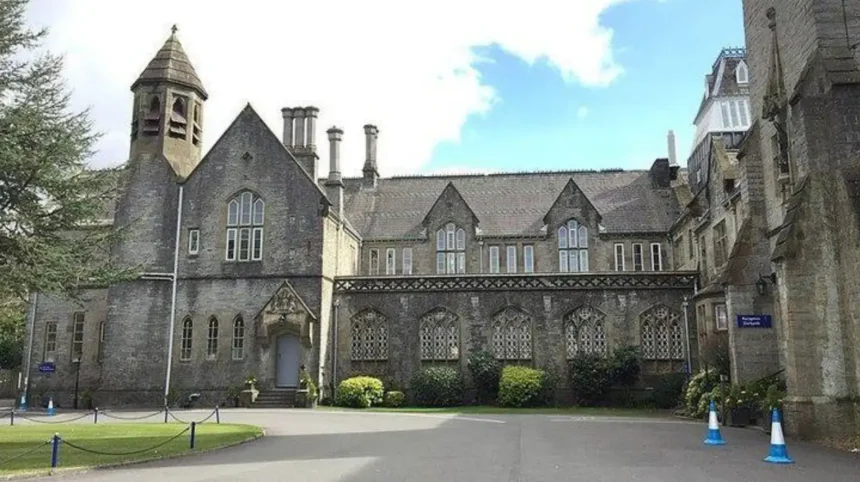
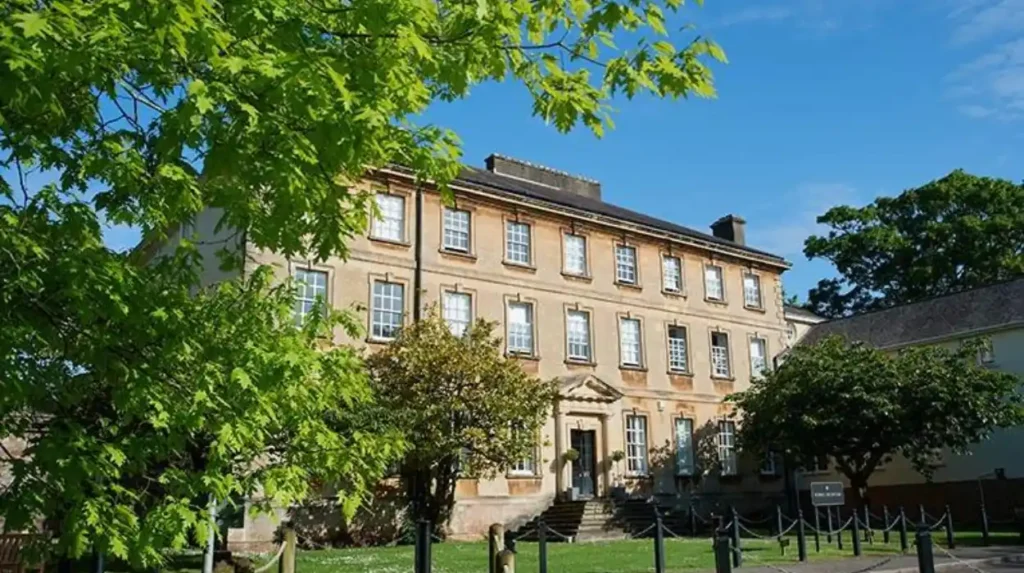
Howell’s School Llandaff provides the clearest 19th-century example. Cadw, the Welsh Government’s historic environment service, identifies Howell’s as an historic independent school founded in 1860. Its present site contains a Grade II listed main building and combines Victorian architecture with modern school facilities.
The Cathedral School in Llandaff presents a different historical model. Records indicate that a school existed in Llandaff from the ninth century, continued through the medieval period, and was later reorganised. The present Cathedral School identifies 1880 as its foundation date because the school was refounded in that year.
Cardiff High School has another form of historical continuity. Its current comprehensive school dates from 1970, but its institutional predecessors include Cardiff High School for Girls, opened in 1895, and Cardiff High School for Boys, opened in 1898.
These examples show why school age cannot be determined simply by looking at the date a current building opened.
When was Howell’s School founded?
Howell’s School was founded in Cardiff in 1860 using money associated with the charitable bequest of Thomas Howell, a Cardiff merchant. The school was established to provide educational opportunities for girls and remains an operating independent school in Llandaff.
Thomas Howell was a merchant associated with the Spanish trade. His earlier charitable arrangements eventually supported educational provision. The school was established in Cardiff in 1860, making Howell’s one of the city’s oldest surviving educational institutions. UCL’s Institute of Education archives record the school’s foundation by the Drapers’ Company in 1860 through the bequest of Thomas Howell.
The Drapers’ Company is one of the historic livery companies of the City of London. Its involvement demonstrates the wider institutional network behind Victorian charitable education.
The school’s educational purpose formed part of a broader nineteenth-century expansion in educational provision for girls. At the time, access to advanced formal education for girls was substantially more restricted than it is today.
Howell’s developed within this changing educational environment. Its long history also connects directly with the growth of Llandaff as Cardiff expanded.
The Llandaff Society records that Howell’s School was founded in 1860 using money held in trust from Thomas Howell. The same historical source identifies the Cathedral School as having been refounded later, in 1880.
Howell’s therefore occupies an important position in Cardiff’s educational history because its documented foundation predates the present institutional foundations of several other historic Cardiff schools.
Today, Howell’s School Llandaff is an independent day school for girls aged 3 to 18, with boys admitted to the sixth form. The school continues to operate from Cardiff Road in Llandaff.
Cadw describes the school as having over 165 years of educational history and highlights its Grade II listed main building.
Does Llandaff Cathedral School have medieval or older roots?
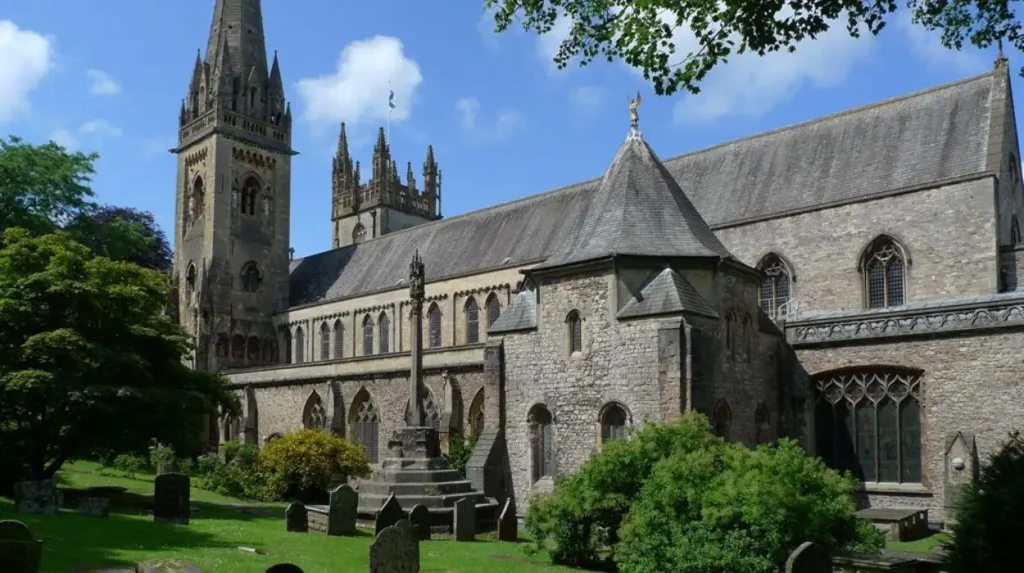
Yes. Llandaff has an exceptionally old educational tradition connected with its cathedral. Historical records state that a school of some kind existed there from the ninth century, although the present Cathedral School was refounded in 1880 and therefore has a different institutional foundation date.
The distinction between the history of education at Llandaff and the foundation date of the present school is central to understanding Cardiff’s oldest schools.
Old Llandavians, an organisation connected with former pupils, states that records are incomplete but that a school of some kind existed in Llandaff from the ninth century. The school continued through the Middle Ages before experiencing periods of change.
The connection with Llandaff Cathedral is significant. A cathedral school traditionally provided education associated with the religious and administrative life of a cathedral.
The medieval school was not identical in organisation to a modern independent school. Education, religious training and preparation for cathedral service were closely connected in medieval institutions.
The Cathedral School was refounded in 1880. Its own historical material identifies 1880 as the year of its modern foundation as a choir school serving Llandaff Cathedral.
Estyn, the education and training inspectorate for Wales, describes The Cathedral School as an independent day school for boys and girls aged 3 to 18. Estyn also records its foundation in 1880 and its ownership by the Woodard Corporation since 1957.
The school subsequently developed beyond its original choir-school role. In 1957, it became part of the Woodard family of schools. In 1958, it moved to its present site, the former Bishop’s Palace in Llandaff.
Girls were admitted from 1978, according to historical information associated with Llandaff Cathedral.
This makes The Cathedral School one of Cardiff’s most historically significant schools, even though its present institutional foundation is nineteenth-century rather than medieval.
Why is 1860 important in Cardiff’s school history?
The year 1860 represents an important stage in Cardiff’s Victorian educational development because Howell’s School was established that year. Its foundation expanded formal educational opportunities for girls and preceded the later growth of municipal and specialist secondary education in Cardiff.
Cardiff changed substantially during the nineteenth century. Industrialisation, port development, coal exports and population growth transformed the town into an increasingly important commercial centre.
Educational institutions developed alongside this transformation.
The foundation of Howell’s School in 1860 occurred during a period when educational reform was expanding access to structured schooling. The institution became part of Cardiff’s developing network of schools serving different communities and educational purposes.
The history of Howell’s also demonstrates how charitable endowments influenced education. Thomas Howell’s bequest created a financial foundation that was subsequently applied to schooling.
This model was significant in nineteenth-century Britain. Charitable funds, religious organisations, philanthropic individuals and public authorities all contributed to educational expansion.
The school therefore represents more than an old building. Its historical importance comes from the continuing educational institution, the charitable foundation behind it and its relationship with Cardiff’s social development.
The school remains in Llandaff today, linking its nineteenth-century foundation with modern education.
When was The Cathedral School refounded?
The Cathedral School was refounded in 1880 as a choir school associated with Llandaff Cathedral. It later became independent from the cathedral, joined the Woodard family in 1957, and moved to the former Bishop’s Palace site in Llandaff in 1958.
The 1880 refoundation created the modern institutional form of The Cathedral School.
The school was established as a choir school connected with Llandaff Cathedral. Choir schools historically educated children who participated in cathedral musical traditions while also providing general academic education.
The school later separated institutionally from the cathedral. In 1957, it became part of the Woodard Corporation, an educational organisation founded in the nineteenth century.
A major physical change followed in 1958, when the school moved to its current site in Llandaff. The location was the former Bishop’s Palace, providing substantially more space for development.
The school subsequently expanded its age range and educational provision.
Its present structure covers primary and secondary education and includes sixth-form education. The school is located on Cardiff Road in Llandaff and operates as an independent co-educational school.
The modern school therefore combines several layers of history: an ancient Llandaff educational tradition, the nineteenth-century refoundation of 1880, the Woodard connection from 1957 and the present campus established in 1958.
What is the history behind Cardiff High School?
Cardiff High School traces its origins to two Victorian predecessor schools: the City of Cardiff High School for Girls, opened in 1895, and the City of Cardiff High School for Boys, opened in 1898. The present comprehensive school was created through later reorganisation.
Cardiff High School provides a useful example of how a school can preserve institutional heritage through mergers and reorganisations.
The City of Cardiff High School for Girls opened in January 1895 in The Parade. The City of Cardiff High School for Boys opened in September 1898 on Newport Road. Both developed under the framework created by the Welsh Intermediate Education Act 1889.
The Welsh Intermediate Education Act 1889 was important because it created a statutory framework for expanding secondary education in Wales.
The boys’ school was initially known as Cardiff Intermediate School for Boys. It later became Cardiff High School for Boys in 1911.
The girls’ and boys’ schools remained separate institutions for much of their early history.
Cardiff’s education system changed substantially during the twentieth century. Comprehensive education eventually replaced the earlier selective structures.
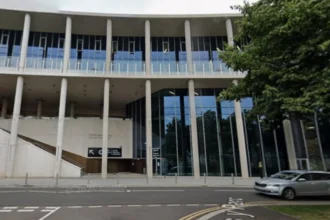
In 1970, the former Cardiff High Schools were combined with Ty Celyn School to create the present comprehensive Cardiff High School structure. The school subsequently transferred to the Llandennis Road site in Cyncoed.
The distinction matters when discussing Cardiff’s oldest operating schools. Cardiff High School is not a school founded in 1895 in its current organisational form. Its historical lineage, however, reaches back to the nineteenth-century high schools.
How did Victorian education change Cardiff?
Victorian education transformed Cardiff by expanding organised schooling alongside rapid population and economic growth. Institutions such as Howell’s School and Cardiff High’s predecessor schools demonstrate the increasing importance of structured primary and secondary education during the nineteenth century.
Cardiff’s nineteenth-century expansion created demand for educational institutions.
The city became increasingly connected to the South Wales coal industry and international trade. Population growth produced new neighbourhoods and increased demand for schools serving different ages and communities.
The establishment of Howell’s in 1860 came before the major statutory developments associated with the late Victorian period.
The Welsh Intermediate Education Act 1889 later created a stronger framework for secondary education in Wales. Cardiff High School’s predecessor institutions developed under this legislation.
This period also saw the development of schools associated with churches and religious organisations.
The Cathedral School’s relationship with Llandaff Cathedral illustrates the religious tradition, while Howell’s illustrates charitable educational provision.
These institutions did not all follow the same governance model. Some were independent, some were church-associated and others became part of municipal education.
That diversity remains visible in Cardiff’s school system today.
Which historic Cardiff schools are still operating today?
Several Cardiff schools preserve nineteenth-century educational foundations or institutional lineages. Howell’s School dates to 1860, The Cathedral School to its 1880 refoundation, and Cardiff High traces its current heritage to predecessor schools opened in 1895 and 1898.
Howell’s School is one of the clearest examples of continuous nineteenth-century institutional identity. Its foundation date is 1860, and it remains an independent school in Llandaff.
The Cathedral School has a more complicated chronology. The Llandaff educational tradition reaches back to the ninth century, but the present school identifies its foundation with its 1880 refoundation.
Cardiff High’s historical lineage begins with its girls’ school in 1895 and boys’ school in 1898. The present comprehensive school emerged from later restructuring in 1970.
St Illtyd’s Catholic High School provides another example of institutional continuity through merger. Its history includes Heathfield House School, founded in 1867, which was described as the oldest Catholic secondary school in Wales. St Illtyd’s College was separately founded by the De La Salle Brothers in 1923, and the two institutions merged in 1987 to form the present St Illtyd’s Catholic High School.
This means St Illtyd’s has a nineteenth-century predecessor but a twentieth-century foundation as the present merged institution.
Such distinctions prevent misleading comparisons between schools.
What makes Llandaff especially important in Cardiff’s educational history?
Llandaff is especially important because its educational history is closely connected with its cathedral and extends far beyond the Victorian period. Howell’s School and The Cathedral School also give the area two major historic educational institutions that remain active in modern Cardiff.
Llandaff was an independent community before becoming part of Cardiff.
The boundaries of Cardiff were extended to include Llandaff in 1922. Before that change, Llandaff had its own long-established civic and ecclesiastical identity.
Llandaff Cathedral is central to the area’s historical identity.
The cathedral’s educational tradition helped create a long association between the area and schooling. The existence of a school connected with Llandaff from the ninth century gives the district an unusually deep educational history.
The Victorian period added further institutions.
Howell’s School was founded in 1860. The Cathedral School was refounded in 1880. These schools subsequently developed different organisational models but both remain associated with Llandaff.
The concentration of historic educational institutions in Llandaff reflects the district’s importance as an ecclesiastical and residential centre.
Today, the area combines historic buildings with modern educational facilities.
Explore More Area Guide
Cardiff’s Longest Roads: A48, Newport Road and More
Cardiff’s Highest Residential Areas: Pentyrch, Lisvane & Thornhill
How has Cardiff’s school system changed since these historic schools opened?
Cardiff’s education system has changed from a mixture of charitable, religious and selective institutions into a diverse modern system containing community, Welsh-medium, Church in Wales, Catholic and independent schools. Historic institutions now operate within this much broader educational network.
Modern Cardiff provides several forms of school education.
Cardiff Council states that every area of the city is served by Welsh-medium, English-medium, Church in Wales and Catholic primary schools.
Welsh-medium education has expanded significantly. Cardiff Council records that Cardiff had only one Welsh primary school in 1981, compared with 15 Welsh primary schools, two dual-stream primary schools and one dual-language model primary school in the council’s current description.
This development represents a major change from the educational environment in which Howell’s School and the Victorian Cardiff High Schools were founded.
Secondary education has also changed.
Cardiff Council currently coordinates admissions across a range of secondary schools, including Cardiff High School, Fitzalan High School, Llanishen High School and Welsh-medium schools such as Ysgol Gyfun Gymraeg Glantaf and Ysgol Gyfun Gymraeg Plasmawr.
Historic independent schools continue alongside the maintained sector.
The result is an educational landscape that contains institutions with nineteenth-century foundations, schools created through twentieth-century reorganisations and newer schools responding to modern population and language needs.
Why do the oldest Cardiff schools still matter today?
Cardiff’s oldest operating schools matter because their histories document major changes in Welsh education, charitable giving, religion, girls’ education, secondary schooling and the growth of Cardiff itself. Their continued operation connects historic institutions with modern educational needs.
The importance of these schools extends beyond their age.
Howell’s School records the role of nineteenth-century philanthropy and the expansion of educational opportunities for girls. Its 1860 foundation places it among Cardiff’s earliest surviving modern educational institutions.
The Cathedral School demonstrates the long relationship between education and Llandaff Cathedral. Its modern foundation dates to 1880, while the wider Llandaff educational tradition reaches back many centuries.
Cardiff High illustrates the development of statutory secondary education under the Welsh Intermediate Education Act and the later transition to comprehensive schooling.
St Illtyd’s demonstrates how historic educational institutions can merge and evolve while retaining elements of their earlier identities. Its connection with Heathfield House adds another nineteenth-century layer to Cardiff’s Catholic education history.
These histories also show that “oldest” does not always mean “same institution in the same form.” Foundation dates, predecessor schools, mergers, refoundations and changes of site all affect how school age is measured.
For Cardiff, the strongest historical examples include Howell’s School from 1860, The Cathedral School from its 1880 refoundation, and Cardiff High School through predecessor institutions dating to 1895 and 1898. Llandaff adds an older educational tradition reaching back to the ninth century.
The continuing operation of these schools makes Cardiff’s educational heritage part of its present-day cityscape rather than only a historical record.
What is the oldest school still operating in Cardiff?
Howell’s School is one of the oldest continuously operating schools in Cardiff. It was founded in 1860 and remains an independent school in Llandaff.