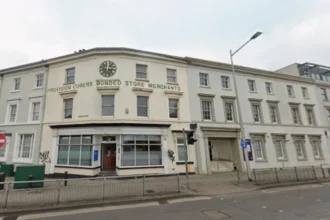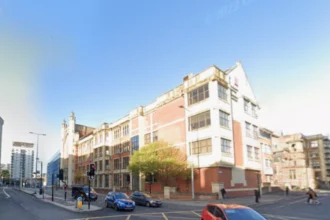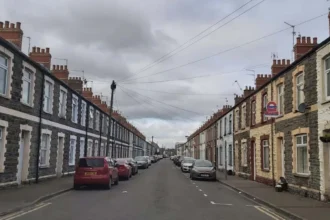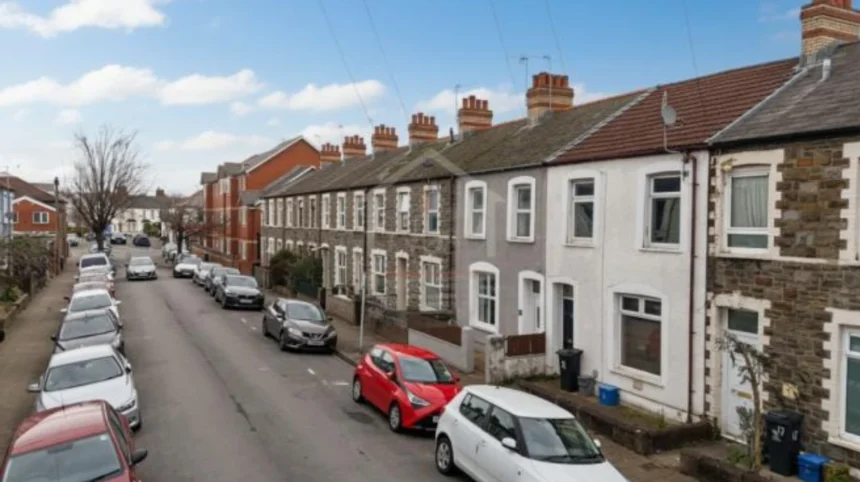
Splott is an established residential district in east Cardiff, located close to the city centre and Newport Road. The area combines traditional terraced housing, flats, social housing, schools, parks, community facilities and major transport corridors. Its location gives residents access to Cardiff city centre, Roath, Adamsdown, Tremorfa and the wider eastern Cardiff area.
- What is Splott like to live in?
- How did Splott develop historically?
- What types of housing are available in Splott?
- How much does property cost in Splott?
- Is Splott suitable for renters and social housing applicants?
- How good is public transport in Splott?
- Can residents travel by bicycle from Splott?
- What are the main roads around Splott?
- What schools and education services are available near Splott?
- What parks and outdoor facilities are available in Splott?
- What local services are available to people living in Splott?
- What energy-efficiency support is available for Splott homes?
- How are community and library services accessed from Splott?
- What should people consider before moving to Splott?
- What does the future hold for living in Splott?
- Why is Splott an established residential choice in Cardiff?
Splott has a strong industrial and working-class history. Its built environment reflects Cardiff’s expansion during the industrial era, while its present-day identity is shaped by established neighbourhood streets, community organisations, local services and ongoing transport investment.
The area is also part of wider Cardiff regeneration and sustainable transport programmes. Cardiff Council identifies Splott within its Tai Clyd Caerdydd home-energy scheme, while future Metro proposals include a planned Splott station as part of the wider Cardiff transport programme.
What is Splott like to live in?
Splott is an inner-eastern Cardiff neighbourhood with established terraced streets, local shops, schools, parks, community facilities and strong connections to the city centre. Its housing stock, transport access and proximity to Newport Road define much of everyday life.
Splott sits immediately east of Cardiff’s central districts. It connects with Adamsdown, Tremorfa, Roath and the eastern side of the city. Newport Road forms an important northern transport corridor, while Splott Road provides a major local route through the neighbourhood.
The area has a predominantly urban residential character. Traditional streets contain rows of terraced houses, with flats, converted properties and newer housing also present.
Splott’s location is important for people who need regular access to central Cardiff. Cardiff city centre is relatively close by road, cycle routes and public transport. Newport Road also provides access towards the eastern suburbs and Newport.
The 2021 Census provides useful evidence about the area’s population characteristics. Cardiff Council data records 13,629 residents aged three and over in the Splott ward for the main-language dataset. English was the main language for 88.0% of residents in that dataset, while 9.9% reported that they could speak Welsh.
Splott therefore has a clearly urban and diverse population. Local services need to accommodate households with different housing, education, transport and community requirements.
How did Splott develop historically?
Splott developed alongside Cardiff’s industrial expansion, with housing growth closely connected to employment, railways, docks and manufacturing. Its Victorian and early twentieth-century terraces remain important evidence of the neighbourhood’s industrial-era development.
Cardiff expanded rapidly during the nineteenth and early twentieth centuries as the city’s docks and coal-export economy grew. Residential districts developed around industrial employment and transport infrastructure.
Splott formed part of this wider eastern expansion. Terraced housing became a defining feature because dense streets provided homes close to workplaces and transport routes.
The industrial character of eastern Cardiff also influenced nearby Tremorfa, Adamsdown and the dock-related areas. Rail infrastructure and industrial premises shaped the area’s physical geography.
Splott also has an important sporting heritage. Cadw records that rugby league player Clive Sullivan was born in Splott. Sullivan became the first Black sports captain for Great Britain in any sport and captained the Great Britain rugby league team to the 1972 World Cup title.
The area’s historic identity remains visible through its street pattern and housing stock. Terraced homes on streets such as Railway Street and surrounding roads form part of the older residential fabric.
Modern Splott is not an industrial district in the historical sense. Residential use dominates the neighbourhood, while nearby commercial, employment and transport corridors continue to influence its character.
What types of housing are available in Splott?
Housing in Splott includes traditional terraced houses, flats, semi-detached properties, social housing and supported accommodation. Terraced homes form a major part of the local market, while housing associations and Cardiff Council provide additional affordable and supported housing options.
Traditional terraced houses are one of the most recognisable housing forms in Splott. Many are two-storey properties arranged in continuous rows, reflecting the area’s nineteenth- and early twentieth-century development.
Flats provide another part of the local housing supply. These include purpose-built accommodation, converted properties and housing association developments.
Cardiff Community Housing Association lists several properties in Splott, including 40 homes at Moorland Road, 18 at Moorhead Close and 40 at Ffordd Ottoway. The listed properties include one- and two-bedroom accommodation.
Supported accommodation is also present. Cardiff Council’s residential-care directory lists St Albans Nursing Home on Swinton Street and St Saviour’s Nursing Home on Splott Road.
Social housing is allocated through Cardiff’s common housing waiting list. Cardiff Housing states that applicants register for council and housing association properties through the same waiting list. Housing need includes homelessness, overcrowding, unsuitable housing and certain medical or financial circumstances.
Housing availability changes over time. People considering a move should therefore check current listings, tenure, property condition, service charges and eligibility requirements rather than relying on historic availability.
How much does property cost in Splott?
Property prices in Splott vary by housing type, size, condition and exact street. HM Land Registry-based records show a 2026 median sale price around £219,000 year-to-date, while terraced properties account for a large share of recorded transactions.
Property prices provide a useful indicator of the local housing market, although individual homes differ substantially.
HM Land Registry-based data compiled for Splott records a 2026 year-to-date median sale price of £219,000. The same dataset records a median of £222,000 in 2025 and £221,000 in 2024.
Rightmove’s HM Land Registry-based figures report an overall average sold price of £214,068 over the previous year. Its breakdown records an average of £226,644 for terraced properties, £124,267 for flats and £208,500 for semi-detached properties.
These figures describe completed sales rather than asking prices. Asking prices can differ from final transaction prices.
Property condition is also significant. Older terraced houses often require maintenance associated with older building fabric, including roofs, windows, insulation, heating systems and damp management.
Prospective buyers should therefore examine the full property condition and running costs. Leaseholders should also check service charges, lease length and planned major works.
Is Splott suitable for renters and social housing applicants?
Splott has private rental properties alongside council and housing association accommodation. Social housing applications operate through Cardiff’s common waiting list, while private renters need to assess rent, deposit requirements, property condition, energy costs and tenancy terms.
Private rental accommodation includes houses, flats and rooms. Availability changes according to the local market.
Social housing operates under Cardiff’s common waiting-list system. Cardiff Housing states that applicants aged over 16 who live permanently in the UK can apply, subject to the scheme’s eligibility rules. Cardiff also gives priority consideration to people with relevant housing needs and local connection requirements.
Cardiff Council publishes availability information for social housing. Its April 2025 waiting-list heat map classified Splott as having medium availability for standard one-bedroom properties.
Housing applicants should distinguish between availability and guaranteed allocation. A listing or availability category does not represent an immediate offer of accommodation.
Private renters should also check whether a property is furnished or unfurnished, whether bills are included, the deposit requirements, the tenancy agreement and the energy performance information.
How good is public transport in Splott?
Splott has strong bus access through routes connecting the neighbourhood with central Cardiff, Adamsdown, Tremorfa and eastern Cardiff. Newport Road provides an important transport corridor, while planned Metro investment includes a future Splott station.
Bus transport is central to everyday travel in Splott. Local routes connect residential streets with schools, shopping areas and neighbouring districts.
Cardiff Council’s published school transport information demonstrates the network’s reach. Routes serving schools include stops on Splott Road, South Park Road, Sanquhar Street, Tweedsmuir Road and surrounding streets.
Newport Road is also a major transport corridor. Cardiff Council is developing a Cardiff-to-Newport sustainable transport corridor incorporating an eastern bus corridor, Cycleway 2 and controlled parking zones.
The council’s transport programme identifies a future Metro station at Splott as part of planned network expansion. The published programme places the Splott station within the 2028 phase alongside proposed stations including Newport Road and Velindre.
Transport infrastructure is therefore an important part of Splott’s future development.
Can residents travel by bicycle from Splott?
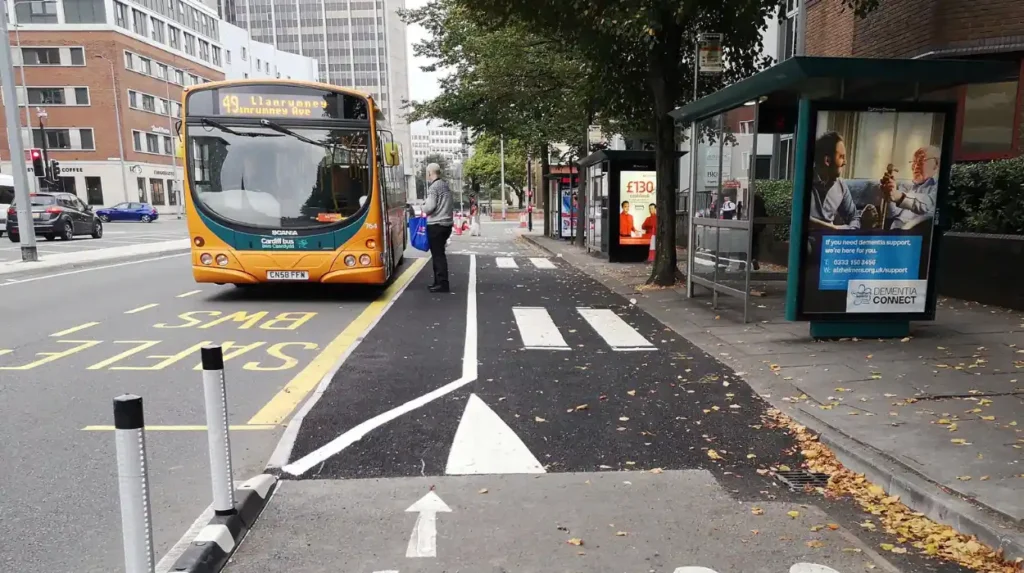
Cycling is an established part of Cardiff’s transport strategy, with routes around Newport Road and connections to Cardiff’s wider cycle network. Planned improvements focus on safer infrastructure, better crossings and links between residential areas and employment destinations.
Newport Road is central to the planned cycling network. Cardiff Council’s sustainable transport corridor includes Cycleway 2 and aims to improve connections between Cardiff city centre, Newport and eastern employment areas.
The wider programme also links with other cycleways, including Cycleway 1 and Cycleway 6.
Cycling infrastructure is important in a dense neighbourhood because many local journeys are short. Trips to nearby shops, schools, employment areas and central Cardiff can therefore form part of the local active-travel network.
Residents should check the current route layout before travelling because infrastructure projects change over time.
What are the main roads around Splott?
The main roads around Splott include Splott Road, Newport Road, Moorland Road, South Park Road and roads connecting towards Tremorfa, Adamsdown and Roath. These routes provide access to housing, schools, shops, employment areas and wider Cardiff.
Splott Road functions as a major local spine. It contains residential properties and community-related services.
Newport Road provides the strongest strategic connection. It carries traffic and public transport towards Cardiff city centre and eastern Cardiff.
South Park Road and neighbouring streets provide connections through the residential area and towards Tremorfa.
Road conditions and traffic patterns change according to construction, events and transport schemes. Cardiff’s 20mph default speed limit for built-up roads was introduced across Wales in September 2023. Cardiff Council subsequently identified Newport Road among four Cardiff roads proposed for a return to 30mph, with implementation dependent on the required legal and signage process.
Drivers should therefore follow current road signs rather than relying on older speed-limit information.
What schools and education services are available near Splott?
Education provision around Splott includes primary and secondary schools serving the local population, with Cardiff Council planning school-capacity changes across Adamsdown and Splott. Nearby schools also serve surrounding districts and provide Welsh-medium and English-medium education options.
Schools form an important part of local infrastructure.
Cardiff Council’s Adamsdown and Splott school programme included proposals to increase Willows High School from 1,121 places to 1,200 places and develop new accommodation at Tremorfa Park. The programme also included increasing Baden Powell Primary School from 420 to 630 places.
School transport information also demonstrates connections between Splott and schools elsewhere in Cardiff. Council-published routes include services from Splott and Tremorfa towards St Illtyd’s and St Teilo’s.
Parents should check Cardiff Council’s current school admissions information for catchment boundaries, admission arrangements and available places. Catchment areas do not automatically guarantee a school place.
What parks and outdoor facilities are available in Splott?
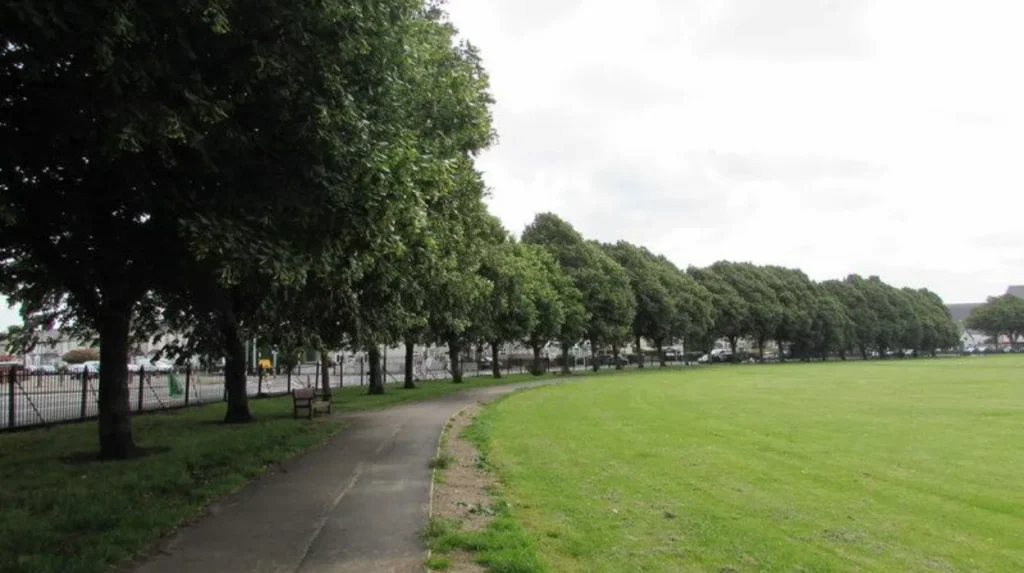
Splott Park provides local outdoor space and includes a skatepark with quarter-pipes, a driveway, flatbank and grind rails. The park supports recreation within the neighbourhood and provides facilities for children, young people and residents.
Splott Park is one of the area’s key public spaces.
Cardiff Council lists the Splott Skatepark at Splott Park on Muirton Road. The facility includes two quarter-pipes, a driveway, flatbank and grind rails. The skatepark has no stated time restriction because it sits within the park.
Parks have a wider role than recreation. They provide open space within a densely built residential environment and support walking, informal activity and community use.
Access to outdoor space also forms part of Cardiff’s wider neighbourhood and age-friendly planning approach. Cardiff Council’s Age Friendly Cardiff programme identifies outdoor spaces, public buildings, transport, housing and community support as key areas of focus.
What local services are available to people living in Splott?
Local services around Splott cover healthcare, schools, community support, waste collection, housing assistance, energy advice, food support and recreation. Cardiff Council and Cardiff and Vale University Health Board provide major public services used by local residents.
Healthcare access is organised through the Cardiff and Vale University Health Board. Its local health-service directory covers GP surgeries, dental practices, community pharmacies and optometrists, with services searchable by postcode.
Housing services are provided through Cardiff Council and Cardiff Housing. Residents can access information about social housing, private renting, homelessness support, housing advice and housing development.
Waste and recycling services are administered by Cardiff Council. The council’s online service covers collection dates, recycling information, bulky waste and related services.
Community food support is also available. Cardiff Council identifies Splo-Down at the Oasis Centre on Splott Road as a community food market operating on Wednesdays from 5pm to 7pm, where residents pay according to what they can afford.
These services form an important part of the practical infrastructure required for everyday life.
What energy-efficiency support is available for Splott homes?
Splott residents can access Tai Clyd Caerdydd, a Cardiff and Welsh Government-supported home-energy scheme covering Splott, Adamsdown and Fairwater. The programme provides advice, home assessments, contractor support and information about available funding.
Tai Clyd Caerdydd is an area-based home-energy efficiency programme.
The scheme provides free impartial advice and home assessments covering measures such as insulation, heating upgrades and renewable-energy systems. It also helps residents identify Welsh Government-approved contractors and available funding.
The programme applies to privately owned homes, including homeowners and landlords. Eligible lower-income households can receive support for certain improvements, while other households can access advice about finance options.
Energy efficiency is particularly relevant to older housing. Traditional terraced homes can have different insulation, ventilation and heating characteristics from newer properties.
Homeowners should therefore assess the building as a whole rather than focusing on one improvement.
How are community and library services accessed from Splott?
Cardiff’s Hub and library system provides residents with access to books, digital resources, computers, Wi-Fi, advice services and community facilities. Library membership is free, while specific services such as printing and room hire can carry charges.
Cardiff Council’s library service provides access to physical and digital resources. Members can use eBooks, eAudiobooks, online newspapers and other electronic services.
Public libraries also provide free Wi-Fi and public computers at participating locations. Cardiff Council states that library members can access computers for internet use and Microsoft Office applications.
The Hub system extends beyond books. Cardiff Council identifies advice on benefits, grants, discounts and money management among available services.
Residents can join Cardiff’s library service free of charge online or in person.
The exact nearest facility depends on the resident’s address within Splott and neighbouring districts.
What should people consider before moving to Splott?
People considering Splott should examine housing type, property condition, transport needs, school catchments, parking, energy costs, local services and future transport changes. These factors vary between streets, so a property-level assessment provides the most useful information.
Housing should be assessed first. Buyers should inspect the condition of roofs, windows, insulation, heating, electrics and plumbing in older terraced properties.
Renters should review tenancy terms, deposit requirements, energy costs and repair responsibilities.
Transport is another important consideration. Residents who commute by bus should examine the current routes and journey times from their specific street. Drivers should assess parking availability because dense terraced streets can place pressure on kerbside space.
School catchments require separate verification. A home’s address determines its relationship to school admissions arrangements, and catchment boundaries can change.
Future transport investment is also relevant. Cardiff Council’s Newport Road programme includes bus, cycling and parking measures, while its wider transport programme identifies a planned Splott Metro station.
Explore More Area Guide
Living in Grangetown Cardiff: Housing, Transport & Amenities
Living in Pontcanna: Cardiff Housing, Transport & Amenities
What does the future hold for living in Splott?
Splott’s future is closely connected to Cardiff’s transport, housing, energy-efficiency and neighbourhood-renewal programmes. Planned Metro infrastructure, Newport Road improvements, cycling investment and home-energy support will influence how residents travel, manage homes and access services.
Transport investment represents one of the clearest long-term changes.
The Newport Road sustainable transport corridor is designed to improve bus infrastructure, cycling connections and sustainable travel between Cardiff and Newport.
The published Cardiff transport programme also identifies a future Splott Metro station.
Housing improvement is another important strand. Cardiff Council’s neighbourhood regeneration programme covers housing, streets, public spaces and local services, while the council’s estate-regeneration programme focuses on improving housing-estate environments.
Energy efficiency also has a direct local programme through Tai Clyd Caerdydd. The scheme specifically includes Splott and aims to make homes warmer, healthier and cheaper to run.
These programmes show that Splott’s development is being shaped through several connected areas rather than a single regeneration project.
Why is Splott an established residential choice in Cardiff?
Splott combines established housing, proximity to central Cardiff, public transport, schools, parks and community services within a compact urban neighbourhood. Its industrial history remains visible, while current investment is reshaping transport, housing quality and local infrastructure.
Living in Splott means living within one of Cardiff’s established inner-eastern residential districts.
The housing market is dominated by traditional terraces, supplemented by flats, semi-detached homes and social housing. Recorded 2026 property data places the median sale price around £219,000 year-to-date, although individual transactions vary considerably.
Transport remains a defining feature. Existing bus services connect the neighbourhood with Cardiff and surrounding districts, while Newport Road forms a major strategic corridor. Future plans include a proposed Splott Metro station.
Local infrastructure includes schools, Splott Park, a skatepark, healthcare access, housing services, community support and energy-efficiency assistance.
The neighbourhood therefore combines established urban housing with active investment in future transport and environmental infrastructure. For anyone researching living in Splott, the most important practical factors are the specific property, street, transport requirements, local services and current council programmes.
Is Splott a good place to live in Cardiff?
Splott is an established residential area in east Cardiff with traditional terraced housing, local services, schools, parks and convenient connections towards Cardiff city centre. Its housing, transport and community facilities make it a practical urban neighbourhood.