Public notice boards remain a practical form of local communication in Cardiff. They provide physical spaces where residents can find information about community activities, local services, voluntary organisations, public meetings, cultural events and neighbourhood opportunities.
- What are public notice boards and why do they matter in Cardiff?
- Where can residents find community information in Cardiff?
- What types of information are displayed on Cardiff community notice boards?
- How do public notice boards work as a local communication system?
- How do notice boards support people who do not rely on digital communication?
- How have community notice boards developed as part of local communication?
- What makes a community notice board effective?
- How can Cardiff community groups use notice boards responsibly?
- How do public notice boards complement Cardiff’s digital information services?
- What role can public notice boards play in Cardiff’s future communities?
Cardiff is a large and diverse Welsh capital with more than 350,000 residents and around 21 million visitors each year, according to Cardiff Council. The city combines dense inner-city neighbourhoods with suburban communities, residential districts, parks, libraries, community facilities and local shopping areas.
Digital communication dominates modern public information. Cardiff Council uses social media to publish council news, consultations, events, transport information and service announcements. Physical notice boards provide another communication channel for people who encounter information while using local facilities and neighbourhood spaces.
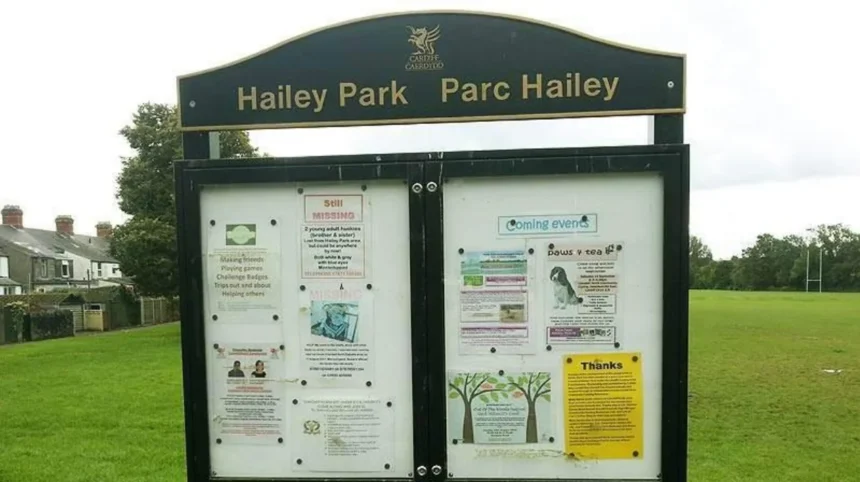
A community notice board is a physical display structure used to share information with a defined local audience. Its contents depend on the organisation responsible for the board, its location and its posting rules.
What are public notice boards and why do they matter in Cardiff?
Public notice boards are physical information points where authorised organisations display local announcements, events, services and community opportunities. In Cardiff, they complement digital communication by placing useful information directly within neighbourhood environments and shared public facilities.
A notice board normally consists of a protected display area, a backing surface, a transparent cover and a mechanism for changing displayed material. Outdoor versions use weather-resistant construction. Indoor boards often use cork, felt or magnetic display surfaces.
The purpose is straightforward. Information is placed where people already live, work, study, shop, travel or access services.
Notice boards support several forms of local communication. Examples include community events, voluntary-sector activities, public consultations, recreational groups, educational activities and local support services.
Cardiff Council identifies community engagement and access to trusted information as objectives within its Hubs and Libraries Strategy. The strategy covers services delivered through Cardiff’s hubs and libraries and aims to provide essential services throughout the city.
The wider concept also fits established research on community infrastructure. A UK Government evidence review examined more than 200 relevant items of evidence and identified social, physical, institutional and other forms of capital as interconnected factors influencing community resilience and social potential.
Notice boards are one small part of that wider community infrastructure.
Where can residents find community information in Cardiff?
Residents can encounter community information through Cardiff’s hubs, libraries, community facilities, voluntary organisations, neighbourhood venues and other locally managed spaces. Exact notice-board locations depend on the organisation controlling each site and its rules for displaying public information.
Cardiff’s hubs and libraries provide important physical locations for public information. Cardiff Council operates a network of hubs and libraries offering library services, rooms, advice services, events and access to digital resources.
Libraries are particularly relevant because they function as more than book-lending locations. Cardiff Council provides free Wi-Fi at its libraries, public computers at designated locations, printing services and access to advice and information.
Community information can also appear in other neighbourhood settings. Examples include community centres, residents’ association facilities, voluntary-sector premises, faith-community venues, sports facilities and local organisations.
The management arrangement differs from one board to another. Some boards belong to councils or public institutions. Others belong to community groups, housing organisations, charities or local organisations.
This distinction matters because there is no single universal set of rules for every notice board in Cardiff.
A board inside a library follows the policies of the organisation controlling that library. A board managed by a residents’ association follows that group’s rules. A privately managed board follows the requirements of its owner.
Residents therefore need to check the individual location before submitting material.
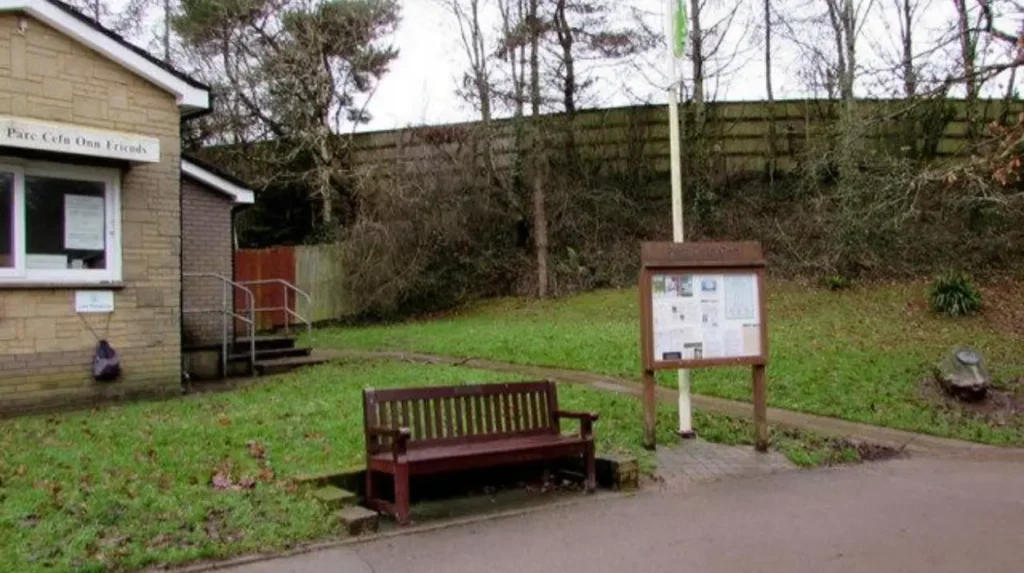
What types of information are displayed on Cardiff community notice boards?
Community notice boards commonly display information about local events, voluntary organisations, public services, activities, meetings, advice services and neighbourhood opportunities. Examples include community-group meetings, charity activities, cultural events, recreational sessions and notices about services available to residents.
The content of a notice board reflects local demand and the organisation managing it.
Community events are a common category. These include local festivals, workshops, talks, clubs, exhibitions and recreational activities.
Voluntary-sector information is another important category. Charities and community organisations use physical displays to communicate activities, support services and opportunities for participation.
Public-service information can also have a place on appropriate boards. Examples include information about council services, consultations, community safety initiatives and local support.
Educational information can include adult learning sessions, library events, language activities and community workshops.
Cultural information is especially relevant in Cardiff because the city supports a substantial network of cultural organisations and bilingual Welsh and English communication.
The contents should remain relevant to the audience that uses the location. A notice board outside a community centre has a different audience from one located inside a specialist organisation.
The principle is simple: local information works best when the subject, location and audience are connected.
How do public notice boards work as a local communication system?
A public notice board works through a simple cycle: an organisation prepares information, submits or authorises the notice, a responsible manager displays it, residents read it, and outdated material is removed. Clear ownership keeps information accurate and relevant.
The process begins with content creation. A community group prepares a poster or notice containing essential details such as the event name, date, location, organiser and contact information.
The next stage is authorisation. The person responsible for the board decides whether the material meets its rules.
Some public authorities use formal criteria for community notice boards. For example, Richmond Council states that its boards can carry information from council services, voluntary organisations and community groups, subject to rules covering content, size, contact details and display periods.
The same principle appears in other local-authority systems. Three Rivers District Council describes community notice boards as places for information from councils, parish councils, police and community organisations, with priorities applied because display space is limited.
Once approved, a notice is displayed.
The final stage is removal. Dates and expired information need to be monitored so that the board does not become crowded with obsolete material.
This management cycle is important because the usefulness of a notice board depends on information quality, relevance and freshness.
How do notice boards support people who do not rely on digital communication?
Physical notice boards provide an additional route to local information for people who do not regularly use social media, websites or digital newsletters. They place information in physical spaces where residents already access services, facilities and community activities.
Digital exclusion is not limited to a lack of internet access. People can also experience difficulties with digital confidence, accessibility, language, device availability or the ability to monitor multiple online channels.
A physical notice board does not require an account, password, smartphone or internet connection.
This makes location important.
A board positioned in a library reaches people visiting the library. A board at a community centre reaches people attending activities there. A board near a local facility reaches people already moving through that neighbourhood.
Cardiff’s library network provides free public internet access and computers, but physical communication remains relevant because digital and face-to-face services operate alongside each other.
Cardiff Council’s own communication strategy demonstrates this multi-channel approach. The council uses social media to distribute announcements about council news, consultations, events, transport and services.
Notice boards therefore should not be viewed as replacements for digital communication. They function as an additional information channel.
This is particularly useful when an organisation wants to reach people who encounter information through their daily routines rather than through online searches.

How have community notice boards developed as part of local communication?
Community notice boards developed from longstanding local practices of publicly displaying information before digital communication became dominant. Their modern role combines traditional physical announcements with contemporary community events, public services, voluntary activities and neighbourhood information.
Public display has a long history in civic administration. Communities have historically relied on publicly visible announcements to communicate meetings, regulations, elections, services and events.
The modern notice board formalised this practice by providing a dedicated location for printed information.
Libraries, town halls, community halls, churches, schools and civic buildings became common locations for public announcements. Local organisations also established their own boards to communicate with nearby residents.
The rise of newspapers expanded local information distribution but did not eliminate physical public notices. Later, websites and social media added faster digital communication.
Modern community communication therefore operates across several channels.
Cardiff provides a clear example of this transition. Its current council communication system includes social media, websites, hubs, libraries and other public services. Cardiff Council also maintains online systems for planning applications, including searches by postcode, address, keyword, reference number and ward.
Physical notices continue to serve a different function. They connect information with a particular physical location.
The historical importance of the notice board therefore lies less in the technology itself and more in its role as a publicly accessible information point.
What makes a community notice board effective?
An effective community notice board presents current, relevant, readable and clearly attributed information in a visible location. Good management includes regular updating, defined display rules, contact details, appropriate poster sizes, accessible language and prompt removal of expired material.
Visibility is the first requirement. Residents need to encounter the board during normal activities.
Relevance is equally important. A board should contain information that relates to its surrounding community or the services provided at its location.
Freshness determines whether people trust the information. An event advertised after its closing date reduces the board’s practical value.
Clear attribution also matters. Notices should identify the organisation responsible for the information and provide a method of contact.
Design affects accessibility. Large headings, readable type, strong contrast and straightforward language make printed information easier to understand.
Bilingual communication has particular relevance in Cardiff and Wales. Welsh and English are both important languages in public life, and organisations communicating with Cardiff communities need to consider appropriate bilingual presentation.
Local-authority guidance elsewhere demonstrates how structured management supports these principles. Richmond Council requires displayed material to include contact details and identify the publisher. Its guidance also establishes rules for poster size, display periods and content.
Community management can also involve volunteers. Frome Town Council, for example, operates 27 community notice boards and uses volunteer Noticeboard Ambassadors to update them weekly.
These examples demonstrate the operational requirements behind an apparently simple public display.
How can Cardiff community groups use notice boards responsibly?
Cardiff community groups can use notice boards by preparing concise, accurate notices, checking the board owner’s permission requirements, including event details and contact information, and removing or updating material when circumstances change. Responsible posting keeps community information useful and trustworthy.
A community group should first identify the organisation responsible for the board.
The group should then check whether the board accepts community notices and whether submission is required through a library, community centre, council service or board manager.
The notice should contain essential information.
For an event, this includes the event name, date, time, venue, cost where relevant, accessibility information and organiser contact.
For a community service, the notice should identify the service, eligibility requirements, location, opening information and contact method.
For a consultation, the notice should identify the organisation, subject, closing date and method for submitting responses.
Accuracy is essential. A changed venue, cancelled event or revised deadline requires an updated notice.
Commercial advertising can have separate restrictions. Many councils distinguish community information from commercial promotion. Richmond Council, for example, excludes ordinary business-related material from its community notice boards, while allowing specified community and event information.
Political material can also be subject to specific restrictions. Notice-board policies vary by organisation, and statutory election notices follow electoral rules.
Cardiff groups should therefore follow the rules attached to each individual board rather than assuming that every public notice board uses the same policy.
Explore More Area Guide
Local Post Offices Serving Communities Across Cardiff
Historic Fire Stations in Cardiff: Westgate Street & Fire Brigade History
How do public notice boards complement Cardiff’s digital information services?
Public notice boards complement Cardiff’s websites, social media and digital services by providing location-based information in physical spaces. Digital channels deliver rapid updates, while physical boards provide visible neighbourhood communication without requiring residents to search online.
Cardiff Council already operates several digital information channels.
Its website provides information covering council services, housing, planning, leisure, parks, culture, hubs and libraries. Residents can also access online planning information and search applications by location and other criteria.
Social media provides another rapid channel. Cardiff Council states that its social media accounts communicate council news, consultations, events, traffic and travel information and service changes.
Physical notice boards perform a different communication function.
They are tied to place.
A resident visiting a library can see information relevant to that facility. A person entering a community centre can encounter activities organised for that neighbourhood. A visitor attending a local venue can discover an event taking place nearby.
This location-based model supports local discovery.
Digital communication is generally searchable and rapidly updated. Physical communication is visible without active searching.
Both channels have limitations. Digital information can become fragmented across websites and social platforms. Physical information can become outdated if boards are not maintained.
The strongest community communication system therefore uses appropriate channels for different audiences and purposes.
What role can public notice boards play in Cardiff’s future communities?
Public notice boards can remain useful in Cardiff by providing low-barrier, location-based communication alongside digital services. Their future relevance depends on regular maintenance, accessible design, bilingual communication, accurate information, community ownership and integration with wider local information networks.
The future of community information is increasingly multi-channel.
Cardiff Council’s Hubs and Libraries Strategy explicitly focuses on community engagement, literacy, trusted information and essential services across Cardiff.
Physical notice boards fit within this wider infrastructure because they connect people with information in shared spaces.
Future boards can support clearer community communication through QR codes, bilingual content, accessible typography and links to official online information. A printed notice can provide essential details while directing readers to a website for full information.
Digital integration does not remove the value of physical communication. It expands what a physical notice can provide.
Community management also has long-term importance. Boards require responsible ownership, regular inspection and clear rules for posting and removal.
The evidence on community infrastructure reinforces this broader point. The UK Government’s rapid evidence review found strong evidence that several forms of capital work together to support positive community outcomes, including social, physical, human, financial and institutional capital.
A notice board represents a small physical resource within that wider system.
Its practical value comes from what it enables: access to local information, awareness of activities, connection with organisations and visibility for neighbourhood opportunities.
For Cardiff, the enduring role of public notice boards is therefore straightforward. They provide a physical layer of community communication that works alongside libraries, hubs, websites, social media and local organisations.
What are public notice boards in Cardiff?
Public notice boards in Cardiff are physical information displays used by councils, libraries, community organisations and other local venues to share announcements, events, services, meetings and neighbourhood information.