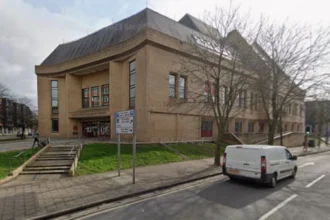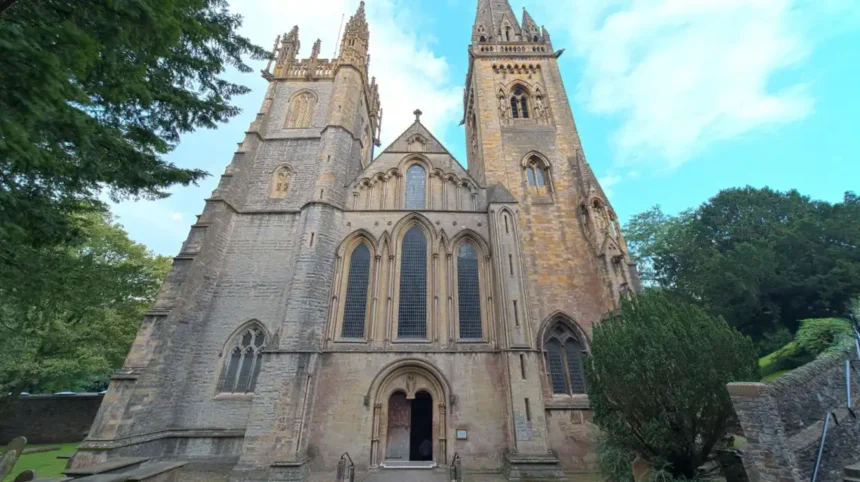
Llandaff is one of Cardiff’s oldest historic districts and retains the physical structure of an ancient ecclesiastical settlement within the modern city. A self-guided heritage walk connects Llandaff Cathedral, Cathedral Green, the medieval Bishop’s Palace, High Street, historic lanes, listed buildings and the wider riverside landscape.
- Why is Llandaff important to Cardiff’s heritage?
- Where should you start a self-guided heritage walk around Llandaff?
- What can you see on Llandaff High Street?
- What should you look for around Cathedral Green?
- What is the history of Llandaff Cathedral?
- Which architectural features should you examine inside Llandaff Cathedral?
- Where is the Bishop’s Palace in Llandaff?
- What does the Bishop’s Palace reveal about medieval Llandaff?
- What historic buildings should you notice beyond the cathedral?
- How can you include Chapel Street and the medieval street pattern?
- How is Llandaff protected as a heritage area?
- How long does a self-guided Llandaff heritage walk take?
- How can visitors reach Llandaff for a heritage walk?
- What should visitors know before walking around Llandaff’s historic core?
- Why is a self-guided heritage walk around Llandaff valuable for understanding Cardiff?
The historic core sits about two miles from Cardiff city centre and occupies elevated ground beside the River Taff. Cardiff Council identifies Llandaff as a conservation area because of its architectural and historic interest. The area retains a village green, historic terraces, cottages, High Street, the cathedral precinct and medieval remains.
Llandaff also has an unusually long religious history. The cathedral site has a Christian presence dating from at least the sixth century, while the present cathedral developed substantially from the Norman period onwards. The surrounding streets preserve the relationship between the cathedral, bishops, clergy, commerce and residential life that shaped the settlement.
A self-guided route therefore works best as a chronological walk. Start with the wider setting, enter through the village streets, examine Cathedral Green, explore the cathedral and medieval remains, then continue through High Street and the surrounding conservation area.
Why is Llandaff important to Cardiff’s heritage?
Llandaff is important because it preserves a sixth-century Christian tradition, a medieval cathedral precinct, a bishop’s palace, historic streets and a village landscape that remained distinct until Cardiff absorbed Llandaff in 1922. These surviving features make Llandaff a concentrated record of Cardiff’s religious and architectural history.
Llandaff developed around its religious centre rather than around Cardiff’s later commercial and industrial expansion. Its elevated position beside the River Taff influenced the location of the settlement. The conservation area appraisal identifies the relationship between the river, higher ground and historic settlement as an important part of Llandaff’s character.
The settlement was historically associated with the Diocese of Llandaff. A diocese is the geographical area administered by a bishop. Llandaff became the seat of a bishop and developed buildings associated with religious administration, worship and residence.
The ancient settlement also included areas that are now separate Cardiff neighbourhoods. Coflein records that the ancient parish included Canton, Ely, Fairwater and Gabalfa. Llandaff gradually became incorporated into Cardiff during the nineteenth and twentieth centuries and was officially incorporated into the city in 1922.
This history explains why Llandaff looks different from much of central Cardiff. Modern Cardiff surrounds the historic core, but the cathedral precinct, village green, High Street and medieval remains retain a separate physical identity.
Where should you start a self-guided heritage walk around Llandaff?
Start the walk around Llandaff High Street and continue towards Cathedral Green, using the historic street pattern to reach the cathedral precinct. This route introduces the village before the cathedral, allowing the settlement’s medieval layout, buildings and changing levels to become part of the heritage experience.
High Street provides the principal approach into the historic core. Cardiff Council’s conservation appraisal describes it as the focus for the community and the main access route towards Llandaff Cathedral and the Bishop’s Palace.
The route can be walked without a formal guide. Visitors should allow around two hours for a detailed walk, particularly when time is included for the cathedral, historic buildings and observation points.
A shorter version focuses on High Street, Cathedral Green, Llandaff Cathedral and the Bishop’s Palace. A longer version continues through the surrounding conservation area and towards the River Taff and Llandaff Fields.
The historic core contains slopes and changes in elevation. The conservation appraisal specifically identifies the difference in level between Cathedral Green and the cathedral as an important characteristic of the area.
This makes walking more informative than simply visiting the cathedral by car. The changing levels reveal how the settlement was positioned on higher ground beside the river.
What can you see on Llandaff High Street?
Llandaff High Street combines historic houses, shops, terraces, cottages and later buildings within a preserved street framework. It remains the principal community focus and creates important views towards the Bishop’s Palace and cathedral, making it the logical first historic section of the walk.
High Street contains buildings from different periods rather than representing a single architectural style. Cardiff Council describes its character as an eclectic mixture of architectural styles from different eras.
This mixture is important because heritage does not exist only in individual monuments. The relationship between buildings, road alignment, shopfronts, walls and views creates the character of the historic street.
Look for the relationship between the street and the cathedral precinct. The conservation appraisal notes that buildings along High Street frame views towards the Bishop’s Palace and cathedral.
The street also demonstrates the continuing commercial role of the village. Shops operate alongside residential buildings, creating a mixed-use historic environment.
Chapel Street provides another useful observation point. Its street form and building alignment retain a medieval pattern even though many surviving buildings date from the late Victorian and Edwardian periods.
For a heritage walk, this distinction matters. A medieval street does not require every building along it to be medieval. Street alignment and plot patterns can survive while individual structures are replaced.
What should you look for around Cathedral Green?
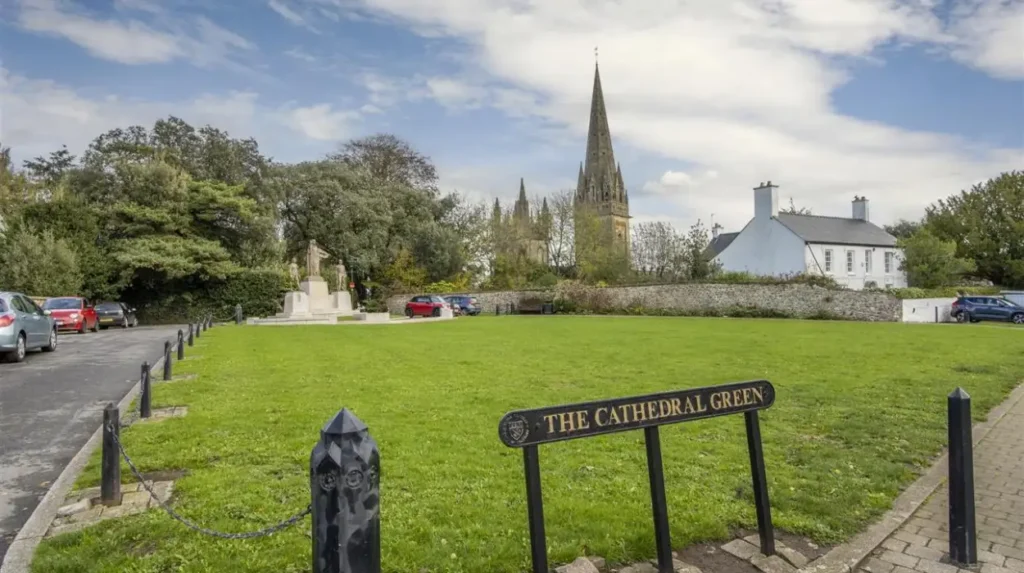
Cathedral Green is the historic centre of Llandaff’s cathedral precinct and contains several important heritage features, including the medieval cross, cathedral lychgate, ruined Bell Tower, historic residences and views towards Llandaff Cathedral. The space demonstrates how religious and residential buildings formed one medieval settlement.
Cathedral Green is an open grassed space surrounded by historic buildings and archaeological remains. Coflein records the medieval cross, cathedral lychgate, ruined Cathedral Bell Tower and residences associated with cathedral dignitaries.
The green is particularly valuable because it preserves the spatial organisation of the cathedral close. A cathedral close is the area historically associated with a cathedral and its clergy.
The ruined Bell Tower is an important visual feature. Its survival provides evidence of earlier cathedral architecture and helps visitors understand that the current cathedral is the product of multiple building phases.
The medieval cross provides another direct connection with the religious history of the site. Its position within the green reinforces the relationship between public space and ecclesiastical buildings.
The surrounding residences are also significant. Clergy and cathedral officials required housing close to the cathedral, creating a concentration of religious and administrative buildings around the central open space.
The result is a landscape where the cathedral is not an isolated monument. The green, houses, lanes, gate structures and ruins collectively form the historic setting.
What is the history of Llandaff Cathedral?
Llandaff Cathedral developed from an early medieval Christian site into a Norman cathedral and later underwent Gothic, Victorian and post-war rebuilding. Bishop Urban began major Norman construction around 1120, while later bishops added architectural elements through the medieval period before twentieth-century wartime damage transformed the building again.
The cathedral’s Christian history reaches back at least to the sixth century. Llandaff Cathedral identifies St Dyfrig and St Teilo among the early bishops associated with the site. Archaeological and architectural evidence includes a late tenth- or early eleventh-century cross and early medieval grave markers.
The Norman period created the foundation for the surviving cathedral. Bishop Urban, a Welshman appointed during the Norman period, began major rebuilding around 1120. He also brought the remains of St Dyfrig from Bardsey Island to Llandaff.
Later medieval development included work associated with Bishop William Saltmarsh and Bishop Henry of Abergavenny. The cathedral acquired its early Gothic west front, nave, Chapter House and Lady Chapel through successive building phases.
The building experienced severe disruption during later centuries. Its history includes damage connected with Owain Glyndŵr and the English Civil War. Coflein records that Parliamentarian forces raided the cathedral during the Civil War and destroyed or seized valuable contents, including part of its library.
A major eighteenth-century collapse transformed the building again. The south-east tower collapsed, leaving the nave roofless. Architect John Wood the Elder subsequently constructed a new church beyond the ruined nave. That building was later demolished during Victorian restoration.
Victorian architects John Prichard and John Pollard Seddon restored the cathedral during the nineteenth century. The Prichard Tower was constructed between 1867 and 1869.
The cathedral suffered catastrophic damage during the Second World War. On 2 January 1941, a German parachute mine caused extensive destruction, including the collapse of the roof and south aisle. Llandaff Cathedral states that it was the second-most damaged British cathedral after Coventry.
Post-war architect George Pace reconstructed the cathedral. The restoration included the St David or Welch Regiment Chapel and introduced modern architectural elements alongside surviving medieval fabric.
Which architectural features should you examine inside Llandaff Cathedral?
Inside Llandaff Cathedral, examine the surviving Norman sanctuary arch, medieval west front, Chapter House, Lady Chapel, Victorian restoration and George Pace’s post-war reconstruction. The cathedral also contains Jacob Epstein’s sculpture Majestas, creating a direct visual relationship between twentieth-century art and medieval architectural fabric.
The Norman sanctuary arch is one of the clearest surviving reminders of the cathedral’s twelfth-century rebuilding. Its roundels and architectural details belong to the period associated with Bishop Urban.
The west front contains surviving early Gothic work associated with Bishop Henry of Abergavenny. The design is connected with the West Country School of Masons, a group of craftsmen associated with major medieval building activity in western England and Wales.
The Chapter House represents another medieval development. Chapter houses were meeting rooms where cathedral clergy conducted administrative and religious business.
The Lady Chapel is also medieval in origin. Bishop William de Braose is associated with its construction during the thirteenth century.
The most striking modern intervention is associated with George Pace. His post-war reconstruction deliberately combined modern design with surviving medieval elements rather than attempting to reproduce the entire building as a nineteenth-century structure.
Jacob Epstein’s Majestas is positioned above the pulpitum arch. A pulpitum is a substantial screen or architectural division traditionally separating areas of a medieval church. The sculpture therefore forms part of the cathedral’s post-war architectural identity.
Visitors should also consider the building as a sequence of historical layers. Norman masonry, Gothic additions, Victorian restoration and twentieth-century reconstruction all occupy the same architectural space.
Where is the Bishop’s Palace in Llandaff?
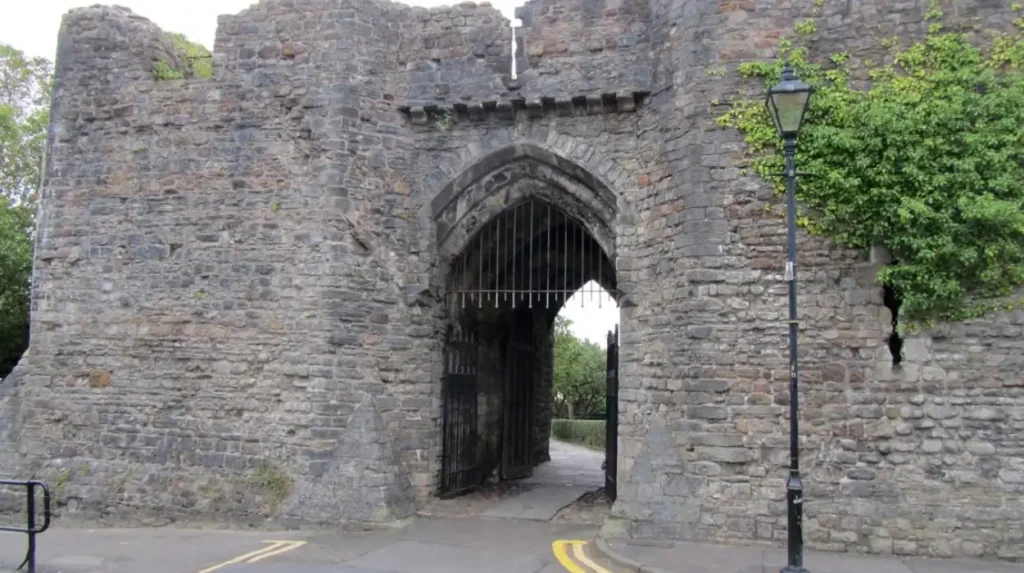
The medieval Bishop’s Palace stands immediately beside the cathedral precinct, close to the junction of Cathedral Green and High Street. Its surviving walls, towers and monumental gatehouse represent the former residence of Llandaff’s medieval bishops and form one of the most important secular medieval remains in Cardiff.
The surviving structure is commonly known as the Bishop’s Castle or Bishop’s Palace. Coflein records a roughly rectangular enclosure measuring approximately 52 metres from northwest to southeast and 40 metres across.
The remains include curtain walls, towers and a monumental gatehouse facing the cathedral approach. The arrangement shows that the bishops required both a residence and a defensible complex.
The palace was probably first constructed in the thirteenth century during the episcopate of William de Braose, Bishop of Llandaff from 1266 to 1287.
John Speed’s 1610 map shows the castle as a complete complex with a gatehouse and four other towers. Historical evidence indicates that the palace was subsequently dismantled, probably during the Civil War period.
The site later became part of the Bishop’s Palace garden. The bishops continued to reside nearby until 1939, while the palace itself survived as a historic ruin.
Cardiff acquired the Bishop’s Palace in 1971. The city repaired the remains and opened the site as a public garden in 1972. The monument is listed at Grade I, reflecting its national architectural and historic importance.
What does the Bishop’s Palace reveal about medieval Llandaff?
The Bishop’s Palace demonstrates the political, administrative and residential importance of medieval Llandaff’s bishops. Its substantial enclosure, towers, curtain walls and gatehouse show that the cathedral precinct functioned as an institutional centre with residential and defensive architecture rather than as a place of worship alone.
Medieval bishops combined religious responsibilities with substantial administrative authority. Their residences accommodated domestic life, visitors, officials and ecclesiastical business.
The Bishop’s Palace therefore complements the cathedral. The cathedral represents worship and ceremony, while the palace represents residence and administration.
The physical proximity of the two buildings is significant. Medieval ecclesiastical settlements commonly grouped the cathedral or church, bishop’s residence, clergy housing and associated spaces together.
The surviving gatehouse provides one of the clearest architectural indicators of the former scale of the complex. The ruined walls also allow visitors to understand the original enclosure.
The site should be viewed from public areas and respected as a protected historic monument. Stonework, walls and archaeological remains require preservation because their value depends on their survival as physical evidence.
What historic buildings should you notice beyond the cathedral?
Beyond the cathedral, Llandaff contains historic clergy residences, terraces, cottages, institutional buildings and later Victorian architecture that collectively preserve the village’s character. The conservation area protects this wider setting, demonstrating that Llandaff’s heritage extends beyond its cathedral and medieval palace remains.
The conservation area contains buildings from several periods. The Cardiff Council appraisal highlights terraces, cottages, High Street buildings and later architectural additions as components of Llandaff’s special character.
John Prichard’s influence is particularly relevant to the nineteenth-century appearance of the area. Prichard was a major Welsh architect associated with the restoration of Llandaff Cathedral and other ecclesiastical buildings.
Victorian buildings around the cathedral reflect the nineteenth-century revival of Llandaff as an important ecclesiastical centre. Their architectural relationship with medieval structures creates a layered historic environment.
The Old Probate Registry is another example of the district’s institutional history. Probate administration relates to the legal process for validating wills and administering estates. Buildings associated with this function demonstrate how the diocese operated administrative systems alongside religious institutions.
Historic boundaries are also important. Stone walls, gardens and narrow lanes help preserve the relationship between individual properties and the older village structure.
For a self-guided walk, these details require observation rather than entry. Look at building proportions, rooflines, windows, masonry, boundary walls and the alignment of streets.
How can you include Chapel Street and the medieval street pattern?
Include Chapel Street as a short extension from High Street because its alignment preserves the form of the historic village even though most surviving buildings are later. The street demonstrates how medieval urban patterns can survive through later rebuilding and architectural change.
Chapel Street retains a medieval street form and building alignment. Cardiff Council’s appraisal identifies this pattern while noting that many buildings date from the late Victorian and Edwardian periods.
This makes Chapel Street useful for understanding urban archaeology. Urban archaeology examines how streets, buildings, boundaries and land use develop over long periods.
A street does not need medieval buildings on every plot to retain medieval significance. The survival of its alignment provides evidence of the historic settlement framework.
The route also demonstrates the difference between architectural age and urban age. A nineteenth-century building can stand within a much older street pattern.
Look towards the junctions with High Street and Cardiff Road. The conservation appraisal identifies these points as important entrances into the historic area and notes opportunities to improve their presentation and pedestrian connections.
How is Llandaff protected as a heritage area?
Llandaff is protected through conservation-area designation and individual listed-building controls. Cardiff Council identifies Llandaff as one of the city’s conservation areas, while nationally important structures such as the Bishop’s Palace receive stronger heritage protection through listing and scheduled-monument arrangements.
A conservation area is an area designated for its special architectural or historic interest. Cardiff currently identifies 27 conservation areas across the city.
Llandaff’s conservation-area status recognises the combined value of its buildings, streets, open spaces and historic landscape.
Listed-building protection applies to individual structures of special architectural or historic interest. The Bishop’s Palace is Grade I listed, reflecting its exceptional significance.
Cardiff Council also uses Article 4 Directions in parts of Llandaff. An Article 4 Direction removes specified permitted development rights, meaning some alterations that normally do not require planning permission can require additional control within the designated area.
These protections explain why visitors see traditional architectural details preserved across the historic core. They also demonstrate that heritage conservation concerns the setting as well as individual monuments.
How long does a self-guided Llandaff heritage walk take?
A detailed self-guided Llandaff heritage walk takes around two hours when it includes High Street, Cathedral Green, Llandaff Cathedral, the Bishop’s Palace and nearby historic streets. A shorter cathedral-focused route takes about one hour, while a wider exploration takes longer.
The duration depends on the level of historical observation. Walking directly between the main sites requires less time than stopping to examine architectural details and historic street patterns.
A practical route begins at High Street, continues towards Cathedral Green, enters the cathedral precinct, examines the cathedral and Bishop’s Palace, then returns through High Street and Chapel Street.
Visitors should allow additional time for cathedral opening arrangements, worship, exhibitions, quiet reflection and architectural viewing.
Llandaff Cathedral currently lists opening hours of 8am to 5:30pm Monday to Saturday and 8am to 4pm on Sunday. The cathedral also provides wheelchair access at its east and west ends.
The cathedral advises visitors to check current arrangements because services and events affect access to particular spaces. Guided tours are also available for groups and schools, with tour lengths ranging from approximately 45 to 95 minutes depending on the itinerary.
How can visitors reach Llandaff for a heritage walk?
Llandaff is accessible from central Cardiff by bus, rail connections and road, with the historic core best explored on foot. Cardiff Cathedral states that buses 25, 63 and 66 connect from central Cardiff, while Fairwater rail station provides a train option followed by a walk.
Llandaff Cathedral provides practical transport information for visitors. Bus routes 25, 63 and 66 run from Westgate Street towards the Llandaff area, with the journey taking approximately 25 to 30 minutes according to the cathedral’s visitor information.
Rail travel provides another option. The cathedral states that Cardiff Central to Fairwater takes approximately 10 minutes by train, followed by a 10 to 15-minute walk from Fairwater to the cathedral.
Driving is possible, but parking pressure forms part of the current management challenges within the historic village. Cardiff Council has consulted on parking arrangements for Llandaff Village, with the conservation-area character considered in the design of proposed signage and road markings.
Walking is particularly appropriate once inside the historic core because the important heritage features are concentrated within a relatively compact area.
Explore More Area Guide
Cardiff’s Oldest Community Centres: Butetown, Cathays & Grangetown
Largest Housing Estates in Cardiff: Ely, Caerau & Plasdŵr
What should visitors know before walking around Llandaff’s historic core?
Visitors should treat Llandaff as a living community as well as a heritage destination. The cathedral remains an active place of worship, residents use the historic streets daily, and protected buildings require careful treatment. Walking quietly, respecting private property and following current visitor guidance protects the area’s character.
Llandaff Cathedral remains an active Anglican cathedral and welcomes worshippers, visitors and pilgrims. Its heritage value therefore exists alongside its continuing religious function.
Several historic buildings are privately occupied. A heritage walk should focus on public views rather than entering private gardens, courtyards or buildings without permission.
The cathedral precinct contains uneven historic surfaces and changes in elevation. Comfortable footwear is appropriate, particularly when continuing beyond the principal paved areas.
Photography is useful for documenting architectural details, but visitors should respect restrictions during services and events.
The conservation area is also a working neighbourhood. Cardiff Council’s heritage planning documents recognise pressures from traffic, parking, signage and changes to shopfronts.
These practical considerations are part of heritage tourism because the survival of Llandaff’s historic character depends on balancing public access with conservation and everyday community use.
Why is a self-guided heritage walk around Llandaff valuable for understanding Cardiff?
A self-guided heritage walk around Llandaff reveals how Cardiff developed around older settlements rather than replacing them entirely. The route connects early Christianity, medieval episcopal power, Victorian restoration, wartime destruction, post-war reconstruction and modern conservation within one compact historic landscape.
Llandaff provides an unusually clear example of historical continuity within a modern capital city. Cardiff expanded dramatically during the industrial period, but Llandaff retained a distinct historic core.
The cathedral demonstrates more than 900 years of architectural change from the Norman period to the present. The Bishop’s Palace preserves medieval secular architecture. High Street and Chapel Street retain historic street patterns. Cathedral Green preserves the spatial relationship between these buildings.
The twentieth century added another important layer. Cardiff absorbed Llandaff in 1922, while the cathedral suffered extensive wartime destruction in 1941 and underwent post-war reconstruction.
Today, conservation-area designation ensures that the historic environment remains part of Cardiff’s future planning framework. The result is a heritage landscape that combines archaeological remains, medieval architecture, Victorian buildings, modern public use and active religious life.
For visitors exploring Cardiff beyond the city centre, Llandaff provides a concentrated route through Welsh religious history, medieval urban development and architectural conservation. Its compact historic core makes the area particularly suitable for an independent walking itinerary based on observation, chronology and place.
What is a self-guided heritage walk around Llandaff?
A self-guided heritage walk is an independent walking route through Llandaff’s historic core. It connects Llandaff Cathedral, Cathedral Green, Bishop’s Palace, High Street, Chapel Street and other historic features without requiring a tour guide.