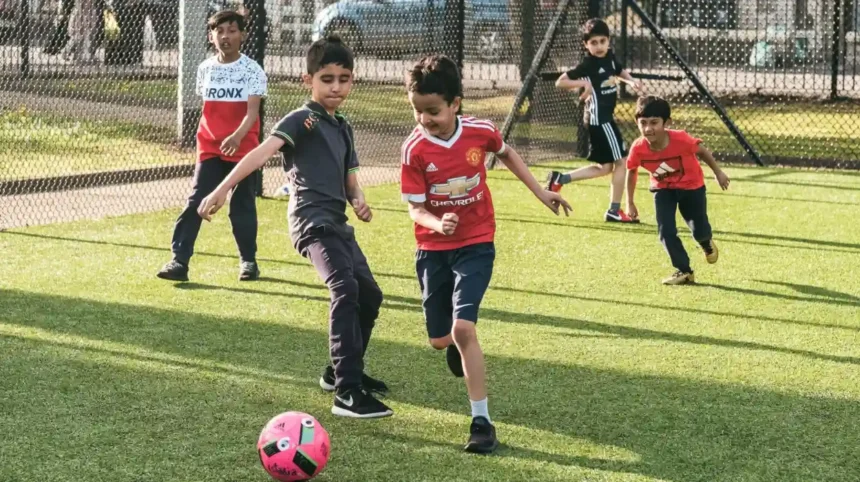
Cardiff has a broad family sports network built around leisure centres, parks, playing pitches, swimming pools, cycle facilities, skateparks, community programmes and organised clubs. The city supports both casual recreation and structured sport for children, teenagers and parents. Cardiff Council provides access to leisure facilities, parks, pitches and activity programmes, while schools, clubs and national governing bodies add further opportunities.
- What makes Cardiff a good city for family sport?
- Which Cardiff leisure centres are useful for family sport?
- Where can families go swimming in Cardiff?
- Which Cardiff parks are suitable for family sport?
- Where can children play football in Cardiff?
- Where can families cycle in Cardiff?
- Where can children use skateparks in Cardiff?
- What sports can children try during Cardiff school holidays?
- How do Cardiff families choose between organised and informal sport?
- How does Cardiff support younger children who are not ready for competitive sport?
- How does Cardiff’s sports infrastructure support children with different abilities?
- How has family sport developed in Cardiff?
- What should families check before using a Cardiff sports facility?
- How can families build a regular sports routine in Cardiff?
- Why is family sport important for Cardiff’s future?
For families choosing where to play sport in Cardiff, the most important distinction is between informal activity and organised sport. Informal activity includes playing football in a park, cycling, using a skatepark or walking and running. Organised sport includes swimming lessons, football clubs, junior cycling, coached sessions and scheduled activities at leisure centres.
The range is important because the latest UK Chief Medical Officers’ guidance recommends that children and young people aged 5 to 18 achieve an average of at least 60 minutes of moderate-to-vigorous physical activity each day across the week. The guidance specifically includes sport, play, active travel, physical education and after-school activities.
Cardiff therefore offers families multiple ways to build regular activity into everyday life.
What makes Cardiff a good city for family sport?
Cardiff combines public parks, leisure centres, swimming facilities, sports pitches, cycling venues, skateparks and organised children’s activities, giving families access to both free outdoor recreation and structured indoor or club-based sport throughout the city.
The city’s sports infrastructure is distributed across residential areas rather than concentrated in one location. Cardiff Council maintains a network of parks and green spaces and provides an online system for finding parks, play areas and pitch information.
Leisure centres provide a different type of access. They support activities that require specialist facilities, including swimming and indoor sports. Cardiff Council identifies leisure centres and facilities as part of its citywide leisure provision and directs residents towards available swimming programmes.
This combination gives families flexibility. A child learning to swim can attend a structured lesson. The same child can also cycle in a park, play football outdoors or use a skatepark.
Family sport in Cardiff also covers different ages. Children under five need active play rather than formal competitive sport. School-age children can participate in swimming, football, cycling, athletics and racket sports. Teenagers can move into competitive clubs, specialist training and independent recreation.
Which Cardiff leisure centres are useful for family sport?
Cardiff leisure centres provide indoor spaces for swimming, fitness, sports sessions and family activities, with facilities distributed across the city so families can select a venue based on location, activity, age requirements and current programme availability.
Cardiff Council’s leisure-centre network is one of the most practical starting points for families looking for organised physical activity. The council provides information on leisure facilities, sports venues and swimming lessons, while individual centres publish programme information.
Leisure centres are particularly useful when weather conditions make outdoor sport unsuitable. Indoor swimming, sports halls and scheduled activities provide more predictable opportunities throughout the year.
Family provision also changes according to school holidays. Cardiff Council promotes holiday activities that include football, squash, soft play and swimming. These programmes are designed to keep children active while schools are closed.
Families should check the current timetable before travelling because activities, age limits, session formats and charges change.
Swimming is particularly significant because Cardiff provides both Welsh-medium and English-medium swimming opportunities. Cardiff Council identifies the Urdd as a provider of Welsh-medium swimming lessons at different levels and locations, alongside English-medium provision through the city’s leisure programme.
Swimming also develops an important practical skill. Unlike many field sports, swimming provides both physical exercise and water-safety development.
Where can families go swimming in Cardiff?
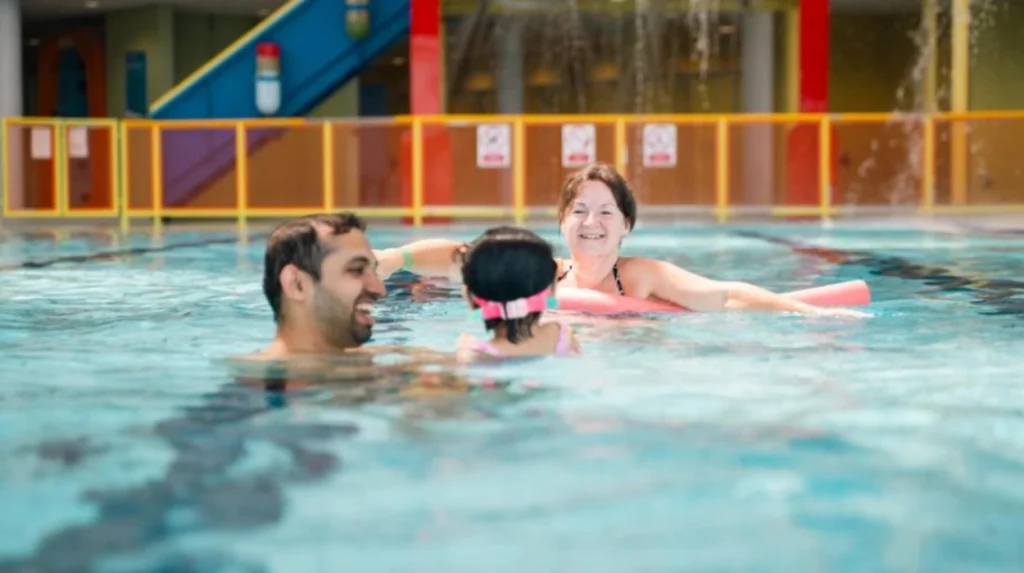
Families can access swimming through Cardiff leisure facilities, with structured swimming lessons available in Welsh and English and additional family swimming sessions provided according to individual centre timetables and programme availability.
Swimming works across a wide age range. Young children can begin with supervised water familiarisation. Older children can progress through swimming lessons and improve technique, endurance and water confidence.
Cardiff’s swimming provision also demonstrates how family sport operates at different levels. A family can use a pool for recreational activity without joining a competitive club. A child who develops an interest in swimming can progress into more structured training.
Historical Cardiff leisure programmes also demonstrate the long-standing role of family swimming. Archived Cardiff Council programme material includes family pool sessions, swimming lessons for children aged four and above, and activities for different age groups.
Current availability should always be checked before attending because pool timetables, admission arrangements and lessons vary between venues.
Swimming is also relevant to the UK’s physical activity guidance. The guidance recommends variety rather than reliance on one form of exercise. Swimming therefore works well alongside running, cycling, jumping, team sports and active play.
Which Cardiff parks are suitable for family sport?
Cardiff’s parks provide accessible outdoor space for informal family activity, including walking, running, ball games, cycling and play, while designated pitches support organised sports such as football and other field-based activities.
Parks are among the simplest places for families to become active because they do not require membership for basic recreational use.
Cardiff Council provides a searchable list of parks and play areas across the city. Its parks service also publishes updates about pitch conditions and organised games.
This distinction matters. A park can support informal activity at any suitable time, while a marked sports pitch can be allocated to clubs or teams.
Parents looking for casual activity can therefore use parks for running, walking, ball skills, cycling and active play. Families involved in organised football or other field sports should use the relevant booking and club arrangements.
Weather also affects outdoor sport. Cardiff Council’s pitch system publishes decisions about whether scheduled games are on or off, based on pitch preparation and weather conditions.
For families, this makes checking current conditions important before travelling to a booked pitch.

Where can children play football in Cardiff?
Football is one of the most accessible organised sports for Cardiff families, with children able to participate through parks, marked playing pitches, leisure-centre activities, schools and community clubs serving different neighbourhoods and age groups.
Football requires relatively little equipment compared with specialist sports. A ball, suitable footwear and an appropriate playing space are sufficient for informal practice.
Cardiff’s parks provide grass pitches used by organised teams, while leisure-centre programmes also include football activities for children during school holidays. Cardiff Council specifically lists football among the sports available through holiday leisure-centre activities.
Structured football introduces additional elements. Children learn passing, receiving, movement, teamwork and match rules. Clubs also introduce scheduled training and competition.
Parents should distinguish between casual park football and club football. Casual play requires a suitable open area. Club participation normally involves registration, scheduled training and age-specific arrangements.
The council’s pitch updates also demonstrate that organised football depends on ground conditions. The authority works through its Parks Ground Maintenance Team when preparing pitches for games.
Where can families cycle in Cardiff?
Cardiff provides family cycling opportunities through roads and paths, cycle-training programmes, dedicated cycling facilities and specialist venues, with Maindy holding particular historical importance for junior cycling and grassroots development.
Cycling has a particularly strong connection with Cardiff’s sports infrastructure.
Maindy is an important example. Cardiff Council documentation records that the Maindy cycle track was built for the 1958 British Empire and Commonwealth Games. The site later became home to Maindy Flyers Cycling Club, which has included around 200 members aged between 5 and 18 in council documentation.
The Maindy site also includes Cardiff’s Road Safety Centre, where child cyclist training has been delivered. Cardiff Council states that National Standard Cycle Training courses are available during school holidays for Cardiff children aged nine and above who own and can ride a bicycle.
Cycling therefore serves several purposes. It provides everyday active travel, recreational exercise, skill development and competitive sport.
The council’s leisure information also lists Maindy Dirt Track, a free outdoor facility with rollers, doubles, step-ups, step-downs and berms. The published opening period is 9am to 10pm, with protective equipment advised.
Families using specialist cycling facilities should follow posted safety requirements and check current operational information.
Where can children use skateparks in Cardiff?
Cardiff has skateparks in multiple neighbourhoods, including facilities at Cardiff Barrage, Llanishen, Fairwater, Eastern, Pentwyn, Splott, Radyr, St Mellons, Trelai and Creigiau, providing different ramps and riding features.
Skateparks provide a different form of physical activity from traditional team sports. They develop balance, coordination, movement control and technical skills.
Cardiff Barrage Skate Plaza is the city’s first concrete skatepark and covers more than 1,100 square metres. Cardiff Council lists features including steps, rails and the 1.8-metre Beijing Gap. Its published opening hours are 7am to 10pm.
Other neighbourhood facilities have different layouts.
Llanishen Skatepark includes quarter-pipes, a jump box, flat banks, a driveway, spine, mini ramp, beginner equipment and a wall ride. Eastern Skatepark includes half-pipes, flat banks, an in-line ramp, quarter pipe and grind rails.
These differences are important for families choosing a venue. Beginners need appropriate equipment and enough space to practise safely. Experienced riders often require more advanced features.
Protective equipment is particularly important for children learning skateboarding, BMX or similar activities.
What sports can children try during Cardiff school holidays?
Cardiff Council provides free and low-cost holiday activities that include sport, swimming, football, squash, cycling, play and other physical activities, giving families additional opportunities to keep children active outside normal school routines.
School holidays create a major opportunity for additional physical activity because children have more available daytime hours.
Cardiff Council promotes holiday programmes through leisure centres, parks and children’s play services. Its published information states that activities include sports and physical activities alongside other recreational programmes.
The council’s holiday provision also includes child cyclist training at the Road Safety Centre in Maindy. The National Standard Cycle Training course is aimed at Cardiff children aged nine and above who own a bicycle and can already ride.
Other holiday activity examples include swimming, football and squash through leisure centres.
The Food and Fun scheme also combines activities, meals and sports for children and families facing financial difficulties during the summer. Cardiff Council describes it as a source of free support delivered with partners.
Families should check eligibility and current programme dates because holiday schemes operate during specific periods.
How do Cardiff families choose between organised and informal sport?
Families should choose organised sport when children need coaching, regular training or competition, and informal sport when they need flexible activity, practice or recreational play in parks, open spaces and public facilities.
The difference is primarily about structure.
Organised sport follows a defined programme. Examples include swimming lessons, junior football training and cycling club sessions. These activities normally involve instructors, coaches or club leaders.
Informal sport is self-directed. Examples include kicking a football in a park, riding a bicycle, running or using a public skatepark.
Both forms contribute to physical activity. The Chief Medical Officers’ guidance specifically recognises sport, play, active travel and after-school activities as ways for children and young people to achieve their recommended activity levels.
Families also benefit from combining the two models.
A child can attend a weekly swimming lesson and use a park at the weekend. Another child can train with a football club and cycle to school. A teenager can combine school sport with independent skateboarding or cycling.
This variety supports the guidance that children should participate in different types and intensities of physical activity across the week.
How does Cardiff support younger children who are not ready for competitive sport?
Younger children can build physical skills through active play, playgrounds, swimming, cycling, walking and age-appropriate community activities before progressing into structured competitive sports such as football, swimming clubs, athletics or cycling.
Formal competition is not necessary for young children to become physically active.
The 2026 UK Chief Medical Officers’ guidance recommends that toddlers aged 1 to 2 spend at least 180 minutes each day in varied physical activity. Pre-school children aged 3 to 4 also have a 180-minute daily recommendation, including at least 60 minutes of moderate-to-vigorous activity.
For these age groups, active play is central.
Cardiff’s children’s play services provide activities across the city, while Cardiff Council also provides information about parks, play areas and family activities.
Swimming provides another suitable pathway because parents can select sessions designed for younger children and gradually introduce formal lessons.
The objective at this stage is movement development rather than competitive performance.
How does Cardiff’s sports infrastructure support children with different abilities?
Cardiff’s combination of public parks, leisure centres, swimming programmes, play services and sports venues creates multiple entry points into physical activity, allowing families to select activities according to age, confidence, skill level, interests and individual circumstances.
Accessibility is broader than physical access to a venue. It also includes cost, location, transport, programme timing and the suitability of an activity.
Cardiff Council provides free and low-cost holiday activities and directs families towards parks, leisure facilities and community programmes.
Different sports also offer different levels of entry.
Swimming can begin with basic water confidence. Cycling can begin with balance and road-safety skills. Football can begin with informal ball games. Skateboarding can begin with beginner-specific equipment. Running can begin through walking and short distances.
The latest national guidance also recognises that increasing activity among inactive children provides health benefits. It does not require every child to participate in organised competitive sport.
This makes Cardiff’s mixture of formal and informal facilities particularly relevant to family activity planning.
How has family sport developed in Cardiff?
Cardiff’s family sports infrastructure has developed from traditional parks and municipal recreation into a broader system containing leisure centres, specialist cycling venues, skateparks, organised clubs, community programmes and modern sports facilities.
The city’s sporting history includes major national and international events. Maindy’s cycle track was constructed for the 1958 British Empire and Commonwealth Games, establishing a long-standing connection between the site and competitive cycling.
The venue subsequently supported grassroots participation. Cardiff Council documentation recorded approximately 200 Maindy Flyers members aged between 5 and 18, demonstrating the site’s role in junior cycling.
Cardiff’s sporting infrastructure has also expanded beyond traditional sports.
The city now includes dedicated skateparks and specialist outdoor facilities. Cardiff Council lists numerous neighbourhood skateparks with different layouts and equipment.
This development reflects a broader understanding of physical activity. Family sport now includes conventional team games, individual exercise, cycling, skating, swimming, active play and recreational movement.
What should families check before using a Cardiff sports facility?
Families should check opening times, age restrictions, session requirements, booking arrangements, pitch conditions, equipment rules, weather information and current programme details before travelling to a Cardiff sports facility.
Facility information changes over time. Cardiff Council publishes current information for leisure centres, parks, pitches and sports facilities through its website.
Pitch conditions require particular attention. The council publishes pitch updates because weather and ground conditions affect organised games.
Families should also confirm whether an activity requires advance booking. Structured swimming lessons and club sessions operate differently from open-access parks and skateparks.
Age requirements are another important factor. Cardiff’s child cyclist training, for example, is specifically available to children aged nine and above who meet the cycling requirements.
Safety equipment also differs by sport. Cycling, skateboarding and BMX activities require appropriate protective equipment and safe riding practices.
Checking the official information before departure reduces unnecessary journeys and ensures that the selected activity matches the child’s age and ability.
Explore More Area Guide
Public Basketball Courts in Cardiff: Complete Guide 2026
Community Fitness Classes Across Cardiff: Complete Guide 2026
How can families build a regular sports routine in Cardiff?
A sustainable Cardiff family sports routine combines structured sessions with flexible outdoor activity, using leisure centres, parks, cycling facilities, swimming pools, pitches and neighbourhood recreation spaces across different days of the week.
The national guidance recommends an average of at least 60 minutes of moderate-to-vigorous physical activity per day across the week for children aged 5 to 18. It also recommends variety in activity types and intensities.
Families can therefore distribute activities across the week.
A weekday routine can include active travel or a school sports session. An after-school day can include football or swimming. A weekend can include cycling, walking, running or park-based games.
Younger children need more emphasis on active play. Toddlers and pre-school children have higher overall movement recommendations, with 180 minutes of physical activity spread throughout the day.
The most practical approach is to use Cardiff’s facilities according to their strengths.
Leisure centres work well for structured indoor activities. Parks work well for flexible outdoor play. Playing pitches support organised team sports. Cycling facilities support skill development. Skateparks support independent action sports.
Cardiff’s family sports landscape therefore works as a connected network rather than a single destination.
Why is family sport important for Cardiff’s future?
Family sport supports physical health, movement skills, confidence, social participation and active communities, while Cardiff’s combination of public facilities and organised programmes creates long-term opportunities for children to remain physically active as they grow.
The latest UK Chief Medical Officers’ guidance links physical activity among children and young people with cardiovascular fitness, mental health, learning and attainment, healthy weight and physical development.
The guidance also emphasises movement variety. Children should develop skills such as running, jumping and catching while experiencing different activities and intensities.
Cardiff’s sports infrastructure supports this principle through different types of facilities.
A child can learn to swim, play football, cycle, skate, run and use local parks without depending on one sport. This variety helps develop different movement skills and provides alternatives when interests change.
Wales’ current Healthy Weight: Healthy Wales delivery plan also promotes a “Daily Active” approach designed to support diverse physical activity opportunities before, during and after school, with connections between schools and local communities.
For Cardiff families, the practical implication is clear. Sport does not need to mean competitive membership or expensive equipment. It can include a swimming lesson, a football session, a cycle ride, an afternoon in a park or supervised use of a local skatepark.
Cardiff’s strongest family-sport advantage is the range of choices available across these settings. Families can select activities based on age, ability, location, cost and interest, then combine them throughout the week.
Where can families play sport in Cardiff?
Families can play sport across Cardiff in leisure centres, public parks, sports pitches, swimming pools, cycling facilities, skateparks and community clubs. Cardiff Council provides information about many of these facilities and activities.